Chimney Cap Installation & Weatherproofing Derby
Call: 01332-529704
Stop rain, birds and damp getting into your flue — ventilated caps and cowls fitted by Derby Roofers, backed by a free drone survey and a written quote.
- Free Drone Survey
- 10-Year Workmanship Guarantee
- No Subcontractors
- IPAF & PASMA-Certified Team
Chimney Cap Installation & Weatherproofing in Derby — Stop Rain, Damp and Birds Before They Cause Real Damage
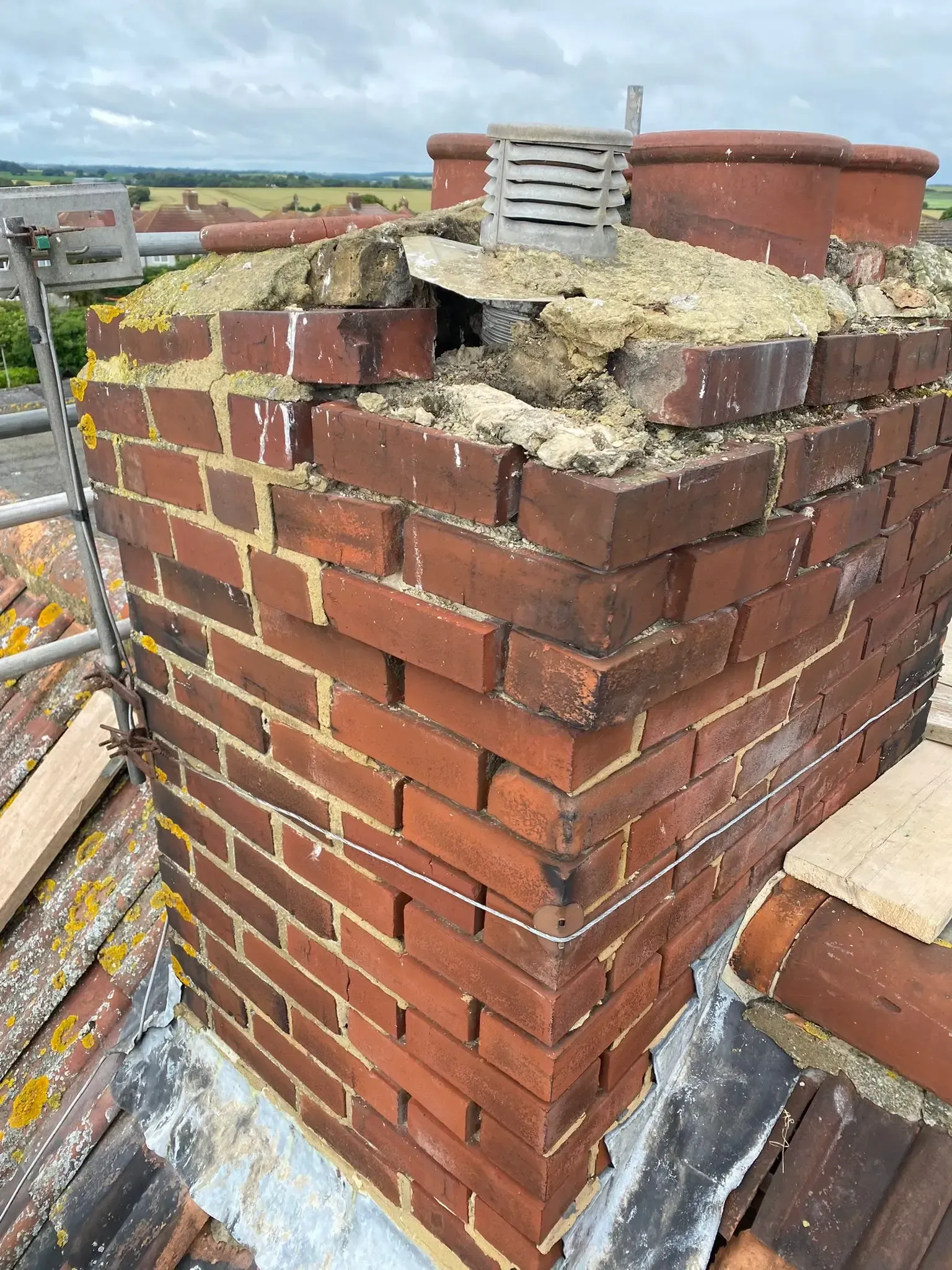
A chimney pot without a cap or cowl is an open funnel straight into the flue. In Derby’s weather that means rain running down the inside of the stack, birds nesting on top of a fire that hasn’t been lit in years, and cold, damp air pooling in a flue that’s no longer in use. Left alone, that moisture works its way into the brickwork and shows up as a damp patch on the chimney breast or a bedroom ceiling — often some distance from where the problem actually started.
Fitting the right cap or cowl for the flue in front of us — closed and ventilated for a redundant stack, open and shielded for one still in use — stops the water and the wildlife getting in without choking off the airflow the flue needs.
- Free drone survey before any quote — no ladders, no guesswork
- 10-year workmanship guarantee on every cap and weatherproofing job
- No subcontractors — the team that surveys your chimney is the team that fits it
What Is a Chimney Cap — and Why Does Your Derby Home Need One?
A chimney cap is a protective cover fitted over the top of your chimney pot or flue opening. Its job is simple: keep water, birds, debris, and wind-driven rain out of your stack — while still allowing the correct ventilation for your flue type.
Without a cap, your chimney is an open channel directly into your home. Rain falls straight into the flue, saturates the internal mortar joints, and works its way into the brickwork — eventually pushing damp into your chimney breast and surrounding walls. In a Derbyshire winter, that trapped moisture freezes overnight, expands, and breaks down the structure from the inside, a process known as freeze-thaw damage that affects thousands of properties across Derby every year.
The cost of a chimney cap is a fraction of the repair bill that follows from ignoring the problem. We see this regularly on properties in Allestree, Breadsall, and Darley Abbey — homeowners who have paid to replaster a chimney breast, only for the damp to return the following winter because nobody fixed the cap.
Chimney Caps, Cowls, and Chimney Pots — What's the Difference?
These three terms are used interchangeably online. They are not the same thing. Fitting the wrong product to your chimney is a common mistake — and one that creates new problems rather than solving the original one.
| Term | What it is | When it's used |
|---|---|---|
| Chimney pot | The ceramic or terracotta extension at the very top of the stack — part of the original building fabric on most pre-1970s Derby properties. | Always present on older stacks. Not a cap — it’s what a cap or cowl sits on top of. Replaced when cracked, loose or missing — see our chimney pot replacement page. |
| Chimney cowl | A ventilated cover for an active flue — open fire, wood burner or gas appliance still in use. Rain, anti-downdraught, rotating and bird guard styles. | Chimney still in use. Full range of cowl types, nesting-season rules and fitting detail is covered on our chimney cowl & bird guard fitting page. |
| Chimney cap | A solid capping slab or closed cover for a redundant flue that’s permanently out of use — must include a ventilation slot or airbrick. | Chimney no longer in use. Covered in full on this page, alongside the wider weatherproofing work — flaunching, flashing, and repointing — that goes with it. |
Solid caps with no ventilation are one of the most common DIY mistakes we rectify on Derby properties — a fully sealed stack traps moisture inside the flue, which condenses on cold internal surfaces and drives damp into the chimney breast. This page focuses on caps and the wider weatherproofing system around them; if your chimney is still in use, our cowl and bird guard page covers that side in full.
The Signs Your Derby Chimney Cap or Weatherproofing Has Failed
You do not always need to get on the roof to spot the warning signs. Many of the signals appear inside the property — and by the time they are visible, water has often been getting in for weeks or months. Watch out for these signs on your Derby property:
- Damp patches or brown staining on chimney breasts and ceilings
- Structural mortar decay inside the stack, accelerated by frost
- Birds nesting in the flue — blocking airflow and creating a fire risk
- Downdraught — cold air or smoke blowing back into the room
- Increased heating bills from cold air dropping into the property
- Mould and musty smells from trapped moisture with nowhere to go
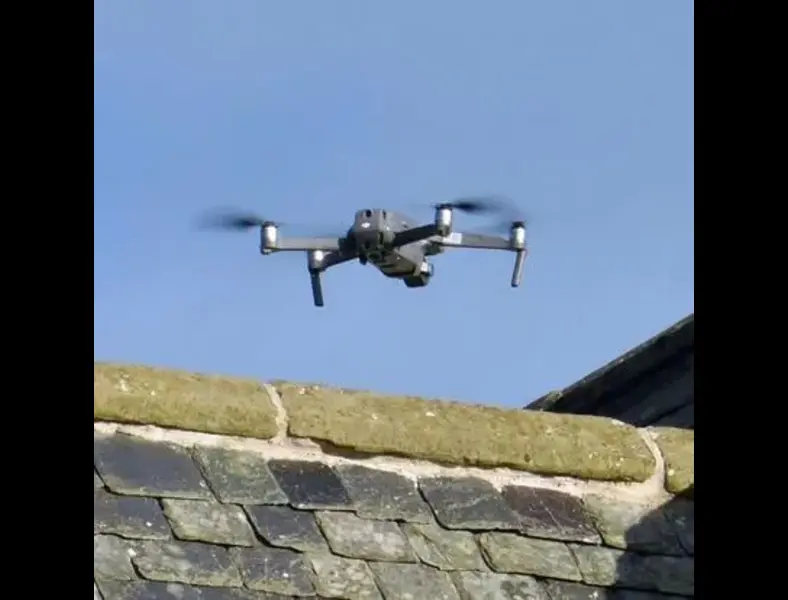
Our free drone survey gives you a close-up view of your stack, pot, flaunching, and lead flashing — without ladders or scaffolding. If there is a problem, we will find it and explain it clearly before any work is agreed.
Chimney Weatherproofing in Derby — It's More Than Just the Cap
A chimney cap is one piece of a wider weatherproofing system. Fitting a new cap to a stack with failed flashing, cracked flaunching, or deteriorated mortar joints will not stop water getting in. We assess the whole stack — not just the part that is visibly failing.
Flaunching is the sloped mortar bed that holds the chimney pot in place and channels rainwater away from the top of the stack. Cracked or eroded flaunching is one of the primary entry points for water on Derby properties — once hairline cracks appear, which happens quickly after a hard Derbyshire frost, water tracks straight into the stack with every rainfall. We repair or replace failed flaunching as part of the cap installation where needed, using the correct mortar mix for the age and type of property.
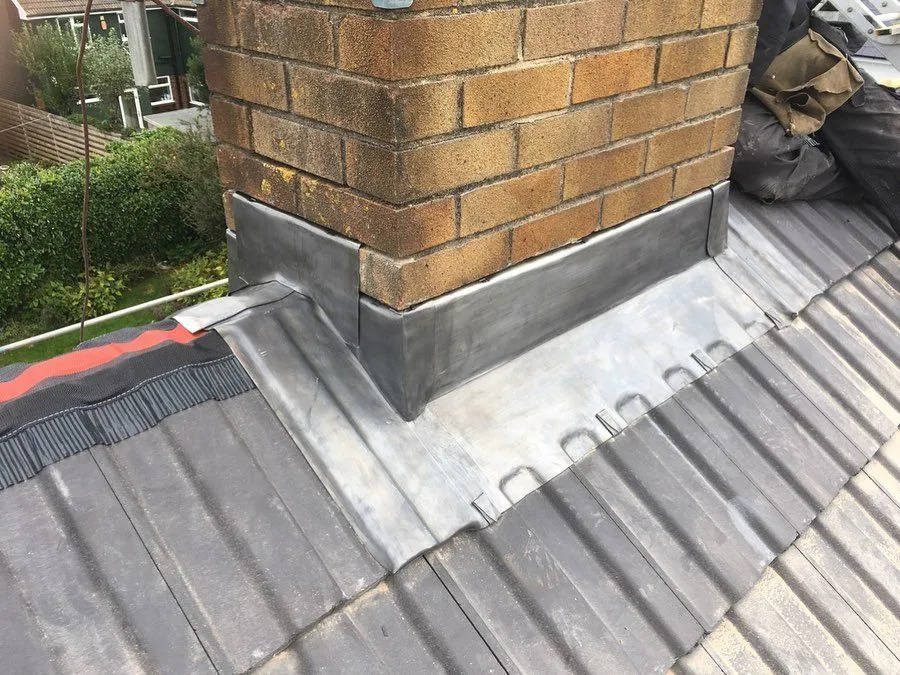
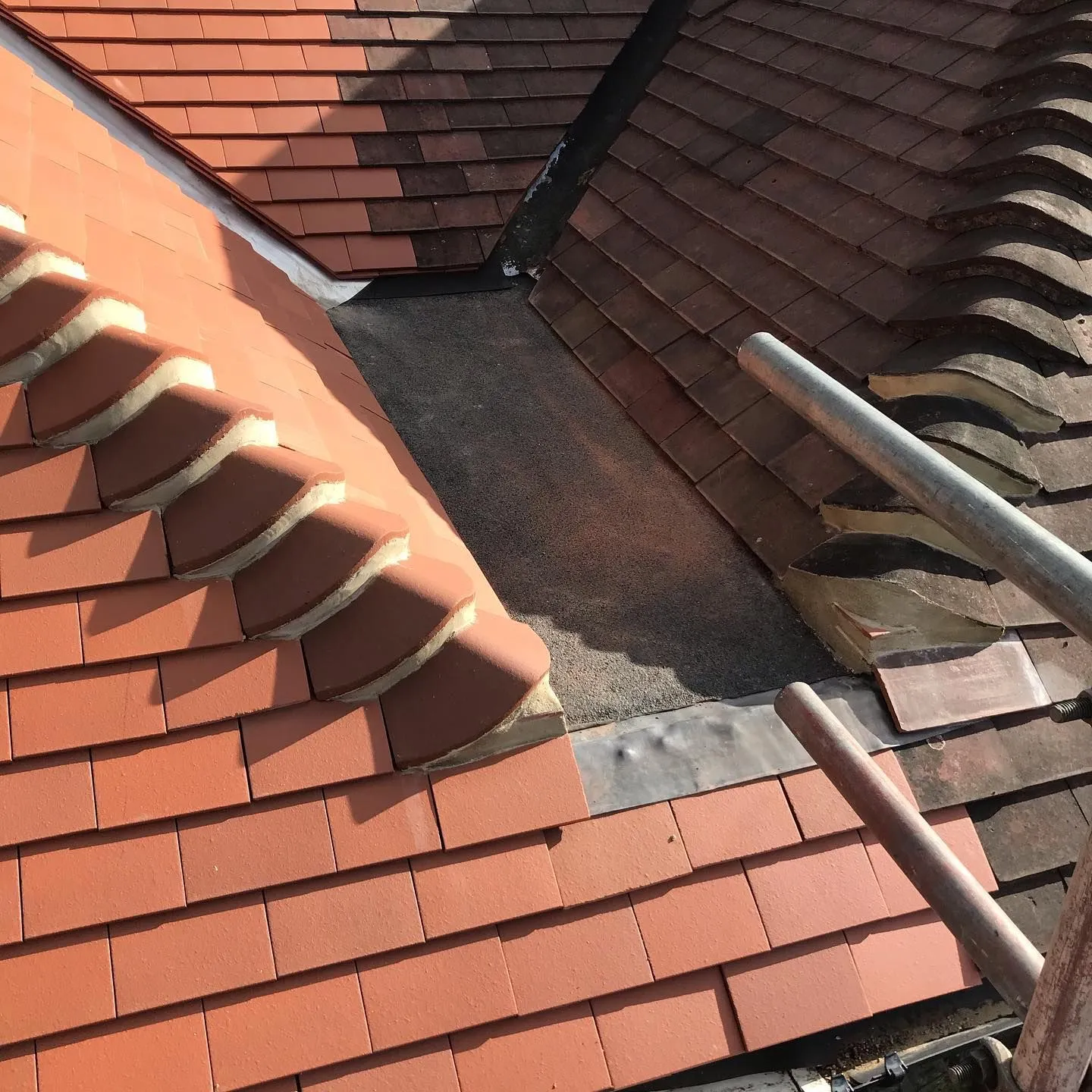
Lead flashing creates the waterproof seal between the chimney stack and the roof surface, and is one of the most common sources of roof leaks on Derby properties. Derbyshire’s westerly weather pushes wind-driven rain horizontally against the chimney face, forcing water under any flashing edge that isn’t fully bedded into the mortar joint. We inspect the lead flashing at the base of every stack we work on and flag any issues in the written report.
Repointing — over time, the mortar joints in a chimney stack break down through constant exposure to rain, wind, and frost. Failed pointing allows water to penetrate directly into the brickwork. We carry out chimney repointing across Derby as part of a full weatherproofing package, using mortars matched to the age of the stack.
Redundant Chimneys in Derby — Ventilated Capping Is Not Optional
One of the most misunderstood aspects of chimney maintenance is what happens to a redundant stack. Many Derby homeowners assume that once a gas fire is decommissioned or a fireplace is boarded up, the chimney can simply be sealed at the top and forgotten about. This is incorrect — and it causes avoidable damp damage.
A redundant chimney is still exposed to the weather at the top and to the indoor air at the bottom. Without ventilation, warm moist air rises into the cold flue and condenses on the internal brickwork, saturating the stack from the inside and pushing damp into the chimney breast — often appearing as a cold, persistent damp patch that no amount of replastering will resolve.
We regularly attend properties in Chaddesden and Spondon where gas fires were removed during the 2000s and solid caps were fitted with no ventilation, resulting in internal damp that has spread to adjacent walls. The correct approach for a redundant chimney in Derby:
- A ventilated capping cowl or slotted cap — not a solid concrete or mortar slab
- Combined with a trickle vent or airbrick at fireplace level inside the property
- Where the chimney pot is intact, a ventilated cap is seated over it
- Where the pot is cracked, loose, or missing, we re-bed or replace the pot before capping
- On pre-1919 properties, we use lime-compatible mortar for all bedding work
Older Derby Properties and Pre-1919 Lime Mortar
A significant portion of Derby’s housing stock predates 1920. Victorian and Edwardian terraces in Normanton, Mackworth, Markeaton, and Darley Abbey were built with lime mortar throughout — including the chimney stack and flaunching.
Lime mortar is softer and more flexible than modern cement. It was designed to accommodate the natural movement of the building and to allow moisture to evaporate through the joints, a property known as breathability. Using a rigid cement-only mix on a lime mortar chimney causes cracking — the hard mortar cannot flex as the stack expands and contracts with temperature changes, and it traps moisture in the brickwork rather than allowing it to escape.
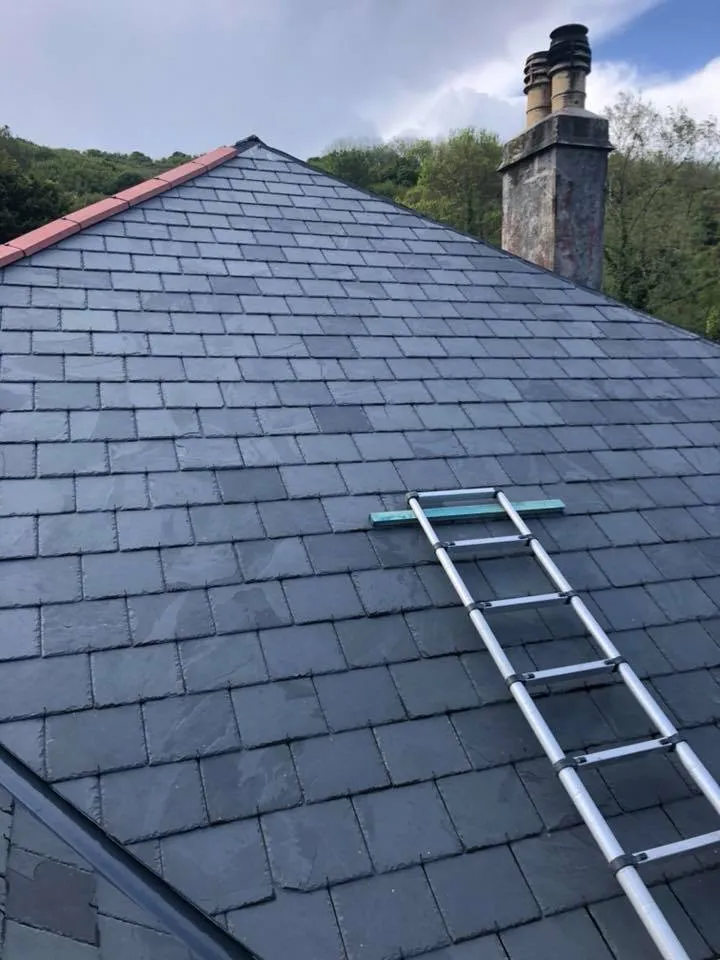
On all pre-1919 Derby properties, we use NHL (natural hydraulic lime) mortar or a lime-blended mix appropriate to the original specification of the stack — not a premium add-on, but the correct approach for the building type. If your property is in a conservation area — parts of Derby city centre, Darley Abbey village, and surrounding areas are designated — additional requirements may apply. We advise on any such considerations as part of the free inspection, and we do not proceed without checking.
Shared Chimney Stacks on Derby Semis and Terraces
Many of Derby’s Victorian and Edwardian semis and terraces share a chimney stack across the party wall. A single stack may contain two or more flues — one serving each property. Capping your flue without first identifying the stack layout can block your neighbour’s flue by mistake, causing condensation problems and potentially affecting gas appliance ventilation on their side.
Before we cap any shared stack in Derby, we identify which pots serve which property. Where the stack is shared, we advise on the correct approach and recommend notifying the adjoining owner before work begins. This protects you, your neighbour, and the structure.
How We Install Chimney Caps on Derby Properties
Here is exactly what to expect when you book with Derby Roofers.
- Free inspection and drone survey: We carry out a thorough assessment of your stack before quoting. For chimneys that are difficult to assess safely from the ground, we use our professional-grade drone to capture high-resolution images of the pot, cap, flaunching, and lead flashing. You receive a clear written report and a fully itemised quote — no obligation to proceed.
- Access: Most standard two-storey Derby properties can be accessed by ladder alone. We assess access on every job. Where the stack is particularly high, on a steep pitch, or otherwise unsafe to access without it, we arrange scaffolding and confirm the cost in writing before work begins.
- Remove and assess: We remove the existing cap, cowl, or failed mortar. We check the condition of the pot, the flaunching, the top courses of brickwork, and the lead flashing. Any issues beyond the cap itself are flagged clearly before we proceed.
- Repair flaunching: Where the flaunching is cracked, eroded, or missing, we repair or replace it before fitting the new cap — getting this step right is what makes the difference between a cap that lasts and one that lets water in within a season.
- Fit the correct cap: We fit the cap or cowl appropriate to your chimney — ventilated for redundant flues, active cowl for working ones. Caps are seated, bedded, or mechanically fixed depending on the product and pot type, using the correct mortar for the property.
- Final check and written confirmation: The cap is checked for level, correct fixing, and proper ventilation before we come down. You receive written confirmation of the work completed.
Most single-stack jobs on a Derby property take between one and three hours, subject to access and the condition of the existing mortar.
What's Included in a Derby Chimney Cap & Weatherproofing Visit
- Removal of the existing cap, cowl or failed mortar, with the pot, flaunching, top brickwork and lead flashing checked underneath
- A ventilated cap or slab fitted for redundant flues, or the correct active cowl for flues still in use
- Chimney pot re-bedding or replacement where the existing pot is cracked, loose or missing
- Flaunching repair or full replacement using mortar matched to the age of the property
- Lead flashing inspection at the base of the stack, with repairs carried out in the same visit where access allows
- Chimney stack repointing where mortar joints have broken down
- A written, itemised quote following the free drone survey, before any work is agreed
Not Included / Costed Separately
- Scaffolding — arranged and costed separately where a stack is too high or the pitch too steep for ladder access
- Internal chimney breast replastering or drying out damp already inside the property
- Flue liner installation or servicing of gas fires and wood burning appliances
- Capping a shared stack before the adjoining owner has been told, where the flue serves a neighbouring property
- Any extra requirements that apply to conservation area properties in parts of Derby city centre and Darley Abbey village
What Determines the Price of Chimney Cap Work in Derby
Every job is priced after the free drone survey, once the pot, flaunching and access can be seen clearly, so an exact figure needs that look at your own stack rather than a phone estimate. What moves the price on a Derby job is mainly access — ladder-only jobs cost less than ones needing scaffolding or tower access — plus the cap or cowl material. Galvanised steel is the cheaper option but can rust within 5 to 10 years in exposed Derbyshire locations, while stainless steel and terracotta cost more upfront and can last 20 years or longer.
How much flaunching repair or repointing is needed, and whether the property is pre-1919 and needs lime-compatible mortar rather than standard sand and cement, also affect the total. A written, itemised quote follows the survey, and any scaffolding cost is confirmed separately, in writing, before work starts.
Why Derby Homeowners Choose Derby Roofers for Chimney Cap Work
We are not the cheapest option in Derby. We are the team that does the job correctly the first time. We have been carrying out chimney cap installation and weatherproofing across Derby and Derbyshire for over 20 years — we know the local housing stock, local weather patterns, and local building materials.
Free Drone Roof Survey
Every new enquiry starts with a free drone survey — no ladders, no scaffolding cost, no obligation, and a clear look at the pot, flaunching and flashing before any price is given.
No Subcontractors
The team that surveys your chimney is the team that fits it — no subcontractors, no handover of your job to someone else.
Correct Mortar For Every Property
Lime-compatible mixes on pre-1919 stacks as standard, not as a premium add-on — we assess the whole system, cap, flaunching, flashing and pointing, not just the visible problem.
Written Quote, No Surprises
A written quote before any work begins, backed by a 10-year workmanship guarantee on materials from BBA-approved suppliers — and we answer the phone, or call you back the same day.
Areas We Cover for Chimney Cap Installation & Weatherproofing
We carry out chimney cap installation and weatherproofing across Derby and throughout Derbyshire, plus Burton on Trent, Chesterfield, Buxton and the Nottingham NG postcode area. Not sure if we cover your area? Call us on 01332-529704 and we will confirm straight away.
- Derby City Centre (DE1)
- Mickleover (DE3)
- Allestree & Darley Abbey (DE22)
- Littleover & Normanton (DE23)
- Chaddesden & Spondon (DE21)
- Breadsall & Oakwood (DE21)
- Markeaton & Mackworth (DE22)
- Alvaston & Chellaston (DE24)
- Borrowash (DE72)
- Willington & Findern (DE65)
- Long Eaton (NG10)
- Belper (DE56)
- Ilkeston (DE7)
- Heanor & Loscoe (DE75)
- Ripley (DE5)
- Alfreton (DE55)
- Matlock (DE4)
- Bakewell (DE45)
- Ashbourne (DE6)
- Swadlincote (DE11)
Frequently Asked Questions — Chimney Cap Installation & Weatherproofing in Derby
What is a chimney cap and what does it do?
A chimney cap is a protective cover fitted over the top of the chimney pot or flue opening. It prevents rain, birds, debris, and downdraught from entering the flue. For active chimneys, a ventilated cowl is used so gases can still escape. For redundant chimneys, a ventilated capping cover prevents rain entry while allowing the flue to breathe and avoid condensation damp.
What's the difference between this and your cowl & bird guard fitting page?
This page covers chimney caps and the wider weatherproofing system around them — flaunching, lead flashing and repointing — with a focus on redundant flues that need a sealed, ventilated cover. Our chimney cowl & bird guard fitting page covers the full range of cowl types — rain, anti-downdraught, rotating and bird guard — for chimneys still in active use. A free drone survey tells us which applies to your stack.
How do I know if my chimney cap needs replacing?
The most common signs are damp patches or brown staining on the chimney breast — especially after rain — a musty smell from a boarded fireplace, cracked or missing flaunching around the pot base, spalling brickwork on the upper stack, or a visibly cracked, rusted, or missing cap. Our free drone survey will identify the problem clearly without any access costs.
Can a missing chimney cap cause damp inside my house?
Yes — and it is one of the most frequently missed causes of internal damp in Derby properties. Without a cap, rainwater enters the flue directly, saturates the mortar joints and brickwork, and works its way through the chimney breast into the walls and ceiling. By the time a damp patch appears on the plaster, water has usually been entering for weeks or months.
Do I need a chimney cap if my fireplace is no longer in use?
Yes. A redundant chimney still needs to be protected from rain and birds — and it still needs to ventilate. A fully solid cap with no ventilation will cause condensation inside the flue, which pushes damp into the chimney breast. The correct solution is a ventilated capping cover combined with a trickle vent or airbrick at fireplace level inside the property.
What is chimney flaunching and why does it matter?
Flaunching is the sloped mortar bed that holds the chimney pot in place and channels rainwater away from the top of the stack. When it cracks — which happens quickly after a hard frost — water tracks directly into the stack with every rainfall. Repairing or replacing the flaunching is an essential part of any chimney weatherproofing job. Fitting a new cap over cracked flaunching will not stop water ingress.
Can you cap a chimney without scaffolding in Derby?
In most cases, yes. For standard two-storey Derby properties, ladder access is sufficient for chimney cap installation. We assess access requirements as part of every free inspection. If scaffolding is needed — on taller properties, steep pitches, or difficult access situations — we confirm this in writing before agreeing the quote.
Do I need my neighbour's permission to cap a shared chimney stack?
There is no automatic legal requirement, but it is strongly advisable to notify your neighbour before any capping work on a shared stack. Many Derby semis and terraces share a chimney stack with adjacent properties, and capping without checking which pots serve which property can accidentally block your neighbour's flue. We check the stack layout on every job before any capping work begins.
What type of mortar should be used on an old Derby chimney?
Pre-1919 properties require a lime-compatible mortar — typically NHL (natural hydraulic lime) or a lime-blended mix. Using hard cement on older brickwork causes cracking and traps moisture, accelerating deterioration. We use the correct mix for every property type as a matter of course, not as an optional extra.
How long does a chimney cap last?
Lifespan depends on the material. Stainless steel and terracotta ventilated caps can last 20 years or more with correct installation. Galvanised steel is cheaper but can rust within 5–10 years, particularly in exposed Derbyshire locations. The single biggest factor in cap longevity is correct installation and a sound flaunching bed beneath it.
How often should I have my chimney inspected in Derby?
We recommend a close-up chimney inspection every two to three years, plus a visual check after every winter. Derby's freeze-thaw cycle means that minor cracks in flaunching or mortar joints in autumn can become open failures by spring. Catching these early costs a fraction of the repair bill that follows from leaving them.
Ready to Protect Your Derby Chimney? Book Your Free Inspection Today
An unprotected chimney is not a problem that waits. Rain, frost, birds, and time work against it every single day. The longer a failed cap or cracked flaunching is left, the more water gets in — and the more expensive the repair becomes.
Derby Roofers has been carrying out chimney cap installation and full chimney weatherproofing across Derby and Derbyshire for over 20 years. We offer free drone surveys, honest written quotes, and workmanship guaranteed for up to 10 years. No subcontractors. No pressure. No nasty surprises.
- ✅ Free drone survey and written, no-obligation quote
- ✅ 10-year workmanship guarantee on every job
- ✅ No subcontractors — the team that surveys is the team that fits
- ✅ IPAF & PASMA-certified access team
If you have seen any of the warning signs on your property — damp on the chimney breast, a loose or missing cap, cracked flaunching, or birds in the stack — now is the right time to act.