Chimney Pot Replacement Derby | 20+ Years’ Local Experience
Call: 01332-529704
A cracked, leaning or fallen chimney pot in Derby rarely stays a small problem for long. Frost gets into damaged flaunching, water tracks down inside the stack, and a hairline crack can end up as a stain on a bedroom ceiling by the following winter.
- IPAF & PASMA-Certified Access Team
- Over 20 Years Fitting Chimney Pots Locally
- Free Survey, Most Jobs Done in a Single Visit
What Is a Chimney Pot and Why Does It Matter?
A chimney pot is the clay, terracotta, or concrete terminal fitted to the top of your chimney stack. Its job is to extend the height of the flue, improve draught, and stop rain, birds, and debris from getting inside your chimney. Without a sound pot — and solid flaunching mortar to hold it in place — water gets in, damp spreads, and the stack itself can begin to deteriorate.
In Derby, most homes built before the 1980s have at least one chimney stack, and many still have their original clay pots. These age well, but they are not immune to frost damage, mortar failure, or storm displacement. When a pot shifts, cracks, or falls, the problem goes beyond the pot itself — the flaunching, brickwork, and lead flashing below all need checking too.
Victorian and Edwardian terraces in Normanton and Spondon carry clay pots that have faced decades of Derbyshire frost and wind. When a pot fails, it puts your flue, your stack, and your roof at risk — which is why every survey covers the pot, the flaunching and the flashing together, not just the part that’s visibly cracked.
Signs Your Chimney Pot Needs Replacing
You do not always need to climb on the roof to spot a problem. Here are the most common signs Derby homeowners notice before calling us:
- Visible cracks or chips in the pot when viewed from the ground or a first-floor window
- A leaning or tilted pot — this means the flaunching mortar has failed or is failing
- Debris or pieces of clay found in the fireplace or on the roof
- Damp patches on the chimney breast inside the property — often caused by water entering an open or damaged flue
- Soot staining around the pot — a sign of cracked mortar or a poorly seated pot
- Jackdaws or other birds nesting in the chimney — a missing or cracked pot is the entry point
- A persistent smell of damp or soot in rooms with a chimney breast
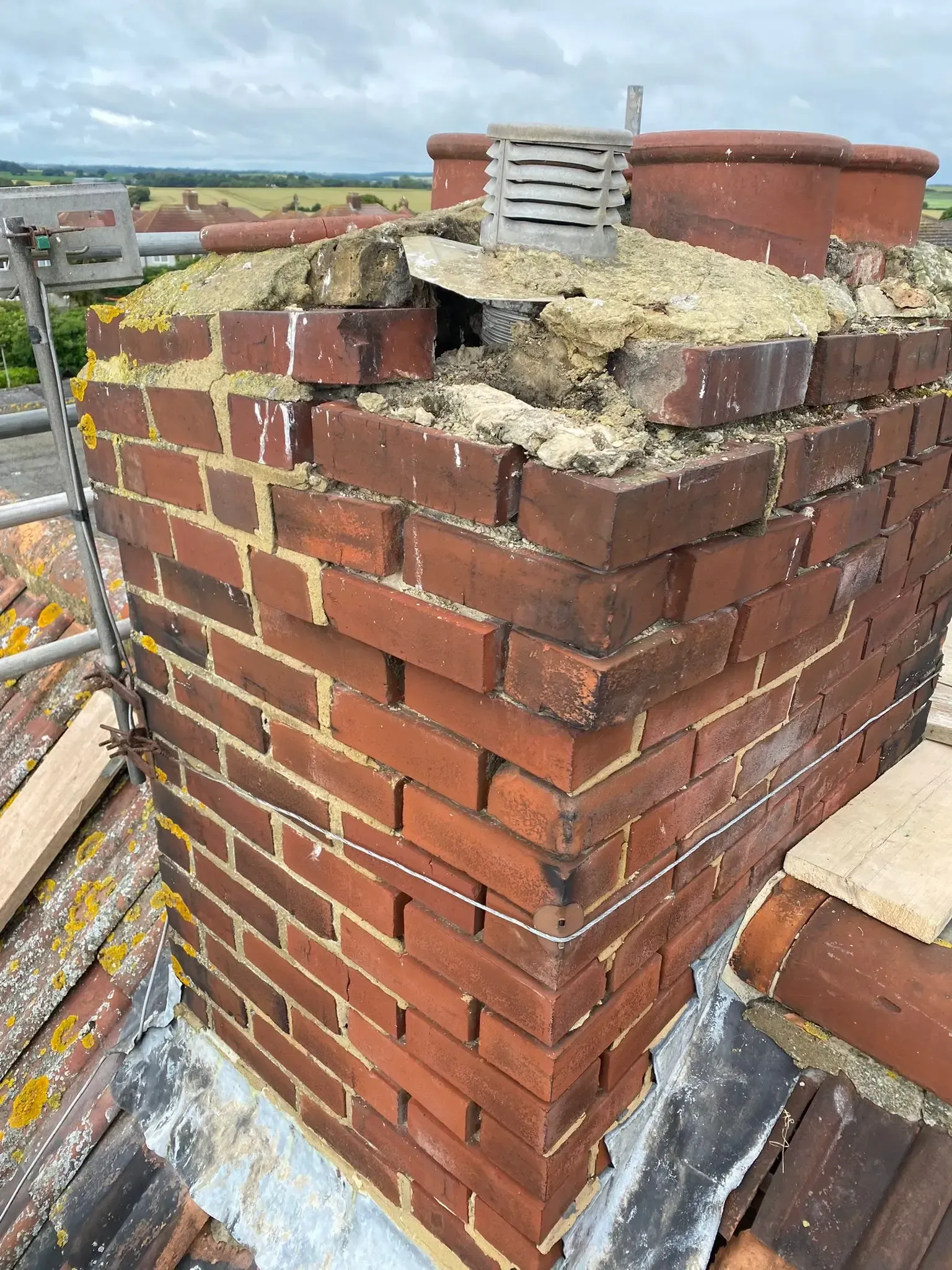
A Fallen or Cracked Pot Is a Structural Risk, Not Just Cosmetic
A loose or fallen chimney pot isn’t just cosmetic damage — it’s a safety and structural issue that needs attention quickly. In areas like Allestree and Mickleover, older clay pots are common on pre-1970s homes, and Derbyshire winters cause frost to work into any small crack in the clay or the flaunching until the pot breaks apart or pulls away from the stack entirely. Here is what a fallen or damaged pot can cause:
- Roof tiles, gutters, and anything below the stack can be struck by falling debris — a genuine safety hazard
- An open flue lets rain, jackdaws, and other birds into the chimney, leading to blockages and spreading damp
- A loose pot destabilises the mortar bed — if the flaunching fails, the stack cap can follow
- Water entering an open flue causes damp patches inside the property, often visible at chimney breast level
- Structural damage to the stack if water freezes inside the brickwork over one or two winters
If your pot has fallen or looks unsafe, call us on 01332-529704. We can arrange an inspection quickly and apply temporary weatherproofing while a permanent repair is planned.
Your Chimney Pot Needs a Trained Roofer — Not a General Builder
Chimney pot work is a job for a qualified roofer or chimney specialist. Working at height above roof level needs proper access equipment, roof ladders, and full public liability insurance — it is not a job for a general handyman or a builder who “does a bit of roofing.”
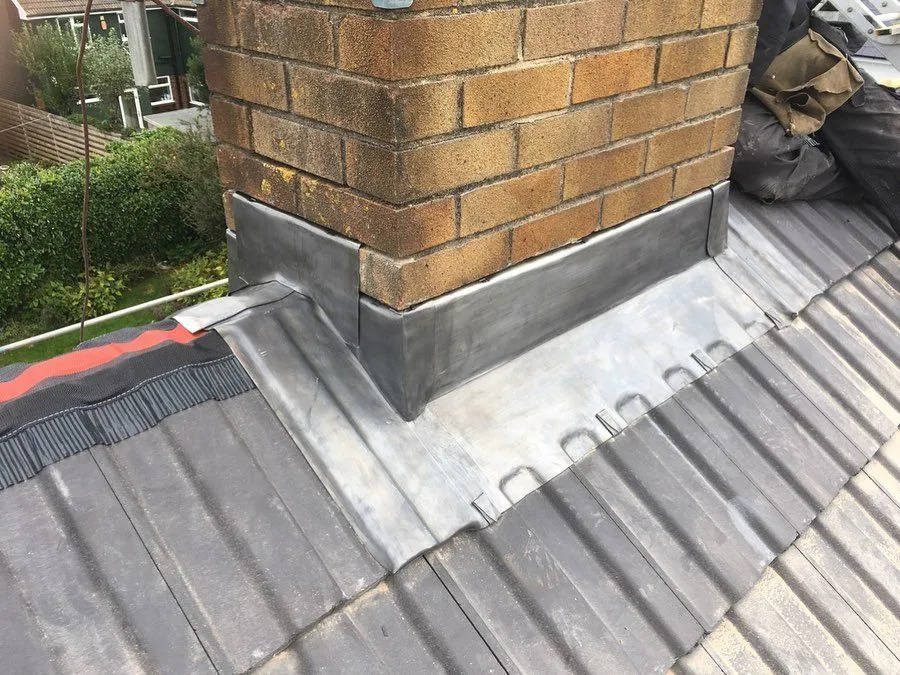
At Derby Roofers, our team assesses the full stack, not just the pot itself — checking the flaunching (the mortar bed holding the pot in place), the brickwork below it, and the lead flashing at the base of the stack, because a pot that has shifted or cracked often points to flaunching that has failed too.
Why Height-Access Training Matters as Much as the Pot Itself
Chimney pot work happens above roof level, and getting stable, safe access to the stack counts as much as the pot fitted at the end of it. Two of the team are IPAF-ticketed for powered access platforms and PASMA-ticketed for mobile towers, so when a stack sits out of reach of a roof ladder, the access kit and trained operators are already part of the same booking — not a second contractor brought in separately. That matters on jobs like a tall Victorian stack on a steep terrace roof, or a chimney set awkwardly on a hip end, where a roof ladder alone isn’t a safe option.
Derby’s mix of Edwardian terraces, post-war semis, and period properties means stack sizes and pot profiles vary widely from street to street. We match the correct pot type and size to your existing stack, so the job is done right, once. We’ve been serving homeowners across Derby and Derbyshire for over 20 years, we’re fully insured, and all chimney pot work carries our workmanship guarantee.
How a Pot Replacement Runs, From First Call to Finished Flaunching
Knowing what’s involved removes uncertainty before you book. Here is exactly how we carry out chimney pot replacement and installation:
- Enquiry and photos: A call or a couple of photos of the pot and stack are usually enough to get a first read on what’s happened — a cracked pot, a slipped cowl, or one that’s come off completely — and whether it looks like a straightforward swap, a flaunching-only repair, or something more involved.
- Free site survey: A visit to look at the pot, flaunching, brickwork and flashing in person, checking the flue diameter against building regulation minimums if a fire or stove is still connected, and working out how the stack can be reached safely.
- Written quote: A fixed price covering the pot or capping option, flaunching renewal, and any access equipment needed, set out before any work is booked — no work starts without this being agreed.
- Access set up: A roof ladder for straightforward stacks, or a PASMA tower or IPAF platform where the pitch, height or position of the chimney rules that out. Because the access team holds both tickets in-house, this doesn’t mean waiting on a second contractor.
- Old pot removed, flaunching renewed: The damaged pot is taken down with debris kept off the roof and out of the flue, old mortar is stripped back to sound brickwork, and new flaunching is mixed to suit Derbyshire’s frost-thaw winters.
- New pot fitted and site cleared: The replacement pot or cowl is bedded and flaunched at a 45-degree slope, pointed at the base so rainwater runs clear of the brickwork, and the site is cleared of debris. A written inspection report is issued where needed, and the finished job carries a workmanship guarantee.
Most single-pot jobs on Derby homes are finished within a day, including setting up access, removing the old pot, renewing the flaunching and fitting the new one.
Which Chimney Pot Is Right for Your Derby Home?
Not every chimney pot suits every stack — getting the right pot is a matter of matching the flue size, the stack profile, and the age of your property. In areas like Chaddesden and Chellaston, large post-war housing estates often have uniform terrace stacks where matching the original pot profile matters, both for function and for the look of the street. For period properties or homes on conservation-sensitive roads, terracotta and buff clay pots are usually the right choice.
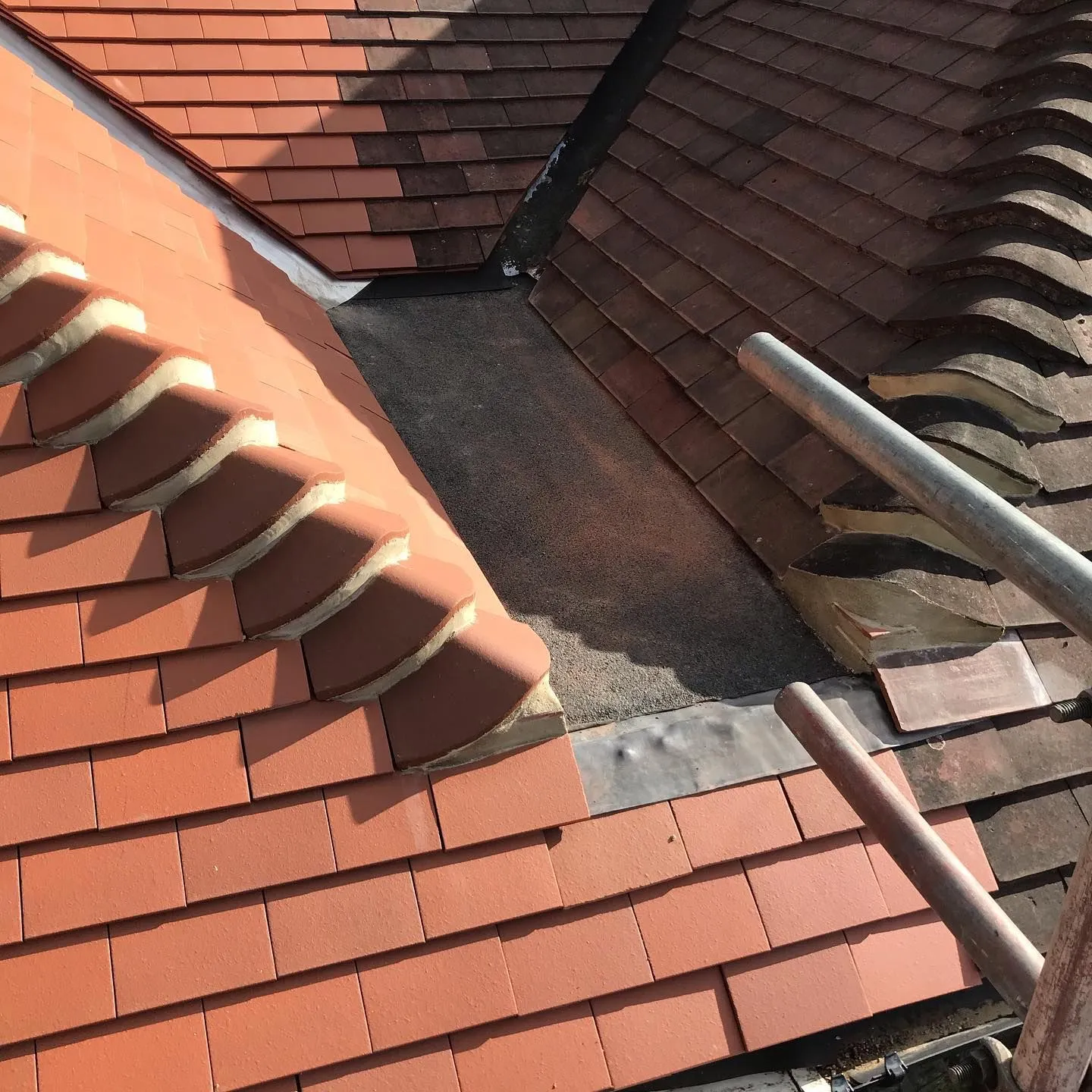
Types of Chimney Pot We Supply and Fit
- Cannon / rolltop pots — The most common type in Derby; round, durable, and suitable for most stacks
- Louvred pots — Deflect wind and prevent rain running down the flue; good for exposed positions
- H-pots — The most effective anti-downdraught design; suitable for stacks that suffer from smoke blowing back into the property
- Crown top / bishop pots — Decorative options for period properties; common on Victorian terraces in Normanton and Spondon
- Terracotta and buff clay pots — Traditional materials; long-lasting and period-appropriate for Derbyshire’s older housing stock
- Concrete pots — Heavier and robust; widely used on post-war builds across Derby’s estates
Active or unused flue? An active fireplace or stove needs a full replacement pot with the correct internal diameter. An unused flue can be fitted with a vented terracotta cap or a stainless steel capping cowl — this allows airflow while keeping water and birds out. If you’re not sure which option suits your stack, we’ll advise you during the free survey; we do not recommend work you do not need.
How to Tell If Your Chimney Breast Is Load-Bearing Before Work Begins
Most chimney breasts in Derby terraces and semis are load-bearing — but not all. Knowing which category yours falls into helps you understand the scope of work before we visit.
Signs your chimney breast is likely load-bearing
- The chimney runs through more than one floor
- The breast sits against an external or party wall
- There is a chimney stack visible on the roof directly above it
- The property is a Victorian or Edwardian terrace
- Joists or beams from the floor above appear to bear against the chimney breast
Signs it may not be load-bearing
- The breast appears to be a later addition, not part of the original structure
- The chimney has already been removed at roof level with no stack remaining
- The breast only appears on one floor with no masonry above
- The property was built post-1970 and the chimney breast is slender and clearly non-structural
One additional thing to check in older Derby terraces: cross-over flues, where flues from one house cross into the adjoining chimney stack. This can make chimney breast removal more complex or, in some cases, not possible without removing the full stack — we check for this at the survey stage. Even if you are fairly certain yours is not structural, a structural engineer must assess it before we proceed. Semi-detached homes in Allestree and Mickleover often have isolated stacks that are straightforward to assess; terraced properties in Normanton or Pear Tree, where stacks are shared between houses, require more careful evaluation.
Pot Replacement, Flaunching Repair, Capping or Full Removal — Which Does Your Chimney Need?
Not every job on a chimney stack is a full pot replacement. Here’s how the main options compare, so you know roughly what to expect before the survey confirms it:
| Option | When It Applies | What’s Involved | Typical Timescale |
|---|---|---|---|
| Pot replacement | Pot is cracked, chipped, leaning or has fallen, but the flue is still in use | Old pot removed, flaunching renewed, new pot bedded and flaunched at 45 degrees | Usually a single visit |
| Flaunching repair only | The pot itself is sound but the mortar around its base has crumbled or come away from the brickwork | Old mortar stripped back and new flaunching mixed and laid without changing the pot | Usually a single visit |
| Capping or vented cowl | The flue is no longer used but still needs airflow to stop damp building up inside the chimney | A vented terracotta cap or stainless steel cowl is fitted in place of a full pot | Usually a single visit |
| Full stack removal | The chimney isn’t wanted any more, or the stack itself has failed beyond repair | Removal of the stack above roof level, waterproofing the roof where it stood, and sometimes internal chimney breast support work | More than one day, depending on scope |
Chimney Pot Replacement in Derby: The Full Job Breakdown
- A full inspection of the pot, flaunching, brickwork and lead flashing before any work is quoted
- Safe removal of the old, cracked or fallen pot with debris controlled so nothing drops into the flue or onto the roof below
- Stripping back and renewing failed flaunching mortar, mixed to suit Derbyshire’s frost-thaw winters
- Supply and fitting of the replacement pot — clay, terracotta, concrete, or a vented cap/capping cowl for a flue that’s no longer used
- Flaunching finished at a 45-degree slope and pointed around the base so rainwater drains away from the brickwork
- Lead flashing checked and dressed back where it’s disturbed during pot or flaunching work, to keep the roof-to-stack junction watertight
- Checking the flue opening meets building regulation diameter minimums where an open fire or stove is in use
- Removal and disposal of the old pot and mortar waste from site once the job is finished
- A written inspection report suitable for submitting with a home insurance claim for storm or impact damage
Not Included / Costed Separately
- Full chimney stack removal or rebuilding — offered as a separate, more involved job covering roof waterproofing and sometimes internal chimney breast support work
- Structural engineer sign-off — only needed when a full stack is being removed or substantially altered, not for pot or flaunching work
- Insurance cover for gradual wear or long-neglected flaunching — policies generally exclude deterioration and only cover sudden storm or impact damage
- Scaffolding — where a stack can’t be reached safely from a roof ladder, access equipment is priced separately based on the property
- Repointing of the wider chimney stack brickwork beyond the flaunching area — quoted separately if the brick joints lower down the stack are also failing
What Pot Replacement Tends to Cost in Derby
A single clay or terracotta pot replacement with new flaunching, reached by roof ladder, typically falls in the low-to-mid hundreds of pounds. Concrete pots cost less than clay or terracotta, since the material itself is cheaper even though the fitting labour is the same. A vented capping cowl for a disused flue is usually priced similarly to a standard pot swap, because most of the job is the flaunching and access work rather than the pot or cowl itself. A flaunching repair on its own, where the existing pot is kept and only the mortar around its base is renewed, generally costs less than a full pot replacement since there’s no pot to source or fit.
Access is the other big variable. A stack that’s reachable safely from a roof ladder keeps the price down, but where the pitch, height or position of the chimney rules that out, a PASMA tower or IPAF platform is needed, and that hire and labour cost is added on top. A property with two or more stacks needing work, or a terrace where a shared party-wall chimney complicates access, will also move the figure up. Weather plays a part too, since flaunching needs dry conditions to set properly and a job pushed back a day for rain doesn’t change the price but can shift the timescale.
None of this replaces an actual figure — pot type, flue condition, number of stacks and access all vary from one roof to the next, so a firm price only comes after the free site survey, and that survey is what the written quote is based on before anything is booked in.
Most Home Insurance Policies Cover Chimney Pot Damage — Know What to Claim
If your chimney pot has been damaged or dislodged by a storm, the repair may be covered by your home insurance — something many Derby homeowners do not check before paying out of pocket. Derbyshire wind events, particularly in autumn and winter, regularly cause pot displacement and flaunching damage. UK home insurance policies generally treat storm-caused damage as a claimable event; what is not usually covered is gradual wear and tear or damage from lack of maintenance.
Before contacting your insurer, here is what you should do:
- Get a written scope of works from us — your insurer will ask for an assessment and a written description of the damage and the repairs needed
- Do not delay the inspection — insurers may decline a claim if further damage has occurred because repairs were not arranged promptly
- Understand what is excluded — normal weathering, old flaunching that has gradually deteriorated, and pre-existing cracks are typically outside a standard policy’s cover
We carry out written inspection reports for Derby homeowners that are suitable for use in insurance claims. Call us on 01332-529704 to book.
Areas We Cover for Chimney Pot Replacement & Installation Across Derby and Derbyshire
Derby Roofers proudly serves homeowners and businesses throughout Derby city and the wider Derbyshire area — with regular pot replacement work across Allestree, Mickleover, Chaddesden, Oakwood, Spondon, Chellaston and Alvaston, and out into towns like Belper, Ripley, Heanor, Ilkeston, Long Eaton, Swadlincote and Ashbourne. Not sure if we cover your area? Call us on 01332-529704 and we’ll confirm straight away.
- Derby City Centre (DE1)
- Allestree, Mackworth & Quarndon (DE22)
- Mickleover (DE3)
- Littleover & Normanton (DE23)
- Chaddesden, Oakwood & Spondon (DE21)
- Alvaston, Crewton & Osmaston (DE24)
- Belper (DE56)
- Ripley (DE5)
- Ilkeston (DE7)
- Heanor (DE75)
- Swadlincote (DE11)
- Ashbourne (DE6)
- Matlock (DE4)
- Borrowash & Draycott (DE72)
- Etwall & Hilton (DE65)
- Melbourne & Chellaston (DE73)
- Duffield & Little Eaton (DE56/DE21)
- Breadsall & Darley Abbey (DE21/DE22)
- Long Eaton (NG10)
- Castle Donington (DE74)
Frequently Asked Questions — Chimney Pot Replacement & Installation in Derby
Who fits chimney pots in Derby?
A qualified roofer or chimney specialist carries out chimney pot replacement and installation. At Derby Roofers, our team handles all chimney pot work across Derby and Derbyshire — including the survey, removal of the old pot, flaunching repair, and fitting the new pot.
How much does it cost to replace a chimney pot in Derby?
The cost varies depending on the pot type, the condition of the flaunching, and whether scaffolding is needed. Simple pot replacements on accessible stacks are typically at the lower end of the cost range. Stacks that need full flaunching renewal, brickwork repairs, or scaffolding will cost more. We offer a free survey and written quote with no obligation — call 01332-529704 to arrange one.
Do I need a structural engineer before chimney pot work in Derby?
No structural engineer is needed for a straightforward chimney pot replacement or flaunching repair. A structural engineer is only required if the full chimney stack is being removed or significantly altered. Pot replacement and flaunching work falls entirely within the scope of a qualified roofer.
What if the flue isn’t used any more — do I still need a pot?
Yes. A chimney pot or capping cowl keeps rain, birds, and debris out of the flue. Without one, water enters the flue and causes damp inside the property. For unused flues, we can fit a vented terracotta cap instead of a full replacement pot — this keeps airflow through the chimney and prevents condensation build-up inside.
What happens if a chimney pot falls off my Derby home?
Book an inspection as soon as possible. The open flue needs temporary weatherproofing straight away to stop rain and birds getting in. We will assess the stack, check the flaunching, and confirm what replacement pot and mortar work is needed before carrying out the repair.
Can a fallen or missing pot be left until spring?
It can, but rain gets straight down an open flue with no pot on it, and that moisture sits against brickwork and any timber near the chimney breast. Over a wet Derbyshire winter that turns a straightforward pot job into a damp problem inside the house, with plaster and ceiling repairs on top of the roof work. A temporary cap can be fitted quickly to hold things over if a full replacement can’t be scheduled straight away, but leaving a flue completely open isn’t worth the risk.
How long does a chimney pot last?
A well-fitted clay or terracotta chimney pot, bedded correctly in sound flaunching mortar, can last many decades. The most common cause of early failure in Derbyshire is frost damage — water gets into small cracks in the pot or mortar, freezes, and expands. Using the correct frost-resistant mortar mix and keeping the flaunching in good condition extends the life of any pot considerably.
Will my home insurance cover a chimney pot replacement?
That depends on the cause. Sudden damage from a storm or a falling branch is typically covered under most buildings policies, and a written inspection report can be provided to support that kind of claim, setting out what’s failed and how it likely happened. Gradual wear from age or long-neglected flaunching is generally excluded, since policies cover sudden events rather than deterioration that’s built up over years — it’s worth checking the policy wording before assuming either way.
What is chimney flaunching and does it need replacing too?
Flaunching is the mortar bed that holds your chimney pot in place on top of the stack. It is shaped at a 45-degree angle so rainwater drains off cleanly. Over time — particularly in Derbyshire’s wet winters — flaunching cracks and crumbles. When we replace a chimney pot, we always inspect the flaunching. If it has failed, we renew it as part of the job so the new pot is properly secured.
Can a roofer remove a chimney stack in Derby?
Yes. Roofers regularly carry out chimney stack removal in Derby. However, this is a more involved job than pot replacement — it requires careful removal of the stack above the roofline, waterproofing of the roof where the stack was, and sometimes internal chimney breast support work. We offer chimney removal services across Derby and Derbyshire. If you are considering this, call us to discuss what is involved for your specific property.
How do I know if my chimney pot needs replacing rather than repairing?
A pot with a visible crack, a chunk missing, or one that’s leaning or has slipped from its flaunching usually needs replacing rather than patching — mortar repairs to a damaged pot don’t hold for long and tend to fail again within a season or two. If the pot itself is sound but the flaunching around the base has crumbled, that can sometimes be re-flaunched without a new pot, which keeps the cost down. A survey settles which applies before anything’s quoted, rather than guessing from ground level.
Do you match the pot to what’s already on the roof?
Where possible, yes. Clay and terracotta pots come in a range of profiles, and on a lot of Derby’s Edwardian and Victorian terraces getting a close match to the original keeps the roofline looking right rather than an obvious replacement pot sitting next to older ones on a shared row. Where an exact match isn’t available, the closest profile and colour is used so the stack still reads as a single set from the street.
Is scaffolding always needed for a pot replacement?
No — a lot of stacks can be reached safely from a roof ladder, and that’s the default where the roof pitch and stack position allow it. Where the pitch, height or position of the chimney rules that out, a PASMA tower or IPAF platform is used instead, priced separately once the survey has had a proper look at the roof and worked out what the stack actually needs.
How long does a pot replacement take?
Most single-pot jobs are finished within a day, including setting up access, removing the old pot, renewing the flaunching and fitting the new one. Jobs with more than one stack, or ones needing a tower rather than a roof ladder, can take a little longer, and flaunching needs dry conditions to set properly so a spell of heavy rain can push the finish back a day.
Does a new pot need building regulations sign-off?
For a straightforward pot swap, no. Where a flue serves an active open fire or stove, the opening is checked against building regulation diameter minimums as part of the job, but this is a routine check carried out during the survey and the work itself rather than a separate approval process that needs booking in.
Can work go ahead in bad weather?
Flaunching needs to be laid and left to set in dry conditions, so heavy rain or a hard frost can push a booked date back a day or two. Wherever possible a temporary cap is fitted to keep the flue protected until conditions allow the job to be finished properly, so a weather delay doesn’t mean the chimney is left open to the elements in the meantime.
Book a Free Chimney Pot Survey Before the Next Storm
A cracked or loose chimney pot only gets riskier the longer it’s left — each spell of wind and rain works the flaunching a little looser, and a pot that’s already leaning can come down without much warning, sometimes taking chunks of brickwork or slate with it.
Derby Roofers has been fitting and replacing chimney pots across Derby and Derbyshire for over 20 years. A free survey gets a proper look at the stack, the flaunching and the flashing, and puts a written quote in your hand before anything is booked — with most replacements finished in a single visit.
- ✅ Free survey and written quote, no obligation
- ✅ Over 20 years fitting chimney pots across Derby and Derbyshire
- ✅ IPAF & PASMA-certified access team
- ✅ Most jobs finished in a single visit, with a workmanship guarantee
Call to get a date booked in, or send over a couple of photos of the pot for a first read on what’s needed.