Chimney Structural Surveys & Inspections Derby
Call: 01332-529704
Know what your chimney has got before it costs you more. Level 2 and Level 3 structural surveys across Derby & Derbyshire — a close-up external stack check paired with a CCTV flue pass, written up with photographs and urgency ratings, not a guess from the pavement.
- Free Consultation & Quotation
- Written Reports With Photos & Urgency Ratings
- IPAF & PASMA-Certified Team
- Free Drone Survey Where Access Allows
Chimney Structural Surveys & Inspections Derby — Know What You’ve Got Before It Costs You More
Worried about a cracked stack, a damp patch on the chimney breast, or a chimney that hasn’t been checked in years? A chimney structural survey gives you a clear, written picture of your chimney’s condition before small problems become expensive ones.
In Derby, thousands of homes were built before 1960 — Victorian terraces, Edwardian semis, and post-war properties where chimneys have had decades of weathering, makeshift repairs, and frost damage behind intact-looking brickwork. You cannot rely on a visual check from the pavement. A professional survey tells you exactly what is there, what is safe, and what needs attention.
- Team members hold IPAF certification for powered access equipment and PASMA certification for mobile access towers, so height access on taller stacks is handled by trained operators
- Over 20 years of local chimney survey and repair experience across Derby and Derbyshire
- Written reports with photographs and urgency ratings, not just a verbal opinion on the doorstep
What a Chimney Structural Survey Covers — And Why It Matters
Most Derby homeowners contact us after spotting a damp patch on the breast wall, a cracked pot, or loose pointing on the stack. A structural chimney survey gives you far more than a glance from below. We inspect every part of the chimney — inside and out — and deliver a written report with photographs, clear findings, and recommended next steps.
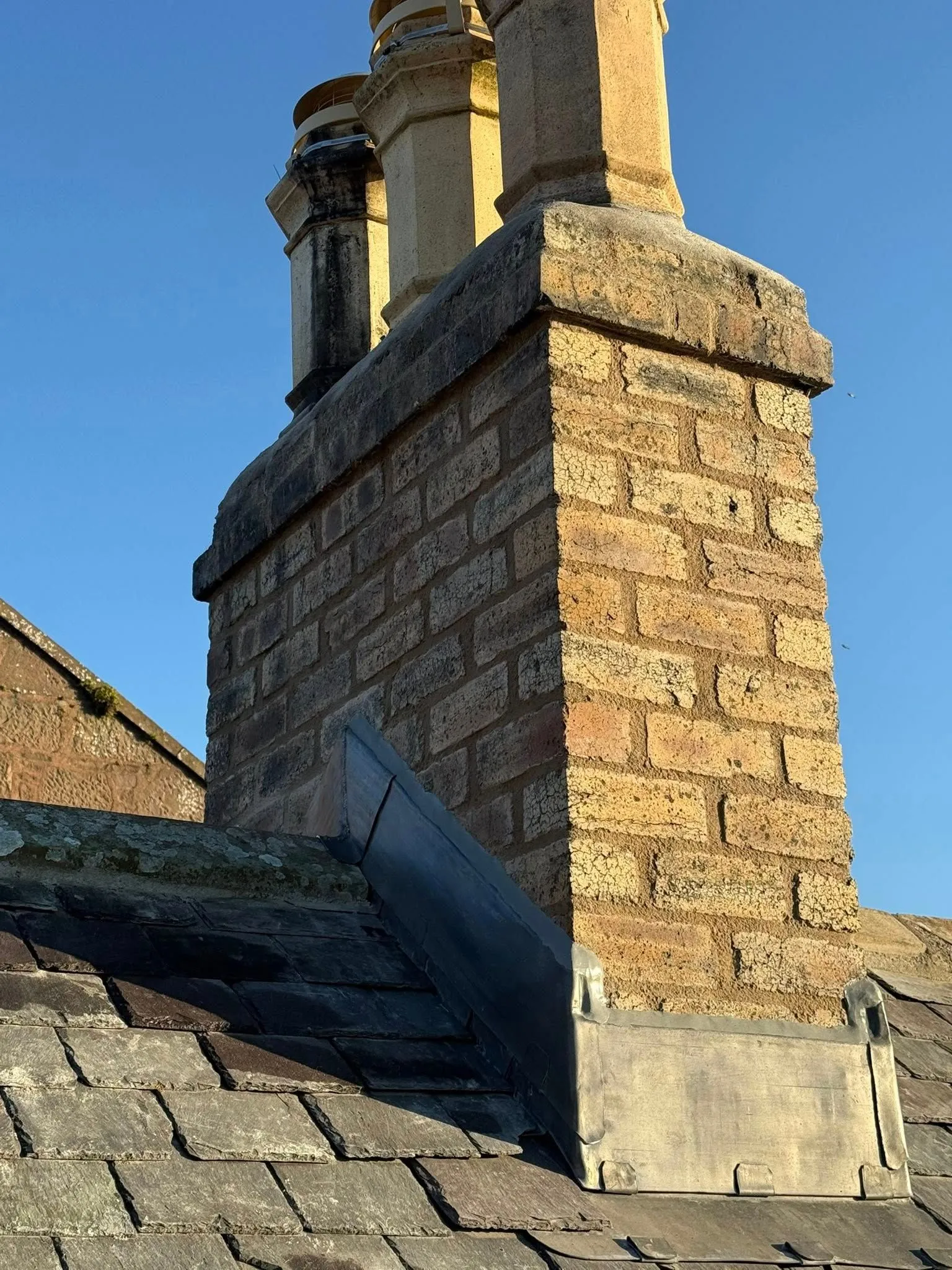
- External stack: brickwork condition, pointing, flaunching, pot and cowl integrity, signs of leaning or settlement
- Chimney breast: stability, lintel condition, signs of movement, cracking, or past unauthorised removal
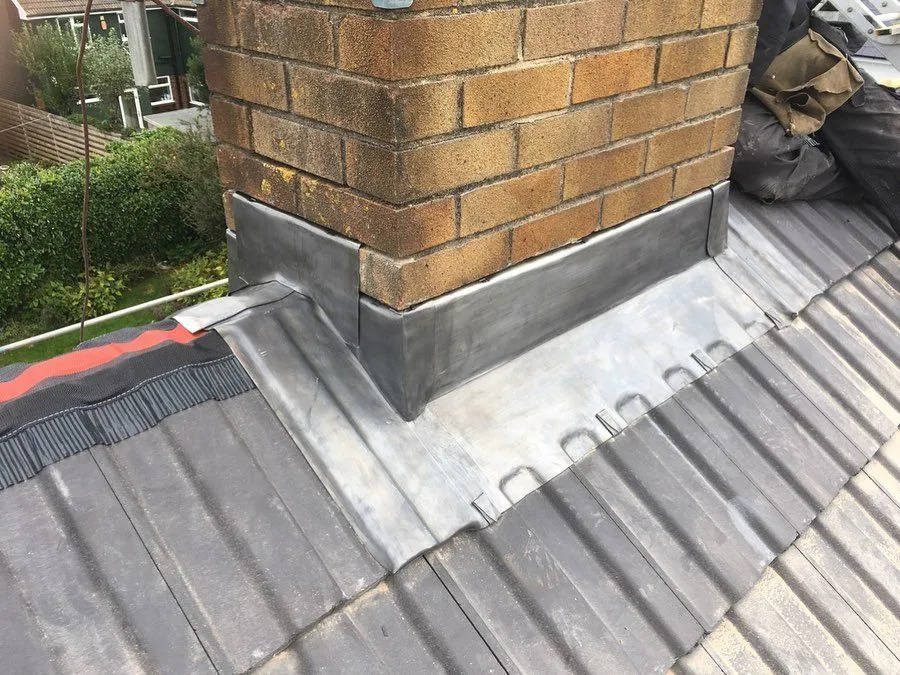
- Flashing and leadwork: condition at the roof abutment and around the base of the stack
- Flue condition: liner integrity, blockages, creosote build-up, signs of smoke or water penetration
- Stack height and position: compliance with building regulations, relevant to any planned roof, loft, or dormer work
- Damp check: salt damp testing on chimney breast walls where damp is suspected
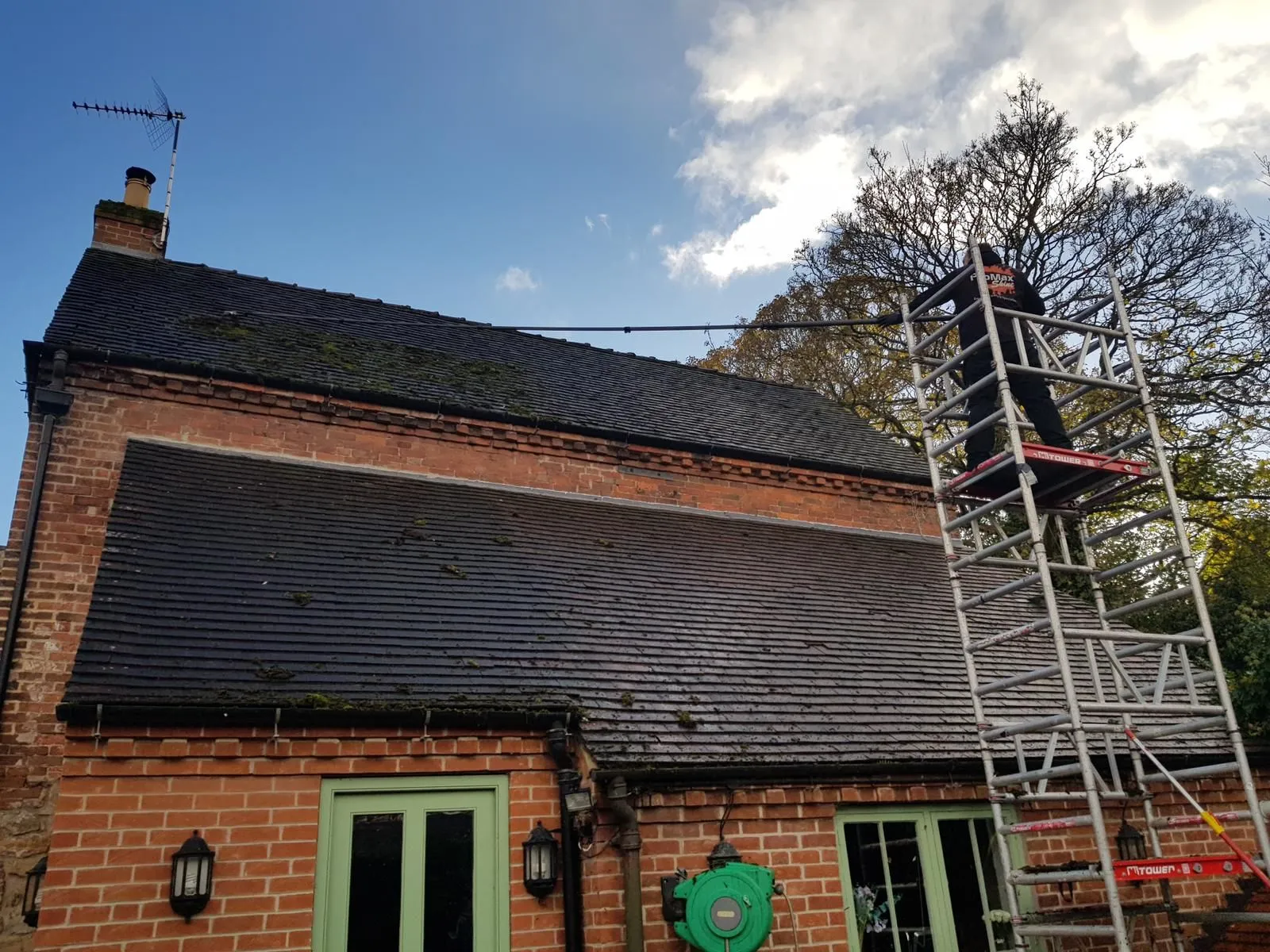
We carry out chimney structural surveys and inspections across Derby and Derbyshire — from Normanton and Pear Tree to Mickleover, Borrowash, and beyond. With over 20 years of local experience and full insurance cover, our team delivers written reports, drone access for inaccessible stacks, and CCTV flue surveys for internal checks.
Drone Inspections and CCTV Flue Surveys
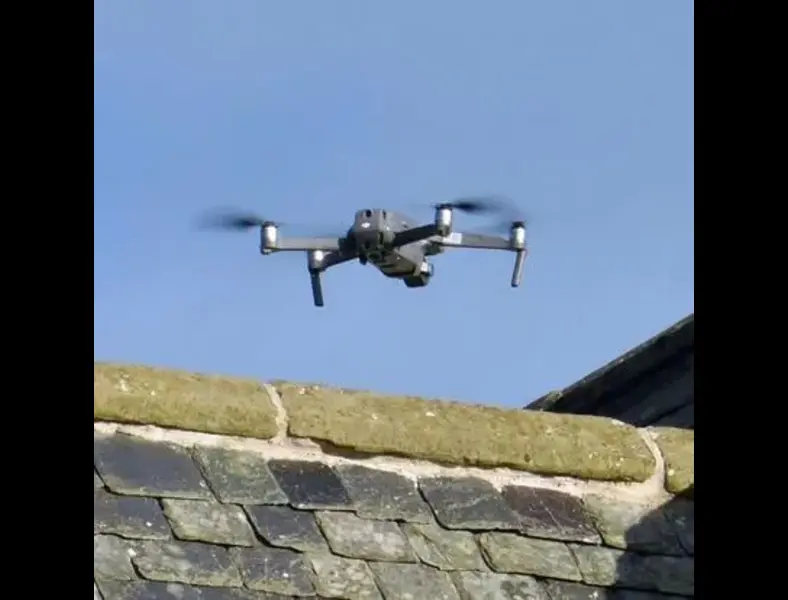
Some of the most important chimney faults are invisible from ground level. Where ladder access is restricted — on taller Derby properties or shared terraced stacks — we use drone inspection to get a close external view of the full stack. Drone surveys remove the need for scaffolding for an initial assessment and give you high-resolution images of exactly what is there.
For internal flue checks, we carry out CCTV camera surveys, passing a small camera through the full height of the flue from fireplace to pot.
- Cracks and open mortar joints that leak smoke or carbon monoxide into adjoining rooms
- Blockages — including birds’ nests, fallen masonry, and debris
- Flue liner condition — whether the liner is intact, part-lined, or absent entirely
- Past alterations to the flue that could affect safe use
Derby’s older terraced rows — particularly in Pear Tree, Normanton, and Spondon — often have chimneys that have been repaired, re-rendered, blocked, or partially removed over decades. A CCTV flue survey finds what a visual inspection from the hearth simply cannot show.
How the Chimney Survey Is Carried Out
A chimney structural survey follows a set process, so you know what to expect from first call to written report.
- Enquiry, booking and access planning: Call or use the online contact form. Enquiries covering Derby postcodes and surrounding Derbyshire areas are typically visited within a few days. Before the visit, we work out whether ladder access, a drone inspection, or scaffold is the right method for the stack height and property type, so nothing is a surprise on the day.
- External stack inspection: Brickwork, pointing, flaunching, pot, cowl, and lead flashing are checked close-up, either by ladder or via drone footage on taller or harder-to-reach stacks.
- Internal flue check: A CCTV camera is passed the full height of the flue from fireplace to pot, revealing cracks, blockages, liner condition, and past alterations that a visual check from the hearth cannot show.
- Chimney breast and damp assessment: The breast is checked internally for load-bearing signs, movement, and cracking, with salt damp testing carried out on breast walls where damp is suspected.
- Written report and next steps: Findings, photographs, and urgency ratings are set out in plain language, along with a clear answer on whether repair work, a chimney sweep, or a structural engineer referral is needed.
Most surveys are completed in a single visit, with the written report following shortly after.
How to Tell If Your Derby Chimney Is Load Bearing Before Any Work Begins
Before any chimney repair, alteration, or removal work starts, you need to know whether your chimney is load bearing. Getting this wrong risks the structural integrity of your home and will fail a building control inspection.
A chimney breast that runs from the ground floor through to the roof is almost always structural. It ties into the floor joists at each level and carries the weight of the stack above. Derby’s pre-1950 terraces and semis — particularly in Mickleover, Littleover, and Chaddesden — frequently have internal breast structures built directly into the fabric of the house, often with no visible sign from inside the room.
Level 2 vs Level 3 Survey: Which One Your Chimney Actually Needs
The RICS survey levels are often misunderstood. A Level 2 survey covers visible and accessible areas of the chimney and roof structure, flags defects apparent on inspection, and identifies urgent risks — the common choice for buyers at conveyancing stage on straightforward pre-1980 properties.
A Level 3 survey goes deeper. It assesses hidden and inaccessible areas where possible, identifies the cause of defects rather than just the symptoms, and produces a detailed picture of the chimney’s structural condition. This is recommended for pre-1960 Derby properties showing signs of movement or past repair, any property where chimney breast removal is planned, and homes in conservation areas such as Darley Abbey or the Cathedral Quarter.
Our structural chimney survey is conducted to Level 3 depth. We provide a written report, photographs, fault descriptions, urgency ratings, and clear recommendations — not a pass/fail tick sheet.
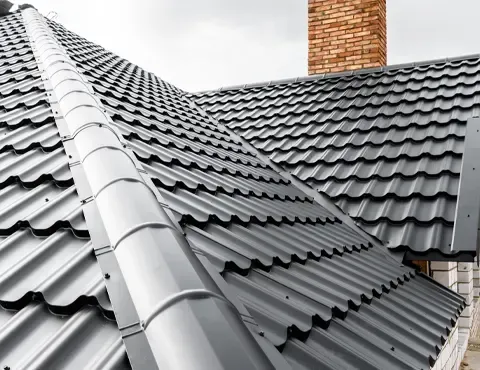
Common Chimney Faults Found During Inspections in Derby Properties
Derby’s weather is hard on chimney stacks. Wet autumns, hard Derbyshire frosts, and repeated freeze-thaw cycles attack exposed brickwork year after year. Here are the most common faults we find — and what they mean for your property.
Failed Flaunching & Spalling Brickwork
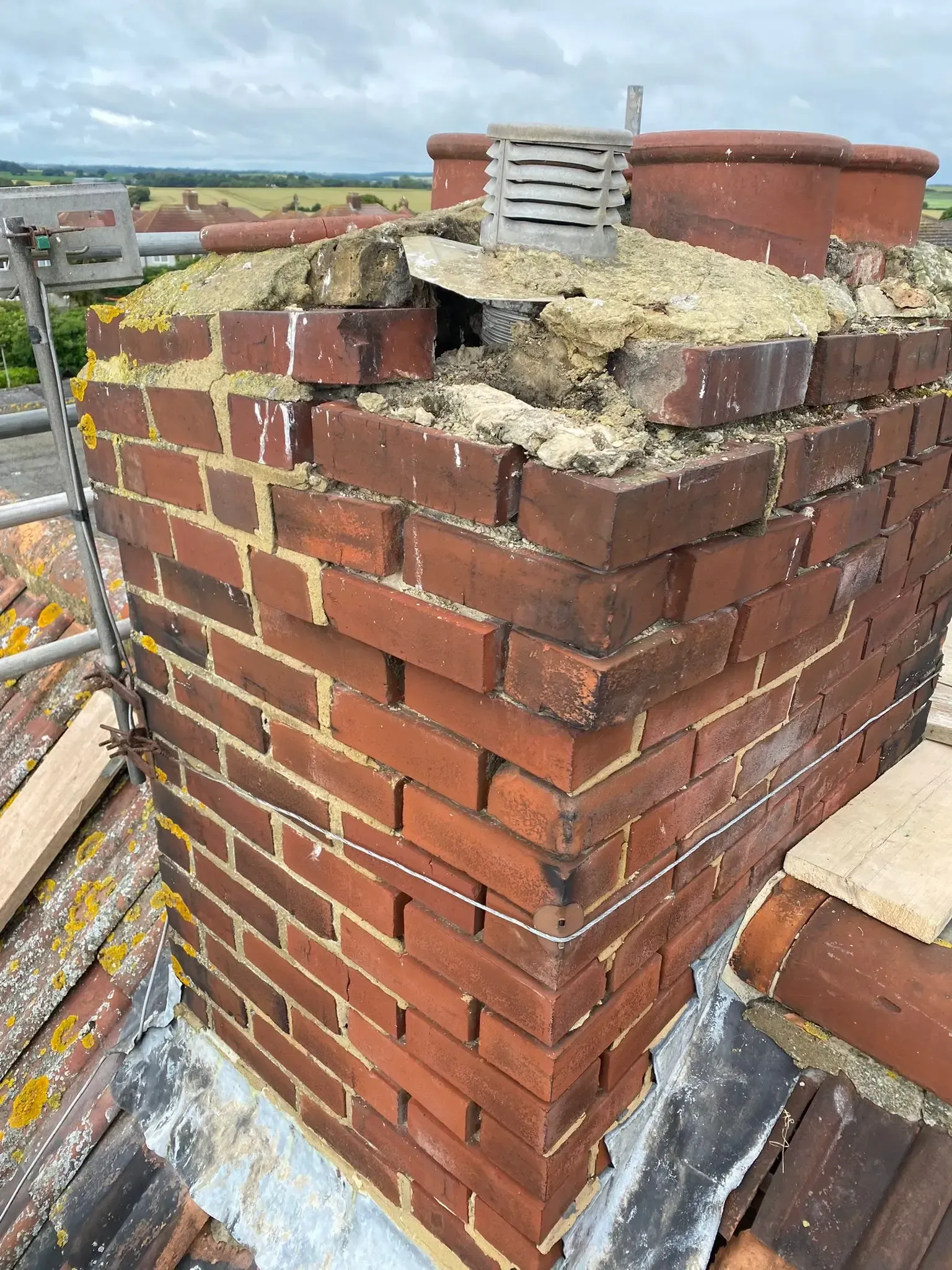
The mortar cap at the top of the stack cracks or lifts, letting water into the stack from the top down — the single most common fault we identify on Derby inspections, found on properties of all ages. Frost also forces water into the brick face, which then flakes away; common on older handmade bricks throughout Derby’s Victorian terraces, spalling brickwork weakens the stack structurally and accelerates further water ingress.
Open Mortar Joints, Lead Flashing & Blockages
Pointing fails over time, letting water track down the stack into the breast, appearing as damp patches on internal walls. The lead seal at the stack-to-roof junction lifts or corrodes too — we find this regularly on terraced roofs in Spondon and Alvaston, causing internal ceiling damage that can be mistaken for a roof leak. Birds’ nests, fallen masonry, and debris block flues and create a carbon monoxide risk if the chimney is then used.
Leaning or Settling Stacks
Prolonged water ingress, frost damage, or failed foundations can cause a chimney stack to lean. A leaning stack is a safety risk — particularly on older Derby terraces where the stack is close to a boundary or shared with a neighbour.
The 10:2:3 Height Rule and Why It Affects Your Chimney Survey Results
If your chimney is being reinstated, rebuilt, or assessed after nearby roof work, its height relative to the ridge matters. The height rule exists to stop downdraft — where wind forces exhaust gases back down into the property rather than venting them away.
- The stack must rise at least 1 metre above the point where it passes through the roof slope
- The top of the stack must be at least 2.3 metres horizontally from the nearest part of the ridge
- Where the horizontal distance is less than 2.3 metres, the stack must be higher than the ridge
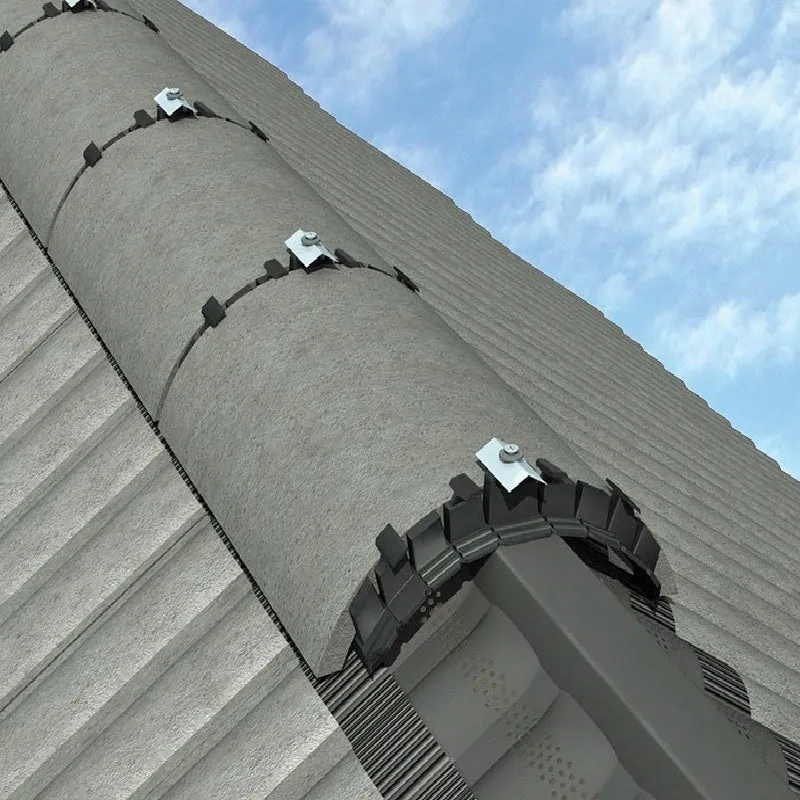
This rule directly affects survey outcomes when loft conversions, dormer additions, or full re-roofing projects have changed the roofline around the stack. We check height compliance as a standard part of every chimney survey. Derby properties in Chaddesden, Spondon, and Alvaston — where loft conversions are common — regularly need this checked after roof work. Non-compliance causes draught problems, smoke blowback, and will fail a building control sign-off.
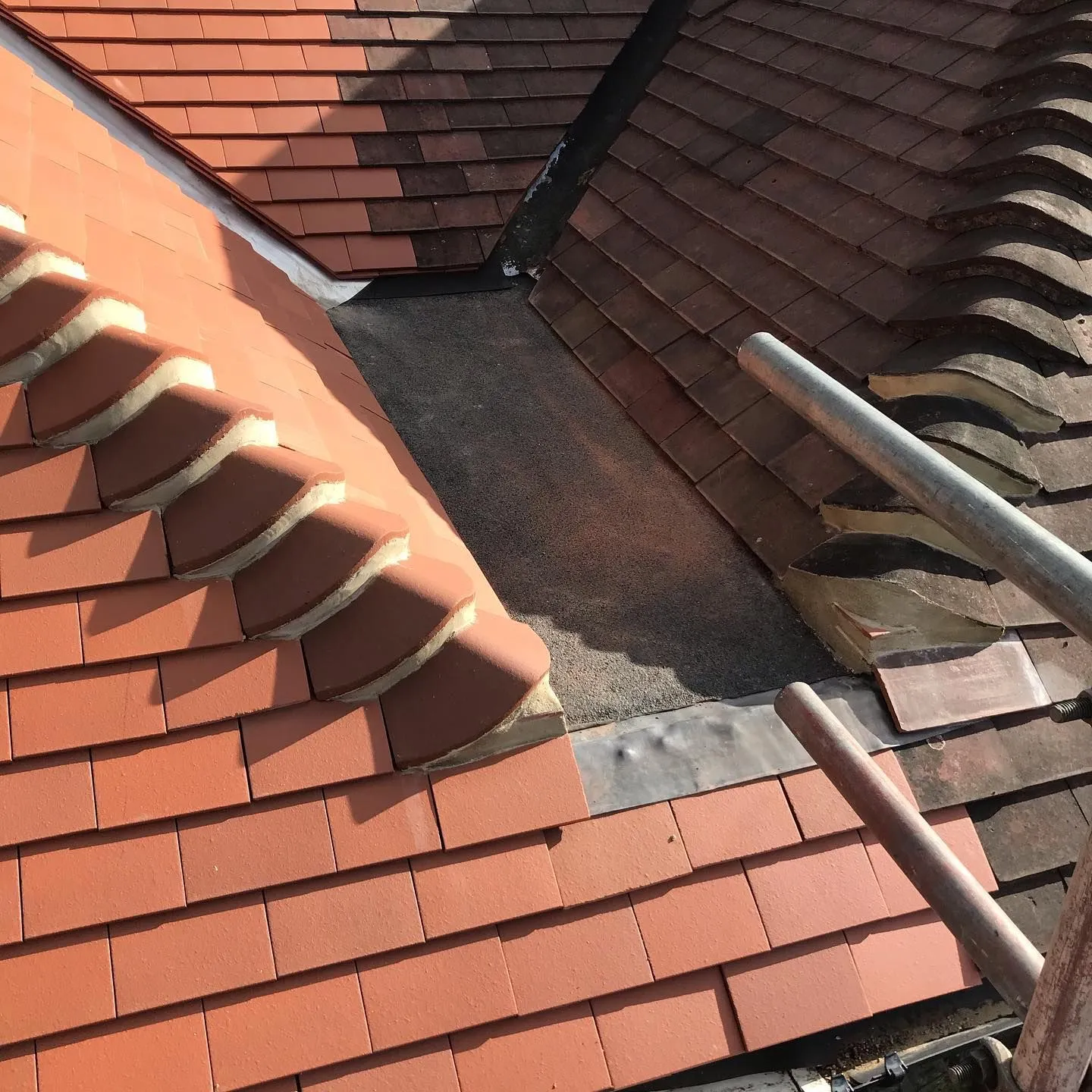
When You Need a Structural Engineer — And When You Don’t
A chimney structural survey and a structural engineer’s report are two different things. Knowing which you need saves both time and unnecessary cost.
We carry out the structural chimney survey and provide a clear written report. Where an engineer referral is needed, we tell you directly and can point you to a Derby-based structural engineer. There is no benefit to you in paying for an engineer’s report when our survey shows one is not needed.
You Need a Structural Engineer When:
- The chimney breast is load bearing and you plan to remove all or part of it
- Derby City Council building control requires a structural calculation for an RSJ or beam
- A Party Wall Agreement is in place — common on Derby’s terraced streets where stacks are shared with a neighbour
- A previous survey identified suspected subsidence or significant structural movement
You Do Not Need One When:
- Our survey confirms the stack is non-load-bearing
- The work is repair only — repointing, flaunching replacement, pot fitting, or re-lining
- You need a CCTV flue check, smoke test, or external drone inspection
- You are buying a property and need a condition report, not structural calculations
What’s Included in Your Chimney Survey Quote
- External stack inspection covering brickwork, pointing, flaunching, pot, cowl and the lead flashing where the stack meets the roof
- A full CCTV camera pass down the flue from fireplace to pot, checking for cracks, blockages, liner condition and old alterations
- Internal chimney breast assessment for movement, cracking and load-bearing signs, with salt damp testing where damp is suspected
- A written report with photographs and an urgency rating for each finding, plus a clear recommendation on next steps
- A decision on the right access method for the stack — ladder, drone, or scaffold — worked out before the visit rather than on the day
Not Included / Costed Separately
- Structural engineer’s calculations for a beam or RSJ — only needed where the breast is confirmed load-bearing and alteration work is planned, and referred separately
- The chimney sweep itself — a survey identifies whether a flue needs sweeping, but sweeping is carried out as a separate visit
- Scaffold erection for close-up Level 3 inspection on taller stacks — confirmed and quoted at the point of enquiry, not built into every survey
- Party Wall Agreement arrangements on shared terraced stacks — flagged during the survey but handled as a separate process
- Repair or rebuild work such as repointing, flaunching replacement, re-lining or pot fitting — the survey is a written diagnostic report; follow-on work is quoted separately once findings are known
What Affects the Price
The price of a chimney structural survey in Derby moves with a handful of factors: whether a Level 2 or Level 3 depth of inspection is needed, whether ladder access is enough or the stack needs a drone or scaffold, whether a CCTV flue survey is included alongside the external check, and how many stacks or pots are on the property. A straightforward pre-1980 home with easy ladder access sits at one end of the range; a tall, shared terraced stack in Pear Tree or Normanton needing scaffold and a full CCTV flue check sits at the other.
An initial consultation and quotation is offered at no charge, along with a free drone survey where that’s the right access method — but a firm figure for a specific property needs a site visit, since stack height, access, and condition all affect the final cost.
Why Choose Derby Roofers for Your Chimney Survey?
Over 20 Years of Local Experience. Derby Roofers has been surveying and repairing chimneys across Derbyshire for over 20 years. We know the local housing stock — from Victorian terraces in Pear Tree and Normanton to post-war semis in Mickleover and Chaddesden — and we know what problems each type of property typically presents.
Honest, Written Findings
We only recommend work that is genuinely needed. Our written survey report gives you the full picture, with urgency ratings for every finding, before a single pound is spent on repairs.
Free Drone Survey Where It’s the Right Access Method
We use drone technology to inspect stacks safely and accurately without the cost of scaffolding just for a survey, wherever that’s the appropriate access method for the property.
Fully Insured, IPAF & PASMA-Certified
Our team is fully insured, and members hold IPAF certification for powered access equipment and PASMA certification for mobile access towers, so height access on taller stacks is handled by trained operators.
Level 3 Depth as Standard
Our structural chimney survey is conducted to Level 3 depth — a written report, photographs, fault descriptions, urgency ratings, and clear recommendations, not a pass/fail tick sheet.
We Actually Answer the Phone
We are fully insured, locally based, and we always answer the phone or call back. If you leave a message, we call back — for a job that affects your home’s structure, you deserve a contractor who communicates clearly.
Areas We Cover for Chimney Structural Surveys & Inspections in Derby
Derby Roofers proudly serves homeowners and businesses throughout Derby city and the wider Derbyshire area. Coverage starts in Derby itself — Pear Tree, Normanton, Rose Hill, Chaddesden, Spondon, Oakwood, Allestree, Mickleover, Littleover, Alvaston, Chellaston and the city centre — before extending into the wider Derbyshire towns. The Victorian and Edwardian terraces around Pear Tree, Normanton and Rose Hill tend to carry tall, shared party-wall stacks with two or three pots apiece, which is usually where scaffold or drone access earns its keep. The 1930s-50s semis in Allestree, Mickleover and Chaddesden mostly have single-flue brick stacks with rendered or rebuilt tops from earlier repairs. Not sure if we cover your area? Call us on 01332-529704 and we’ll be happy to help.
- Derby City Centre (DE1)
- Allestree, Mackworth & Quarndon (DE22)
- Mickleover (DE3)
- Littleover & Normanton (DE23)
- Chaddesden, Oakwood & Spondon (DE21)
- Alvaston, Crewton & Osmaston (DE24)
- Belper (DE56)
- Ripley (DE5)
- Ilkeston (DE7)
- Heanor (DE75)
- Swadlincote (DE11)
- Ashbourne (DE6)
- Matlock (DE4)
- Borrowash & Draycott (DE72)
- Long Eaton (NG10)
- Melbourne & Chellaston (DE73)
Frequently Asked Questions About Chimney Structural Surveys & Inspections in Derby
How Do I Book a Chimney Structural Survey in Derby?
Call us on 01332-529704 or use our online contact form. We cover all Derby postcodes and surrounding Derbyshire areas, and aim to arrange a visit within a few days of your enquiry.
What Does a Chimney Structural Survey Report Include?
A thorough chimney inspection covers the external stack — brickwork, pointing, flaunching, pot, and cowl — the chimney breast internally, the lead flashing at the roof junction, and the flue from hearth to pot. You receive a written report with photographs of defects, urgency ratings for each issue, and a clear list of recommended repairs or further actions, written in plain language rather than technical shorthand.
Can My Chimney Be Inspected Without Scaffolding?
Yes, in most cases. External checks are carried out by ladder or drone depending on stack height and access. A full structural survey on a taller Derby property may require scaffold for safe close-up inspection of the stack — we confirm access requirements at the point of enquiry so there are no surprises.
Do I Need a Survey Before Repointing a Chimney Stack?
A survey before repointing confirms whether repointing alone is sufficient — or whether deeper work such as rebuilding sections of the stack, replacing the flaunching, relining the flue, or addressing a structural crack is also needed. It stops you spending money on repointing work that will not hold.
Is a Chimney Survey Needed When Buying a Derby Property?
Yes — particularly on pre-1960 homes. A chimney structural survey gives you written evidence of the chimney’s condition at the point of purchase, supports price negotiations if serious faults are found, and protects you from costly post-purchase surprises. Conveyancers in Derby increasingly flag chimney conditions on older stock.
How Often Should a Chimney Be Inspected in Derby?
Annually for chimneys in active use, before any building work touching the roof, breast, or stack, before buying or selling any property that includes a chimney, and before putting any unused chimney back into use — even if it appears intact.
Should I Get a Level 2 or Level 3 Chimney Survey?
A Level 2 survey covers the standard external stack check and an internal CCTV flue pass, and is the right depth for a straightforward pre-sale or general condition check. A Level 3 survey goes further with a closer, hands-on inspection of the stack — usually needed where a Level 2 has flagged movement, cracking, or a suspected structural issue, and it’s this level that typically calls for scaffold or drone access on a taller stack rather than a ladder.
What Are the Most Common Chimney Problems in Derby’s Older Properties?
Failed flaunching, open mortar joints, spalling brickwork, cracked or missing pots, displaced lead flashing, damp penetration through the breast, and blocked flues. In Derby’s older housing stock, we most frequently find a combination of failed flaunching and open pointing that has been letting water in for years.
Can a Blocked Flue Be Dangerous?
Yes. A blocked flue — from a birds’ nest, fallen masonry, or soot build-up — prevents exhaust gases and carbon monoxide from venting safely. Never use a chimney that has not been checked until a survey and, where needed, a sweep has confirmed it is clear and safe.
Does a Chimney Survey Include Sweeping the Flue?
No. The CCTV camera pass shows whether a flue needs sweeping, along with any blockages, cracks, or old alterations, but sweeping itself is booked as a separate visit once the survey findings are known.
What Happens If the Chimney Breast Turns Out to Be Load-Bearing?
The survey report will flag it and set out what was found, but calculations for a beam or RSJ where alteration work is planned come from a structural engineer, not the survey itself. That referral is made separately once the breast has been checked internally for movement and cracking.
My House Is a Victorian Terrace With a Shared Stack — Does That Change Anything?
Shared party-wall stacks on Victorian and Edwardian terraces, common around Pear Tree, Normanton and Rose Hill, often carry two or three pots and need closer access than a single-flue semi. If the survey findings point to repair work on a shared stack, Party Wall Agreement arrangements get flagged at that point, though they’re handled as a separate process from the survey itself.
Ready to Book Your Chimney Structural Survey in Derby?
A chimney problem does not get smaller if you leave it. Failed flaunching, open joints, and cracked liners get worse through every wet season — and what starts as a minor repair job can become a full stack rebuild if water is left to do its work.
Derby Roofers has been surveying and repairing chimneys across Derbyshire for over 20 years. We are fully insured, locally based, and we always answer the phone or call back. We only recommend work that is genuinely needed — and our written survey report gives you the full picture before a single pound is spent on repairs.
- ✅ Free consultation and quotation, no obligation
- ✅ Level 3-depth written reports with photos and urgency ratings
- ✅ Free drone survey where that’s the right access method
- ✅ IPAF & PASMA-certified access team
Call us today, or complete our online contact form. We’ll arrange your chimney survey quickly, give you a clear written report, and tell you exactly what needs doing — and what doesn’t.