Storm & Weather Damage Roof Repairs Derby — Fast Response When You Need It Most
Call: 01332-529704
When a storm hits Derby, your roof takes the full force. Missing tiles, lifted flashing and sudden leaks can turn a manageable problem into a costly one within hours — we carry out emergency and permanent storm and weather damage roof repairs across Derby and Derbyshire.
- Free Drone Survey with Written, Insurance-Ready Damage Report
- Same-Day Emergency Response for Active Leaks
- IPAF & PASMA-Certified Access Team
How to Spot Storm Roof Damage Before It Gets Worse
After a storm passes through Derby, the damage to your roof is not always obvious from the ground. Some of the most serious problems — trapped moisture, cracked underlayment, lifted flashing — are hidden from view. Catching them early is the difference between a small repair and a major job.
Start with a safe walk around the outside of your property, keeping your distance in case of loose tiles — never climb onto the roof yourself. Look out for:
- Missing or slipped tiles — gaps in the roof covering or tiles in your garden
- Damaged flashing — lifted, bent or torn metal around the chimney, vents or skylights
- Debris on the roof — fallen branches or objects sitting on the surface
- Sagging gutters — blockages from storm debris can back water up under the eaves
- Fallen ridge or verge pieces, and cracked or split tiles from hail or flying debris
- Damaged soffits or fascias — high winds can lift or crack these even when the tiles look intact
Then go inside. Check your loft and ceilings for damp patches or water stains, dripping or pooled water, daylight visible through the roof timbers, or a sudden drop in loft temperature — a sign the roof covering has been compromised.
Derby’s position in the Derwent Valley channels south-westerly winds along its older housing corridors. Victorian terraces in Pear Tree and Normanton are particularly exposed — ridge mortar and lead flashing on these properties can shift after just one named storm. If you spot anything that looks wrong, call us on 01332-529704 before water gets the chance to work its way deeper.
What Types of Weather Cause Roof Damage in Derby?
Derbyshire sees a wide range of damaging weather throughout the year. The most common causes of roof damage we see across Derby include:
- High winds — the leading cause of missing tiles, lifted ridge pieces and torn flashing. Named Atlantic storms between September and March are the highest-risk period for Derby properties
- Heavy rain — prolonged downpours force water through any existing weak point, and blocked gutters or failed flashings become critical during sustained rainfall
- Hail — hail impact can crack or split tiles without removing them entirely, and is often invisible from the ground until a professional inspection
- Fallen trees and debris — a significant branch or a full tree can puncture the roof deck, dislodge tiles, or damage gutters along an entire elevation
- Freeze-thaw cycles — water trapped in cracked mortar expands when it freezes, a common cause of ridge and verge failure on older Derby terraces during and after cold snaps
Whatever the cause, the response is the same: stop water getting in first, then carry out a permanent repair matched to your existing roof covering.
What Your Home Insurance Covers for Storm Roof Damage
Most standard UK buildings insurance policies cover sudden storm damage. If a named weather event causes physical damage to your roof — blown-off tiles, fractured slates, lifted flashing — your insurer should pay for repairs. What they do not cover is wear and tear, poor maintenance, or damage that developed gradually over time.
Your insurer may send their own assessor. An independent written report from a qualified roofing contractor, with photographs, gives your claim the best chance of success — we provide one as part of our free inspection service.
Some insurers specify a minimum wind speed before they classify an event as a storm. If your claim is declined, ask your insurer to confirm the exact threshold in your policy and cross-reference it against Met Office records for your area on the date of the damage. The term “act of God” appears in some older policy documents, but in practice it rarely prevents a payout for standard storm events under current UK insurance policies — if your insurer uses this to decline a claim, ask them to point to the exact wording.
This page focuses on getting your roof repaired quickly and correctly. If you want a fuller walkthrough of the claims process itself — evidence-gathering, loss adjusters and appeals — see our dedicated Storm Damage Roof Insurance Claims guide.
Watch Out for Rogue Traders After a Storm
After major storms, rogue traders sometimes target worried homeowners with fast offers and low prices. They often disappear before the work holds up, or before it even starts.
A legitimate roofer will never knock on your door unsolicited immediately after a storm, demand a large cash deposit before materials are on site, pressure you into a same-day decision, or be unable to provide a local trading address, phone number, or references.
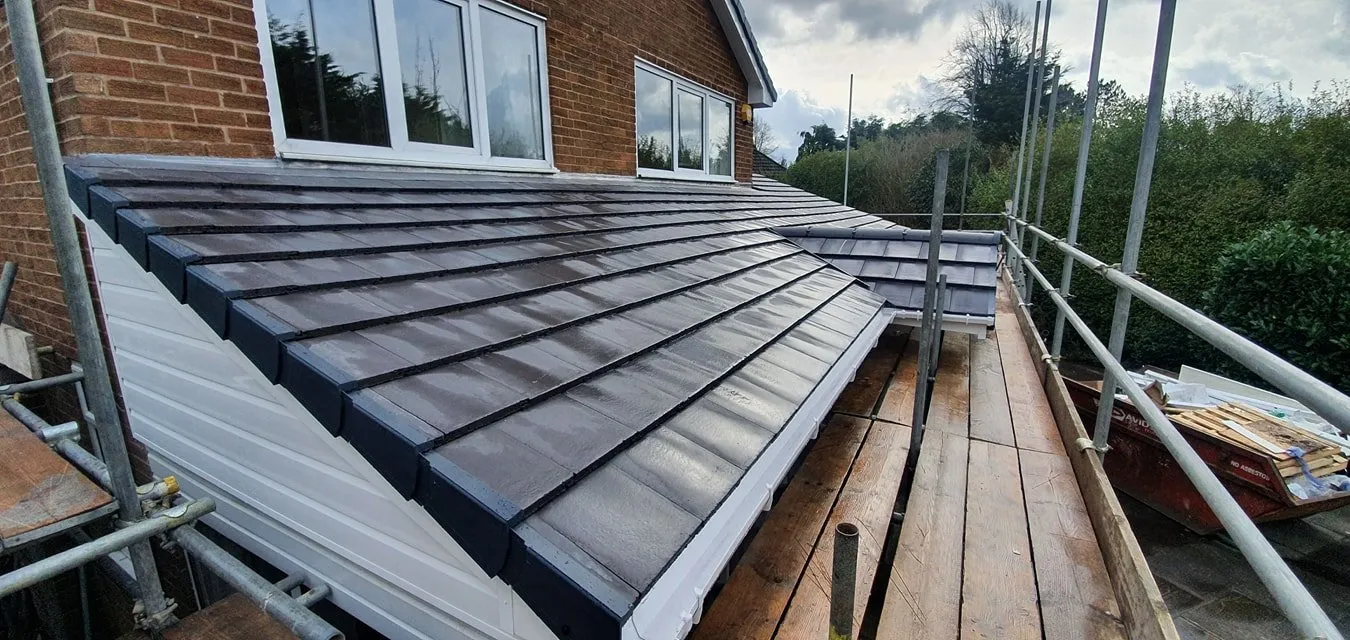
Always use a local roofer with a verifiable address, real reviews and full public liability insurance. Derby Roofers has served this area for over 20 years — you can check our track record before you commit.
Steps to Take Immediately After a Storm Damages Your Roof
Act quickly, stay safe, and document everything before calling a roofer and your insurer. Follow these steps:
- Stay safe — do not climb on a wet or storm-damaged roof under any circumstances
- Check inside first — look in the loft and on ceilings for leaks, drips or damp patches
- Walk around outside — look for fallen tiles, debris, sagging gutters or visible gaps in the roof
- Photograph everything — wide shots and close-ups of all damage before anything is moved or cleaned up
- Keep fallen materials — fallen tiles, slates and ridge pieces are physical evidence for your insurance claim; do not throw them away
- Call Derby Roofers — we can fit emergency boarding or a tarpaulin to stop further water getting in while you arrange repairs
- Contact your insurer — report the damage within 24–48 hours, with your policy number, the date of the storm and your photos ready
- Keep a record of all costs — most insurers will reimburse reasonable emergency protection costs
If water is actively coming through the ceiling or you can see structural damage like a sagging roofline, treat this as urgent — call us on 01332-529704. We cover Derby city and the wider Derbyshire area and can arrange same-day emergency protection where required.
How Derby Roofers Carries Out Storm Damage Roof Repairs
When you call us after storm damage, here is exactly what happens, from first call to finished repair.
- Call and triage: you call and describe the damage. Emergency situations, such as active water coming through a ceiling, are prioritised for same-day attention.
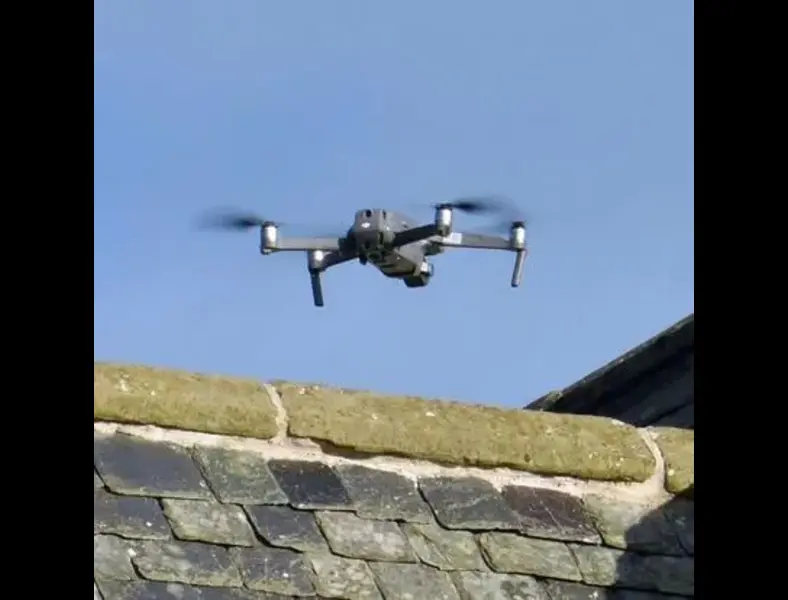
- Free drone roof inspection: a team member attends your Derby property, surveys the roof by drone and checks internally where it’s safe to do so, then prepares a written report with photographs.
- Emergency protection: where tiles are missing or a membrane is exposed, we fit a tarpaulin or storm board straight away to stop water getting in while the permanent repair is planned.
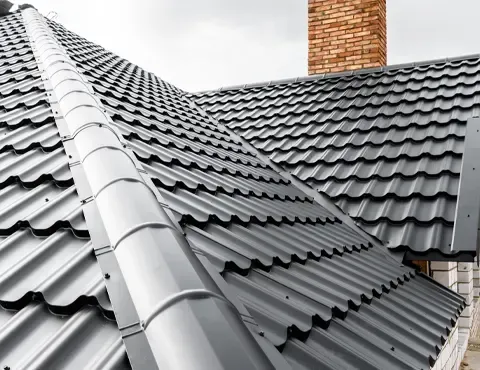
- Material matching and repair plan: we match clay, concrete or slate tiles, or flat roof membrane, to what’s already on your roof, and agree the repair scope with you before work starts.
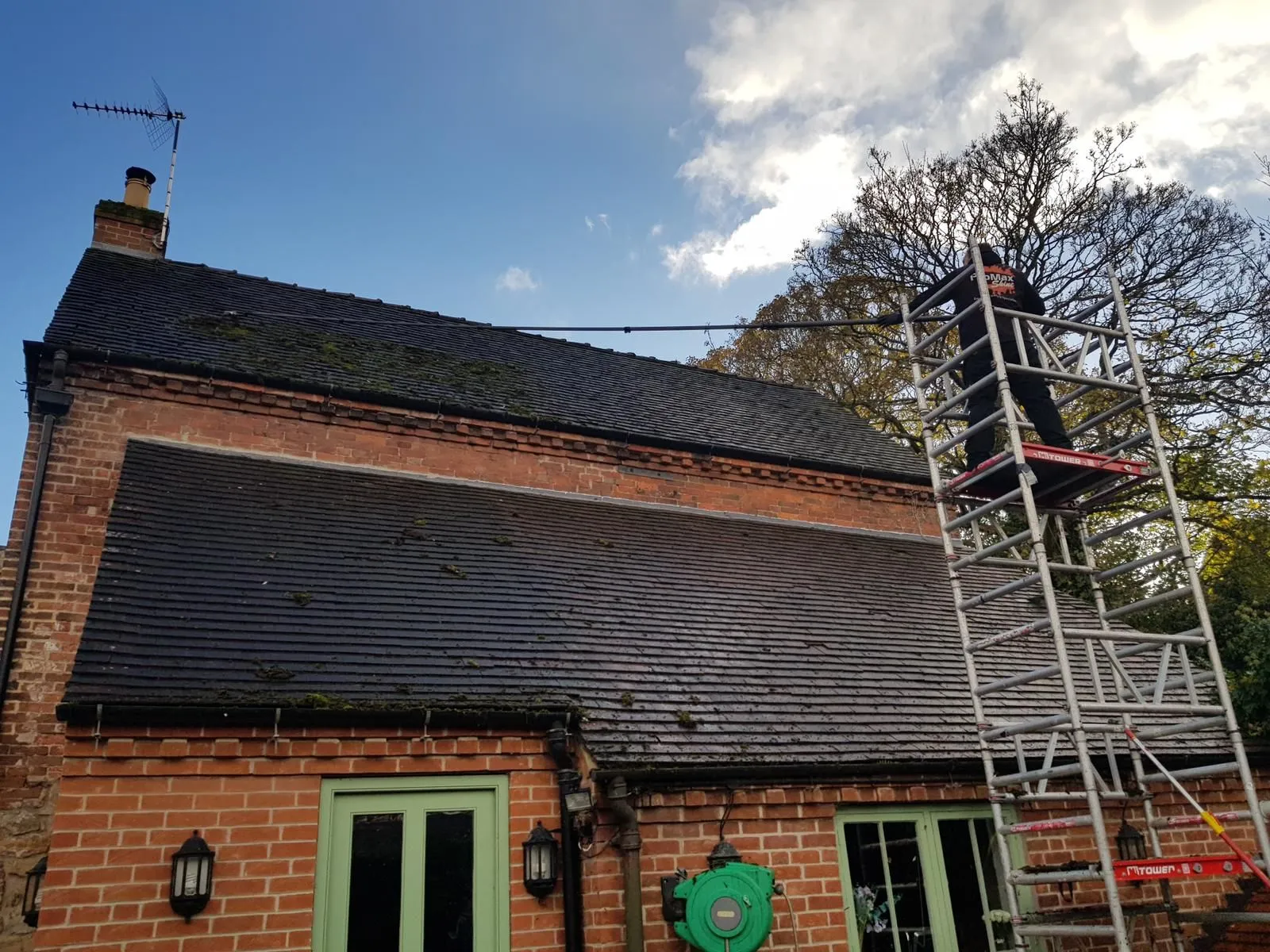
- Repair carried out: tiles, flashing, ridge and verge work, gutters or flat roof sections are repaired, using powered access equipment or mobile towers operated by our IPAF and PASMA-certified team where height or access demands it.
- Final check and guarantee: we inspect the completed repair before leaving and issue a written guarantee, along with the damage report you can pass to your insurer.
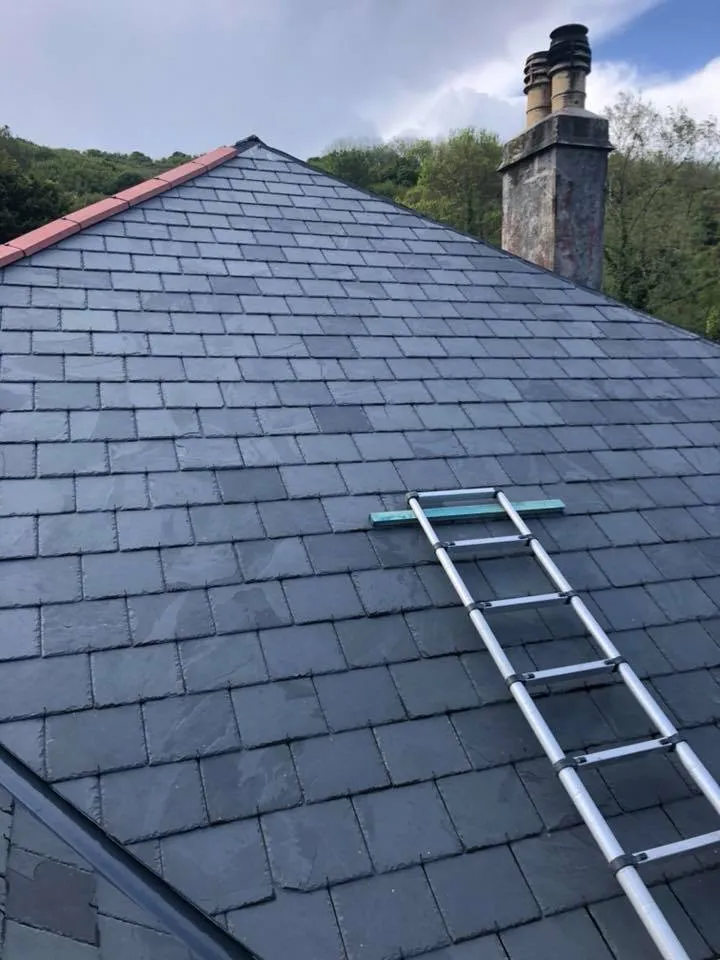
For the repair itself, we match materials to your existing roof wherever possible — clay tiles on older Allestree and Chellaston properties, natural slate on Victorian terraces, concrete tiles on post-war estates in Sinfin — so your roof stays consistent in appearance.
Storm Damage Roof Repairs We Carry Out
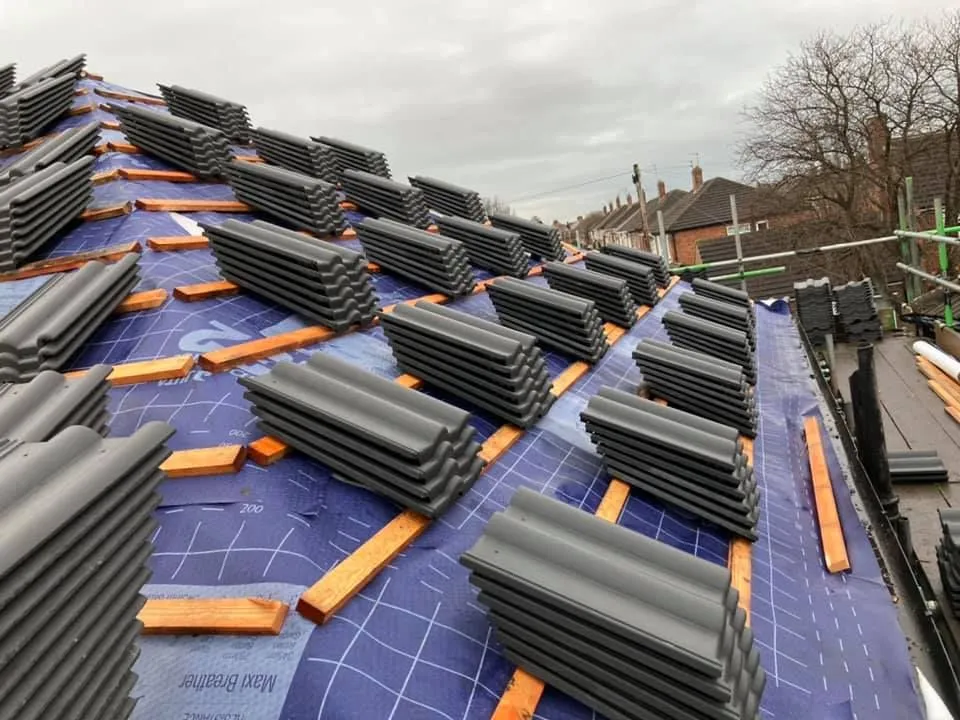
- Replacement of cracked, broken or missing clay, concrete or slate tiles
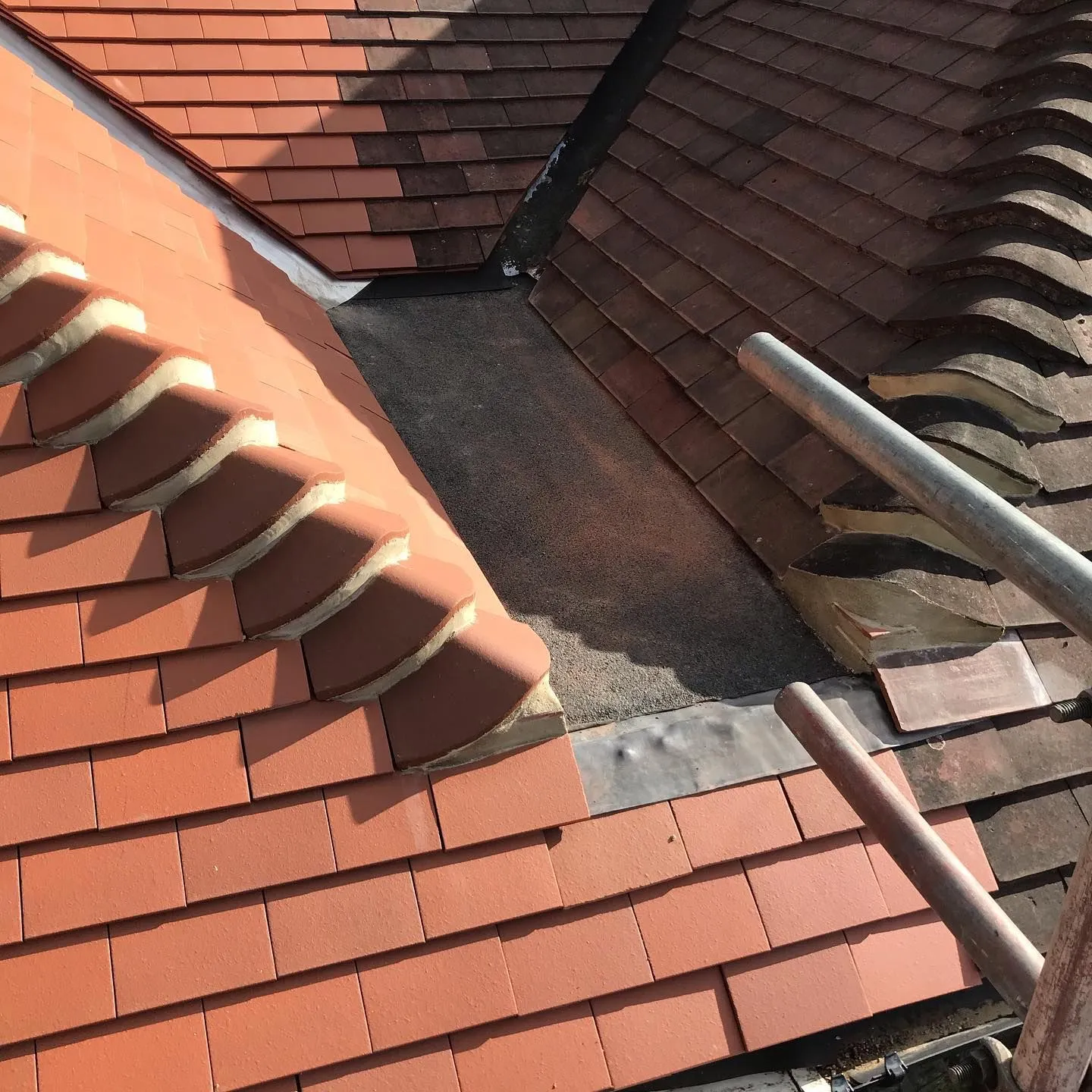
- Repointing or replacement of ridge and hip mortar
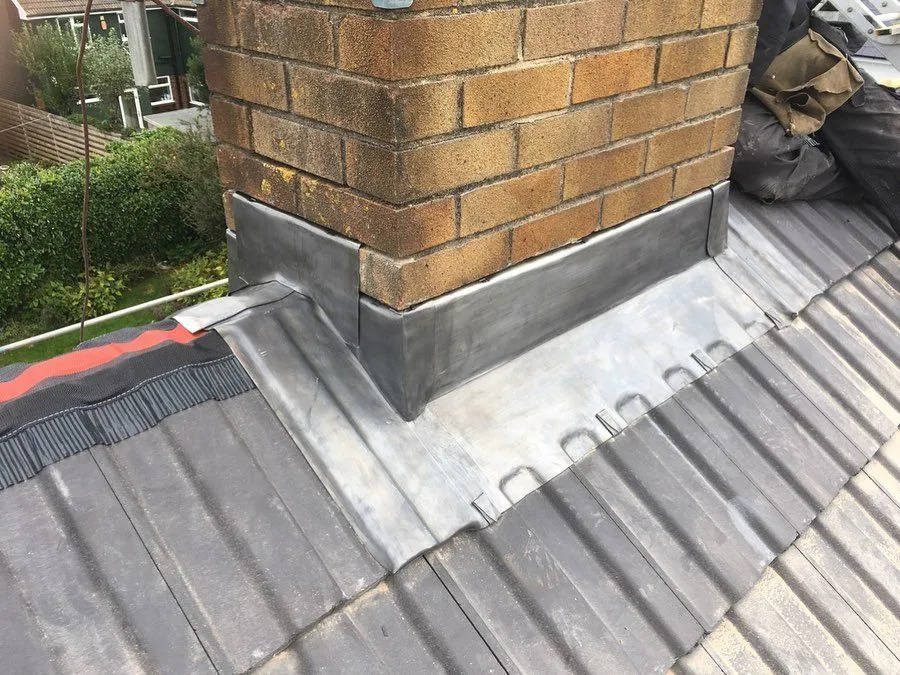
- Lead flashing repairs around chimneys, skylights and abutments
- Verge and eave repairs after wind uplift
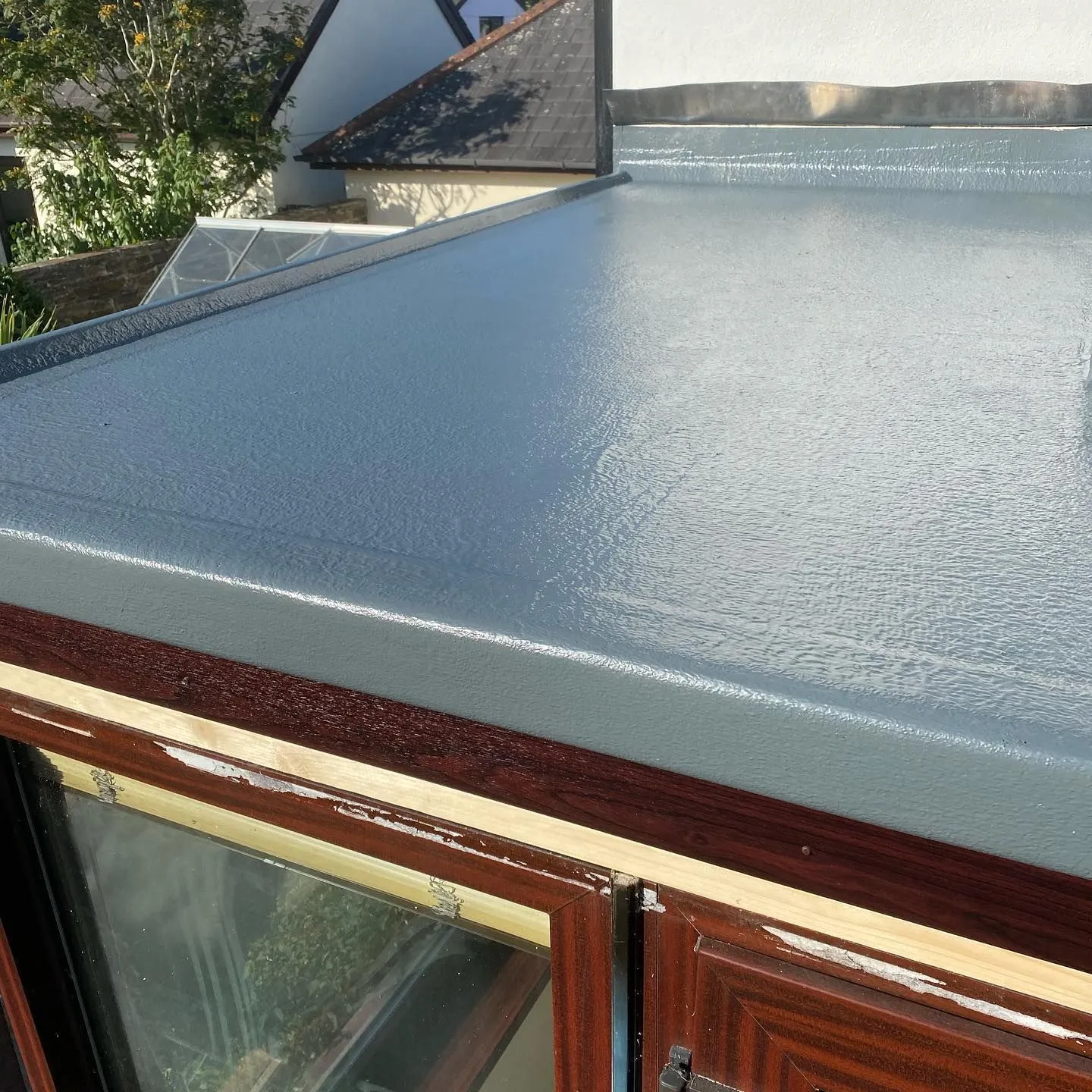
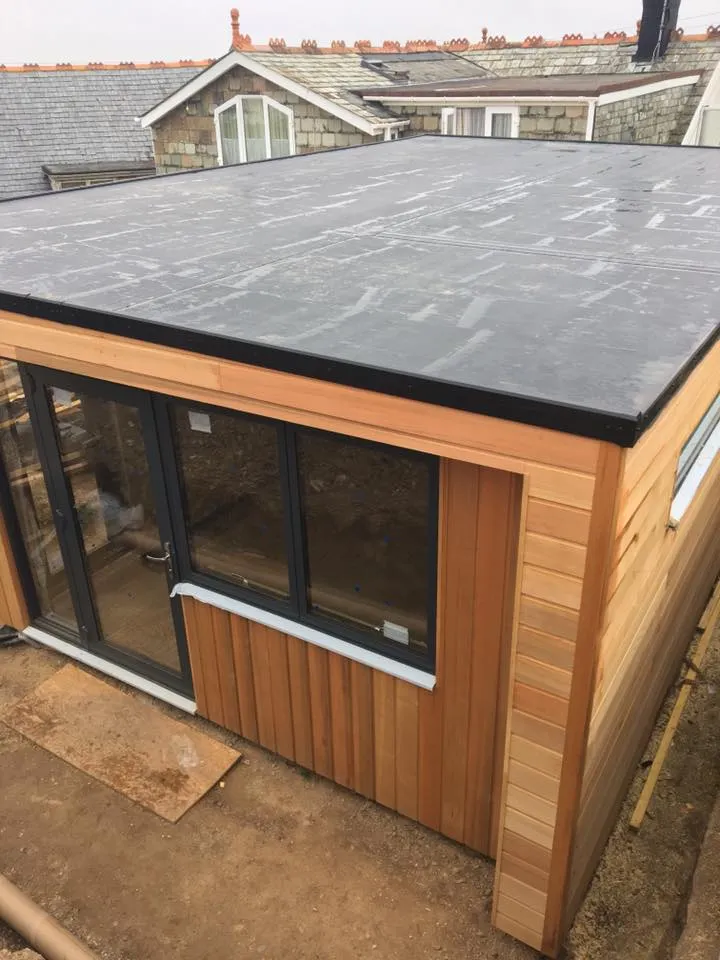
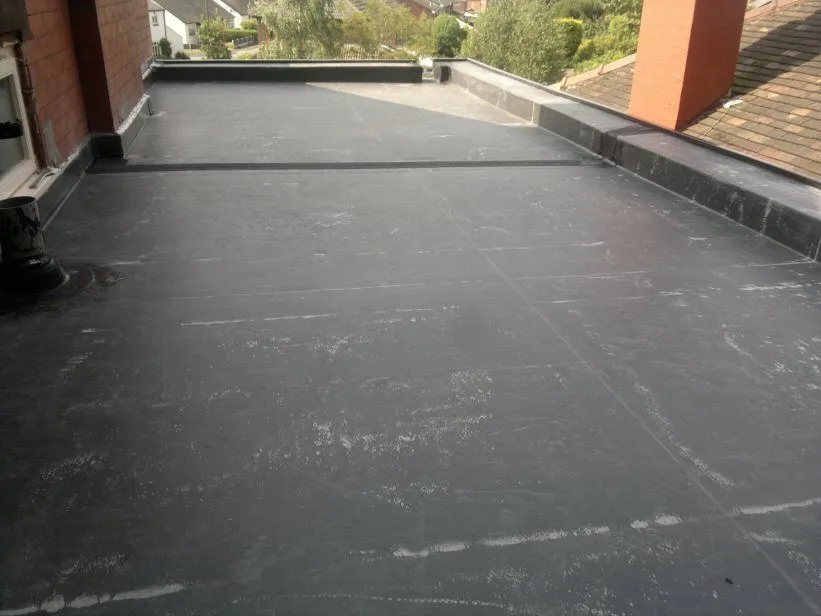
- Flat roof storm repairs — EPDM, felt and GRP systems
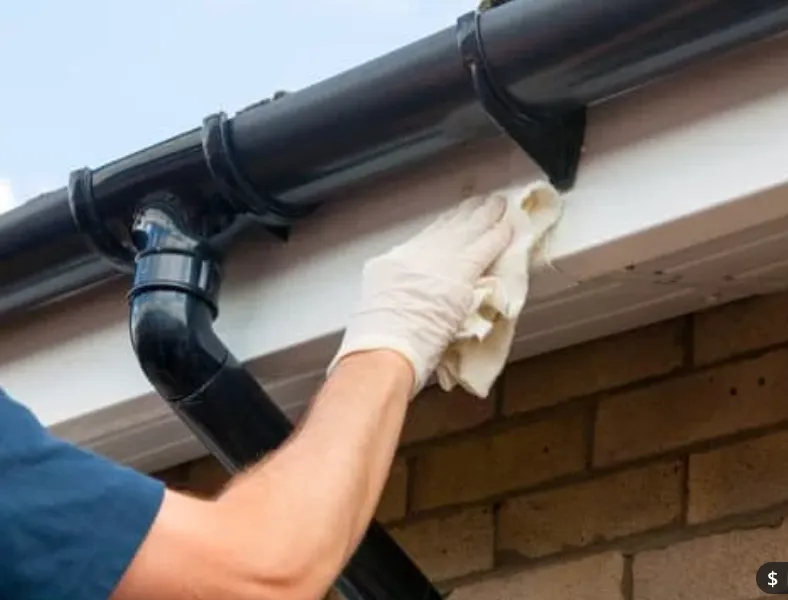
- Gutter and fascia repairs following debris impact or wind damage
- Emergency tarpaulin and storm boarding, fitted fast to stop water ingress while permanent repairs are arranged
- Fallen tree damage repairs — structural assessment and roof deck repair where impact has caused significant damage
- Hail damage repairs — tile and slate inspection and replacement following impact events
- Chimney repairs — repointing, flaunching and flashing re-dressing after storm movement
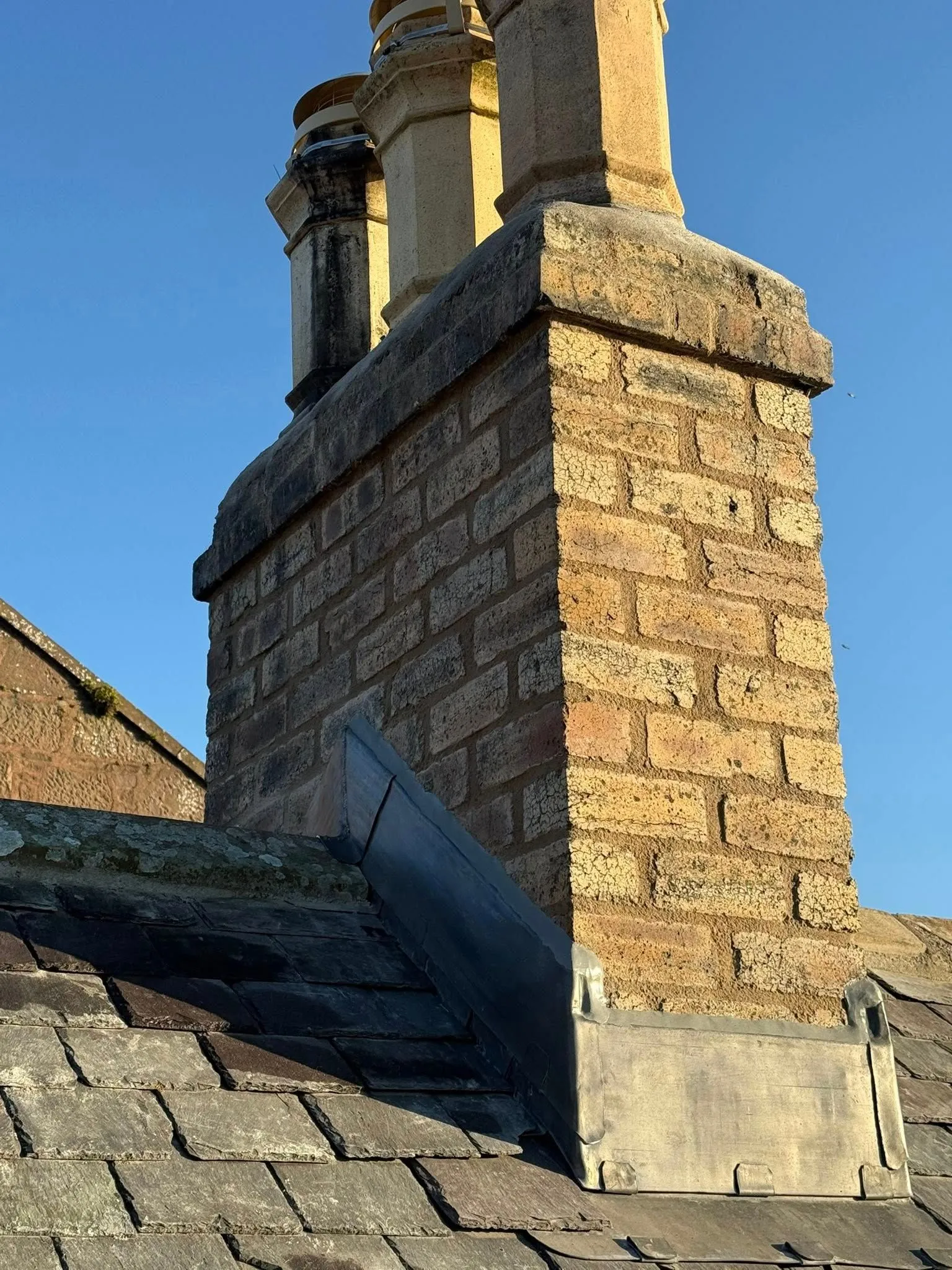
All repair work comes with our standard written guarantee. Once the job is complete, we carry out a final check before we leave.
What Counts as Wear and Tear — and Why It Matters for Your Claim
This is one of the most common sticking points between homeowners and insurers after a storm. Wear and tear describes the normal ageing and deterioration of your roof over time — crumbling ridge mortar, cracked concrete tiles, perished roofing felt and corroding flashings all develop slowly, usually over years, and are your responsibility as a homeowner to maintain.
Storm damage describes physical damage caused by a specific weather event — high winds, heavy rain, hail, or falling debris. This happens suddenly and was not present before the storm.
The problem arises when an insurer argues that pre-existing wear made your roof more vulnerable, and so they share or reduce their liability. A detailed, independent roof report written by a qualified roofer — with photographs and a clear description of how the damage occurred — is your strongest defence against this argument.
Derby’s older housing stock is particularly relevant here. Pre-1970s terraces across Litchurch, the Arboretum and parts of Normanton often have original ridge mortar and bedded verges that are decades old, and insurers sometimes flag this as wear and tear. We can help you document exactly what was caused by the storm and what, if anything, was already showing age — and if the claim itself gets complicated, our Storm Damage Roof Insurance Claims page covers working with loss adjusters and what to do if a claim is disputed.
Government Grants and Financial Help for Roof Repairs
A full roof replacement grant is not widely available in the UK. However, there are a few options worth exploring:
- The ECO4 scheme may cover insulation-related work for eligible households — contact your energy supplier or local council for eligibility
- The Warm Home Discount and local authority funding sometimes extends to structural repairs in qualifying properties — Derby City Council and Derbyshire County Council can advise on any active local schemes
- If the damage is severe and your property is rented, your landlord has legal obligations to repair storm damage — this is not the tenant’s financial responsibility
A free roof inspection with our free drone survey will clarify exactly what your roof needs before you explore any funding route.
How to Storm-Proof Your Derby Roof Before Winter Hits
The most cost-effective storm damage repair is the one you never need. A roof in good condition before autumn handles Derbyshire winters far better than one with small unresolved problems. Between September and March, Derby and the wider Derbyshire area regularly sees named Atlantic storms bringing strong winds and sustained heavy rain.
Victorian terraces and older semi-detached properties in high-density areas — Mackworth, Allestree, Littleover — face particular risk because original mortar and old ridge bedding tends to fail in freeze-thaw cycles. Here is what to do before the first serious storms arrive:
- Book a pre-winter roof inspection — we check the ridge, verge, flashings, gutters and downpipes for anything that needs attention before conditions worsen
- Repoint loose mortar — crumbling ridge mortar lets water in and loosens tiles; repointing is far cheaper than storm repair after the fact
- Clear gutters of leaf debris — blocked gutters back water up under the eaves and accelerate edge damage
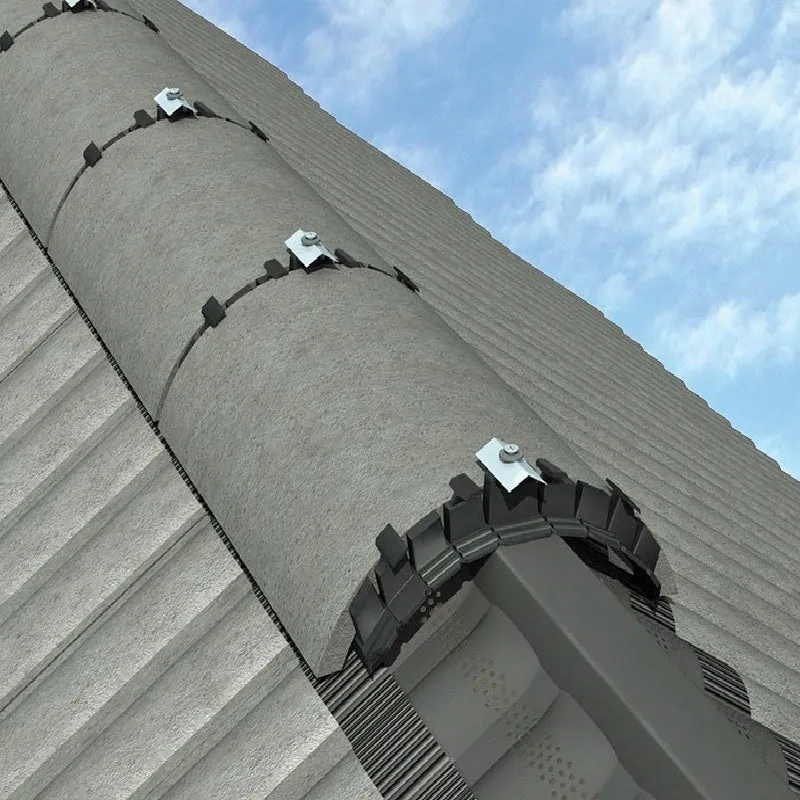
- Upgrade to dry ridge and dry verge systems — these use mechanical fixings rather than mortar, removing the most common point of failure in high winds
- Address any known weak spots — if a roofer has flagged an issue in the past and it has not been fixed, now is the time
- Check chimney flashings and pointing — chimneys are one of the most exposed parts of any Derby roof
- Inspect your flat roof membrane — EPDM and felt flat roofs on garages and extensions are vulnerable to wind uplift
A pre-winter survey with Derby Roofers is free and carries no obligation. Call 01332-529704 or use the contact form to book yours.
What a Storm Repair Costs, and How Fast We Respond
There is no fixed price list for storm repairs, because the cost depends on how much of the roof is affected, the roof type, and how the damaged area is reached — a handful of slipped tiles on a low-pitch roof costs far less to put right than flashing and ridge work on a tall Victorian terrace needing tower access. Where the damage is covered by your buildings insurance, what you pay is usually limited to your policy excess, with the insurer settling the rest against our written report. Emergency tarpaulin or boarding is priced separately from the permanent repair, though most insurers reimburse this as a reasonable protection cost.
What Costs Extra (Not Included in a Storm Callout)
- Removing a fallen tree from the property (cutting up and hauling away the timber) — this is arranged separately, though we make the roof safe first
- Wear-and-tear repairs unrelated to the storm event, such as crumbling ridge mortar that pre-dates the damage — these are quoted as separate maintenance work, not the storm callout
- Your insurance policy excess — this stays payable by you even where the repair itself is covered
- A full roof replacement, where the damage is too extensive for repair — this is scoped and quoted as its own project after the free inspection
- Scaffold or tower hire for taller or harder-to-reach sections of roof — factored into the quote once the site visit confirms what access is needed
Same-Day Protection, Then a Permanent Fix
A hole in the roof gets worse with every hour it rains, so the first job on any storm callout is stopping water getting in, not filling out paperwork. Once you’ve called and described the damage, active leaks jump the queue, and a tarpaulin or storm board can usually go over exposed timber or missing tiles that same day. That fast cover counts for more on the tightly packed terraces around Normanton and Peartree, where steep-pitched roofs sit hard against the pavement, leaving no safe spot to lean a ladder — powered access platforms and mobile towers do the job instead, and because our team carries both IPAF and PASMA cards, that kit can go up without waiting on a separate scaffolding firm.
Derby and the surrounding Derbyshire towns and villages are where we’re based and where most storm callouts happen. The same emergency response also reaches out into Nottingham and Nottinghamshire, Sheffield, Rotherham, Doncaster, Wakefield, Leeds, York, Hull, Manchester, Liverpool, Newcastle, Sunderland, Durham and Glasgow — call to confirm how quickly we can reach your postcode after a storm.
Why Choose Derby Roofers for Storm Damage Repairs?
Derby Roofers has been fixing storm-damaged roofs across Derby and Derbyshire for over 20 years. We know local roofs, local weather and local insurance processes — the clay tiles on Victorian terraces in Normanton, the concrete tiles on post-war semis in Sinfin, the flat-roof additions across Mickleover.
Same-Day Emergency Response
We aim to respond the same day for emergency situations across Derby and Derbyshire. Active leaks and exposed roofs are prioritised for immediate temporary protection.
Free Drone Survey with Written Report
We use drone technology to inspect storm-damaged roofs safely and accurately, then provide a written, insurance-ready damage report with photographs.
Fully Insured and IPAF & PASMA-Certified
Our team is fully insured, and our IPAF and PASMA-certified access team can safely reach steep or awkward roofs without waiting on a separate scaffolding firm.
Like-for-Like Material Matching
We match clay, concrete or slate tiles, or flat roof membrane, to what’s already on your roof, so a repair stays consistent in appearance.
Written Guarantee on Every Repair
All storm damage repair work comes with our standard written guarantee, plus the damage report you can pass directly to your insurer.
Areas We Work — Storm & Weather Damage Roof Repairs Derby
Derby Roofers proudly serves homeowners and businesses throughout Derby city and the wider Derbyshire area with fast storm response. Not sure if we cover your area? Call us on 01332-529704 and we’ll be happy to help.
- Derby City Centre (DE1)
- Allestree, Mackworth & Quarndon (DE22)
- Mickleover (DE3)
- Littleover & Normanton (DE23)
- Chaddesden, Oakwood & Spondon (DE21)
- Alvaston, Crewton & Osmaston (DE24)
- Belper (DE56)
- Ripley (DE5)
- Ilkeston (DE7)
- Heanor (DE75)
- Swadlincote (DE11)
- Ashbourne (DE6)
- Matlock (DE4)
- Borrowash & Draycott (DE72)
- Etwall & Hilton (DE65)
- Melbourne & Chellaston (DE73)
- Duffield & Little Eaton (DE56 / DE21)
- Breadsall & Darley Abbey (DE21 / DE22)
- Long Eaton (NG10)
- Castle Donington (DE74)
Frequently Asked Questions About Storm & Weather Damage Roof Repairs
Can I claim on my home insurance for storm damage to my roof in Derby?
Yes — most standard UK buildings insurance policies cover sudden storm damage to your roof. Your insurer will want evidence that the damage was caused by a specific weather event rather than gradual wear. A written report and photographs from a qualified roofing contractor will support your claim. Contact us for a free inspection and written damage report, or see our dedicated Storm Damage Roof Insurance Claims guide for the full claims process.
How do I know if my roof has been damaged by a storm?
Check outside for missing or cracked tiles, fallen ridge pieces, lifted flashing and debris on the roof surface. Inside, check your loft for daylight, damp patches or dripping water. If you are unsure, call us — we carry out free inspections across Derby and will tell you clearly what, if anything, needs repairing.
What should I do if my roof is badly damaged in a storm?
Stay indoors away from the damaged area, check for active leaks in your loft and ceilings, and photograph all visible damage before anything is moved. Call Derby Roofers on 01332-529704 for emergency boarding or tarpaulin to protect the property, then report the damage to your insurer within 24–48 hours.
How quickly can Derby Roofers respond after storm damage?
We aim to respond the same day for emergency situations across Derby and Derbyshire. Call us on 01332-529704. We can arrange emergency protection — boarding or tarpaulin — while full repair materials are sourced and permanent repairs are booked in.
Is hail damage to a roof covered by insurance?
Yes, in most cases. Hail damage is classed as sudden storm damage under standard UK buildings insurance policies. The difficulty with hail is that impact damage to tiles or slates is not always visible from the ground, so we carry out a full roof inspection and provide a written report with photographs.
Will my insurer pay for a full roof replacement after storm damage?
If the storm damage is severe enough that repair is not viable, most insurers will consider a full replacement. You will need a professional assessment confirming the extent of damage and why repair alone is insufficient — we provide this as part of our inspection service.
Is there a government grant available for roof repairs in the UK?
A direct grant for roof repairs or replacement is not widely available. The ECO4 scheme may cover insulation-related work for households that meet eligibility criteria, and Derby City Council may hold information on local home improvement funding. We can assess your roof and confirm exactly what work is needed before you explore any funding options.
Can a fallen tree on my roof be claimed on insurance?
Yes — a tree falling on your roof during a storm is typically covered under buildings insurance as sudden accidental damage. Document the damage thoroughly with photographs before any debris is removed. Do not attempt to remove a large tree from your roof yourself, as it can shift tiles further or cause structural movement — call us first, and we will assess the damage safely.
What's the difference between this page and your Storm Damage Roof Insurance Claims page?
This page covers the repair side — spotting storm damage, our emergency response, and how we physically fix a storm-damaged roof. Our Storm Damage Roof Insurance Claims page goes deeper into the claims process itself: gathering evidence, working with loss adjusters, and what to do if a claim is disputed or declined.
Do you offer emergency tarpaulin or boarding to stop a leak the same day?
Yes. Where tiles are missing or a membrane is exposed, we fit a heavy-duty tarpaulin or storm board the same day in most cases, to stop water getting in while materials are sourced and the permanent repair is scheduled. Most insurers reimburse this as a reasonable emergency protection cost.
Storm-Damaged Roof? Get a Free Drone Inspection Today
Storm damage does not get better on its own. A missing tile left for a week can let in enough water to damage roof timbers, insulation and ceiling boards — a leaking flat roof in winter can turn a £300 repair into a £3,000 problem.
Derby Roofers has been fixing storm-damaged roofs across Derby and Derbyshire for over 20 years. We know local roofs, local weather and local insurance processes. We respond quickly, give you honest advice, and back all our work with a written guarantee.
- ✅ Free roof inspection with our drone — no charge, no obligation
- ✅ Written damage report suitable for insurance claims
- ✅ Same-day emergency response where needed
- ✅ Like-for-like material matching on all repairs
- ✅ IPAF & PASMA-certified access team
Do not wait for the next rainfall to find out how bad the damage is. Call us now, and we will arrange your free drone inspection with a clear repair plan usually within 24 hours.