Slate Roof Installation & Repair in Derby | BS 5534 Roofing
Call: 01332-529704
A slate roof only gets replaced once every few decades, so getting the slate choice, grading and fixing right the first time matters. We survey the property first, grade every slate by thickness before it goes up, and fix to BS 5534 so the finished roof holds up through Derbyshire’s weather for the next 80 to 100 years.
- Free On-Site Slate Roof Survey Before Any Quote
- IPAF & PASMA-Certified Team for Scaffolding & Access Towers
- Slates Graded & Fixed to BS 5534 on Every Job
Why Slate Remains the Best Roofing Choice for Derby Homes
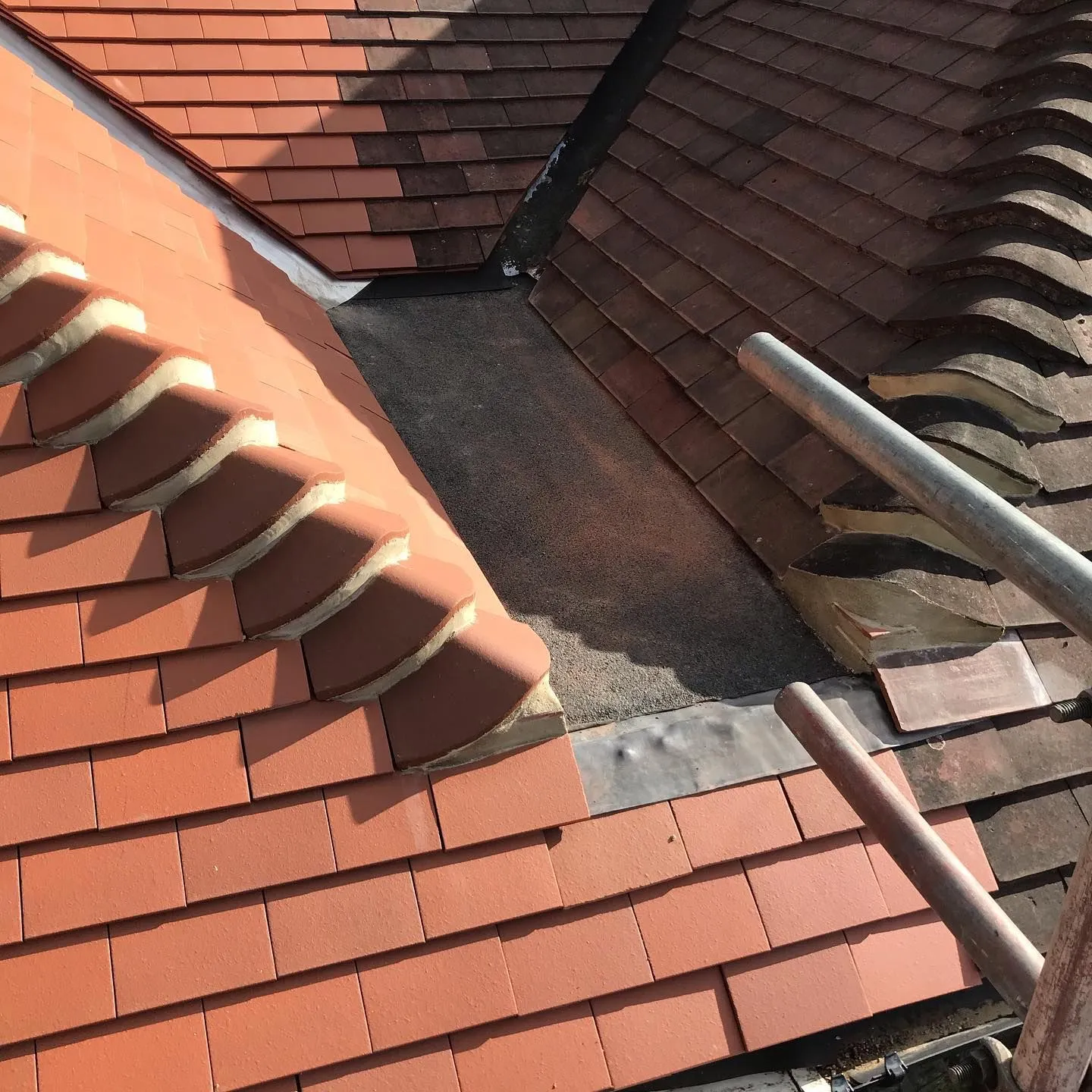
Derby still has more of its original slate roofline than a lot of towns its size — walk around Little Chester or the mill-worker terraces near Strutt’s Park and the Derwent Valley Mills World Heritage Site and you’re looking at Victorian and Edwardian slate that’s still doing the job it was laid to do well over a century ago.
Derby sits in the East Midlands with a climate that brings wet winters, freeze-thaw temperature swings, and strong winds. Natural slate handles all of these well — it sheds water cleanly, resists frost penetration, and does not warp or crack under normal UK weather conditions.
- Exceptional lifespan — natural slate can last 80 to 100+ years when installed correctly
- Fire resistant — slate is non-combustible, which matters on Derby’s closely spaced terrace rows and semi-detached properties
- Waterproof and frost-resistant — slate does not absorb water the way concrete tiles do
- Low maintenance and adds property value — a well-maintained slate roof registers positively at survey stage
We work with Welsh, Spanish, and Brazilian natural slate, as well as quality fibre-cement alternatives. Each has different colour, texture, and thickness characteristics, and we advise on which suits your roof pitch, property style, and any planning requirements before any work starts.
How Long Does a Slate Roof Last in Derby?
Natural slate roofs installed correctly on Derby properties last between 80 and 100 years, sometimes longer. Fibre-cement slate lasts 30 to 50 years. The lifespan depends on the quality of the slate, the fixing method, and how quickly small repairs are dealt with.
Key factors that affect lifespan on Derby roofs: Welsh slate is among the most durable, with Spanish and Brazilian slate reliable, cost-effective alternatives. Corroded nails cause slippage long before the slate itself fails — often called “nail sickness” and the most common cause of early problems on Derby’s older roofs. Winter freeze-thaw cycles accelerate deterioration in cracked or porous tiles, and lead flashings at chimneys and valleys are often the first failure point, not the slate itself.
Signs Your Derby Slate Roof Needs Attention
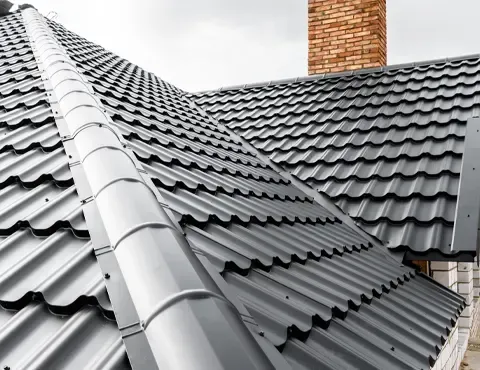
Catching problems early saves money. Common warning signs include slipped, cracked, or missing slates visible from ground level, damp patches or brown ceiling stains after heavy rain, daylight visible in the loft space, loose or lifting ridge tiles, moss or algae building up in valleys, water marks on chimney breast walls, and gutters filling with slate fragments or grit. If more than roughly one in five slates are showing wear, that’s usually the point where re-roofing becomes more cost-effective than repeated patch repairs.
Slate itself does not absorb water — when water gets under a slate roof, the problem is usually a failed fixing, a cracked tile, or a deteriorating underlay. If you notice any of these signs on your Derby home, contact us for a free survey, including our drone roof survey option, so we can inspect fully before giving an honest recommendation.
Stripped, Graded, Relaid: The Order Slate Work Happens In
A new slate roof installation involves more than laying tiles — the roof structure beneath needs to be sound first. All work is carried out to BS 5534, the UK Code of Practice for Slating and Tiling, which sets standards for fixing, lap, and batten gauge.
- Booking a survey: You get in touch with the roof’s age, slate type if known, and any access issues. We book a free survey, by drone or direct access depending on pitch and height, usually within a few working days.
- Site assessment: We check the existing slate, battens, rafters and underlay, note whether the property sits in a listed or conservation area such as Little Chester or Strutt’s Park, and work out what access equipment the job actually needs.
- Quote and slate selection: You get a written quote covering the slate type (Welsh, Spanish, Brazilian or fibre-cement), any access equipment as its own line, and a separate allowance for timber repairs if the survey flagged a risk of rot. Nothing gets bundled in as a guess.
- Strip and timber repair: The existing covering comes off, and any defective battens, rafters or underlay get replaced there and then. Waste slate and timber gets skipped or removed as it comes off.
- Slate installation: New slates go on graded by thickness, thicker courses at the eaves tapering to thinner ones towards the ridge. Ridge tiles, lead flashing and valley work follow at chimneys and wall abutments.
- Completion and clean-up: A final inspection checks every fixing and flashing line, the site gets cleared, and we walk the finished roof with you before we leave. Leftover slate is left with you for future colour-matched repairs.
Properties in Derby’s conservation areas — including Little Chester, Strutt’s Park, and the Derwent Valley Mills World Heritage Site zone — may require specific slate types, colours, and finishes to satisfy planning requirements. We advise you on this before quoting if your property is in a conservation area or is listed.

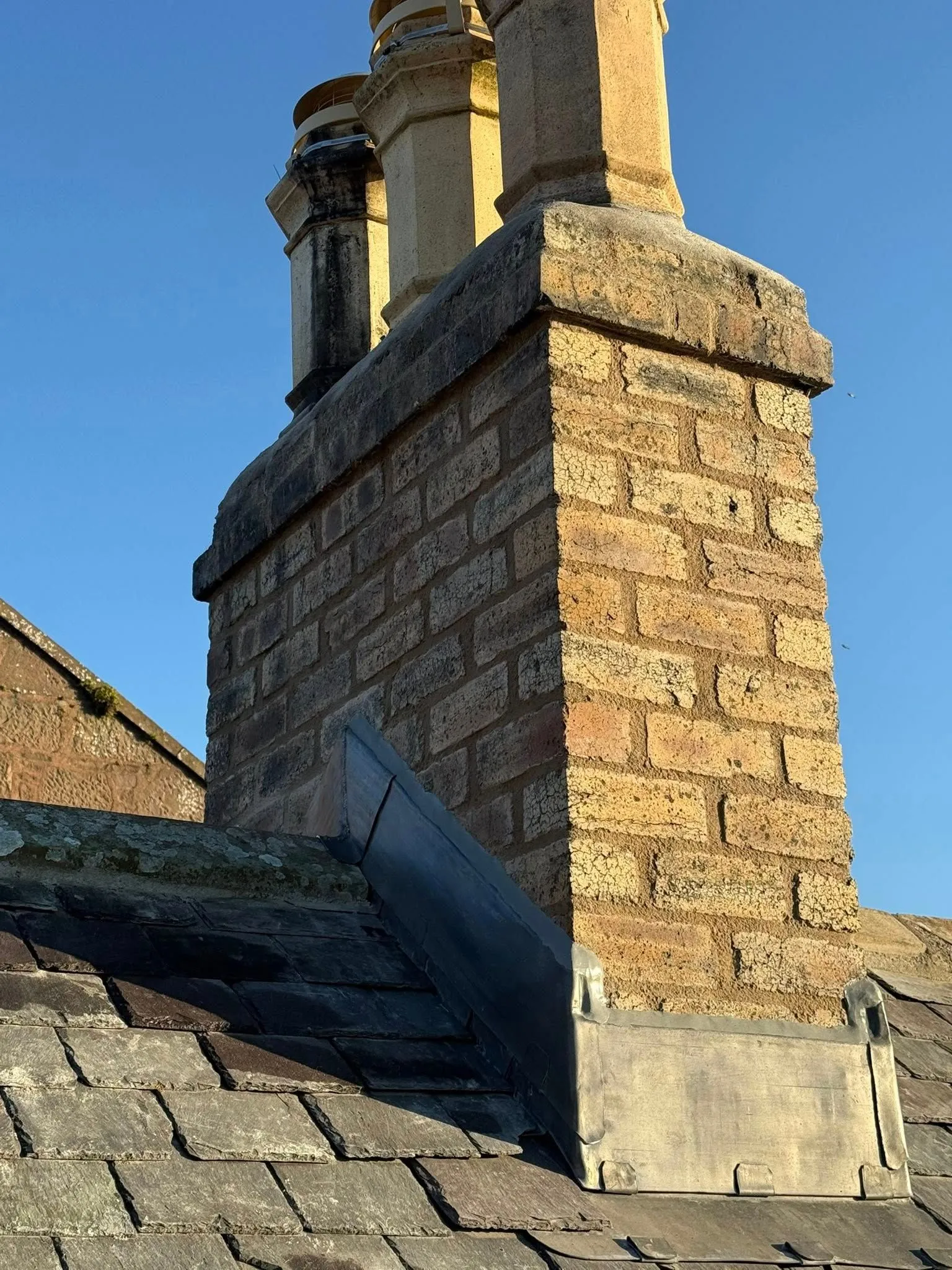
Welsh, Spanish, Brazilian or Fibre-Cement: How the Four Compare
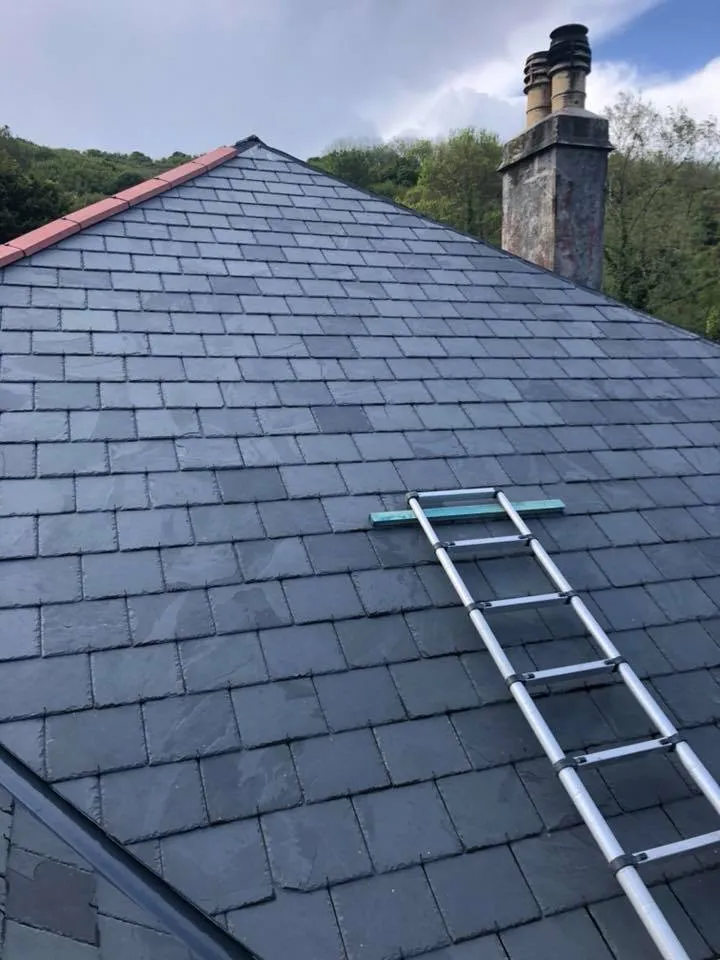
We work with Welsh, Spanish, and Brazilian natural slate, as well as quality fibre-cement alternatives. Each has different colour, texture, and thickness characteristics — here is how they compare on lifespan and cost.
| Slate Type | Typical Lifespan | Material Cost (per m²) | Fully Installed Price Guide | Best Suited For |
|---|---|---|---|---|
| Welsh slate | 80 to 100+ years | From £180 | £12,000 to £20,000 | Listed buildings, conservation areas such as Little Chester and Strutt’s Park |
| Spanish slate | 80 to 100 years | From £75 | £8,000 to £14,000 | Genuine natural slate performance at a lower material cost |
| Brazilian slate | 80 to 100 years | From £110 | Confirmed at site survey | A reliable, cost-effective natural slate alternative to Welsh |
| Fibre-cement slate | 30 to 50 years | £20 to £40 | Confirmed at site survey | Budget-conscious properties outside conservation areas |
Labour typically accounts for 40 to 60% of the total installed cost. Steeper roofs, hips, valleys, dormers, and conservation area requirements in areas like Little Chester or Strutt’s Park can all affect the final price.
Grading Slate to Match What’s Already on the Roof
Little Chester’s Victorian terraces, the mill-worker rows near Strutt’s Park and the wider Derwent Valley Mills World Heritage Site were slated in a pattern most modern crews rarely look at closely: courses laid thicker at the eaves and progressively thinner towards the ridge, which spreads the roof’s weight correctly and sheds water the way the original roofer planned. Re-roofing or repairing one of these properties to BS 5534 means grading new slate to match that pattern rather than laying a single thickness because it’s quicker to order and fit.
Where the pitch is steep, the property is tall, or the access is tight — a common combination on terraced streets built close to the road — our team holds IPAF certification to operate powered access platforms and PASMA certification to erect and work from mobile towers themselves, rather than handing that part of the job to a subcontractor. A roof in Strutt’s Park or Little Chester sitting in a conservation area often needs the slate colour and coursing pattern signed off before a conservation officer will wave the job through, and that conversation is easier when the quote already shows graded, matched slate. None of this shows up as a separate charge — it’s built into how the survey and the slate order are put together in the first place.
How a New Slate Roof Adds Value to Derby Homes
A new slate roof is one of the few home improvements that directly supports your asking price. Surveyors note roof condition prominently in their reports — a roof flagged as near end-of-life gives buyers a negotiating point and reduces your sale price, while a recently installed or well-maintained slate roof removes that risk entirely.
Natural slate also has strong visual appeal on period properties found across Chellaston, Littleover, Quarndon, and Darley Abbey. It signals quality to buyers looking at older homes and matches the architectural character of Derby’s Victorian and Edwardian streets. Beyond resale, a watertight, well-insulated slate roof reduces heat loss from the top of your property, which has a direct effect on energy bills on the older, less-insulated housing stock common across many Derby neighbourhoods.
How Much Does a Slate Roof Cost in Derby?
Slate roof costs vary depending on the type of slate, roof size, and condition of the structure beneath. Current UK average price guides:
- Welsh slate — from £180 per m² (materials); £12,000 to £20,000 fully installed
- Spanish slate — from £75 per m² (materials); £8,000 to £14,000 fully installed
- Brazilian slate — from £110 per m² (materials)
- Fibre-cement / synthetic slate — £20 to £40 per m² (materials)
- Individual slate replacement — £150 to £350
- Ridge repointing or flashing repairs — £200 to £750
- Scaffolding or access equipment — £800 to £2,500 depending on access
None of these figures replace a proper quote — roof size, pitch, the condition of the battens and rafters underneath, and how the access equipment needs to reach the property all move the final number, and only a site visit gives you a price you can rely on. A typical three-bedroom semi in Derby has somewhere between 60 and 90 square metres of roof to cover, which gives a rough sense of scale before the survey narrows it down.
Ongoing costs after installation are minimal compared with a tiled roof, though gutters clogged with moss shed from older slate are worth clearing every year or two. Delaying a re-roof once slate has started slipping rarely saves money in the long run — water reaching the timber underneath often turns what would have been a slate-only job into one that also needs batten and rafter replacement, priced as additional carpentry rather than folded into the original slate figure. VAT applies at the standard rate on both repair and installation work, and we take a deposit against the slate order once a quote is signed rather than asking for the full amount up front.
How to Keep Your Slate Roof in Good Shape
A natural slate roof needs less maintenance than most other materials, but it does need some. In Derby, autumn leaf fall from mature trees in areas like Allestree and Darley Abbey blocks valleys and gutters, and moss builds up faster on north-facing slopes. Catching these issues early prevents water from backing up under tiles.
- Inspect twice a year — spring and autumn are the best times; check from ground level for slipped, missing, or visibly cracked tiles
- Clear valleys and gutters of debris before winter — blocked valleys are a common cause of water ingress on older Derby properties
- Treat moss with a soft-wash solution — never use a pressure washer on slate; it damages the tile surface and dislodges fixings
- Check and repoint ridge tiles every 10 to 15 years — mortar-bedded ridges are a common failure point after a hard winter
- Inspect flashings at chimneys, valleys, and wall abutments annually — lead flashings can lift or crack over time
- Replace individual broken slates promptly — a single missing tile left unattended allows rain to reach the underlay and batten below
- Book an annual roof inspection — a professional visit costs significantly less than the repairs that follow from undetected damage
We offer a roof maintenance inspection service for Derby homeowners, including our free drone survey option. Proactive maintenance is how Derby homeowners get a full century of performance from a natural slate roof.
What’s Covered in a Derby Slate Roof Quote
- Free roof survey and condition assessment, carried out by drone or direct access
- Safe removal and disposal of the existing roof covering
- Inspection and replacement of battens, rafters and underlay found to be defective beneath the slate
- Supply and fixing of Welsh, Spanish, Brazilian or fibre-cement slate to BS 5534
- Grading of slates by thickness, from thicker at the eaves to thinner towards the ridge
- Ridge tile installation or repointing, and lead flashing and valley work at chimneys and abutments
- Individual slipped or cracked slate replacement, without disturbing the rest of the roof where possible
- Final inspection and site clean on completion
- Scaffolding or mobile access tower set-up by our IPAF and PASMA certified team where needed
Not Included / Costed Separately
- Scaffolding and access equipment hire — priced as its own line item (roughly £800 to £2,500) depending on access, rather than bundled automatically into every quote
- Structural carpentry beyond the batten, rafter and underlay replacement identified at survey — any further timber work found once the roof is stripped is confirmed with you before it proceeds
- Same-day storm damage callouts and temporary tarpaulin work, which fall under our emergency roof repair service rather than a scheduled slate installation
- Slate type and colour on listed buildings or in conservation areas such as Little Chester, Strutt’s Park and the Derwent Valley Mills zone, which may need to match council-specified materials confirmed at survey stage
- Guttering and fascia replacement, priced separately unless the survey finds they’ve already been damaged by a failing roof covering above them
Why Choose Derby Roofers for Your Slate Roof?
Slate is a specialist material. Not every Derby roofer has the experience to install or repair it correctly. Here is why homeowners across Derbyshire trust us with their slate roofs:
- 20+ years working on Derby roofs — we know the local housing stock and what Derby winters do to older fixings
- Free drone roof survey — we inspect your full roof before recommending any work, with no obligation
- BS 5534 compliant — all slate work follows the UK Code of Practice for Slating and Tiling
- Quality slate sourced — Welsh, Spanish, Brazilian, and reclaimed slate available to match your property
- Conservation area experience — we know Derby City Council’s planning requirements for Little Chester, Strutt’s Park, and the Derwent Valley Mills zone
- Fully insured — every job covered, large or small
- We answer the phone — we respond fast when it matters
- Guaranteed workmanship — we stand behind every installation and repair we carry out
Where We Take Slate Roofing Jobs Around Derby
We cover slate roof installation and repair across Derby — including the Little Chester and Strutt’s Park conservation areas — and further out across Derbyshire. Derby’s slate stock isn’t spread evenly across the city: older, heavier natural slate tends to cluster in the Victorian and Edwardian streets closer to the centre, while newer estates further out are more likely to be on concrete or fibre-cement tile. Whichever category your roof falls into, the survey covers slate type identification and grading before any quote is written. Not sure if we cover your area? Call us on 01332-529704 and we will confirm straight away.
- Derby City Centre (DE1)
- Allestree (DE22)
- Mickleover (DE3)
- Littleover (DE23)
- Normanton (DE23)
- Chaddesden (DE21)
- Oakwood (DE21)
- Spondon (DE21)
- Alvaston (DE24)
- Belper (DE56)
- Ripley (DE5)
- Ilkeston (DE7)
- Heanor (DE75)
- Swadlincote (DE11)
- Ashbourne (DE6)
- Matlock (DE4)
- Borrowash (DE72)
- Chellaston (DE73)
- Darley Abbey (DE22)
- Long Eaton (NG10)
Frequently Asked Questions About Slate Roofs in Derby
Is my Derby slate roof worth repairing or does it need a full replacement?
Targeted repairs are usually the right call if fewer than roughly one in five tiles are failing and the battens and underlay beneath are in reasonable condition. When failure is widespread — or the nails holding slates are corroding across the whole roof — re-roofing becomes more cost-effective than repeated patch repairs. We carry out a free drone survey to give you a clear, honest answer before any commitment.
How long will a new slate roof last on a Derby Victorian terrace?
Natural slate installed to current standards on a Derby Victorian terrace will typically last 80 to 100 years or more. The slate grade, the fixing method, and regular maintenance all affect that figure. Welsh slate is the most durable option; Spanish and Brazilian slate offer excellent performance at a lower material cost. Fibre-cement slate is a practical alternative with a shorter but still strong lifespan of 30 to 50 years.
What are the disadvantages of a slate roof?
The main disadvantages are the higher upfront cost, the weight of natural slate, and the need for experienced installers. On some older or weaker roof structures, additional support may be needed before natural slate can be laid, and individual tile repairs can be harder to match exactly by colour as the slate weathers. That said, the long lifespan and low maintenance of natural slate mean it often offers better value over time than cheaper alternatives.
Does a slate roof add value to your home?
Yes. A well-maintained or newly installed slate roof supports your asking price and reduces the risk of buyers negotiating down at survey stage. In Derby’s Victorian and Edwardian neighbourhoods — areas like Darley Abbey, Chellaston, and Littleover — a quality slate roof is expected by buyers and adds genuine kerb appeal.
What is the best roofing material for Derby's wet winters?
Natural slate is one of the strongest performers in the UK’s wet, frost-prone climate. It sheds water effectively, resists freeze-thaw damage, and does not absorb moisture the way concrete tiles can. For Derby properties where natural slate is outside budget, quality fibre-cement slate offers similar weather resistance at a lower material cost.
Do I need planning permission to replace a slate roof in Derby?
A like-for-like replacement on a standard property usually doesn’t need planning permission. Listed buildings and conservation areas such as Little Chester, Strutt’s Park and the Derwent Valley Mills zone are different — the council may specify the slate type and colour, and we confirm this at survey stage before quoting. Even outside a formal conservation area, Derby City Council can apply an Article 4 direction removing permitted development rights on some streets, which is another reason the survey checks the property’s specific status rather than assuming.
Can I stay in my home while my Derby slate roof is being replaced?
In most cases, yes. We stage the work to keep your property weather-tight throughout. For a standard Derby semi-detached or terraced property, the full process is planned and communicated with you before we start so there are no surprises.
How do I book a slate roof survey or quote in Derby?
Call Derby Roofers on 01332-529704 or use our contact form. We offer a free survey — by drone or direct access — with no obligation. We cover Derby city centre and all surrounding Derbyshire postcodes.
What's the difference between Welsh and Spanish slate?
Both are natural slate with similar lifespans, but Welsh slate costs more and is the material most often specified for listed buildings and conservation areas. Spanish slate gives close to the same performance at a lower material cost, which is why it’s the more common choice on standard re-roofs.
Can you replace a few slipped or cracked slates without redoing the whole roof?
Yes, individual slate replacement is carried out without disturbing the rest of the roof where possible, rather than treating every repair as a full re-roof. It also keeps the roof’s existing weathering pattern intact instead of leaving a bright patch of new slate standing out against decades-old colour.
Do you supply the scaffolding or access towers?
Yes, where a property needs it. This is priced as its own line item, typically £800 to £2,500 depending on access, and it’s put up and worked from by our IPAF and PASMA certified team rather than handed off to a separate contractor.
What if you find rotten battens or rafters once the old slate is off?
Battens, rafters and underlay found to be defective are replaced as part of the job. If further structural timber work is needed once the roof is stripped, we confirm that with you before it goes ahead rather than adding it to the bill unannounced.
How long does a slate roof installation take?
A straightforward domestic re-roof typically takes one to two weeks once access equipment is up, depending on the size of the roof, the pitch and how much timber repair is needed underneath. Individual slate repairs are usually finished within a day.
How heavy is a slate roof, and does my Derby property need extra support?
Natural slate is heavier than most modern tiles, which is exactly why the original rafters on Little Chester and Strutt’s Park terraces were built to carry it in the first place. On a straight re-roof we’re putting slate back onto a structure that already carried it, so extra support is rarely needed. Switching from an existing tile roof to natural slate is the one scenario where the rafters do need checking against the extra weight.
What should I do if a slate has blown off in a storm?
That’s a job for our emergency roof repair service rather than a scheduled installation — get in touch for same-day cover and temporary tarpaulin work while a permanent repair is arranged.
Book the Survey While the Weather's on Your Side
A slipped or cracked slate lets water reach the battens and rafters underneath long before it shows up as a leak inside, and the longer that goes on, the more timber ends up needing replacement rather than just the slate.
Derby Roofers has served homeowners across Derby and Derbyshire for over 20 years. We know the local housing stock, the local climate, and what Derby roofs need — and we only recommend work that is actually needed.
- ✅ Free on-site slate roof survey, by drone or direct access
- ✅ IPAF & PASMA-certified team for scaffolding and access towers
- ✅ Slates graded and fixed to BS 5534 on every job
- ✅ Guaranteed workmanship on every installation and repair
Get a free survey and a written quote booked in now — before the first storm makes the decision for you.