
Roof Shingle Repair Derby | Slipped & Cracked Tile Fixes
Call: 01332-529704
Slipped, cracked or missing roof tiles in Derby? Local repairs from Derby Roofers, priced fairly and carried out safely at height — whatever your roof covering, we get it back into place properly.
- IPAF & PASMA-Certified Team
- Straight Tile-Matching Advice
- Written Quote Before Any Work
- Most Repairs Done Within Half a Day
Roof Shingle Repair in Derby — What It Actually Means for Most Homes
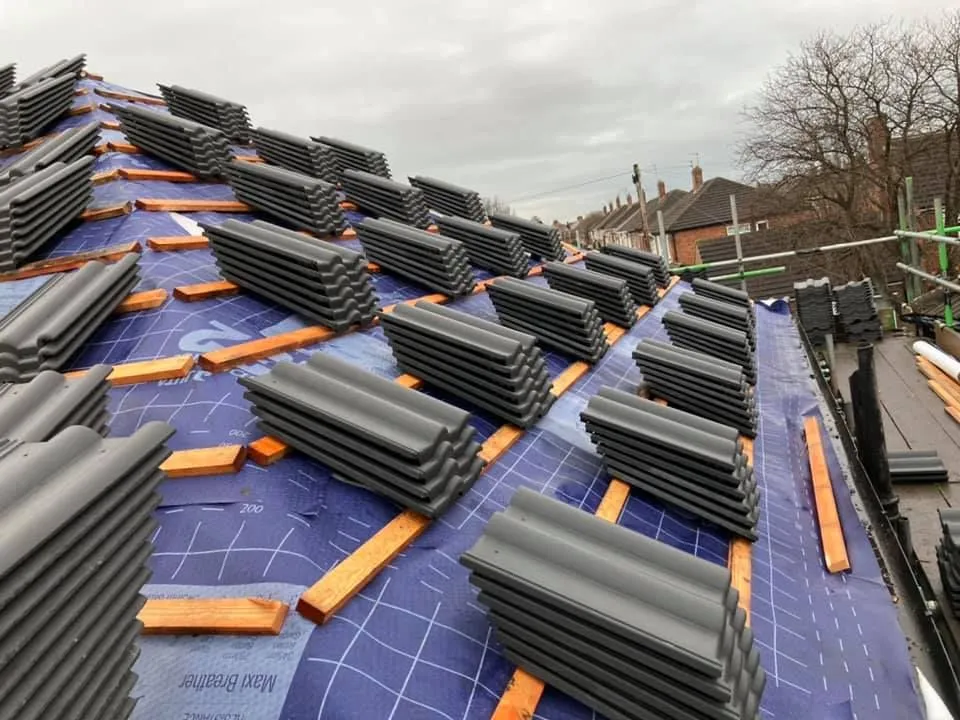
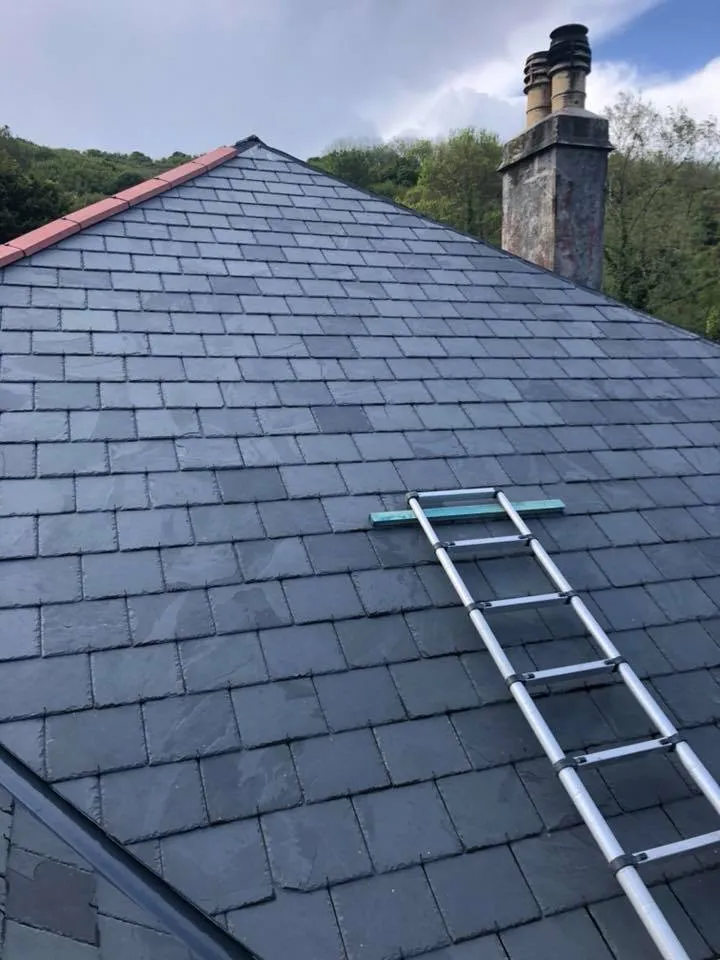
Roof shingle repair Derby jobs are usually less dramatic than they sound. Most of the properties we work on aren’t fitted with the asphalt-style shingles you’d see on an American house — they’re finished in interlocking concrete tiles, clay plain tiles, or the older double-Roman profile that’s common on Derby’s Victorian and Edwardian terraces. When people search for “shingle repair” locally, what they usually mean is a slipped tile, a cracked ridge piece, or a gap that’s letting water into the loft.
Whatever the roof covering, the job is the same: get up safely, work out exactly what’s moved or broken, and get it back into place so your roof is repaired properly rather than patched over. A single slipped tile rarely stays a single problem for long — once one tile has moved, the ones around it lose some of their support, wind gets underneath the gap, and the felt or membrane below starts taking weather it was never meant to face directly.
- IPAF-certified for powered access equipment, so taller Derby roofs get worked on safely
- PASMA-certified for mobile tower work, useful on terraces where a ladder alone isn’t enough
- Straight tile-matching advice up front, so you’re not guessing what colour will turn up on the day
Signs Your Derby Roof Tiles Need Repairing — and What Causes It
Derby’s mix of exposed hillside streets and more sheltered terraces closer to the city centre means wind loading varies a fair bit street to street, which is part of why the whole slope gets checked rather than just the one tile you’ve spotted from the ground. Look out for:
- Tiles that appear crooked or out of line from the ground
- Daylight visible through the roof from inside the loft
- Damp patches on ceilings after rain
- Tile fragments in the gutter or garden
- Moss or vegetation build-up around ridge tiles
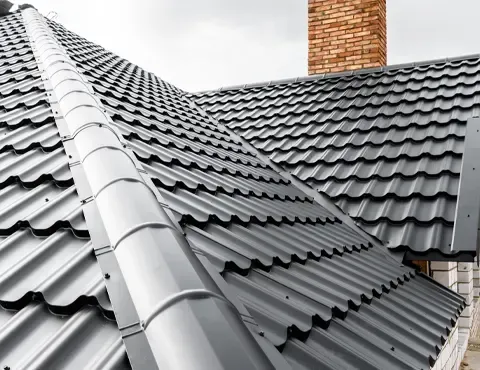
Wind is the biggest factor behind slipped or cracked tiles, especially on roofs facing the prevailing south-westerly weather that comes across Derbyshire, followed by nail fatigue as fixings corrode over decades, frost getting into hairline cracks and expanding them, and general age wear on tiles that have simply been up there a long time. Homes on higher, more exposed ground towards the edges of Derby and out towards the Peak District fringe tend to see faster wear than more sheltered streets closer to the city centre.
What’s Included in a Derby Tile and Shingle Repair Callout
- Replacing individual cracked, slipped or missing roof tiles, matched to your existing colour and profile where possible
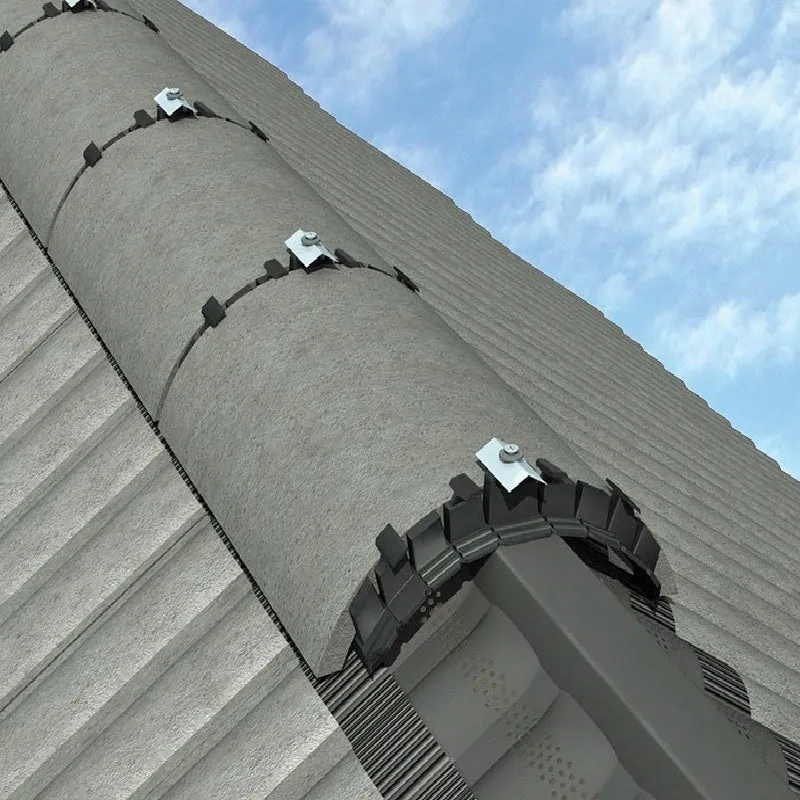
- Re-bedding and re-pointing ridge and hip tiles that have come loose from their mortar
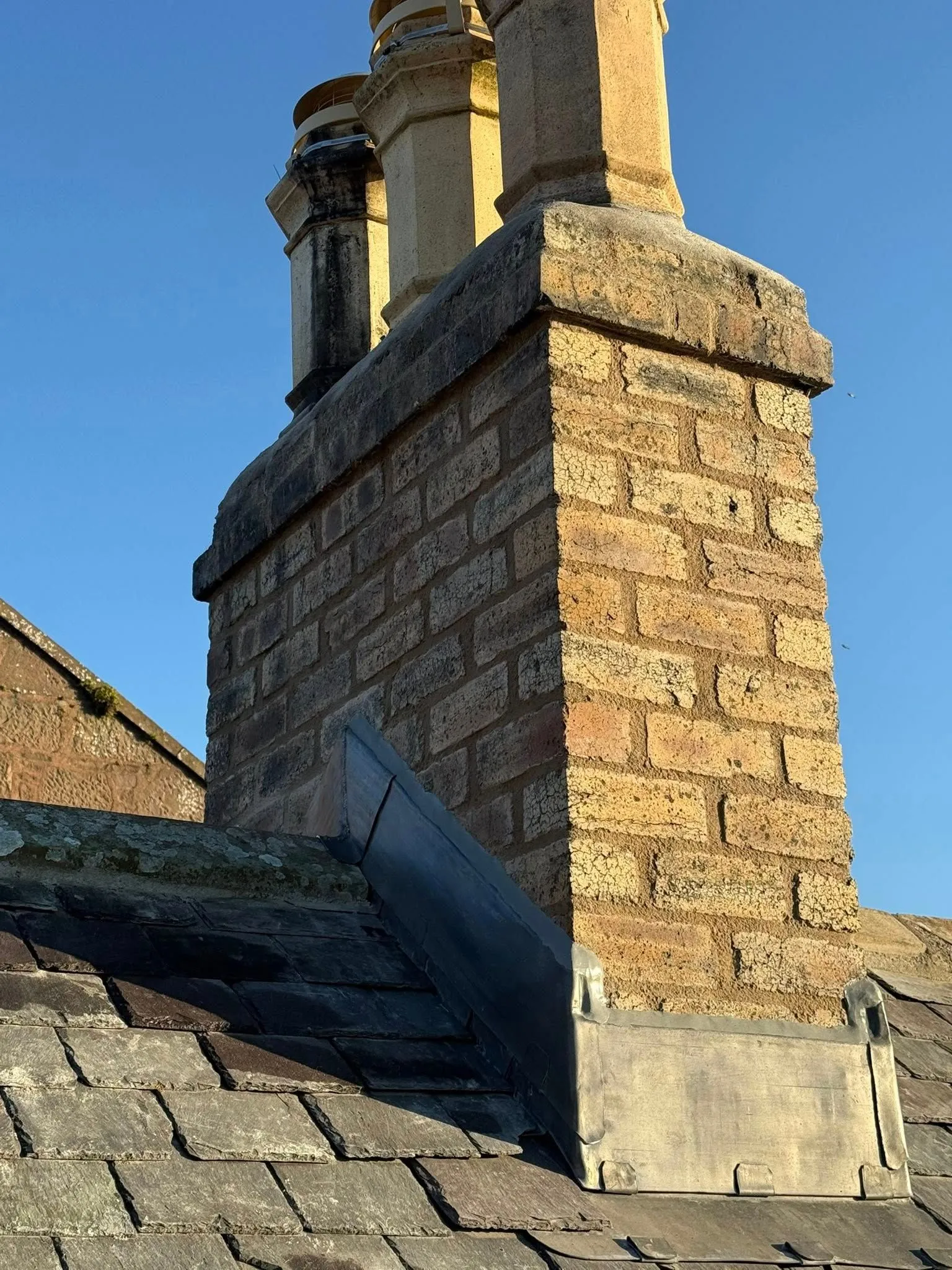
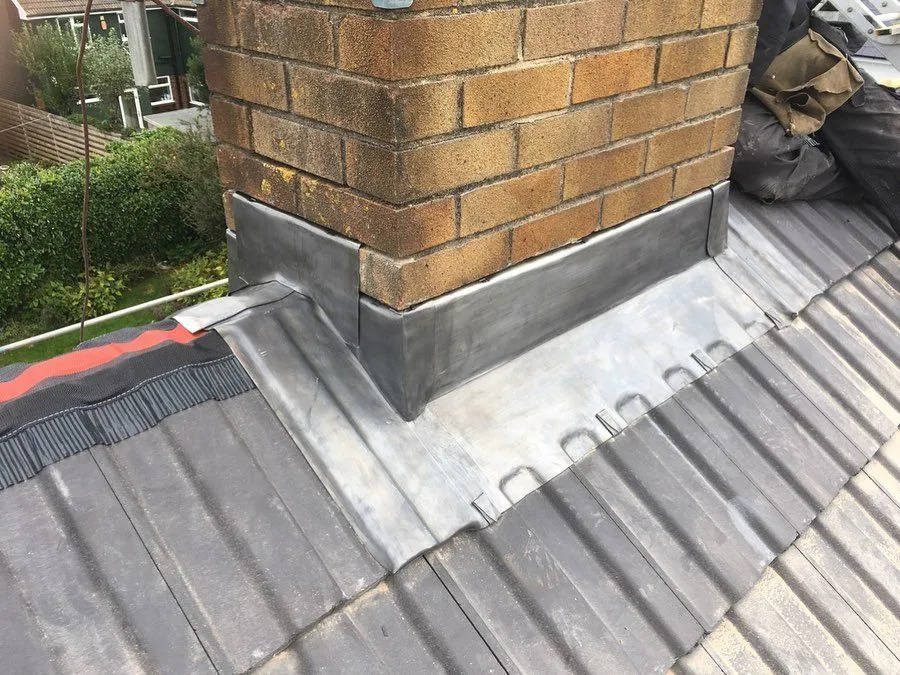
- Lead flashing repairs around chimneys, valleys and abutments where water is getting in at a junction rather than through the tiles themselves
- Clearing debris and moss from valleys and gutters that’s been forcing water back under the tiles
- Checking and replacing damaged battens or nibs directly under the repaired area
- Small localised repairs to felt or underlay exposed once the damaged tiles are lifted
- A check of surrounding tiles for hairline cracks or loose nails while we’re up there
Not Included / Costed Separately
- Full roof strip and re-cover — if more than around a fifth of the roof is affected, re-roofing gets recommended instead and quoted separately
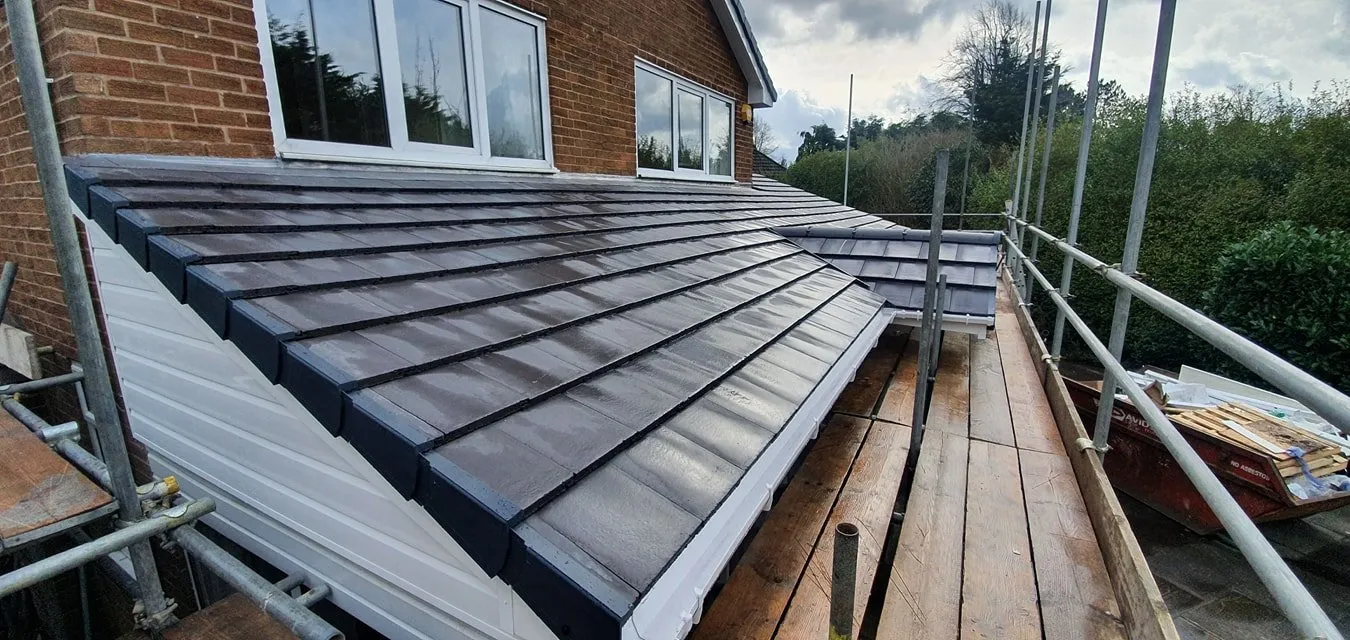
- Scaffolding or tower hire, priced on top when the pitch or height means a ladder isn’t a safe option
- Structural timber repairs to rafters or trusses found once tiles are lifted
- Insurance claim paperwork or loss adjuster liaison — you’ll get a written report to pass on, but the claim itself stays between you and your insurer
- Asbestos-containing roofing materials, which need a specialist removal firm rather than a standard repair
- Full underlay replacement across the whole roof, as opposed to patching the section exposed by the repair
How We Handle a Slipped or Cracked Tile Callout
A tile repair callout follows the same structured process every time, whether it’s one slipped tile or a handful across a slope.
- Tell us what you’re seeing: A phone call or a couple of photos of the affected area, or the tile that’s ended up in the garden, usually gives us enough to plan the visit and bring the right materials the first time.
- Site visit and access check: We look at the roof from ground level first to work out pitch, height and the safest way up — ladder for straightforward single-storey jobs, or a tower where the terrace, dormer or steep pitch calls for it.
- On-roof check: Once up safely, we check the tiles either side of the damage, the battens underneath, and the felt or membrane for wider signs of wear before quoting the actual work.
- Sourcing a matching tile: Where your existing tile is still made, we match colour and profile directly. Where it’s been discontinued, we source the closest reclaimed or current equivalent and position it lower down or on a less visible slope where a slight shade difference matters less.
- Carrying out the repair: Damaged tiles come out, battens and felt get checked and patched if needed, and the new or matched tile goes back in and is properly fixed, not just balanced in place.
- Clear-down and sign-off: Debris is cleared from the roof and gutters, the area is checked from the ground, and you get a rundown of what was found and fixed before we leave.
Most straightforward jobs — a few slipped or broken tiles — are done within half a day once we’re on site, tools out to tools away. Lead flashing repairs or jobs needing a tower for access can run closer to a full day.
What Tile and Shingle Repairs Tend to Cost in Derby
For a straightforward job — a handful of cracked or slipped tiles on a standard two-storey semi — you’re typically looking at somewhere between £150 and £400, with most simple slipped or broken tile repairs falling in the £150–£500 range depending on how many tiles are affected and how accessible the roof is.
Lead flashing repairs, which come up often around chimneys and valleys, tend to run £400–£800 because the lead has to be lifted, reshaped and reseated rather than just swapped out. If the roof’s height or pitch means scaffolding or an independent tower is needed for safe access, add roughly £500–£1,200 to the job — usually the single biggest swing factor in the final bill.

These figures line up with the ranges quoted across UK trade pricing guides for 2026, but they’re a starting point rather than a promise — the only way to get a number you can rely on is a site visit, since the number of tiles affected, the pitch, and what turns up once we’re up there all move the price.
Repair, Flashing Fix, or Full Re-Roof: Working Out Which One You Need
A slipped tile is easy to talk up into a bigger job than it needs to be, and it happens across the trade more than people realise. What actually happens on a Derby Roofers tile callout is a check of the tiles either side of the damage and the felt underneath, then a straight answer about whether that’s a simple repair, a slightly bigger repair, or something that genuinely needs a full re-cover — not an automatic push toward the priciest option.
As a rough guide, if the damage is limited to a handful of tiles or one section, repair almost always makes more sense. If tiles are failing across large areas of the roof, if the felt underneath is visibly perished in several places, or if the roof is past 40–50 years old and showing wear generally rather than in one spot, a full re-roof usually works out better value over time.
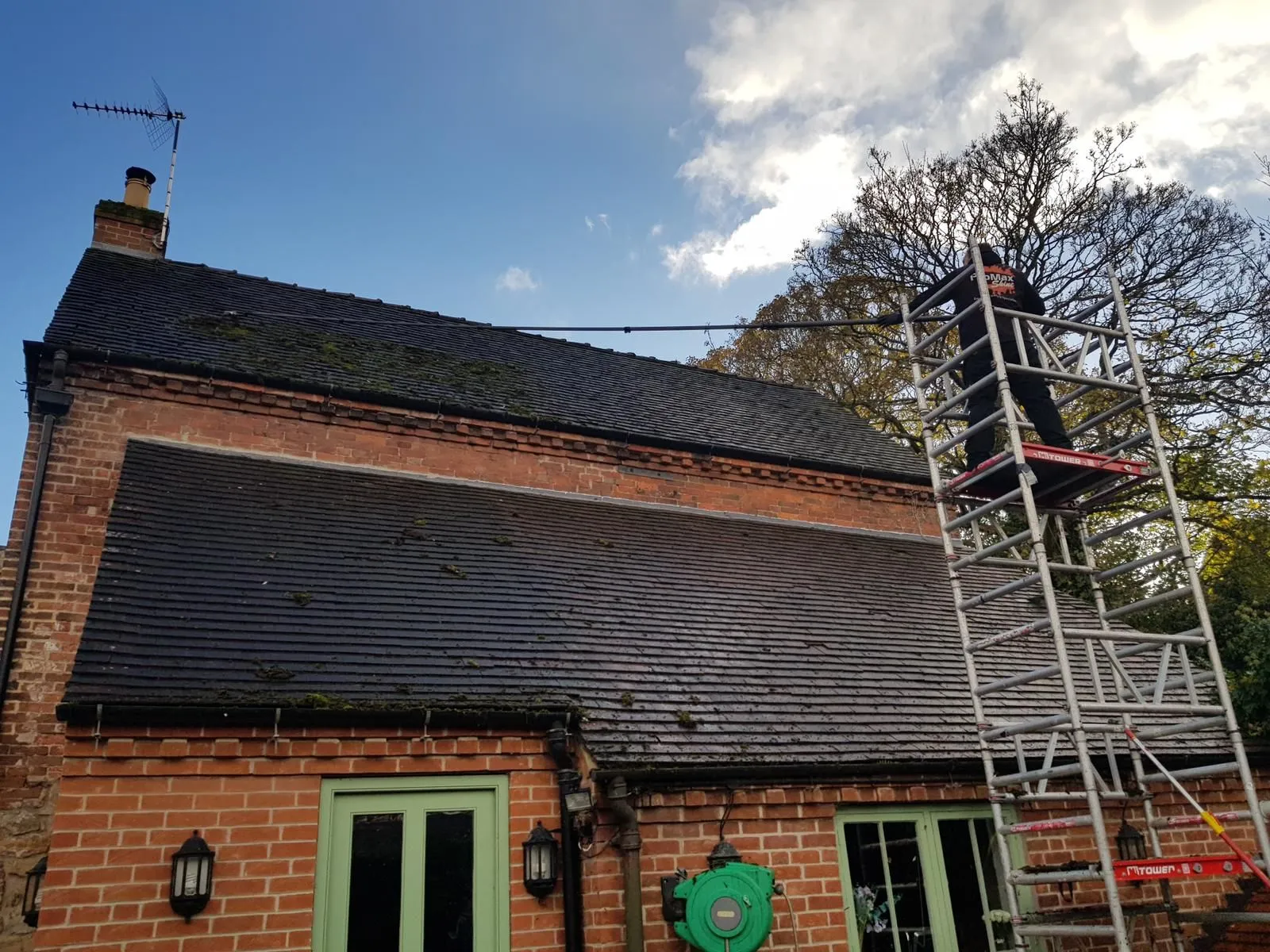
Tile matching gets the same straight treatment: where your original colour or profile is still made, it’s used; where it’s been discontinued, a reclaimed or close equivalent goes on a less visible slope rather than a mismatched tile going straight on the front elevation because it was quicker. Height and pitch are handled properly too — our team holds IPAF and PASMA certification, so a steep-pitched terrace roof or a taller detached house doesn’t mean a wait for scaffolding when a tower can go up and come down safely in an afternoon.
Why Choose Derby Roofers for Tile and Shingle Repairs?
Derby is where most of our shingle and tile repair callouts come from, from the older terraced streets close to the city centre out to the newer estates on the edges of town, and the mix of tile types and roof ages you get across the city is one we see week in, week out.
IPAF & PASMA-Certified Access
Our team holds IPAF certification for powered access equipment and PASMA certification for mobile tower work, so taller or awkward Derby roofs get worked on safely without an automatic wait for full scaffolding.
Honest Repair-First Advice
We tell you plainly whether a repair will fix the problem or whether the roof genuinely needs more. We do not recommend a full re-cover unless it is the right call for your property.
Straight Tile-Matching
Where your tile is still made, we match colour and profile directly. Where it has been discontinued, we source the closest reclaimed or current equivalent and position it carefully so it blends in.
Fully Insured and Qualified
Our team is fully insured and every repair is carried out to a proper standard, not just balanced back into place.
We Actually Answer the Phone
We respond to every call and every email. Send a couple of photos of the damage and we can usually plan the visit and bring the right materials the first time.
Areas We Cover for Tile and Shingle Repairs
Derby is where most of our shingle and tile repair callouts come from — from the older terraced streets close to the city centre out to the newer estates on the edges of town. Beyond Derby itself, we also cover the wider Derbyshire area and take on tile and flashing repair work further afield across the East Midlands and beyond, including Nottingham and Nottinghamshire, Sheffield, Leeds, Manchester, Doncaster, Wakefield, Rotherham, York, Hull, Glasgow, Newcastle, Sunderland, Durham and Liverpool. If you’re outside Derby itself, it’s worth a call to check on a visit planned in your area soon, since travel time factors into how quickly a smaller repair can get booked in. Call us on 01332-529704 and we will confirm straight away.
- Derby (DE1)
- Long Eaton (NG10)
- Belper (DE56)
- Borrowash (DE72)
- Breadsall (DE21)
- Mickleover (DE3)
- Ashbourne (DE6)
- Ilkeston (DE7)
- Willington (DE65)
- Chesterfield (S40)
- Matlock (DE4)
- Bakewell (DE45)
- Swadlincote (DE11)
- Markeaton (DE22)
- Heanor (DE75)
- Ripley (DE5)
- Alfreton (DE55)
- Burton on Trent (DE13)
- Buxton (SK17)
- Nottingham (NG)
Frequently Asked Questions About Roof Shingle & Tile Repair in Derby
How much does it cost to fix a few broken roof tiles in Derby?
For a standard two-storey house with a handful of cracked or slipped tiles, you’re typically looking at £150–£400. That figure covers straightforward access and a small number of tiles — it climbs if scaffolding is needed, if the tiles are hard to match, or if wider damage turns up once we’re up there. A proper price only comes after the roof has actually been looked at.
What are the signs my roof tiles or shingles need repairing?
Look for tiles that appear crooked or out of line from the ground, daylight visible through the roof from inside the loft, damp patches on ceilings after rain, tile fragments in the gutter or garden, and moss or vegetation build-up around ridge tiles. Any one of these on its own is worth a call before it turns into a bigger job.
How long does a typical shingle or tile repair take?
Most straightforward jobs — a few slipped or broken tiles — are done within half a day once we’re on site, tools out to tools away. Lead flashing repairs or jobs needing a tower for access can run closer to a full day.
Can a single cracked tile really cause a bigger roof problem?
Yes, and it’s one of the more common ways a small job turns into a large one. A cracked or slipped tile lets water reach the felt underneath directly rather than running off the tile surface. Over weeks and months that can soak into the battens, rot timber, and eventually show up as a damp patch on a ceiling nowhere near where the original crack was.
Do I need scaffolding for a small tile repair?
Not usually. Most single-storey and standard two-storey roofs can be worked on safely with a ladder or a mobile tower — our PASMA certification covers exactly that kind of access. Scaffolding tends to come into play on steeper pitches, taller properties, or where several separate areas of the roof need attention at once.
How do I know if I need a repair or a full roof replacement?
As a rough guide, if the damage is limited to a handful of tiles or one section, repair almost always makes more sense. If tiles are failing across large areas of the roof, if the felt underneath is visibly perished in several places, or if the roof is past 40–50 years old and showing wear generally rather than in one spot, a full re-roof usually works out better value over time. You’ll get an honest steer either way rather than a push toward one option.
What causes roof tiles to slip or crack in Derby in the first place?
Wind is the biggest factor, especially on roofs facing the prevailing south-westerly weather that comes across Derbyshire, followed by nail fatigue as fixings corrode over decades, frost getting into hairline cracks and expanding them, and general age wear on tiles that have simply been up there a long time. Homes on higher, more exposed ground towards the edges of Derby and out towards the Peak District fringe tend to see faster wear than more sheltered streets closer to the city centre.
Is shingle or tile repair covered by home insurance?
Sometimes, if the damage was caused by a specific insured event like a storm, and not if it’s put down to gradual wear and tear, which most tile slippage over time falls under. It’s worth checking your policy wording and, if you think it might be a storm claim, getting a written assessment before you speak to your insurer.
What happens if my exact tile colour isn’t made any more?
It comes up more than you’d think, especially on older Derby roofs where the original tile has been discontinued or has weathered to a shade that’s hard to match new. Reclaimed tiles or the closest current equivalent get sourced, with any slight colour difference positioned on a less visible slope or lower course where it blends in rather than standing out on the front elevation.
Get a Slipped or Cracked Tile Sorted Before the Next Storm
A tile that’s already moved won’t fix itself, and every spell of wind and rain between now and your repair is a chance for a small gap to become a bigger one.
If you’ve spotted a slipped tile, a crack, or a damp patch that’s turned up out of nowhere, get in touch and get a visit booked in to look at it properly. Derby Roofers has been repairing tiles, ridges and lead flashings across Derby and Derbyshire for over 20 years.
- ✅ IPAF & PASMA-certified team for safe access at height
- ✅ Straight tile-matching advice, no guessing on colour
- ✅ Written quote before any work is booked in
- ✅ Most repairs done within half a day
If tile repair isn’t quite the right fit for what’s going on with your roof, we’ll tell you straight and talk you through the alternative.