
Roof Restoration Derby | Free Drone Survey
Call: 01332-529704
Repair, protect and extend the life of your Derby roof — soft-wash cleaning, tile and slate repairs, ridge repointing, leadwork and a breathable protective coating, without the cost and disruption of a full replacement.
- Free Drone Roof Survey
- Fixed-Price Written Quote
- IPAF & PASMA-Certified Team
- No Subcontractors
What Is Roof Restoration — and Is It Right for Your Derby Home?
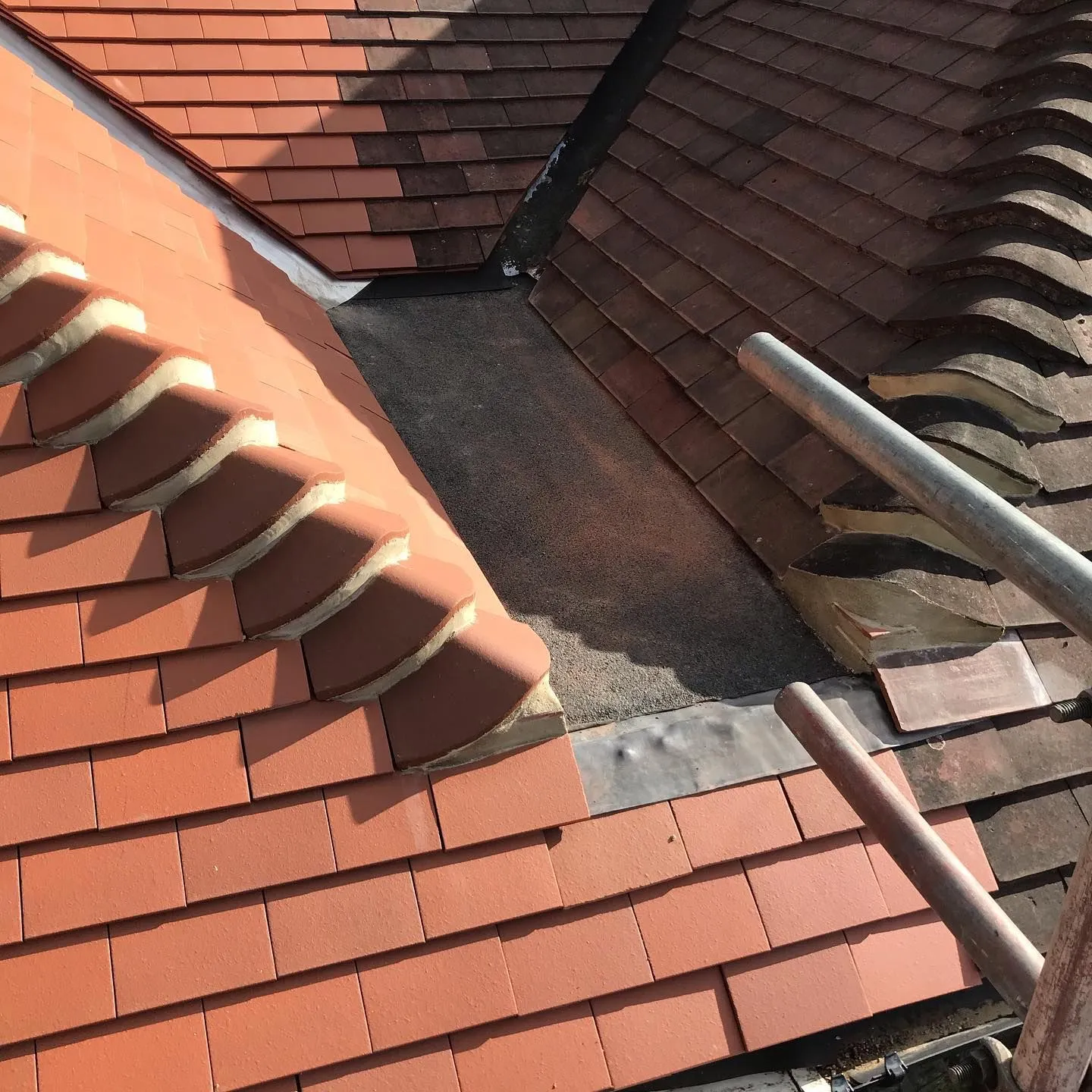
Roof restoration repairs and protects an existing roof without replacing it entirely. It suits roofs that are structurally sound but showing signs of wear — moss growth, cracked mortar, slipped tiles, or failing flashings. In Derby, where much of the housing stock dates back 50 to 100 years, restoration is one of the most common and cost-effective roofing jobs we carry out.
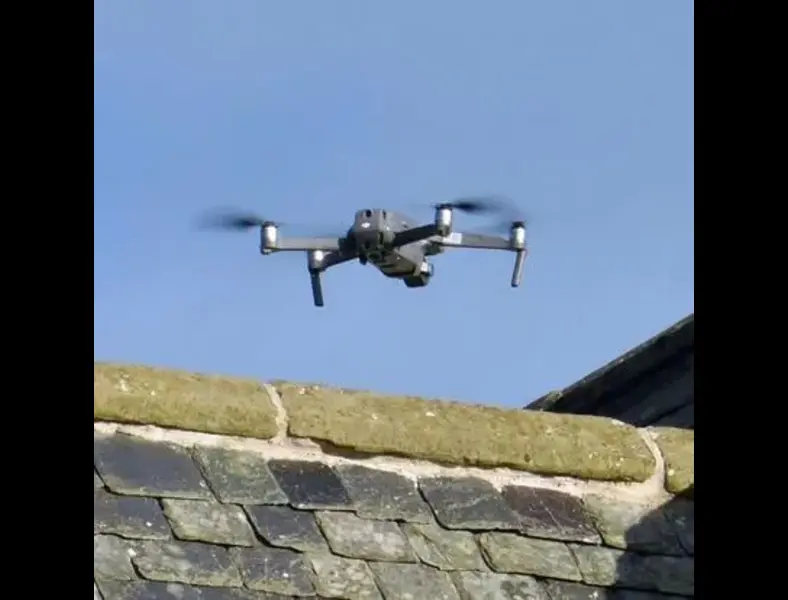
We start every job with a free drone roof survey, so you see exactly what your roof looks like before we recommend anything. No ladders, no guesswork — just a clear, honest written report and a fixed-price quote.
A full restoration typically includes:
- Soft-wash cleaning — safely removes moss, algae and lichen without damaging tiles
- Tile and slate repairs — replacing cracked, slipped or missing materials
- Ridge and hip repointing — fresh mortar or a dry-fix system where appropriate
- Lead flashing repairs — around chimneys, dormers and valley junctions
- Breathable protective coating — seals the tile surface and extends roof life
How to Tell If Your Derby Roof Needs Restoration or Full Replacement
Most Derby homeowners only find out there’s a problem when water starts coming through — by which point the damage is already done. Roof restoration is the right answer when the structure is still sound but the surface and mortar joints have deteriorated. A full replacement is needed when the felt, battens, or roof timbers have failed.
Signs your roof needs restoration, not replacement:
- Missing, slipped or cracked tiles — but the underlying felt and battens are intact
- Ridge mortar crumbling or gaps appearing along the ridge line
- Heavy moss or lichen growth left untreated for several years
- Lead flashing pulling away from a chimney or parapet wall
- Damp patches on upper ceilings — but no structural failure visible in the loft
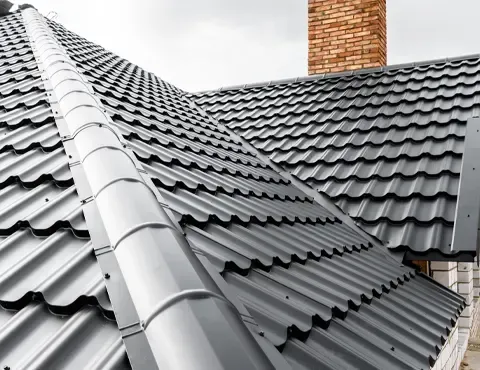
Signs replacement is needed instead:
- Daylight visible through the felt in the loft space
- Sagging or uneven roof lines indicating timber failure
- Widespread felt deterioration or multiple failed batten runs
- Persistent leaks that repairs have not resolved
We will always tell you honestly which category you are in. Our free drone survey inspects every surface before we make any recommendation — we never push work that isn’t needed. Derby properties on north-facing slopes, particularly in areas like Allestree and Darley Abbey, hold moisture for longer, which accelerates tile deterioration and mortar failure. An early inspection costs nothing; waiting until the roof visibly fails can push a restoration job into a full replacement.
Our Step-by-Step Roof Restoration Process
A roof restoration is not just a clean and a coat. Done properly, it’s a structured process that addresses every weak point on the roof surface before any protective treatment is applied.
- Free drone roof survey: We map the full roof condition using professional-grade drone equipment, identifying every slipped tile, cracked ridge, failed flashing and moss-heavy zone before we touch the roof.
- Written, fixed-price quote: A fully itemised quote — no vague estimates, no work starts without your written approval.
- Soft-wash roof clean: A low-pressure, biodegradable cleaning system removes moss, algae and lichen safely, without the tile damage pressure-washing can cause.
- Biocide treatment: Applied after cleaning to inhibit moss and algae regrowth at a biological level, extending the results of the clean significantly.
- Tile and slate repairs: Broken, slipped or missing tiles are replaced and properly secured, matched to existing materials as closely as possible.
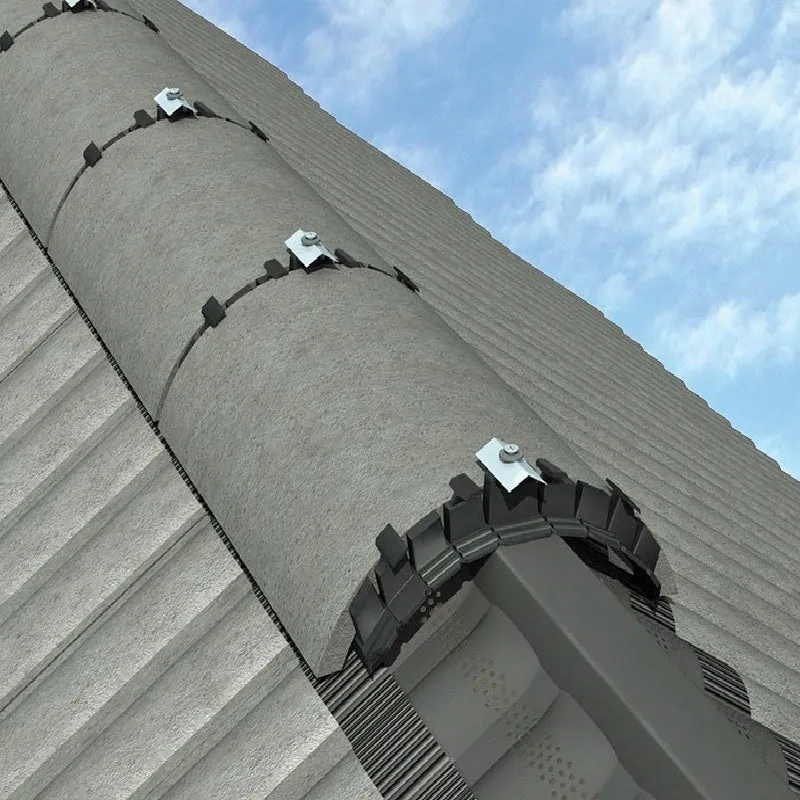
- Ridge and hip repointing: Failed mortar joints are raked out and repointed. Where appropriate, we install a dry-fix ridge system — a longer-lasting, maintenance-free alternative to mortar.
- Flashing repairs: Lead or aluminium flashings around chimneys, dormer walls and valleys are re-dressed or replaced where necessary.
- Breathable protective coating: Applied to clean, sound tiles to seal the surface against water ingress and slow moss regrowth. All products are BBA-approved and specified for the UK climate.
- Final inspection and clean-down: The roof is checked in full, all debris is removed, and your property is left clean and tidy.
Properties in areas like Normanton and Pear Tree — where Victorian terraces sit close together and gutters are shared — often have compounding issues. Blocked valleys, failed flashings and crumbling ridge mortar all present at the same time. We work through every problem we find, not just the one you called about.
Why Derby’s Climate Makes Roof Coatings and Sealing Essential
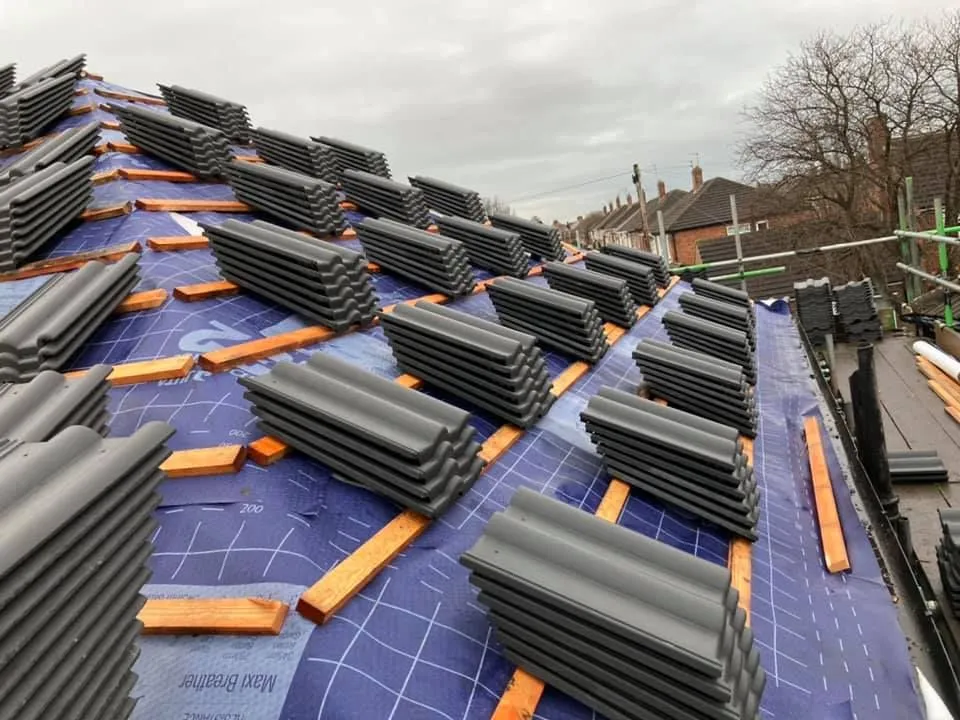
Derby sits in a frost hollow — cold air drains down from the surrounding hills and settles in the city overnight. This means Derby regularly experiences harder frosts than nearby towns, and more freeze-thaw cycles through winter.
Freeze-thaw damage is one of the leading causes of tile failure on Derby roofs. When water soaks into a porous concrete or clay tile and then freezes, it expands. Over several winters, this spalls the tile surface and cracks the structure from within.
How a breathable coating protects your tiles: the coating we apply forms a breathable, water-resistant film across the tile surface. It blocks liquid water from soaking into the tile, while still allowing moisture vapour to pass out of the tile and roof structure — preventing condensation and trapped damp.
This isn’t the same as painting a roof. An impermeable coating traps moisture and causes more damage than it prevents. Every product we specify is BBA-approved and designed for the UK climate — specifically for the wetter, colder conditions of the East Midlands. Homes in Mickleover, Littleover and Chellaston, where concrete interlocking tiles from the 1970s and 1980s are common, are particularly well-suited to this treatment.
Victorian and Edwardian Terraces in Derby — A Specialist Approach Is Needed
Derby has a high proportion of pre-1940s housing. The streets around Normanton, Arboretum, Pear Tree and Abbey are densely packed with Victorian and Edwardian terraced homes that have been standing for well over a century. These roofs need a fundamentally different approach to a modern concrete-tiled semi in Chellaston.
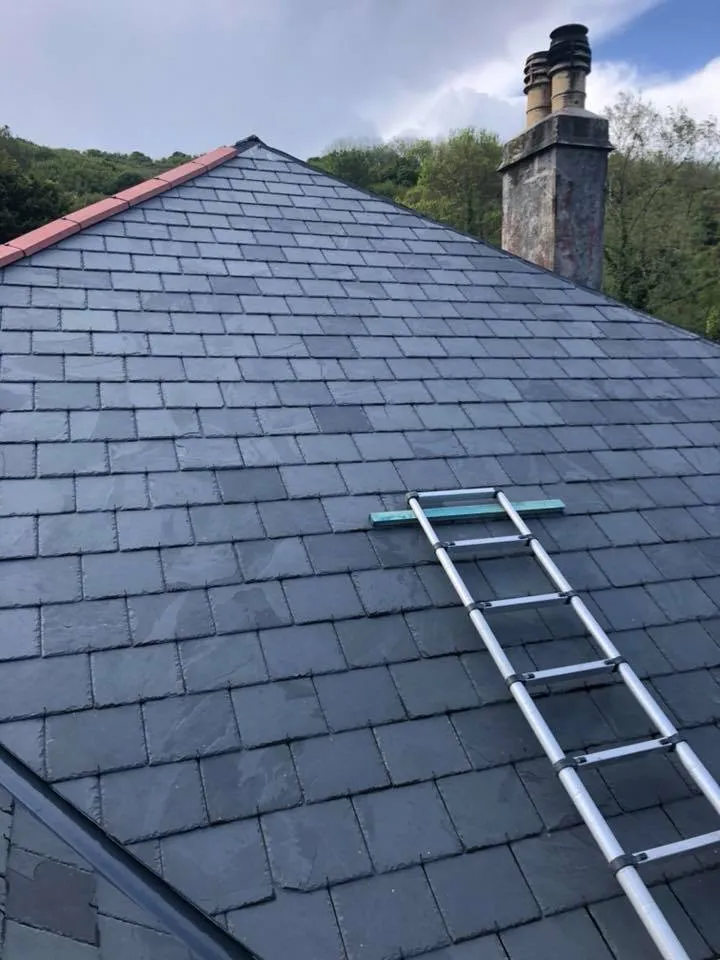
Welsh slate and nail sickness: original Welsh slate was the standard roofing material on most Derby Victorian terraces. Slate itself is exceptionally durable — but the nails holding it in place are not. After 80 to 100 years, the original nails corrode and the slates begin to slip. This is known as nail sickness. A roof with nail sickness looks intact from the street but is progressively losing fixings across the whole surface. A proper assessment tells you whether targeted re-nailing or a full re-slate is the right course of action.
Older Derby buildings were designed to breathe. Solid brick walls and lime mortars allow moisture to move through the structure and evaporate naturally. When modern materials — hard cement mortars, impermeable sealants, or non-breathable coatings — are applied, that moisture gets trapped, leading to damp, failed mortar joints and, in some cases, timber rot. We always specify breathable materials on pre-1940s Derby properties — where ridge mortar needs replacing, we use a flexible breathable compound, not hard OPC cement.
Conservation Areas, Listed Buildings and Spray Foam Removal in Derby
If your Derby property sits in a conservation area — such as parts of Derby city centre or Darley Abbey — some roofwork may require prior notification or consent from Derby City Council. We advise you on this as part of the free survey. No work starts until you know exactly where you stand.
We also carry out spray foam removal on older Derby properties where foam insulation has been applied directly to the underside of roof tiles. This is a known issue that renders properties unmortgageable. We remove it and restore the roof to a condition that satisfies mortgage lenders.
Spray foam removal, structural timber repairs and full re-slating for roof-wide nail sickness are treated as separate services from a standard restoration — we’ll always tell you honestly if your roof needs one of these rather than a restoration package.
Lead Flashing Repairs and Ridge Repointing — The Detail Work Behind a Restoration
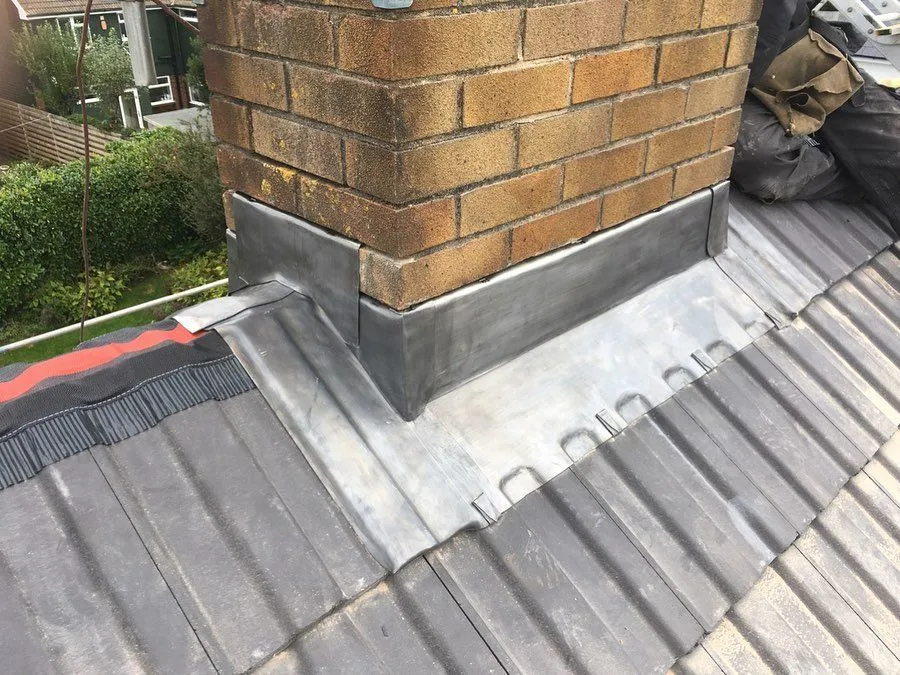
Flashing failures and crumbling mortar joints are two of the most common reasons a sound roof starts to leak. Lead or aluminium flashing around chimneys, dormer walls and valley junctions is re-dressed or replaced where it has pulled away or split, stopping water tracking down into the roof structure at exactly the points where two surfaces meet.
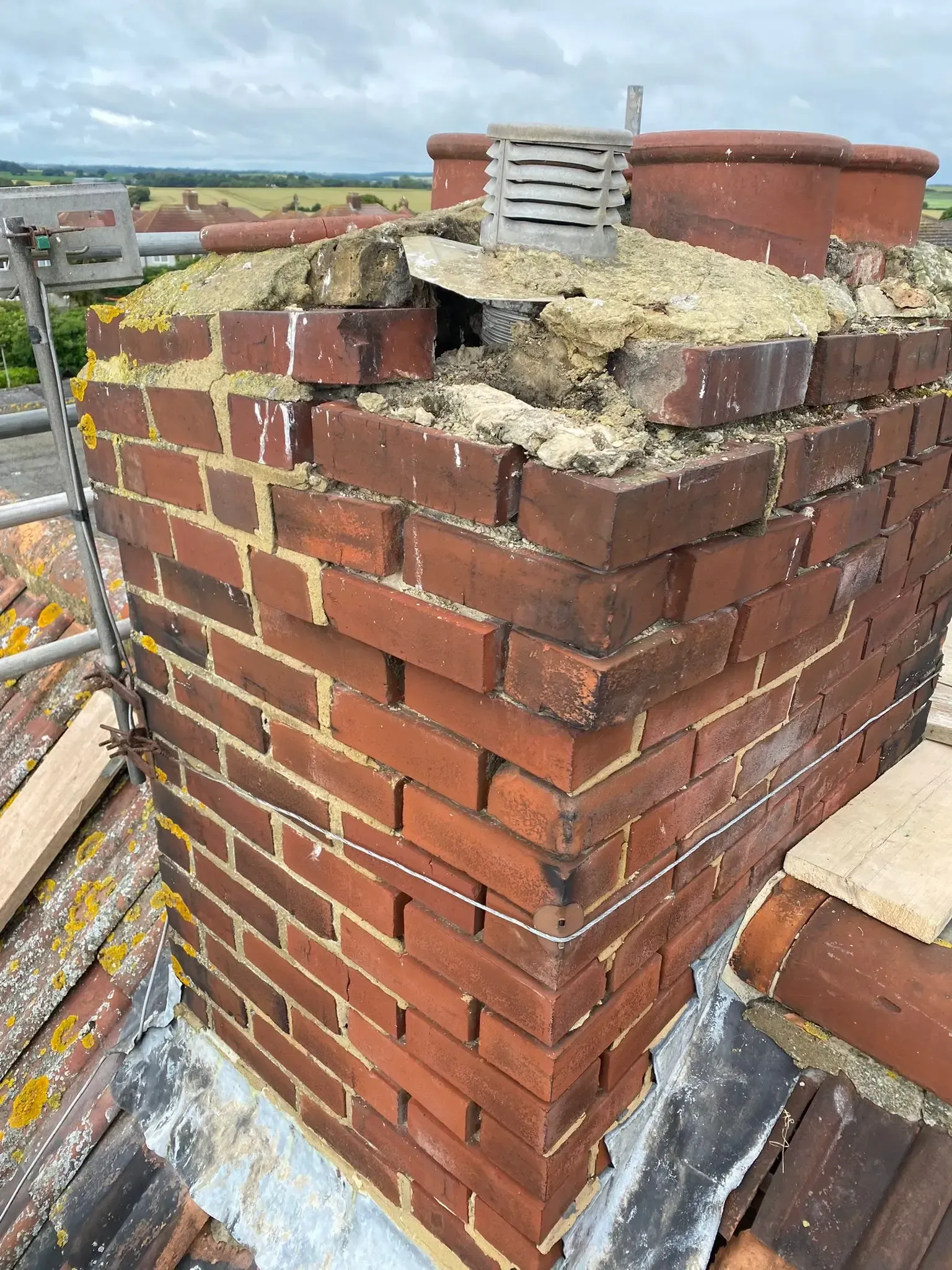
Ridge and hip mortar fails gradually — freeze-thaw cycles open small cracks that widen every winter until sections lift or fall away completely. We rake out failed mortar and repoint with a flexible, breathable compound, or fit a dry-fix ridge system where it’s the better long-term option: a mechanically fixed, maintenance-free alternative that removes mortar failure from the equation entirely.
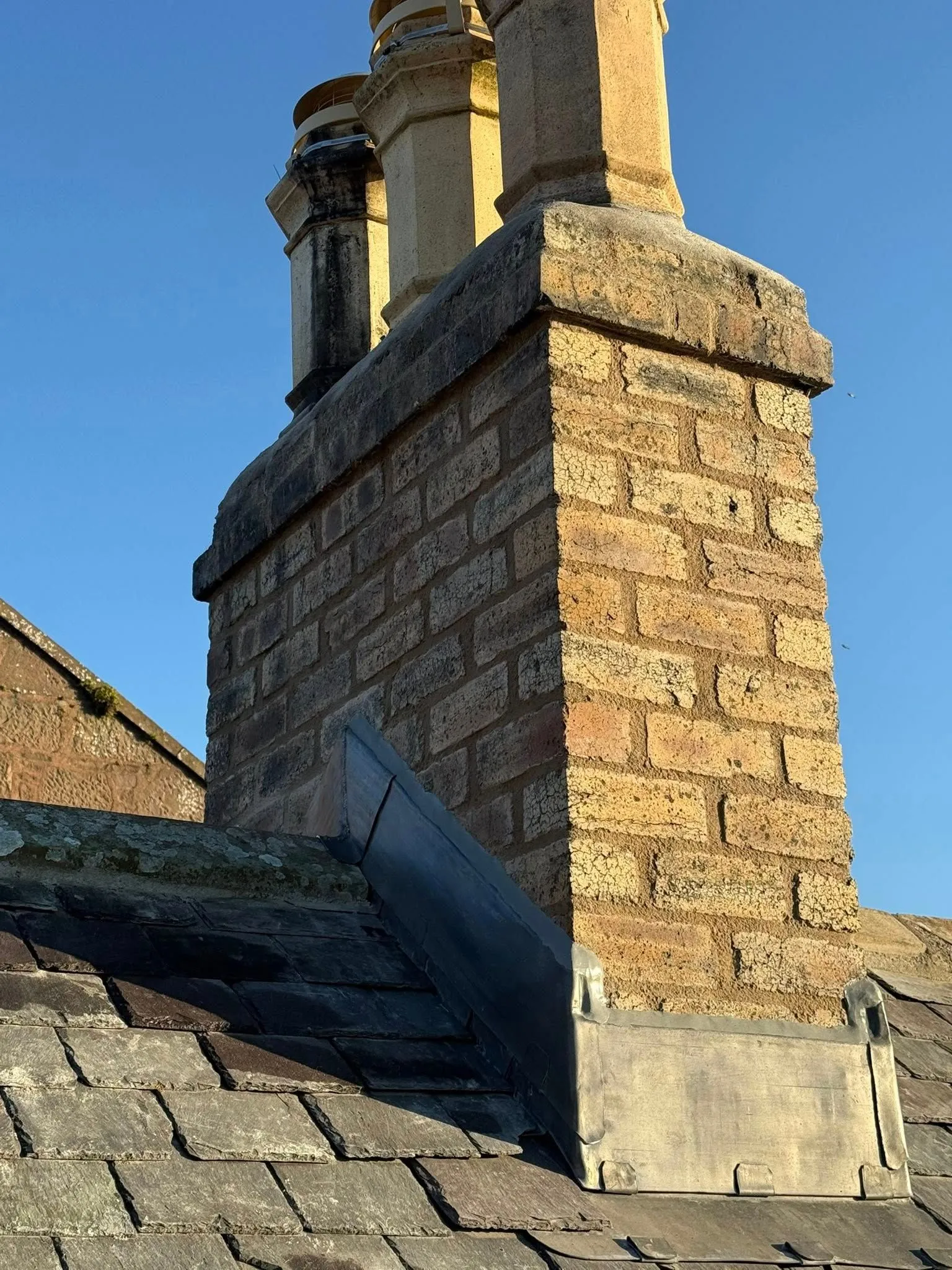
Both jobs are common on the same visit — a roof with failed ridge mortar has usually been sitting untreated for years, and chimney flashing nearby is often showing the same age-related wear. Dealing with both together, rather than one at a time, is part of what makes a full restoration better value than a series of one-off call-outs.
Restored Roofs Last Longer — How to Protect Yours After Treatment
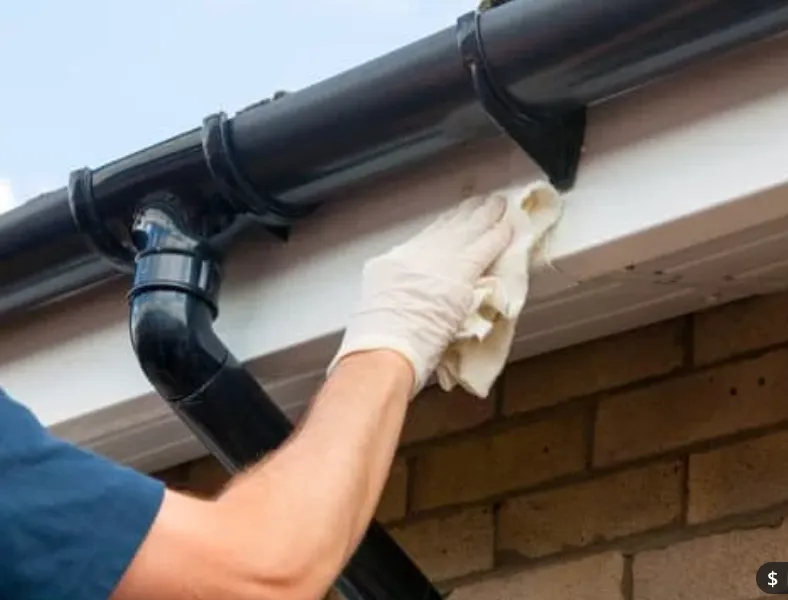
A professional restoration resets the clock on a roof that still has structural life left. After treatment, the key is keeping it that way. Moss and algae return over time — typically within three to five years without preventative treatment. A biocide application after every clean significantly slows regrowth.
The breathable coating we apply can last a decade or more on a properly prepared, structurally sound surface. What shortens it is applying coating to a dirty, mossy or already-failing tile — which is why the survey and preparation stages aren’t shortcuts, they’re what makes the whole treatment last.
Derby Roofers Helped a Chesterfield Homeowner Save His Roof — Without Replacing It
Travis owns a 1930s semi-detached on Chatsworth Road in Chesterfield. He’d noticed dark streaks across his tiles, a crumbling ridge line, and a damp patch appearing on his upstairs ceiling after heavy rain. Two contractors had already told him the roof needed a full replacement, with quotes running into thousands.
He called Derby Roofers for a second opinion. We booked a free drone survey within 48 hours. The footage told a different story — the roof structure was sound, the felt and battens were intact. What Travis actually had was years of unchecked moss growth, failed ridge mortar, and a lead flashing that had pulled away from his chimney stack, allowing water to track down into the bedroom ceiling below.
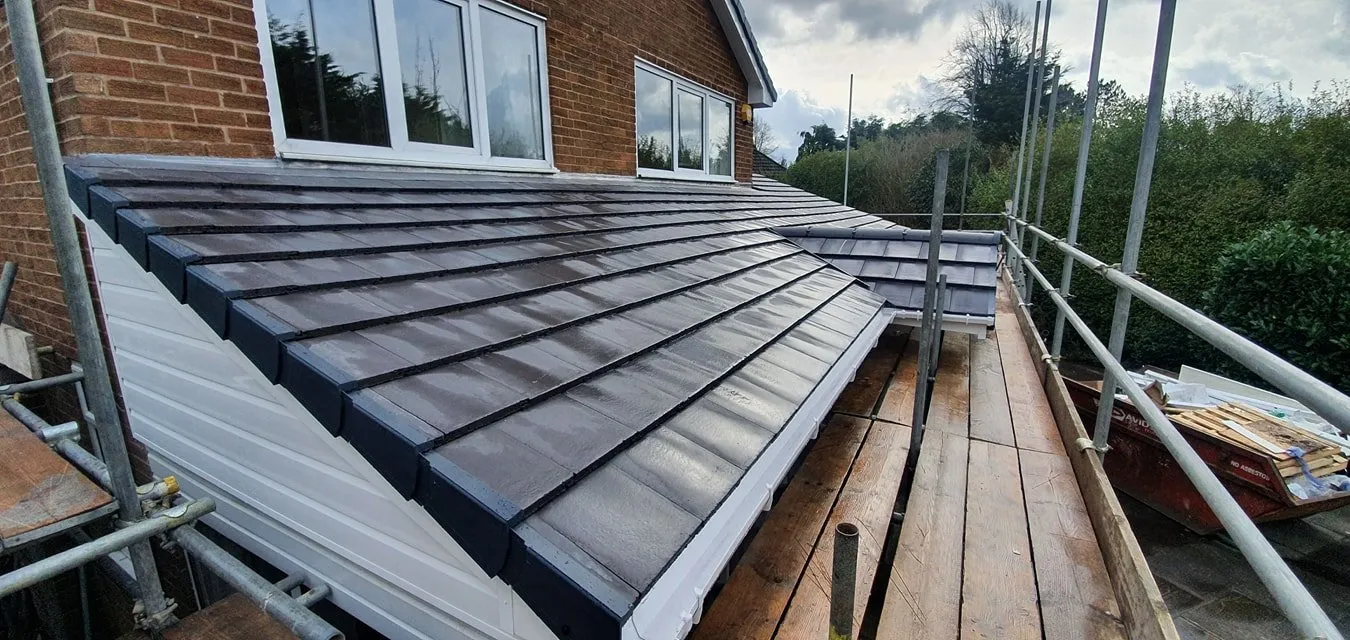
No replacement needed. We soft-washed the entire roof, replaced two cracked tiles, repointed the full ridge line with a flexible breathable compound, and re-dressed the chimney flashing. A BBA-approved breathable coating was applied across the whole surface to protect against Chesterfield’s cold winters. Total time on site: two days. Travis’s roof is watertight, restored and protected — and he kept thousands of pounds in his pocket.
What’s Covered in a Derby Roof Restoration — and What Costs Extra
- Free drone roof survey and a fully itemised, fixed-price written quote before any work is booked
- Soft-wash cleaning to remove moss, algae and lichen without the tile damage pressure-washing can cause
- Biocide treatment applied after the wash to slow moss and algae regrowth
- Replacement of cracked, slipped or missing tiles and slates, matched to existing materials
- Ridge and hip repointing, including a dry-fix ridge system where it’s the better long-term option
- Lead and aluminium flashing repairs around chimneys, dormers and valley junctions
- A breathable, BBA-approved protective coating applied once tiles are clean and sound
- A final inspection and full clean-down, with all debris removed from site
Not Included / Costed Separately
- Full roof replacement — needed once felt, battens or roof timbers have failed, rather than just the tile surface and mortar
- A complete re-slate where nail sickness has affected the whole roof, rather than a handful of slipped slates
- Spray foam insulation removal, carried out as a separate service where foam has been sprayed directly onto the underside of tiles
- Structural timber repairs inside the loft
- Submitting formal conservation area or listed building consent applications to Derby City Council — we advise on whether consent is needed, but the application itself sits outside the restoration job
How Much Does Roof Restoration Cost in Derby?
Roof restoration costs in Derby depend on the size of your roof, its current condition, and what work is needed. A full restoration on a typical semi-detached — including cleaning, repointing, minor tile repairs and coating — costs less than a full re-roof. We don’t publish a fixed price list because no two roofs are the same; every enquiry gets a free drone survey and a fixed-price written quote before anything is booked in.
Why Choose Derby Roofers for Your Roof Restoration?
Over 20 Years of Local Experience. We have been restoring and protecting roofs across Derby and Derbyshire for over 20 years, from Victorian terraces in Normanton to concrete-tiled semis in Mickleover, and we know what problems each type of property typically presents.
Honest Surveys, No Pressure
We carry out free drone roof surveys and give you a clear, written quote. If a full restoration isn’t what your roof needs, we’ll tell you — we never push work that isn’t needed.
Free Drone Survey
We use drone technology to inspect roofs safely and accurately before quoting. You get a thorough assessment without the cost of scaffolding just for a survey.
BBA-Approved, Breathable Products
Every coating and repointing compound we specify is BBA-approved and breathable, so moisture in the roof structure can still escape — particularly important on Derby’s older housing stock.
No Subcontractors
The team that surveys your roof is the same team that carries out the restoration. Every job comes with written documentation of the work carried out, useful for insurers, solicitors and estate agents.
We Actually Answer the Phone
We respond to every call and every email. If you leave a message, we call back — you deserve a contractor who communicates clearly from first contact to final sign-off.
Areas We Cover for Roof Restoration Across Derby and Derbyshire
We carry out roof restoration work across Derby and the surrounding Derbyshire area — no call-out fee, a free drone survey, and the same local team on every job. Derby is our base, and most restoration jobs sit within the city itself, but we also cover the wider county including Belper, Duffield, Ripley, Heanor, Ilkeston, Long Eaton, Swadlincote and Ashbourne. If your property sits further out, call to check availability — most jobs within roughly a twenty-mile radius of Derby city centre are within easy reach. Not sure if we cover your area? Call us on 01332-529704 and we will confirm straight away.
- Derby City Centre (DE1)
- Normanton & Pear Tree (DE23)
- Allestree & Darley Abbey (DE22)
- Littleover (DE23)
- Mickleover (DE3)
- Chaddesden & Spondon (DE21)
- Alvaston & Chellaston (DE24)
- Borrowash (DE72)
- Breadsall & Oakwood (DE21)
- Markeaton & Mackworth (DE22)
- Long Eaton (NG10)
- Ilkeston (DE7)
- Belper (DE56)
- Heanor (DE75)
- Ripley (DE5)
- Alfreton (DE55)
- Matlock (DE4)
- Bakewell (DE45)
- Ashbourne (DE6)
- Willington & Findern (DE65)
- Swadlincote (DE11)
- Burton on Trent (DE13)
- Chesterfield (S40)
- Buxton (SK17)
- Nottingham (NG)
Roof Restoration FAQs — Derby Homeowners Ask
How Do I Know If My Roof Needs a Restoration or a Full Replacement?
It comes down to what’s underneath the tiles. If the felt, battens and roof timbers are still sound and only the tile surface and mortar have worn, deteriorated or grown moss, a restoration deals with that without stripping the roof back. A full replacement is needed once the felt has perished, battens have failed, or leaks keep coming back despite repairs. The free drone survey is how we tell which situation you’re in before any quote is written.
Is the Drone Survey Actually Free, and Does It Commit Me to Anything?
Yes, the survey is free and there’s no obligation attached to it. We fly the drone over the roof rather than putting a ladder against your wall, then put together a fully itemised, fixed-price written quote based on what we find. You can take that quote away and think it over — nothing is booked until you decide to go ahead.
Will You Use a Pressure Washer to Clean the Tiles?
No. Restoration cleaning is done with a soft-wash: a controlled, low-pressure application that removes moss, algae and lichen without the tile damage a pressure washer can cause, followed by a biocide treatment that slows how quickly growth comes back. Pressure washing can strip the protective granules off a tile and drive water under laps that aren’t designed to take it, so it isn’t part of how we clean a roof.
What Does the Protective Coating Actually Do?
Once the tiles are clean and any cracked, slipped or missing ones have been replaced, we apply a breathable, BBA-approved coating over the top. It seals the tile surface against further weathering while still allowing moisture trapped in the roof space to escape from underneath, rather than sealing it in.
How Much Does Roof Restoration Cost in Derby?
Roof restoration costs depend on the size of your roof, its current condition, and what work is needed. A full restoration on a typical semi-detached — including cleaning, repointing, minor tile repairs and coating — costs less than a full re-roof. We provide a free drone survey and a fixed-price written quote for every enquiry.
Is Roof Restoration Worth It, or Should I Just Replace the Roof?
Restoration is worth it when the roof structure is still sound. If the felt, battens and timbers are intact and the tiles still have life in them, restoration adds years to the roof at a fraction of the cost of replacement. If the structure has failed, replacement is the correct call, and we will always tell you honestly which applies to your roof.
How Long Does a Roof Restoration Last?
A professionally restored roof with a quality breathable coating applied to properly prepared tiles can last ten years or more before the next full treatment is needed. Regular maintenance — gutter clearing, biocide re-treatment and periodic inspections — extends this further.
Will Moss Come Back After Roof Cleaning and Treatment?
Moss will return over time on any untreated roof. A biocide treatment applied after cleaning significantly slows regrowth, typically keeping the roof clear for three to five years. A breathable coating adds another layer of protection by reducing the moisture the tile holds. Annual maintenance keeps it manageable between full treatments.
Do I Need Planning Permission for Roof Restoration in Derby?
In most cases, no — standard roof restoration (cleaning, repointing, tile repairs and coating) falls under permitted development rights. If your property is a listed building or sits in a conservation area, such as parts of Derby city centre or Darley Abbey, some work may require prior consent. We advise you on this during the free survey.
Do I Need to Notify My Home Insurer Before Roof Restoration in Derby?
It’s worth checking your policy — some home insurers require notification before significant roofwork is carried out, and failing to notify can, in some circumstances, affect a subsequent claim. We recommend checking with your insurer before booking.
Do You Need Scaffolding, or How Do You Reach a Steep or Terraced Roof?
It depends on the property. Straightforward roofs are worked from ladders and roof ladders, but for ridge lines, chimney stacks or taller terraced elevations that need closer access, our team holds IPAF certification for powered access equipment and PASMA certification for mobile access towers, so that access is set up and used safely without always requiring full scaffolding.
Ready to Book Your Free Roof Restoration Survey in Derby?
Your roof takes the full weight of the British weather, year after year. Leaving it unchecked — or trusting it to a contractor who is not local, not insured, and not putting anything in writing — is a risk your home doesn’t need.
Derby Roofers has been protecting homes and businesses across Derby and Derbyshire for over 20 years. We carry out a free drone roof survey for every new enquiry, provide a clear written quote before any work starts, and we never use subcontractors — the team that visits you is the team that does the work.
- ✅ Free drone survey and fully itemised, fixed-price written quote
- ✅ Over 20 years restoring roofs across Derby and Derbyshire
- ✅ IPAF & PASMA-certified access team
- ✅ No subcontractors — the surveying team does the work
Whether your roof needs a full restoration, a targeted repair, or you simply want to know where you stand, the first step is a free inspection.