
New Roof Building Regulations in Derby: What Homeowners Need to Know (2026)
Call: 01332-529704
Most full roof replacements in Derby require building regulations approval, not just a like-for-like repair. Derby has 16 conservation areas and a large Victorian and Edwardian housing stock, so local rules add a layer that most online roofing guides skip entirely. We manage Building Control compliance, Part L insulation upgrades and conservation area rules as standard on every re-roof.
- 20+ Years Handling Building Control Compliance Across Derby and Derbyshire
- Free Drone Roof Survey With a Written Report, No Obligation
- IPAF and PASMA-Certified Team for Safe Access on Awkward Derby Roofs

Building Regulations for a New Roof in Derby — What This Guide Covers
Derby has 16 designated conservation areas and a large Victorian and Edwardian housing stock. When it comes to replacing a roof, that matters — a lot. National guidance applies everywhere in England, but local rules in Derby add a layer that most online roofing guides skip entirely.
Understanding building regulations for a new roof in Derby means knowing when approval is required, what insulation standards apply under Approved Document L, and how Derby City Council's own rules — including Article 4 Directions in conservation areas — affect your choice of materials. Get it wrong and you risk enforcement action, a void warranty, or serious problems when you come to sell.
At Derby Roofers, we have been working across Derby and Derbyshire for over 20 years. We manage building regulations compliance as part of every new roof installation — and we advise you on local planning considerations before any work begins. This guide covers when approval is needed, what the 2026 insulation targets mean for your home, and the two questions most Derby roofers will not ask you — but should.
Do I Actually Need Building Regulations Approval for My Derby Roof?
The answer depends on what the job involves. Most full roof replacements in Derby require building regulations approval. Most minor tile repairs do not. The threshold that triggers approval is replacing more than 25% of a roof covering. In practice, any full strip-and-relay — whether that is a three-bedroom semi in Allestree or a terrace in Normanton — crosses that threshold. You need approval.
A like-for-like repair — replacing a handful of broken tiles with the same material — is usually exempt, provided it stays under 25% of the roof area. The two routes for submitting to Derby City Council Building Control are a Full Plans Application and a Building Notice. Both are valid — we advise on the right route as part of the free survey.
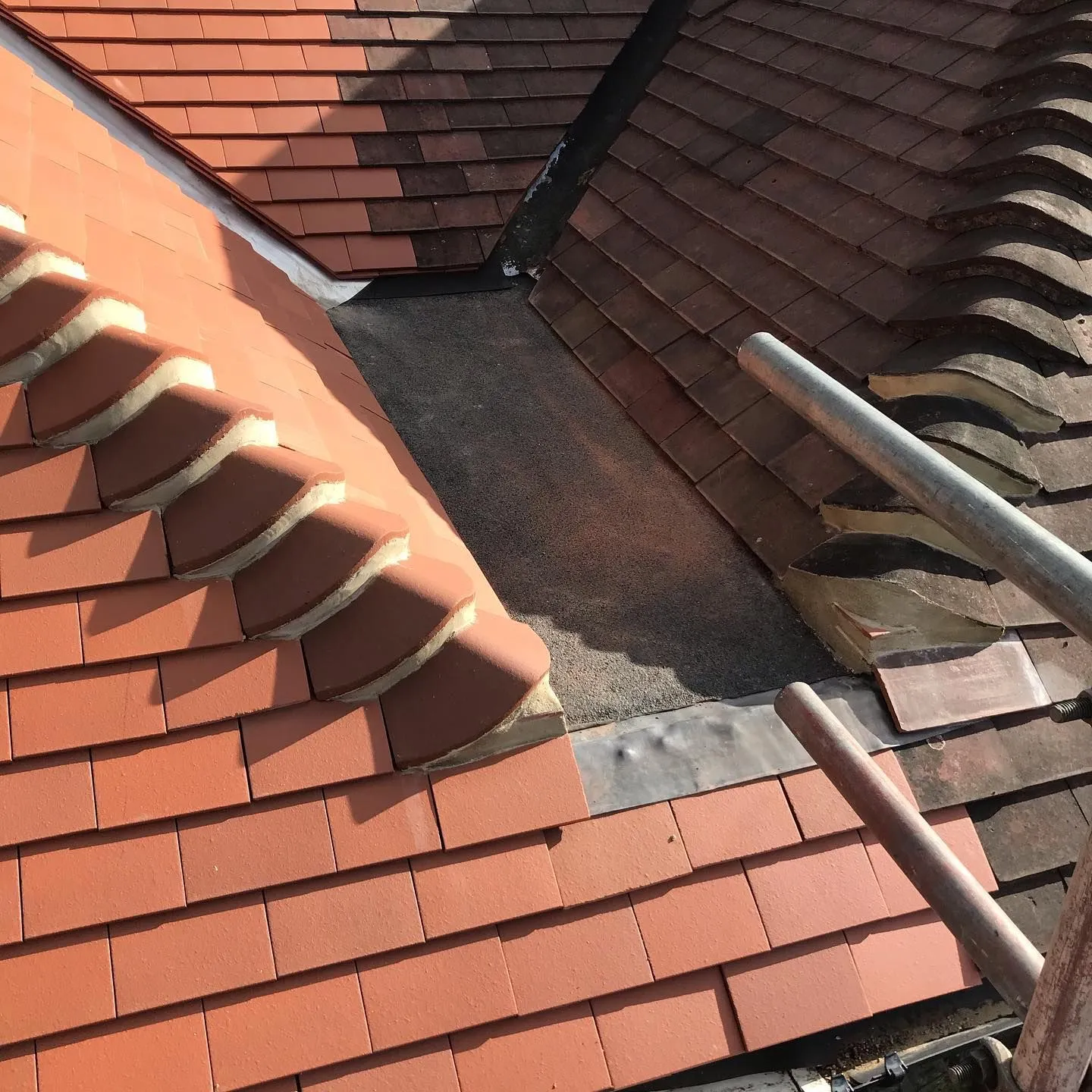
The Four Triggers for Building Regulations Approval
You will need to notify Building Control if any of these apply to your Derby roof project:
- More than 25% of the roof covering replaced — triggers a requirement to upgrade insulation to current Approved Document L standards
- Structural changes to roof timbers — replacing rafters, a ridge board, or purlins requires approval under Part A (structural integrity)
- Change in roof weight — adding heavier materials, such as replacing lightweight slate with concrete interlocking tiles, requires a structural check
- Change in fire performance — particularly relevant on terraced properties in Derby where Part B (fire spread near boundaries) applies
On Derby jobs, Building Control officers routinely check whether the breathable underlay specification has been documented. We have seen roofs on Chaddesden semis where a previous contractor swapped materials without notification. When the homeowner came to sell, the conveyancer flagged it immediately. Getting this right upfront costs almost nothing compared to sorting it out later. Not sure if your Derby roof project needs approval? Call us on 01332-529704 — we will tell you straight away.
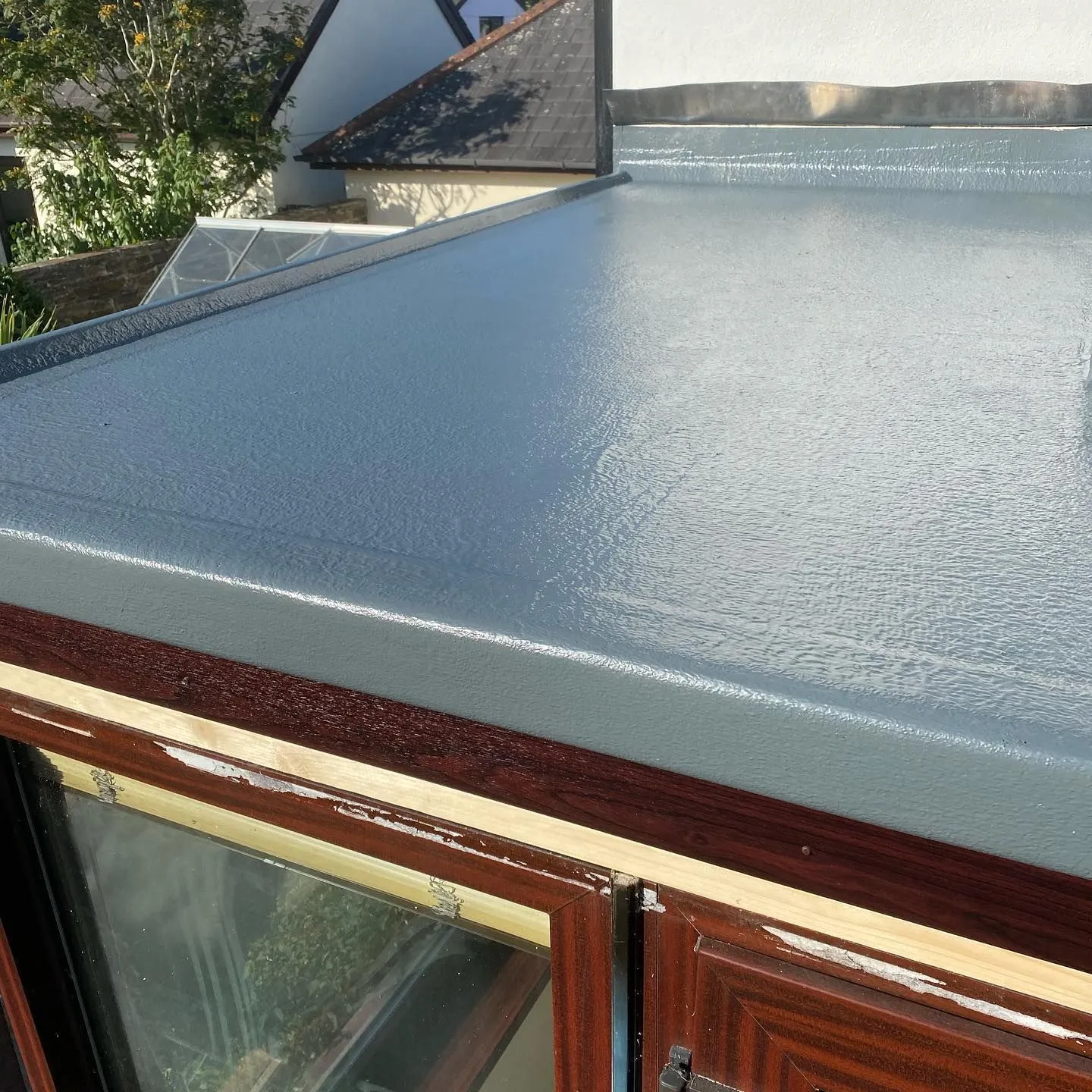
The 2026 Insulation Rules — What U-Values Mean for Your Derby Home
When a roof replacement triggers building regulations in Derby, the main regulation to understand is Part L — Conservation of Fuel and Power. It sets the thermal performance your new roof must achieve. The measure used is a U-value: it tells you how quickly heat passes through a building element. The lower the number, the better the insulation. A roof with a U-value of 0.16 loses heat more slowly than one at 0.35.
For a pitched roof on an existing Derby home being re-roofed, the target is 0.16 W/m²K. For a new build pitched roof, the standard tightens to 0.11 W/m²K. Flat roofs on new builds and extensions must hit 0.18 W/m²K, and flat roof renovations on existing properties must reach 0.25 W/m²K. In all cases where more than 25% of a pitched roof is being replaced, loft insulation must be topped up to a minimum of 270mm of mineral fibre at ceiling level — not an optional upgrade, but a Building Regulations requirement.
What This Means in Practice for Derby Homeowners
If we strip and re-lay your pitched roof in Derby, checking and topping up your loft insulation to 270mm is part of the job — we do not leave that step out or treat it as an add-on. For flat roofs on extensions in areas like Mickleover and Littleover, warm deck construction is the right approach: insulation sits above the structural deck, keeping the deck warm and dry. Cold deck flat roofs — where insulation sits between the joists below the deck — often fail to meet current standards, and moist air from the room below meets the cold deck above and condenses. We see the results on Derby extension roofs regularly.
On Derby jobs, we check existing insulation depth and condition as part of every re-roofing survey — not just whether insulation is present. Loft insulation topped up years ago and since compressed performs well below its rated value; compressed mineral fibre is one of the most common hidden compliance failures we find on Derby properties. Looking further ahead, the Future Homes Standard is expected to tighten roof U-value targets further, particularly for extensions, to around 0.15 W/m²K. If you are planning an extension in Derby now, specifying insulation above the current minimum keeps you ahead of those changes. Want to know what insulation standard applies to your Derby property? Book a free survey — call 01332-529704.
Derby-Specific Rules — Conservation Areas, Article 4 & Listed Buildings
This is where national guidance stops and Derby's own rules take over. Most UK roofing guides ignore it entirely. If your property sits within one of Derby's 16 conservation areas, or is a listed building, the rules are different — and the consequences of getting them wrong are serious. The ones most commonly relevant to roofing work include Friar Gate, Darley Abbey, the Cathedral Quarter, Little Chester, Arboretum, and Nottingham Road.
Under Article 4 Directions, Derby City Council has removed permitted development rights in its conservation areas. That means a change of roofing material — even a straight swap from one tile type to another — can require planning permission that would not be needed elsewhere in the city. Derby also has over 240 locally listed buildings; these do not carry statutory protection in the same way as nationally listed buildings, but Derby City Council's CP20 policy applies, and any visible change to a locally listed building's roof is subject to scrutiny.
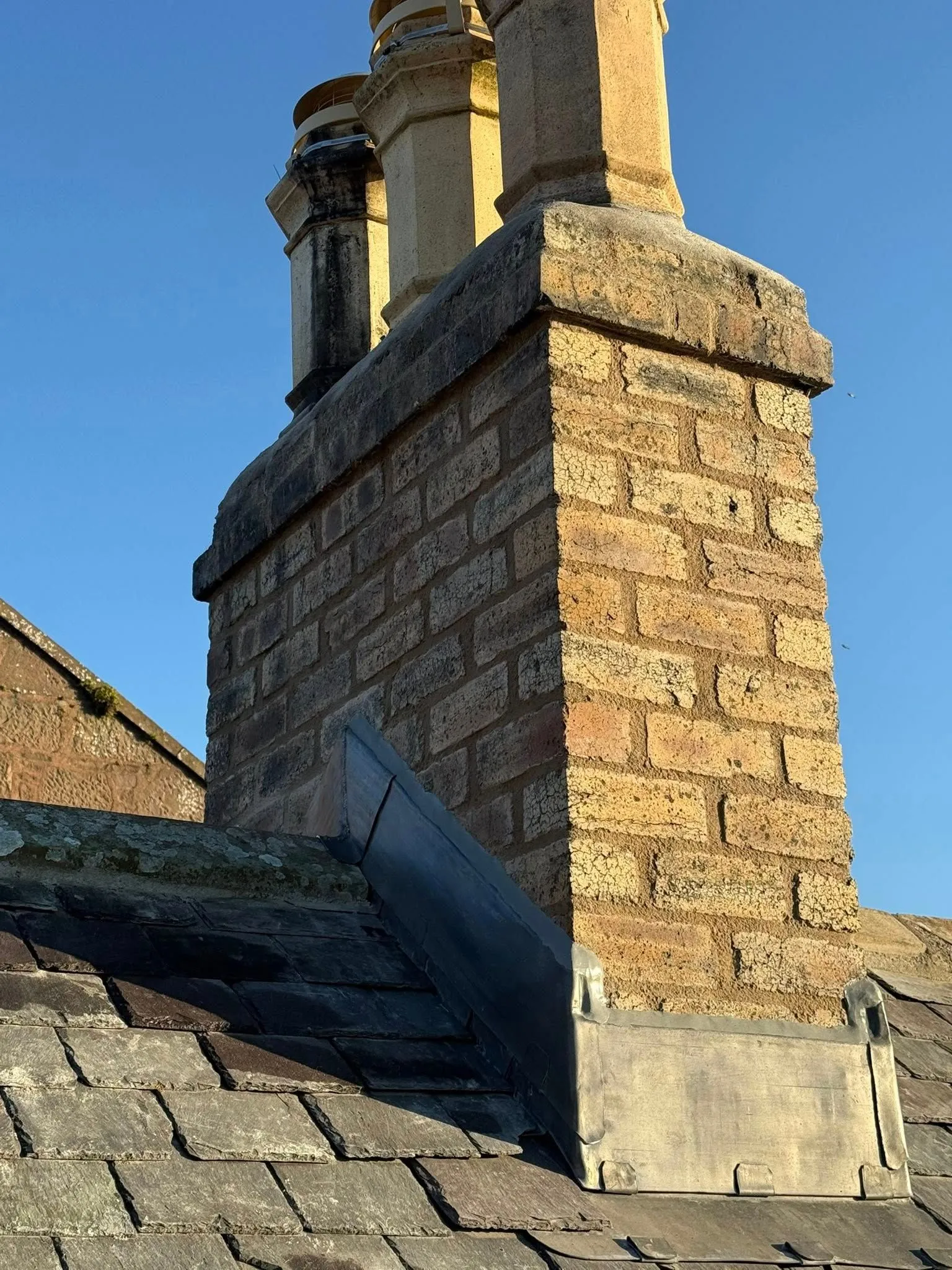
- Clay tiles must typically remain clay in Darley Abbey and the Cathedral Quarter
- Welsh or natural slate is often specified in conservation area conditions on period properties
- Concrete interlocking tiles are generally not accepted as a like-for-like replacement in most Derby conservation areas
- Roofline changes — altering pitch, adding dormers — require a planning application in all conservation area properties
If your property is a nationally listed building — Grade I, II*, or II — you need listed building consent before any work that affects the roof's character or appearance. This is a separate application from planning permission and from building regulations. Material must match the original specification: switching from natural Welsh slate to a synthetic alternative on a Grade II-listed terrace in Friar Gate will not get consent. We advise on heritage-appropriate materials and have worked on listed Derby properties where matching the original clay profile was the only acceptable option. Not sure if your Derby property is in a conservation area or listed? Call 01332-529704 — we check this before quoting every job.
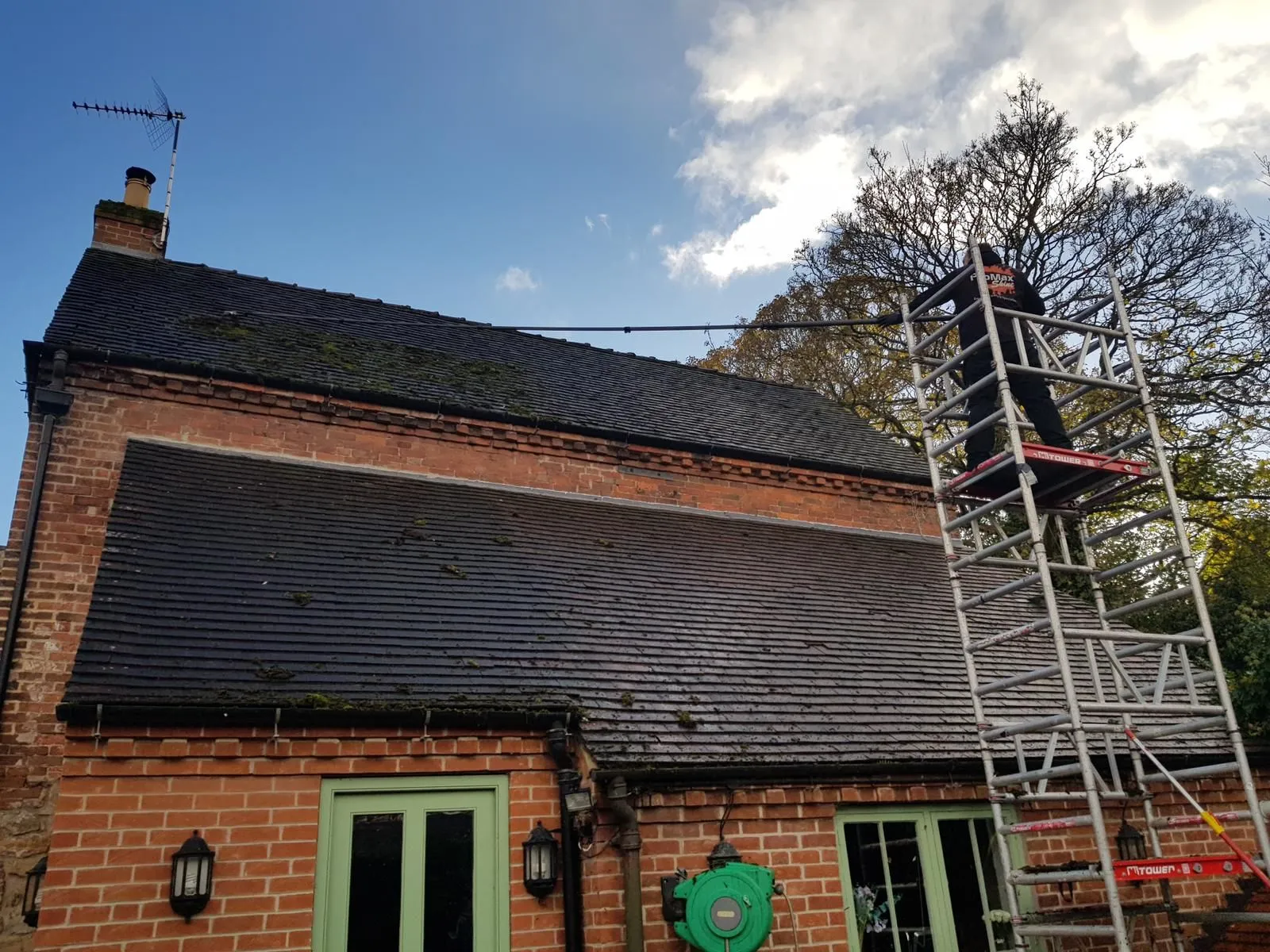
The Spray Foam Problem — What Derby Homeowners Need to Know Before Reroofing
This affects far more Derby properties than most people realise. Spray foam insulation was sold aggressively to homeowners across the UK during the 2010s — often via government scheme referrals. Many properties in Derby's older housing stock were treated. The problem is not the foam itself. The problem is what it has done to mortgage lenders — and, in many cases, to the roof timbers underneath it.
The majority of UK mortgage lenders currently refuse to lend on properties where spray foam insulation is present in the roof space. The foam bonds to roof timbers and breathable membranes, preventing surveyors from inspecting the condition of the structure underneath. Trying to sell a Derby home with spray foam and no independent survey report is likely to cause a mortgage offer to collapse in conveyancing — we have seen it happen on properties in Alvaston and Spondon.
What to Do If Your Derby Home Has Spray Foam
Around 250,000 UK homes are estimated to contain spray foam, and independent inspections have found that a significant proportion have defects — including moisture damage to roof timbers that was invisible to the homeowner.
- Get a PCA-registered spray foam inspection before booking any roofing work — or before listing the property for sale
- Do not instruct removal without an inspection first — poorly executed removal can damage timbers and membranes more than the foam itself
- If the foam has already caused timber damage, a full roof replacement may be needed before the property is mortgageable again
- Keep all documentation — any inspection report or removal certificate is part of your property's sale pack
We carry out spray foam removal as part of our services across Derby and Derbyshire. We assess the condition of the timbers before and after removal, and advise honestly whether a full re-roof is needed or whether the structure is sound. We have been to surveys in Derby where the spray foam looked intact from below but had caused significant moisture damage to rafters behind it — the homeowner had no idea. A full roof replacement was needed before the property could be sold. Finding this before listing saved the sale. Concerned about spray foam in your Derby home? Call us on 01332-529704 for an honest assessment.
Pre-1919 Derby Properties — The Roofing Regulations Most Contractors Won't Mention
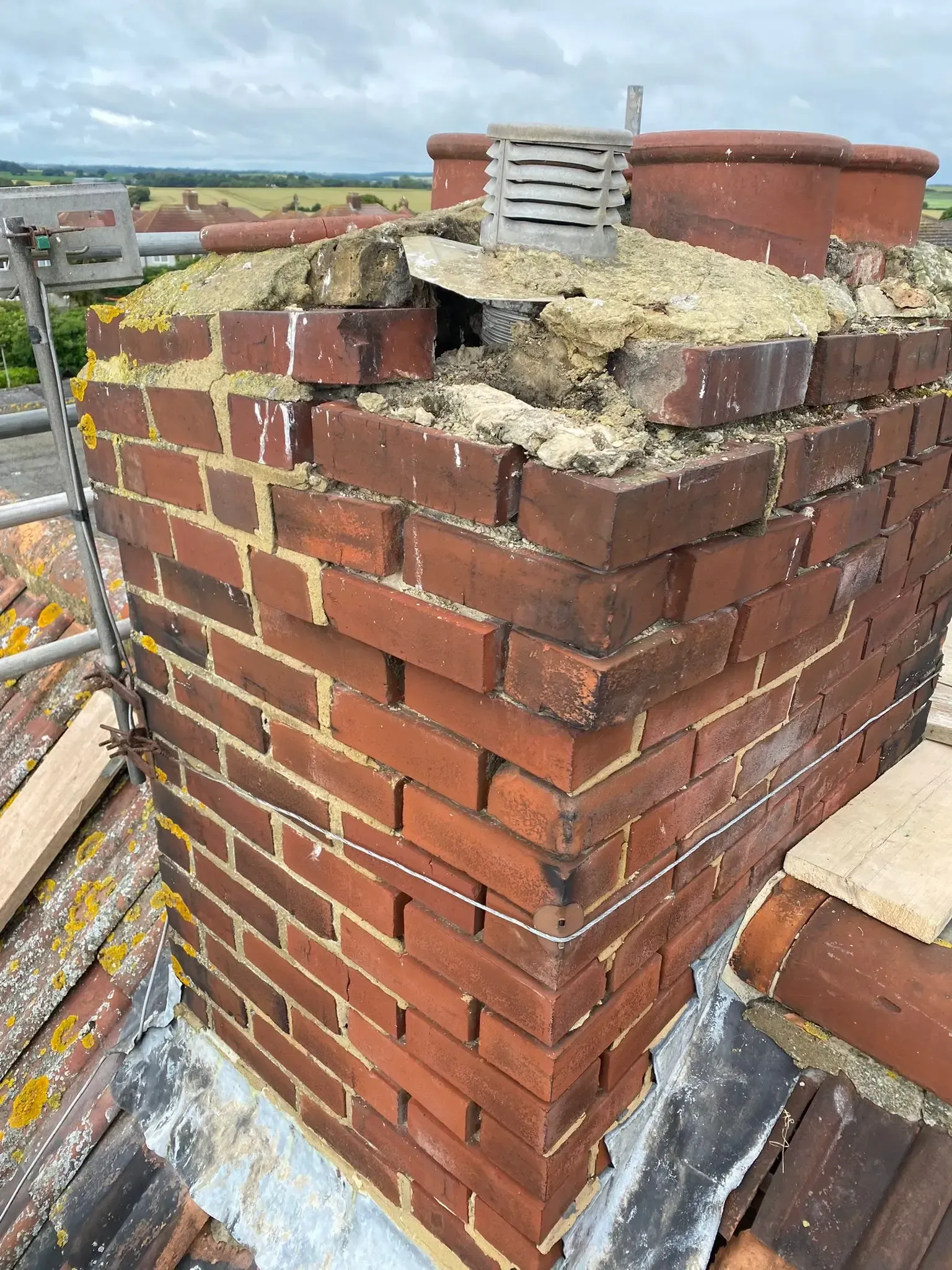
A large proportion of Derby's housing stock predates 1919. Streets in Normanton, Spondon, Alvaston, and parts of Darley Abbey contain Victorian and Edwardian terraces built with solid masonry walls, original clay tiles, and no insulation specification. When it comes to roofing regulations, these properties have specific characteristics that most online guides — and many roofers — do not address.
Approved Document L includes an exemption that applies to older properties. Where meeting the standard U-value target would reduce a room's internal floor area by more than 5%, or where it would create significant damp or structural problems, the full insulation upgrade requirement can be relaxed. In practice, this applies to some solid-wall Derby properties where fitting sufficient insulation would make the loft space unusable, or where the wall-to-rafter junction makes continuous insulation impractical. We assess this on each property individually — it is not a blanket pass.
Heritage Materials on Older Derby Roofs
Clay plain tiles are the dominant material on older Derby roofing stock. Derby was historically a significant producer of clay roofing tiles, and the profile of these tiles — particularly the flat, hand-pressed style common in areas like Darley Abbey — is distinct from modern machine-made clay tiles. Replacing these with concrete interlocking tiles is not acceptable in conservation areas and is often not the right call even outside them; the weight difference, drainage profile, and batten gauge requirements are all different.
- Match the existing tile profile when re-roofing a pre-1919 Derby property
- Check batten gauge against the manufacturer's specification for the tile you are using — not the tile you are removing
- Use a breathable underlay suited to older, uninsulated roof voids — non-breathable felt can cause condensation problems
- If the property is within a conservation area, confirm material acceptability with Derby City Council before ordering
We know the tile profiles common across Derby's older streets. We match materials correctly and we do not use conservation area roofs as an opportunity to fit whatever is on the van. Own a pre-1919 property in Derby? Book a free survey — we know the local stock and the rules that apply. Call 01332-529704.
Building Control Sign-Off in Derby — Can Your Roofer Self-Certify?
This is the question most Derby roofing contractors avoid. The answer matters, because without proper sign-off you have no legal proof the work was done correctly — and that creates problems when you sell. When roofing work in Derby requires building regulations approval, there are two standard routes: a Full Plans Application, where plans are submitted to Derby City Council Building Control before work starts and an inspector checks and approves the proposals; or a Building Notice, where Building Control is notified before work starts without submitting full plans, and an inspector visits during the work. Both routes end with a completion certificate — the document your solicitor will ask for when you sell.
Some trades in England can self-certify certain work without involving Building Control, through Competent Person Schemes. Roofers registered with schemes such as the NFRC (National Federation of Roofing Contractors) can self-certify some limited work. However, self-certification does not cover structural changes, full thermal element renovations above the 25% threshold, or any work that affects fire performance. For most full roof replacements in Derby, Building Control notification is still required. If a roofer tells you a full roof replacement 'doesn't need building regs,' ask them specifically whether the insulation upgrade is being notified to Derby City Council — if they cannot answer clearly, that is a warning sign.
What Happens Without Sign-Off
Roofing work done without the required building regulations approval in Derby is an enforcement risk. Derby City Council can issue an enforcement notice requiring the work to be opened up for inspection — or removed and redone. The more immediate problem for most homeowners is the property sale: when your solicitor runs conveyancing searches, the absence of a building regulations completion certificate for notifiable roof work will be identified, and you will need to obtain retrospective approval — called regularisation.
- Regularisation application: submitted to Derby City Council Building Control after work is complete
- Inspector may require opening up parts of the roof to check compliance
- Costs more than getting approval in the first place — and delays property sales
- Manufacturer warranties on tiles and flat roof systems may also be void if the installation was not Building Control-notified
We quote Building Control notification as standard on every Derby job that requires it. We have been asked to quote remediation on Derby roofs where a previous contractor gave verbal assurances that building regs were not needed — on jobs where the 25% threshold was clearly exceeded. Sorting it out retrospectively is almost always more expensive and more stressful than doing it right first time. Ask us about building regulations compliance on your Derby roof project — call 01332-529704.
Will a New Roof Improve My EPC — and Does That Matter for Selling or Remortgaging?
A new roof done to current Building Regulations standards does more than fix the physical problem — it updates the thermal performance of your property, and that shows up on your Energy Performance Certificate. An EPC is required when you sell or rent a property in England. Derby estate agents and buyers look at EPC ratings: a roof laid 30 years ago, with no insulation top-up and a failed underlay, contributes to a lower band rating, while a new roof with compliant insulation to Approved Document L standards pushes that rating upward.
If you're selling, a new roof with updated insulation removes one of the most common concerns that comes up in surveys and valuations, and strengthens your sale documentation — your solicitor will need a Building Regulations completion certificate for any notifiable roofing work. If you're remortgaging, some lenders now offer preferential rates on properties rated EPC B or above; a roof upgrade combined with loft insulation topped up to 270mm can move a D-rated Derby property toward a C rating or above.
Rental properties in England must currently meet a minimum EPC E rating, and proposed regulations are expected to require EPC C for new tenancies — Derby landlords with older housing stock, particularly Victorian terraces in Normanton, Alvaston, or Chaddesden, should factor roof condition and insulation into their upgrade planning now. Equity release providers also assess property condition carefully before agreeing to lend: a property with spray foam in the roof space, a failed roof structure, or no Building Control sign-off on recent roofing work can be declined outright. For solid-wall Derby properties where external or internal wall insulation is not practical, the roof is often the only thermal element that can be upgraded cost-effectively — a new roof with correct insulation is one of the most impactful single improvements you can make to both the EPC rating and the long-term condition of the property. Talk to our Derby roofing team about EPC improvements through roof replacement → call 01332-529704.
Frequently Asked Questions — New Roof Building Regulations in Derby
Do I need planning permission to replace my roof in Derby?
In most cases, no — like-for-like roof replacement is permitted development and does not require a planning application. However, if your Derby property is in a conservation area, is a listed building, or the replacement changes the material, colour, or profile of the tiles, a planning application may be required. Derby City Council's Article 4 Directions remove permitted development rights across all 16 of its conservation areas for certain changes. We check this as part of every free survey.
How does Derby City Council's Article 4 Direction affect my roof replacement?
Article 4 Directions in Derby remove the permitted development right to change external materials on properties within conservation areas. Replacing clay tiles with concrete tiles on a property in Darley Abbey or Friar Gate, for example, would require a planning application — even though the same swap would need no permission on a property outside the conservation area. The full list of affected properties is available on Derby City Council's interactive planning map.
Does a full roof replacement in Derby need building regulations sign-off?
Yes, in most cases. Any roof replacement involving more than 25% of the covering area requires notification to Derby City Council Building Control or a government-approved inspector. The completed work must receive a building regulations completion certificate. Work done without this sign-off creates problems when you sell the property and may void manufacturer warranties on roofing materials.
What insulation does my replacement roof need to meet building regulations in Derby?
Under Approved Document L, a re-roofed pitched roof in an existing Derby dwelling must achieve a U-value of 0.16 W/m²K. In practice, this means loft insulation must be topped up to a minimum of 270mm of mineral fibre where accessible. We include insulation assessment and upgrade as part of every re-roofing project — it is a Building Regulations requirement, not an optional extra.
Can my Derby roofer self-certify building regulations without involving Derby City Council?
For limited works only. Competent Person Scheme registration allows some self-certification, but this does not extend to full thermal element renovations, structural repairs, or work affecting fire performance. For most full roof replacements in Derby, Building Control notification is still required regardless of whether the contractor holds scheme registration. Always ask your roofer for the completion certificate at the end of the job.
I have spray foam insulation in my Derby property — will I need a new roof?
Not necessarily, but you need an independent inspection first. Spray foam bonds to roof timbers and membranes, making the structural condition impossible to assess visually. A PCA-registered inspection will tell you whether the foam has caused timber damage that requires a full replacement, or whether removal and re-inspection is sufficient. We carry out spray foam removal across Derby and Derbyshire and always inspect the timber condition before advising on next steps.
My Derby home was built before 1919 — are the regulations different for my roof?
The national building regulations apply, but there are limited exemptions. Where meeting the standard U-value target would reduce internal floor area by more than 5% or create structural or damp problems, a relaxation may be applied. Older pre-1919 Derby properties also require careful material matching — clay plain tiles common on Victorian streets in Normanton and Alvaston have specific dimensions and batten gauge requirements. We assess older properties individually and advise on the correct specification.
How do I contact Derby Roofers for a roof survey?
Call us on 01332-529704 or complete our online form at derbyroofers.co.uk/contact-derby-roofers. We offer a free drone roof survey for all new enquiries — no obligation, no call-out fee, and a written report of findings. We cover Derby, Mickleover, Allestree, Normanton, Spondon, Alvaston, Chaddesden, Borrowash, Littleover, and all surrounding Derbyshire areas.
Ready to Get Your Derby Roof Right? Here Is Where to Start.
Building regulations for a new roof in Derby are not complicated — if your contractor knows them. The problem is that many don't. We see the results on every other survey we carry out: insulation not upgraded, no Building Control notification, materials changed without conservation area approval, spray foam left undeclared.
Derby Roofers has been working across Derby and Derbyshire for over 20 years. We manage building regulations compliance as standard. We check conservation area and Article 4 status before quoting. We advise on insulation upgrades, material choices, and sign-off requirements before any work starts — not after.
- ✅ Free drone roof survey with a written report, no obligation
- ✅ 20+ years handling Building Control compliance across Derby and Derbyshire
- ✅ IPAF and PASMA-certified team for safe access on awkward Derby roofs
- ✅ Honest advice on insulation, conservation area rules, and sign-off before you commit
The first step is a free survey. We come out, inspect the roof — by drone if needed — and give you a written report with honest recommendations. No pressure. No hidden costs.