Lead Work Derby | Leadwork for Valleys, Bays, Dormers & Parapets
Call: 01332-529704
Lead flashing, valleys, soakers, bay roofs and parapet gutters repaired and replaced across Derby & Derbyshire — not just chimneys. We diagnose the actual fault, specify the correct lead code in writing, and fix it so it lasts.
- Free Drone Roof Survey
- Written, Itemised Quotes by Lead Code
- IPAF & PASMA-Certified Team
- Guarantee of Up to 20 Years
What Is Lead Work, and Where Does It Actually Sit on Your Roof?
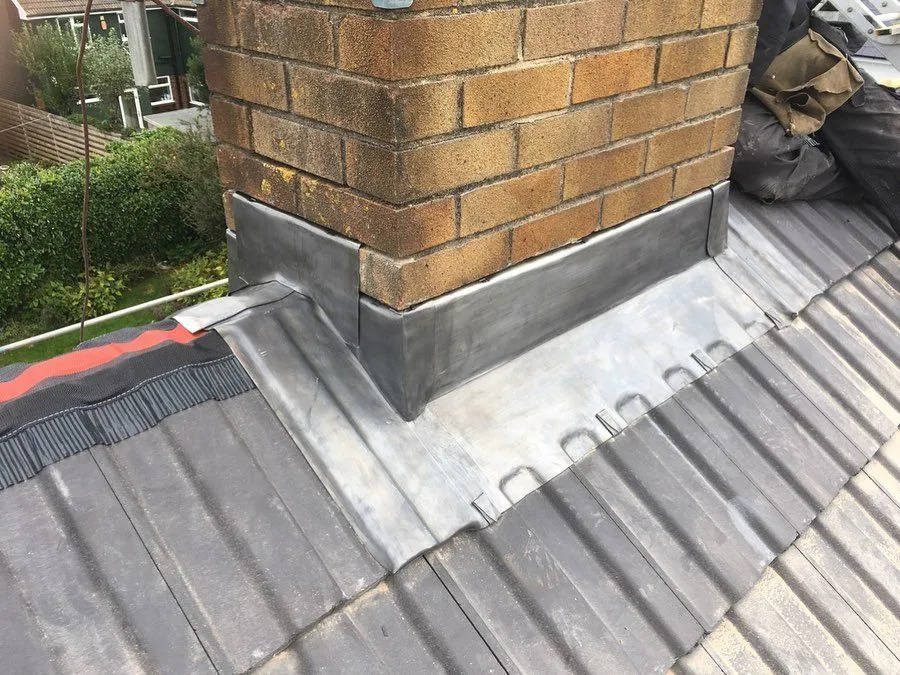
Lead work is the shaped lead sheet that seals every junction on your roof — anywhere two surfaces meet and water could otherwise get in. That covers far more than chimneys: valleys, dormer cheeks, bay window roofs, parapet gutters, wall abutments, and skylight upstands all rely on lead dressed and fixed correctly to stay watertight.
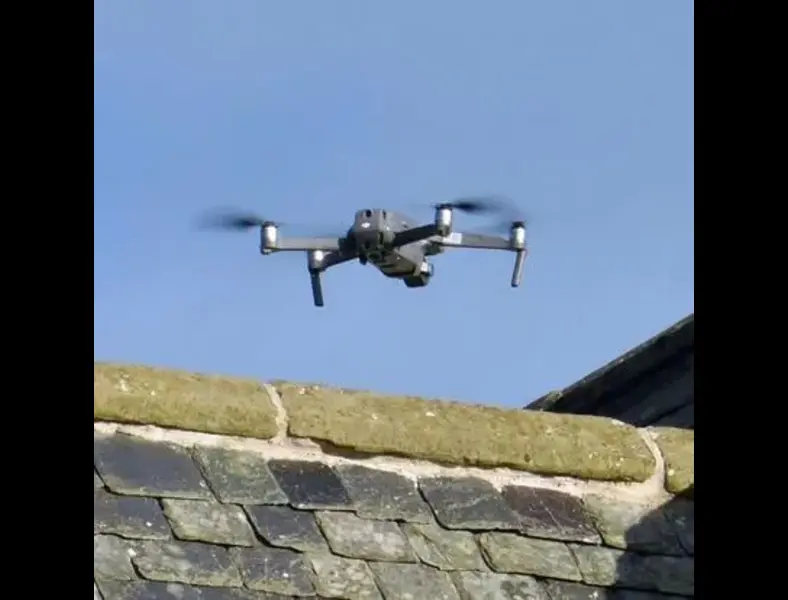
Before any access equipment goes up, we look at the detail with a free drone roof survey, so we know which lead code, bay size and fixing method the job actually needs before we write a quote. All rolled lead sheet we install meets BS EN 12588, the British Standard for roofing lead.
- IPAF and PASMA-certified team for safe access on chimneys, bay roofs, and parapet gutters
- Free drone roof survey before any scaffolding goes up
- Written, itemised quotes specifying the exact lead code for every part of the job
The Main Areas Where We Install and Repair Lead Work
- Chimney flashings — apron, step, back gutter and saddle pieces around the full chimney stack
- Lead valleys — lining the channel where two roof slopes meet
- Step flashings and soakers — where a pitched roof meets a wall or extension
- Dormer flashings — cheek and apron pieces around dormer windows
- Bay window lead roofs — flat lead covering over canted and square bay window roofs
- Parapet gutters — lead-lined gutters behind parapet walls
- Skylight and rooflight flashings — sealing around Velux and similar windows
- Wall abutment flashings — where a roof slope runs alongside a vertical wall
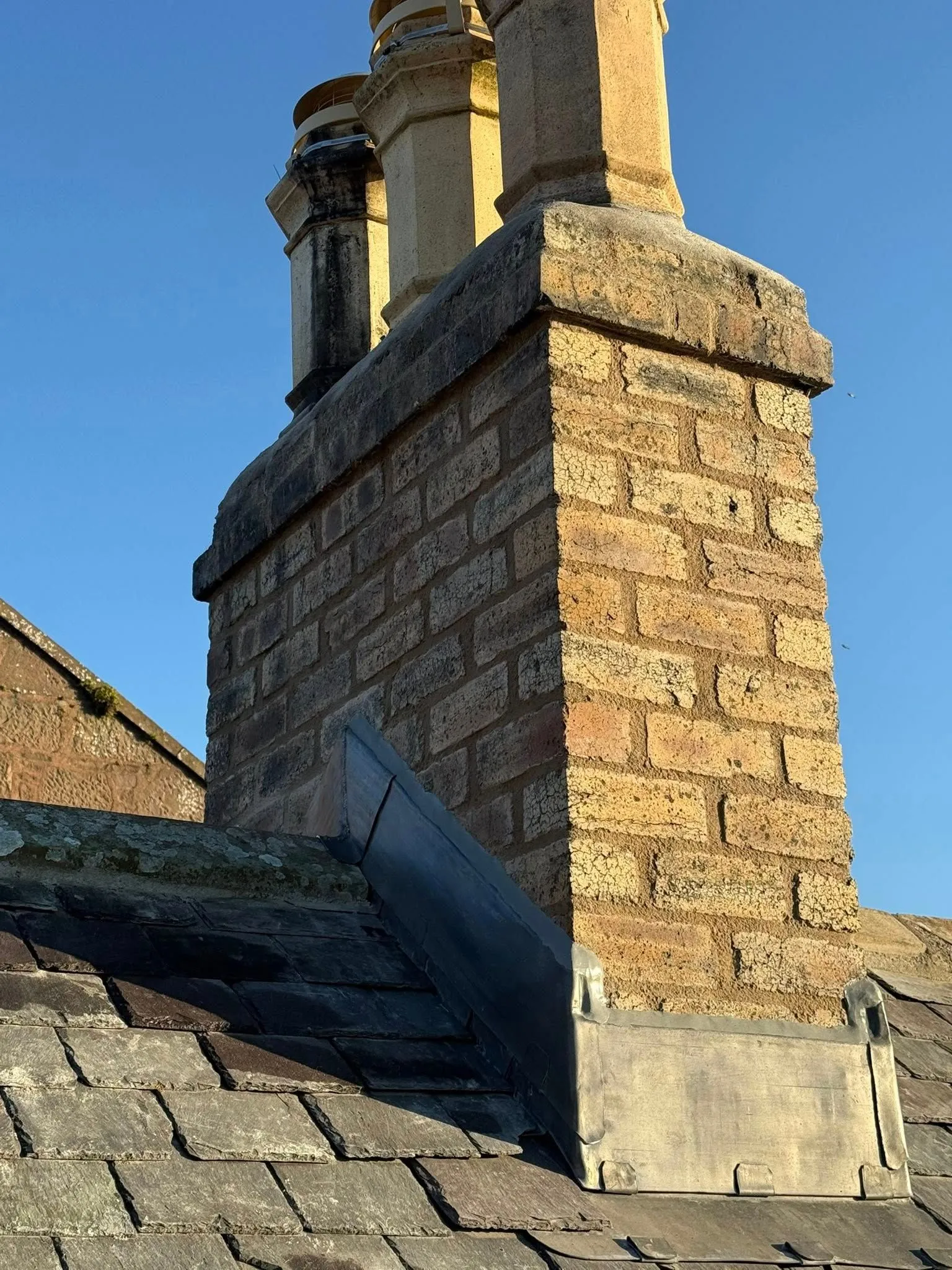
If your roof is leaking near any of these areas, the lead is the first place we check. Book a free drone roof survey and we will tell you exactly what is happening — no ladders, no scaffolding, no obligation, and no assumption that a chimney is automatically the culprit.
Clear Warning Signs Your Lead Work Needs Attention
You do not always need to get on the roof to spot a lead problem. Many lead failures show up inside the house first — often well before you notice any visible damage outside.
- Damp patches or water stains on ceilings, not always directly below a chimney breast
- Staining on an upstairs wall below a roof junction, valley, or bay window roof
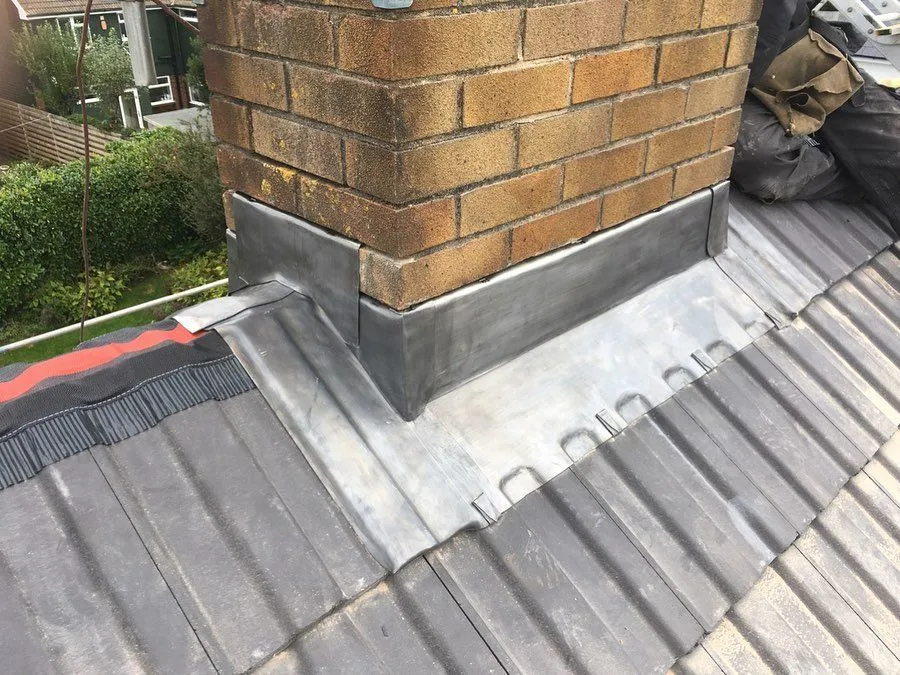
- Lead that is visibly cracked, split, or has pulled away from the brickwork
- Mortar holding the lead in a wall chase has crumbled or fallen out
- Lead has dropped out of its chase entirely and is sitting on the tiles or in a valley
- White powdery deposits on the lead — normal patination, but heavy deposits near joints can signal movement
- Moss growing directly on lead flashings, valleys or bay roofs — a sign of standing moisture
- A persistent dripping sound in the loft after heavy rain
Derby’s winters bring freeze-thaw cycles that put real pressure on older lead. Properties in Allestree, Chaddesden and Littleover with chimneys, extensions or bay-fronted terraces are especially worth checking after a cold spell or heavy rainfall. Any of these signs means water has a route into your property — call us on 01332-529704 and we will come out to take a look, free of charge.
Why Lead Splits, Lifts and Fails — and How We Fix It Properly
Most lead failures we see in Derby are not caused by the lead itself. Lead is one of the most durable roofing materials available — failures almost always come down to how it was installed. Derby’s temperature swings between cold Derbyshire winters and warm summers cause lead to expand and contract significantly; if the installation does not allow for that movement, it cracks and splits.
- Bays cut too long — lead fixed in lengths over 1.5m without a lap joint cannot move freely and will crack
- Lead fixed too rigidly — over-nailed or set in hard mortar that grips the lead and tears it as it moves
- Wrong lead code used — too thin for the application; it degrades faster and splits under pressure
- Mortar failure in the chase — the lead loses its fixing point and lifts away from the wall
- Patch repairs over failed sections — covering the symptom without fixing the design fault
- Poor ventilation beneath flat lead bays — condensation forms on the underside and corrodes the lead from within
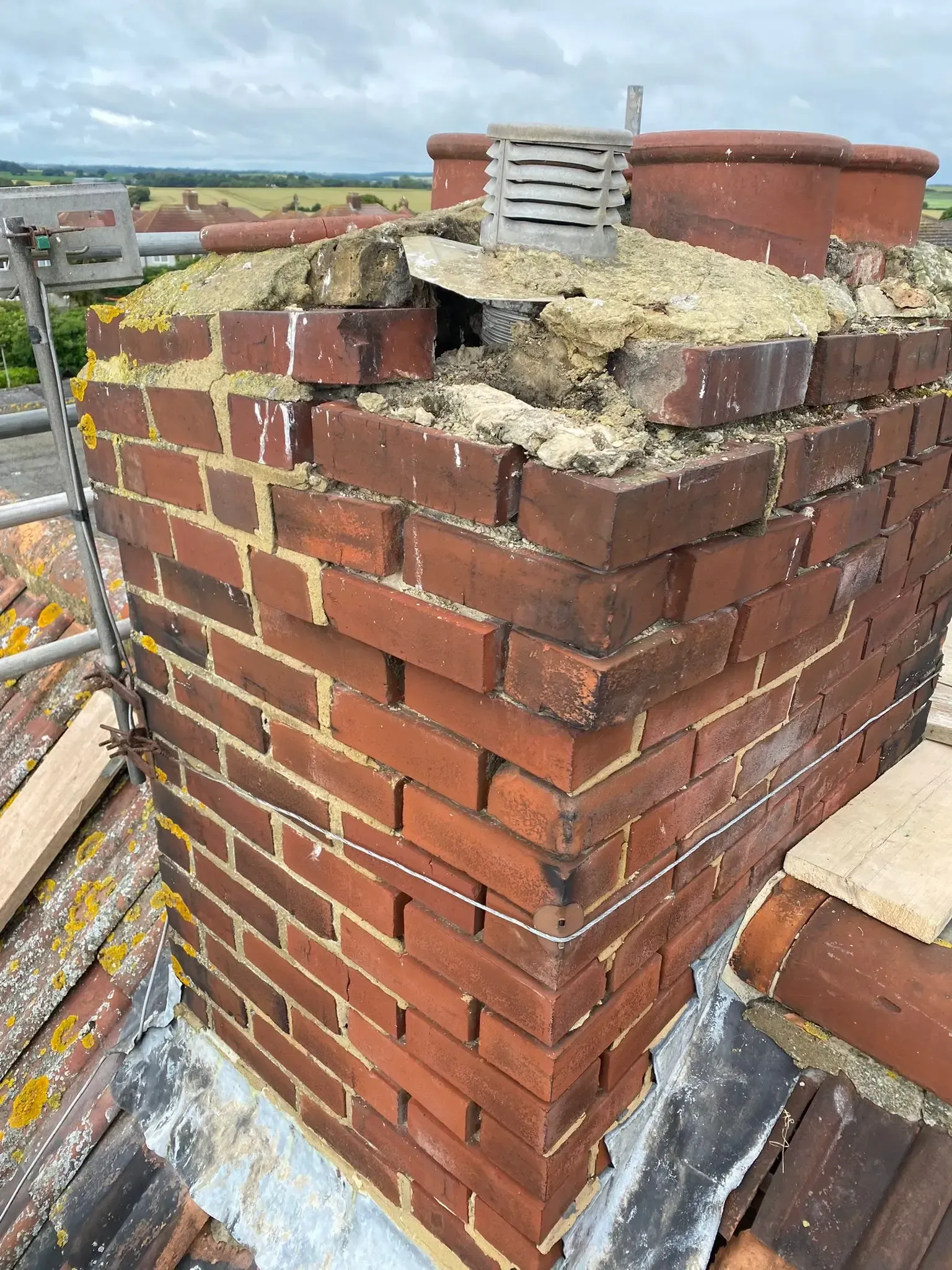
When we repair lead work on a Derby property, we inspect the full detail, not just the visible split. If the bay sizing is wrong or the fixing method is the problem, we redesign the detail so the repair lasts. We also check ventilation beneath flat lead sections on bay roofs and extensions — a step many repair jobs miss entirely.
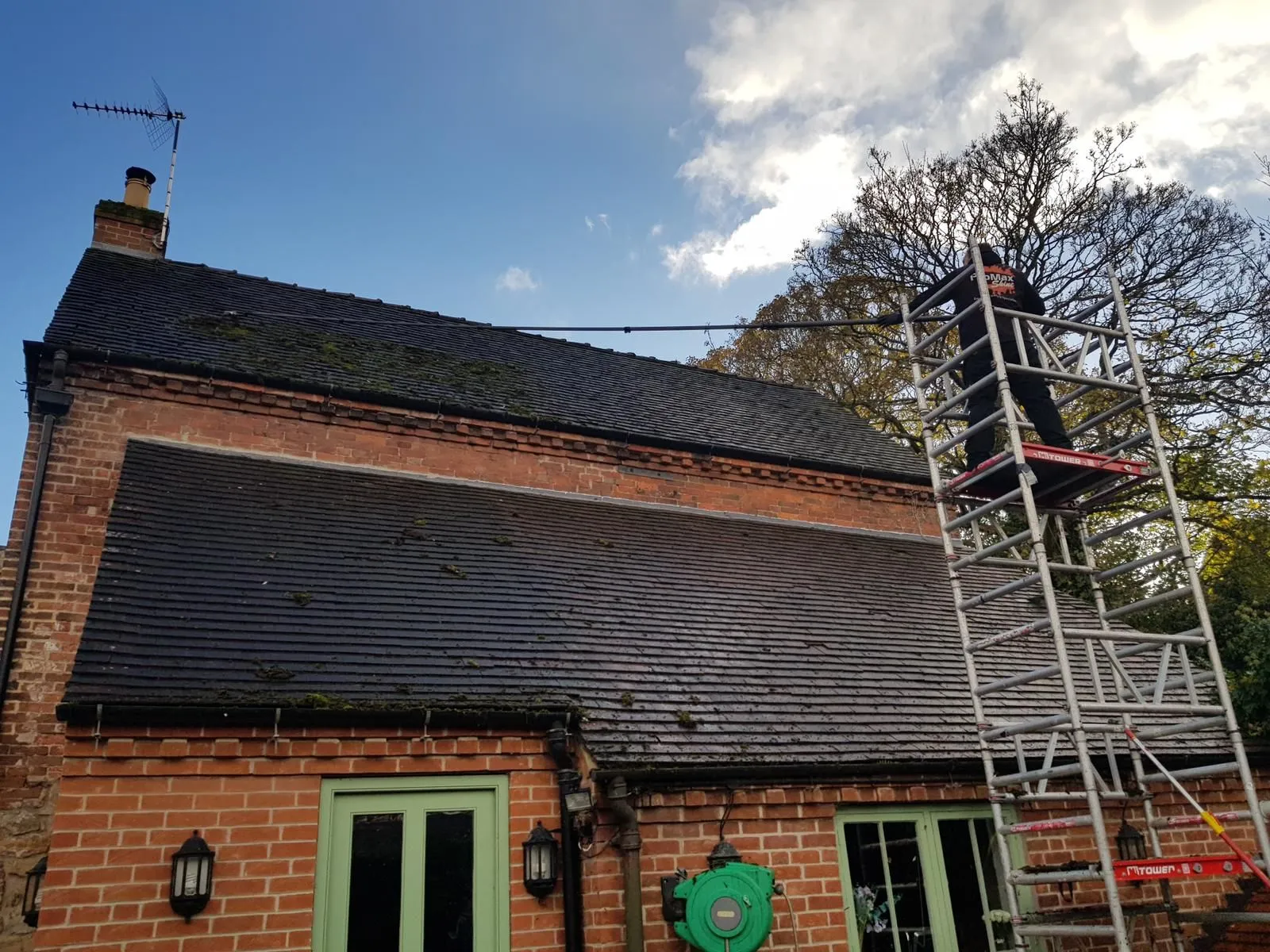
Lead Codes Explained: Choosing the Right Thickness for the Job
Every lead flashing on your roof should be a specific thickness, known as its code. Using the wrong code is one of the most common mistakes we see on Derby properties — particularly where a cheaper, thinner lead has been used to cut costs. All rolled lead sheet we install meets BS EN 12588, the British Standard for roofing lead.
| Code | Thickness | Typical Use |
|---|---|---|
| Code 3 | 1.32mm | Soakers on slated and tiled roofs |
| Code 4 | 1.80mm | Flashings, soakers, chimney aprons, wall abutments |
| Code 5 | 2.24mm | Flashings, pitched roof bays, dormers, valley gutters |
| Code 6 | 2.65mm | Flat roof bays, parapet gutters, exposed valley gutters |
| Code 7 | 3.15mm | Dormers, flat roofs, tapered valley gutters |
| Code 8 | 3.50mm | Heavy-duty flat roofs, large dormers, valley gutters |
When we quote your lead work in Derby, we specify the correct code for each part of the job in writing, before any work starts. In Mickleover and Littleover, where Derby’s housing stock ranges from 1930s semis to modern new-builds, the correct code varies by roof type, pitch and application — you know exactly what is being installed and why.
Lead Work on Listed and Older Buildings in Derby
Derby has a significant number of listed and heritage properties, particularly around the Cathedral Quarter, Darley Abbey, and parts of the city centre. On these buildings, lead work is not simply a repair job — it is part of preserving the fabric of the building, and the rules around it are specific. Any lead repair or replacement on a listed building in Derby may require Listed Building Consent from Derby City Council before work begins, even for small repairs.
- We advise you on whether Listed Building Consent is needed before we quote
- All replacement lead is like-for-like in code and profile — no cheaper substitutes
- We use traditional techniques where the specification requires it, including hand bossing and welding around complex architectural details
- Re-pointing of flashing chases uses lime mortar, not cement — cement is too rigid and causes lead to lift over time
- Where original lead has been in place for many decades, we assess whether sections can be repaired rather than fully replaced
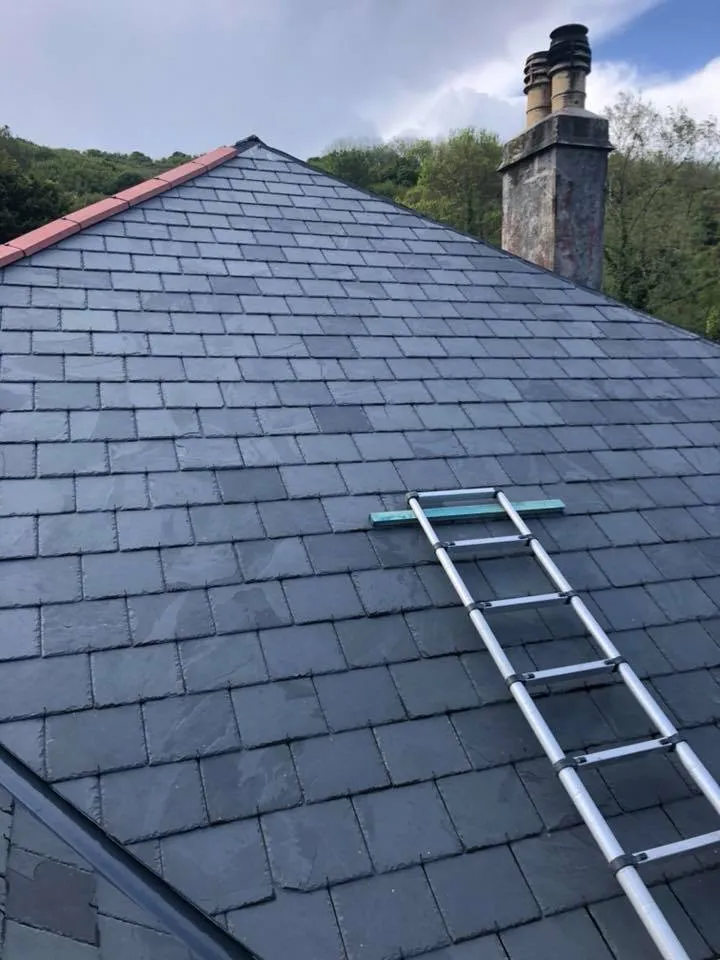
If you own a listed property or a home in a conservation area in Derby, call us first. We will give you an honest view on the consent position and the correct repair approach, at no charge.
Getting the Diagnosis Right Before Any Lead Goes On
Lead work is a precise trade. Here is what happens once you get in touch about a lead problem on your Derby property.
- Call or enquiry: You call the number above or fill in the contact form describing the leak or damage; we answer the phone or call back the same day.
- Free drone roof survey: We survey the roof by drone where possible, so we can see the lead detail up close without scaffolding before any work is agreed.
- Diagnosis and written quote: We identify the actual cause of the failure — bay sizing, fixing method, or lead code — and provide a written, itemised quote specifying the correct code for each part of the job.
- Repair or installation: Our own team, not subcontractors, carries out the work using BS EN 12588 lead, correct bay sizing and fixing, and lime mortar re-pointing on older properties where cement would cause the lead to lift again.
- Completion and guarantee: We check the finished detail, leave the area clean, and back installations with a guarantee of up to 20 years.
Most standalone lead repairs are completed in a single visit; larger jobs such as a full chimney lead set, a bay roof re-lead, or heritage work take longer and are scoped in the written quote.
What Happens When Your Roof Lead Gets Stolen
Lead theft is a persistent problem across Derbyshire. Flat roof sections, bay window lead, chimney flashings and valley linings are all targeted, sometimes stripped overnight, leaving the roof completely open to the weather. If you wake up to find lead missing from your Derby property, the first priority is getting the roof temporarily covered — every hour it stays open, the risk of water damage to timbers, ceilings and internal walls increases.
- Call Derby Roofers on 01332-529704 — we can attend quickly and make the roof temporarily weathertight
- Report the theft to the police and obtain a crime reference number
- Photograph the damage before any temporary covering is applied — your insurer will need this
- Contact your home insurer with the crime reference number
- Once a temporary cover is in place, we survey the full extent of the damage and provide a written quote for replacement
Replacement lead is installed to the correct code with proper fixings — we do not simply replace like-for-like if the original installation had faults that made theft easier. We can provide a clear written report to support your insurance claim.
Repair or Replace? How We Make the Right Call
One of the most common questions we get from Derby homeowners is whether their lead needs a repair or a full replacement. There is no one-size-fits-all answer — it depends on the condition of the lead, the extent of the damage, and how it was originally installed.
Repair is appropriate when damage is isolated, the lead is otherwise in good condition, and the original installation is sound. Replacement is the better option when the lead is heavily corroded, bays are badly oversized, the same section has been repaired repeatedly, or the original installation has design faults that will continue to cause problems.
We never recommend replacement when a repair will genuinely do the job, and we never patch over a fault that needs a proper fix. Every assessment starts with a free inspection. We tell you honestly what the roof needs, explain our reasoning, and leave the decision with you.
Lead Work Needs the Right Access, Not Just the Right Metal
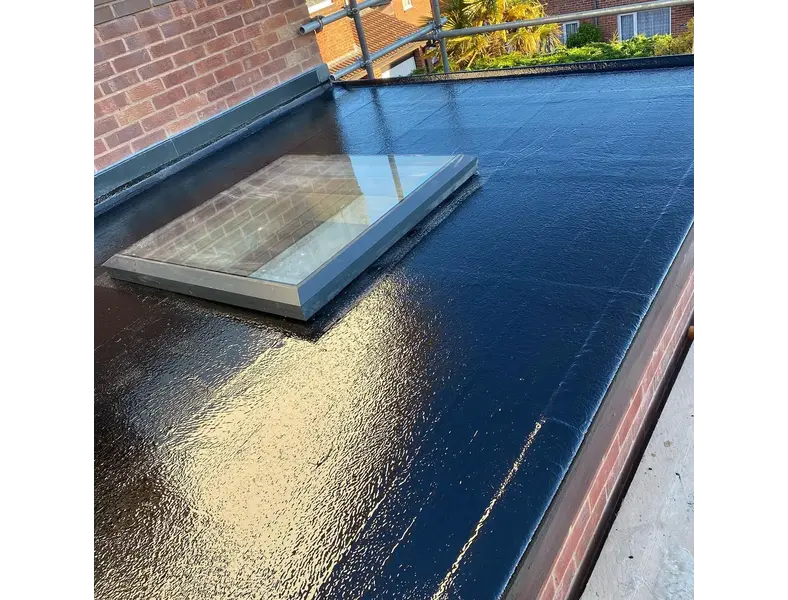
Lead work happens right at the point most access equipment struggles to reach cleanly — tight against a chimney stack, wrapped round a bay window, or running along a parapet gutter with barely a foot of standing room. Rather than defaulting to a scaffold booking, we send a drone up first and follow, where access is needed, with a mobile tower or powered platform sized to the actual job.
That's operated by team members holding PASMA certification for tower work and IPAF certification for powered access — what it means in practice on a conservation-area chimney in Darley Abbey or a canted bay in Normanton is that the person qualified to be on that platform is the same person who welds and dresses the lead, rather than the job passing between an access contractor and a separate roofer.
Why Derby Homeowners Choose Derby Roofers for Lead Work
From a single chimney flashing repair to a full heritage re-lead, we bring the same standard: correct code, correct bay sizing, correct fixing method, because that is the only way it lasts.
Over 20 Years of Local Experience
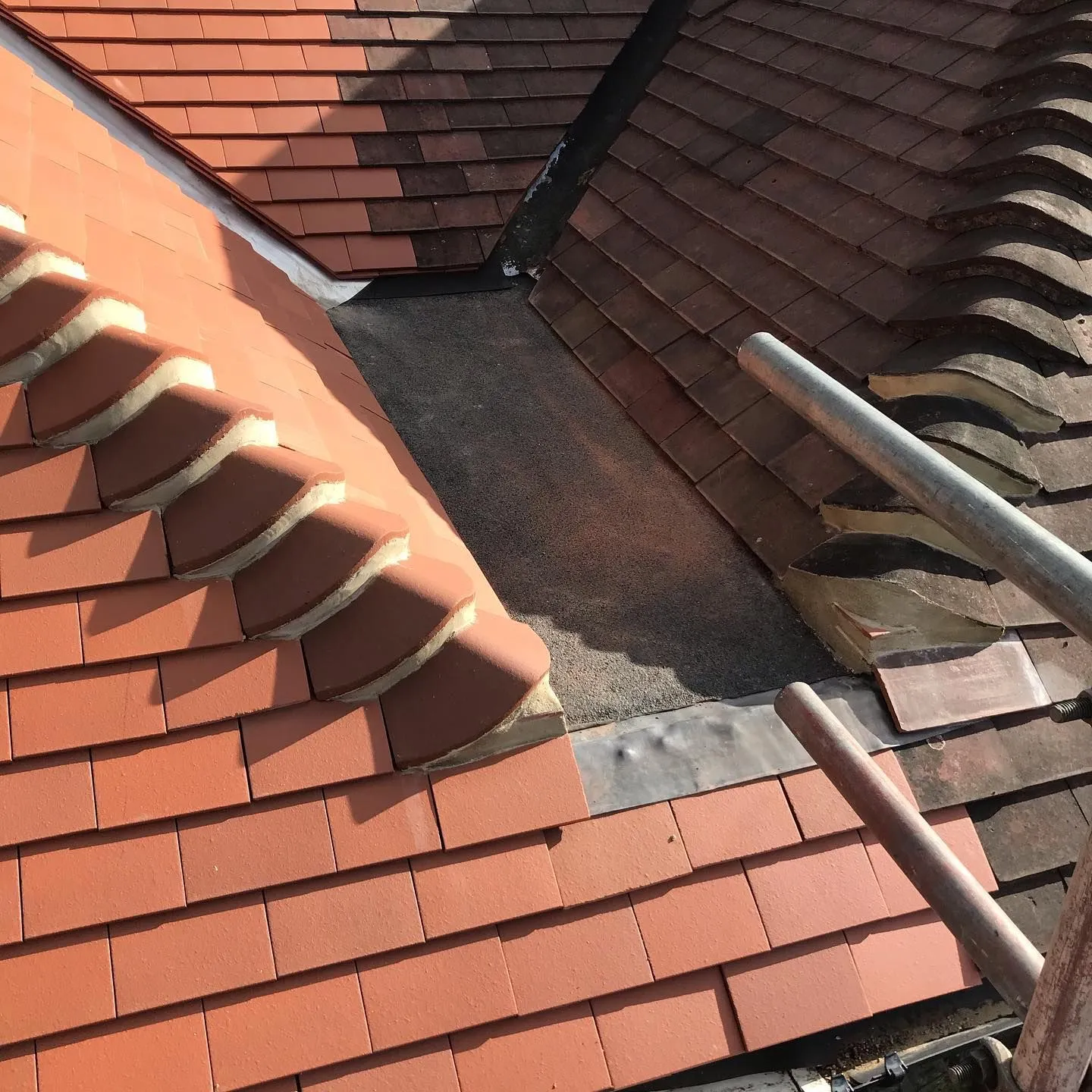
We have carried out lead work across Derby and Derbyshire for over 20 years — from a simple chimney flashing repair in Chaddesden to full heritage lead replacements on Victorian properties in Darley Abbey.
No Subcontractors
The team that surveys your roof carries out the work. No handoffs between an access contractor and a separate roofer.
Free Drone Roof Survey
See your roof clearly before any work starts, with no ladders or scaffolding needed just to get a quote.
Written, Itemised Quotes
No vague estimates, no hidden costs — every quote specifies the exact lead code for every part of the job.
Fully Insured, All Work Guaranteed
Public liability cover on every job, with installations guaranteed for up to 20 years.
We Answer the Phone
Or we call you back the same day. For a leak that's actively letting water in, that response time matters.
Areas We Cover for Lead Work in Derby & Derbyshire
We carry out lead work across Derby city and the wider Derbyshire area — from bay-fronted Victorian terraces in Normanton, Pear Tree and Rose Hill, to parapet gutter and chimney work on Georgian and Victorian townhouses along Friar Gate and Kedleston Road, and heritage lead on the stone and brick chimney stacks around Darley Abbey and Spondon’s older village core. Not sure if we cover your area? Call us on 01332-529704 and we will confirm straight away.
- Derby City Centre (DE1)
- Mickleover (DE3)
- Allestree & Darley Abbey (DE22)
- Littleover & Normanton (DE23)
- Chaddesden & Spondon (DE21)
- Borrowash (DE72)
- Breadsall & Oakwood (DE21)
- Markeaton & Mackworth (DE22)
- Alvaston & Chellaston (DE24)
- Willington & Findern (DE65)
- Long Eaton (NG10)
- Belper (DE56)
- Ilkeston (DE7)
- Heanor (DE75)
- Ripley (DE5)
- Alfreton (DE55)
- Matlock (DE4)
- Ashbourne (DE6)
- Swadlincote (DE11)
- Burton on Trent (DE13)
- Chesterfield (S40)
- Buxton (SK17)
- Nottingham (NG)
Frequently Asked Questions — Lead Work in Derby
What is lead work and what is it used for on a roof?
Lead work is the use of shaped lead sheet to waterproof the joints on your roof, anywhere two surfaces meet and water could get in. It is used on chimneys, valleys, wall abutments, dormers, skylights, bay windows, and parapet gutters. Lead has been used on UK roofs for centuries because it is flexible, durable, and forms a permanent watertight seal around complex shapes.
How long does lead flashing last on a Derby roof?
Correctly installed lead flashing lasts 60 to 100 years, and can outlast the building itself. Failures almost always come from poor installation: bays too long, lead fixed too rigidly, or the wrong code used for the application. When we install lead work in Derby, we follow correct bay sizing, fixing methods, and code selection so the lead performs for the long term.
What are the signs that my lead work needs replacing?
The most common signs are damp patches or water stains on ceilings, lead that is visibly cracked or lifted away from the brickwork, mortar around the flashing chase that has crumbled, lead sitting on the tiles having fallen from its fixing, and moss growing directly on the lead surface. Any of these signals a leak route into your property.
Can I repair lead flashing myself, or do I need a professional?
Lead flashing repair is not a safe DIY job. Working at height on a Derby roof without proper equipment is dangerous. Beyond the access risk, DIY repairs using the wrong materials, wrong fixing method, or skipping ventilation details cause repeat failures. We inspect the full installation and fix the root cause, not just the visible split.
What is the difference between lead codes 3, 4, 5 and 6?
Lead codes refer to the thickness of the sheet. Code 3 (1.32mm) is used for soakers. Code 4 (1.80mm) covers most standard chimney flashings and wall abutments. Code 5 (2.24mm) is used for pitched roof bays, dormers, and valley gutters. Code 6 (2.65mm) and above are for flat roof bays, parapet gutters, and heavier applications. Using the wrong code is one of the most common causes of early lead failure.
Why does my lead roof keep cracking or splitting?
Lead cracks and splits when it cannot move freely. The most common causes are bays cut too long without a lap joint, lead fixed too rigidly in hard mortar, and incorrect code selection. Derby’s seasonal temperature swings make this worse, as lead expands and contracts significantly between winter and summer. We identify the design fault and correct it, not just patch over the crack.
Do I need planning permission or listed building consent to replace leadwork in Derby?
For most Derby homes, replacing lead flashing does not need planning permission, as it falls under permitted development rights. However, if your property is a listed building or sits within a conservation area, you may need Listed Building Consent from Derby City Council before any work starts. We advise you on this as part of every survey, at no charge.
What should I do if lead has been stolen from my roof?
Call Derby Roofers immediately on 01332-529704 to make the roof temporarily weathertight. Then report the theft to the police and get a crime reference number, photograph the damage before any covering goes on, and contact your insurer. We can provide a written damage report to support your insurance claim and carry out the full replacement once cover is arranged.
What are the alternatives to lead flashing on a roof?
Zinc, copper, aluminium, and proprietary synthetic flashings exist as alternatives. For most Derby properties, particularly older housing stock in Normanton, Spondon, or Darley Abbey, lead remains the most durable and appropriate choice. It is the only material that combines flexibility, longevity, and compatibility with traditional roofing materials over the long term. On listed buildings, lead is almost always the required specification.
How much does lead work cost in Derby?
Lead work costs vary depending on the scope, access, and code of lead required. A straightforward flashing repair typically starts from a few hundred pounds. A full chimney lead set, or a bay roof re-lead, costs more, and scaffolding adds to the total where access requires it. We provide a free, written, itemised quote before any work begins, no hidden costs, no vague estimates.
Do you only do chimney lead work, or other areas of the roof too?
We cover the full range of lead work on a roof, not just chimneys: valleys, step flashings and soakers, dormer flashings, bay window lead roofs, parapet gutters, skylight flashings, and wall abutments. If your leak is coming from a valley or a bay roof rather than a chimney, the diagnosis and the fix are different, and that's exactly what a free survey establishes before we quote.
Ready to Book Your Lead Work in Derby?
If you have a leak near a chimney, valley, bay window, or roof junction, or you can see that your lead is cracked, lifted, or missing, do not leave it. Water finds the smallest gap, and the longer a lead failure is left, the more damage it causes inside your property.
Derby Roofers has been protecting homes and businesses across Derby and Derbyshire for over 20 years. We carry out lead work properly — correct code, correct bay sizing, correct fixing method — because that is the only way it lasts.
- ✅ Free drone roof survey and written, itemised quote
- ✅ Every area of lead work covered, not just chimneys
- ✅ IPAF & PASMA-certified access team
- ✅ Guarantee of up to 20 years on installations
Call us now, or complete our contact form for a free survey and no-obligation written quote. We respond the same day.