
How to Prepare Your Roof for a UK Winter — Derby Homeowner’s Guide
Call: 01332-529704
Winter is hard on Derby roofs. Freeze-thaw cycles find every weak tile, cracked mortar joint, and blocked gutter — turning a small fault in October into a leak by December. Here is what to check before the weather turns.
- Free CAA-Compliant Drone Survey
- Written Report, No Obligation
- IPAF & PASMA-Certified Team
- Same-Day Response
Why Derby Roofs Need Extra Attention Before Winter
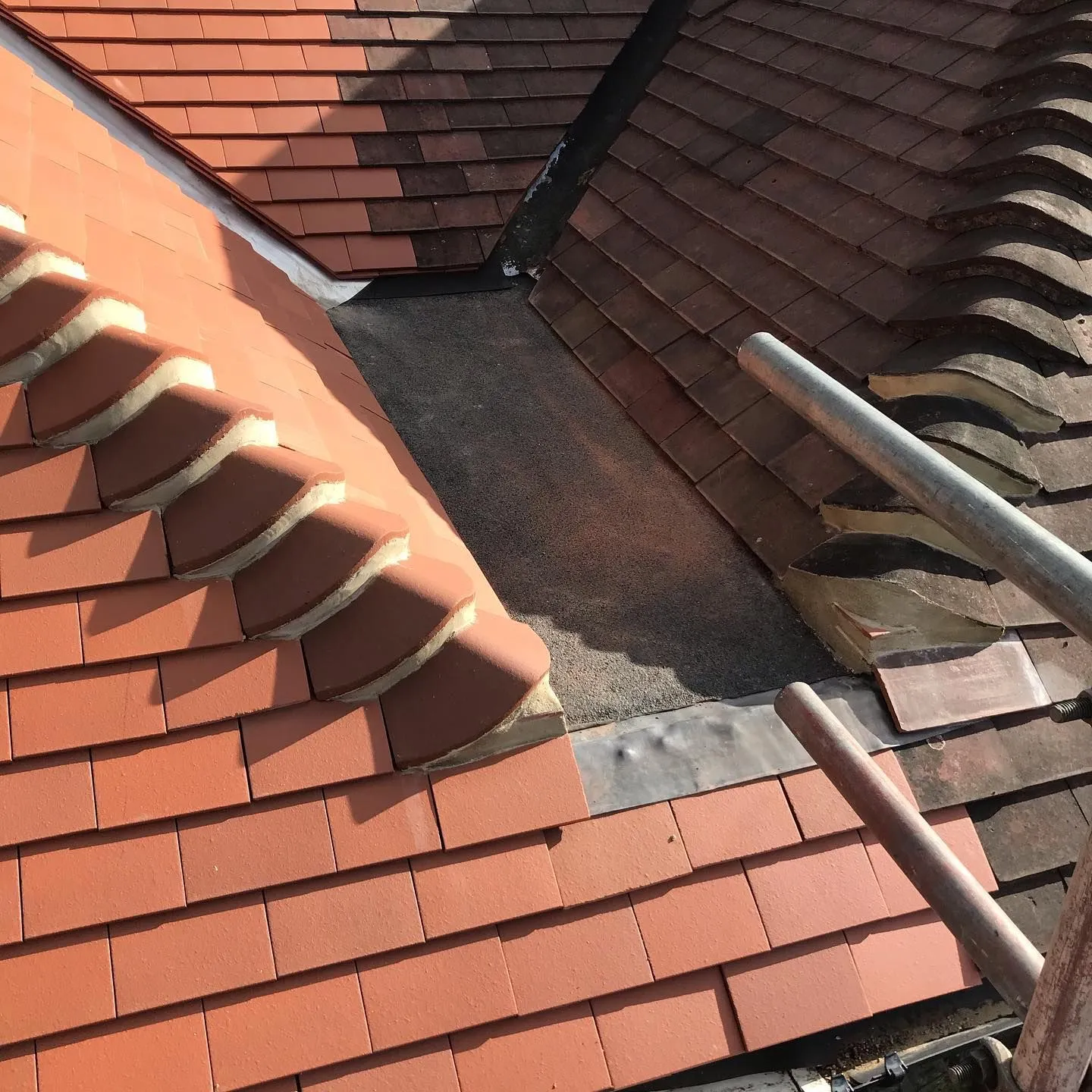
Derby winters are wet, cold, and hard on roofing materials. Damp autumns give way to hard frosts, and the freeze-thaw cycle — water getting into small gaps, freezing overnight, and expanding — puts real stress on tiles, mortar, and flashing across Derbyshire properties.
Derby’s housing stock makes this worse. The city has a wide mix of Victorian terraces with clay tile roofs in Normanton and Spondon, post-war semis across Chaddesden and Alvaston, and modern flat-roof extensions throughout Mickleover and Littleover. Each roof type has specific weak points, and each needs different checks before winter sets in.
A roof that held up through summer can fail fast once the wet season arrives. A small crack in October becomes a leak by December. Acting now saves you money and keeps your home dry — this guide walks through the checks worth doing yourself, and the ones worth having looked at properly.
When Should You Start Preparing Your Roof for Winter in Derby?
The right time is late summer to early autumn — August through October. The weather is still dry enough to inspect and repair, and you have time to book a roofer before the autumn rush begins.
By November, availability shrinks. We see a sharp rise in emergency call-outs after the first storms of the season. Homeowners who booked in September get repairs done in dry conditions at normal rates. Those who wait often pay more and wait longer.

Our advice is simple: check your roof in September. Book any work by October at the latest. If you have missed that window, call us anyway — most repairs can still be carried out through winter, weather allowing.
Step 1 — Check Your Roof Tiles and Slates
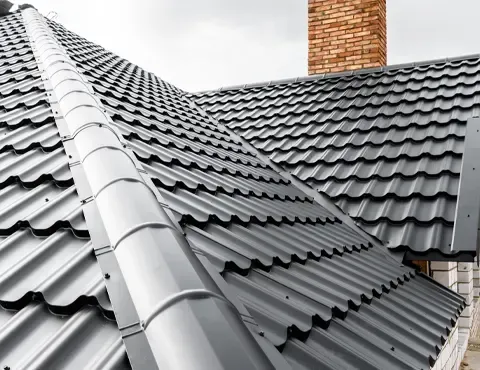
Most winter leaks start with a single damaged tile. One cracked or slipped tile lets water in. That water freezes overnight, expands, and turns a hairline gap into a serious hole. By the time you see a damp patch on the ceiling, the damage has usually been spreading for weeks.
Stand at the perimeter of your property and look up at the roof surface with binoculars. Do not climb onto the roof yourself — it is not safe and it is not necessary. You are looking for:
- Tiles that are cracked, lifted, or sitting at an angle
- Missing tiles leaving a dark gap in the roof line
- Slates that have slipped down or out of position
- Ridge tiles that look uneven or have mortar missing around them
Derby has a wide mix of roof coverings. Clay tiles are common on older properties in Darley Abbey and Spondon, concrete tiles appear on post-war houses across Allestree and Breadsall, and natural slate is found on Victorian terraces in Normanton. Each material ages differently and fails differently — we know what to look for in all of them. If anything looks wrong, our free CAA-compliant drone survey captures high-resolution photographs of every tile, valley, flashing, and chimney on your property, from the ground, with no scaffolding and no charge.
Step 2 — Clear Your Gutters and Downpipes Before They Freeze
Blocked gutters are one of the most common causes of winter roof damage across Derby. Autumn leaf fall from the trees lining streets in Allestree, Breadsall, and Borrowash fills gutters fast. When water cannot drain, it backs up under the roofline.
In freezing weather that backed-up water turns to ice. Ice forces its way under tiles and flashing. The result is a leak — sometimes weeks after the original blockage formed and long before you notice anything inside the house.
- Water spilling over the top edge of gutters
- Gutters sagging or pulling away from the fascia board
- Downpipes that are blocked at bends or joints
- Overflow staining running down external walls
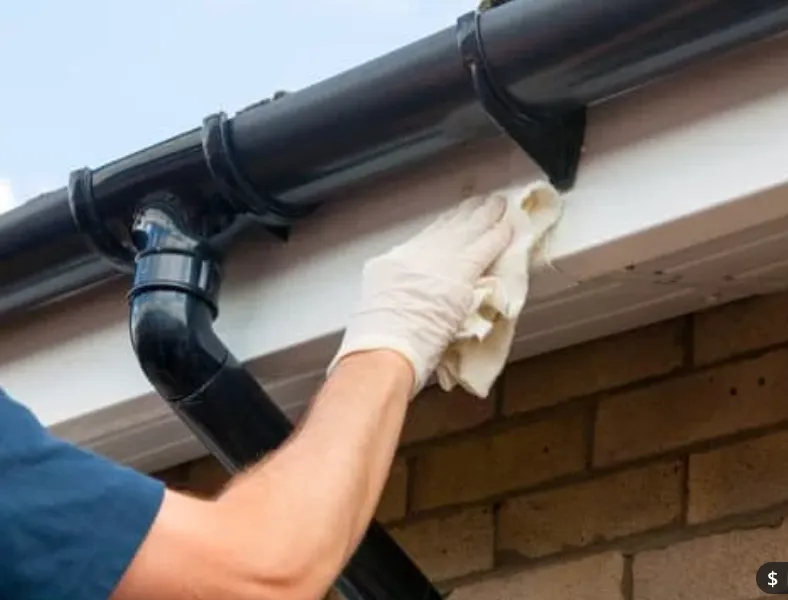
If you are comfortable on a ladder and have a single-storey run, you can clear debris with a scoop and flush with a garden hose. For anything higher, or if gutters are pulling away or cracked, call us — we inspect gutters as part of every roof survey and can replace UPVC or cast iron guttering on the same visit. Cast iron guttering is common on period properties in Derby’s conservation areas and needs different handling to UPVC; we work with both.
Step 3 — Inspect Your Roof Flashing Before the Frost Sets In
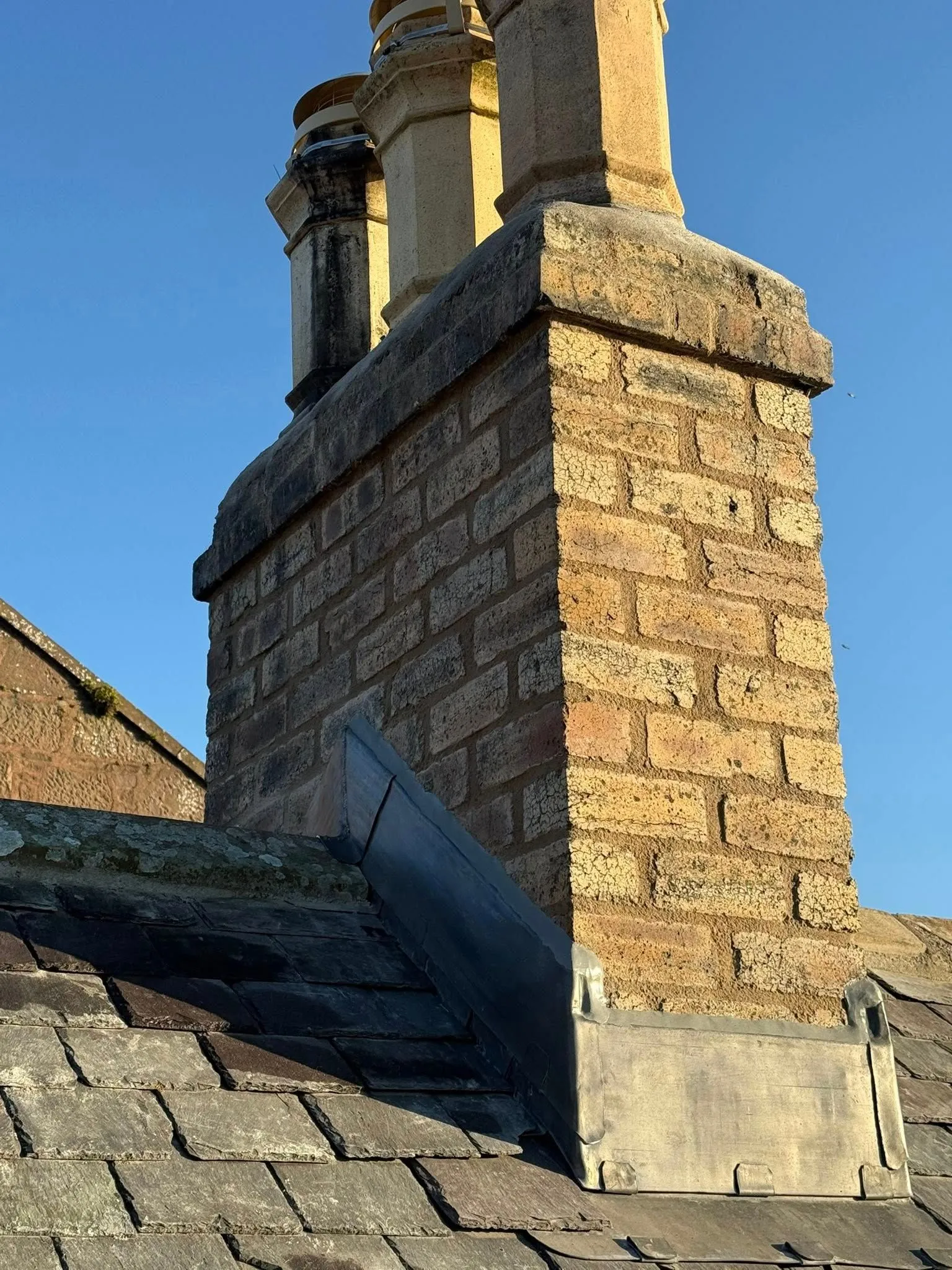
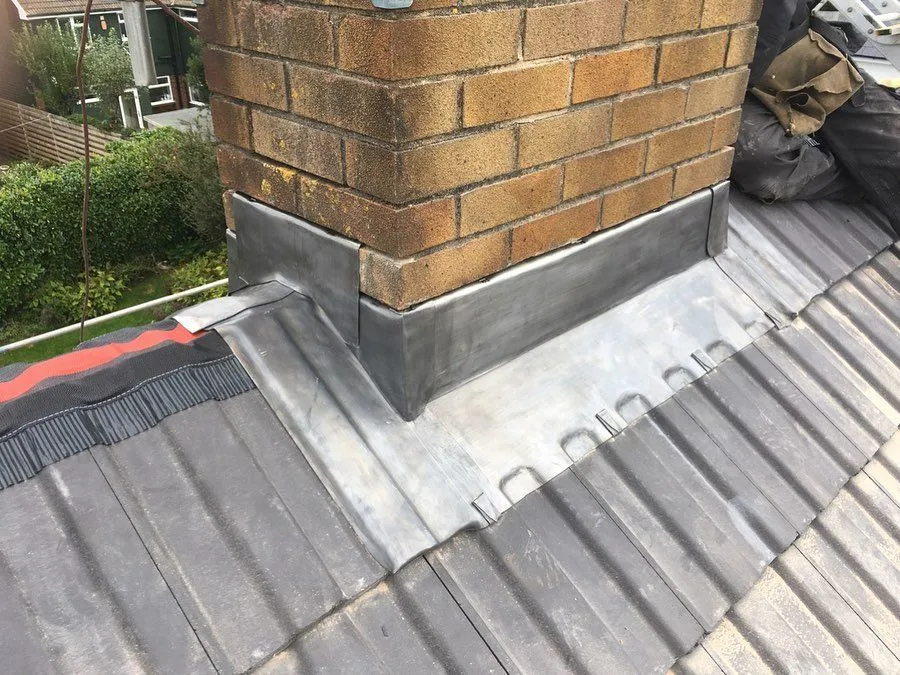
Flashing is the lead or metal seal that runs around chimneys, skylights, dormers, and where the roof meets a wall. It stops water getting into the joints between surfaces. When it fails, water gets in quietly — spreading through insulation before it ever shows on a ceiling.
Failed flashing is one of the most common causes of roof leaks we attend across Derby and Derbyshire. From the ground, look for:
- Rust staining running down the chimney breast or parapet wall
- Gaps or lifting at the edges of lead flashing
- Mortar that has cracked away from the flashing line
- Damp patches on upper ceilings near a chimney, dormer, or skylight
Do not attempt to seal flashing with DIY mastic. It does not perform in cold and wet conditions and can make a proper repair harder later on. Our team carries out lead flashing repair and replacement across Derby and Derbyshire — from bay window lead roofs to full chimney flashing replacements. If your property is in a conservation area in Derby, lead is typically the required material, and we know the local planning context.
Step 4 — Deal With Moss and Algae Before Winter Sets In
Moss is very common on Derby roofs. North-facing slopes and properties near wooded areas in Darley Abbey and Markeaton Park are particularly affected. In winter, moss becomes a direct hazard: it holds water against the tile surface, that water freezes, and the repeated expansion cracks tiles from beneath. It also blocks gutters and slows drainage from the whole roof.
Left untreated, moss shortens the working life of your roof. It is worth removing before the wet season starts, not after.
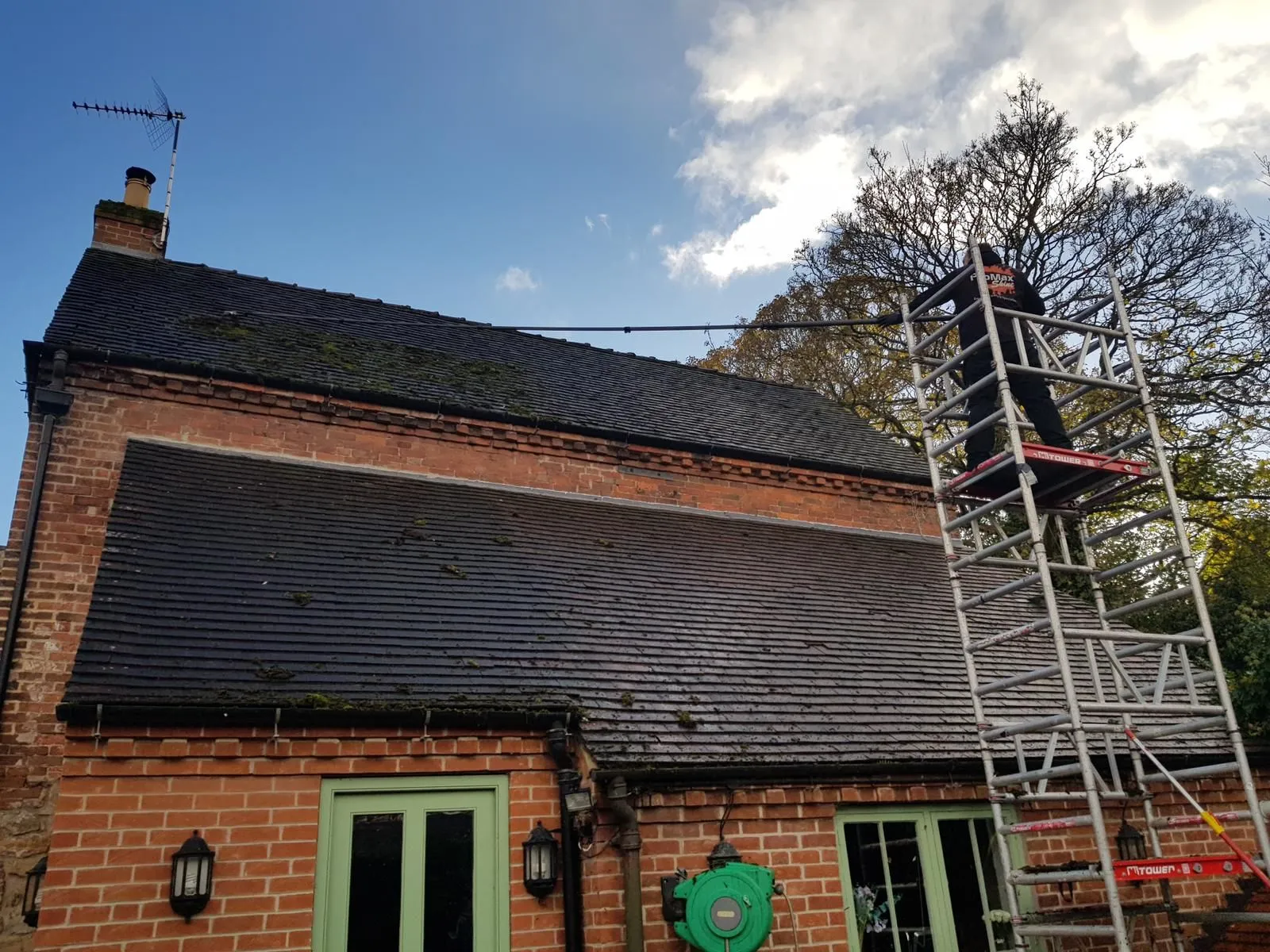
Do not pressure wash your roof. Pressure washing strips the surface from tiles, drives water into the structure, and can void manufacturer warranties. Our team uses a professional soft-wash cleaning system — a low-pressure, biodegradable solution that removes moss, algae, and lichen safely. We follow up every clean with a biocide treatment to inhibit regrowth, and for longer-term protection we can fit zinc or copper strips along the ridge line.
Autumn is the best time to book moss removal in Derby. The treatment works through the winter and you head into the wet season with a cleaner, better-draining roof.
Step 5 — Check Your Flat Roof for Standing Water Before It Freezes
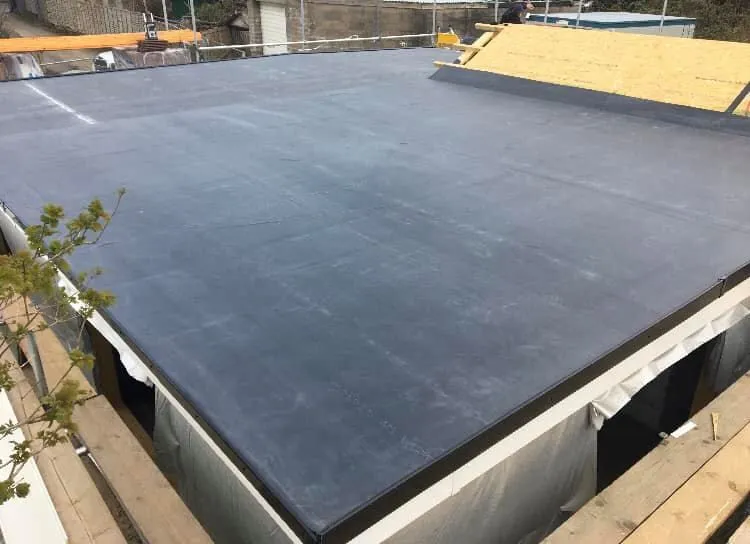
Flat roofs need separate checks before winter. Unlike pitched roofs, flat roofs depend entirely on drainage outlets and falls to remove water. If those outlets block, water sits on the surface — and standing water in freezing temperatures causes more damage than almost anything else on a roof, as it expands and forces open any weak seam in the felt or membrane.
Derby has a large number of flat-roof house extensions, garage roofs, and bay window roofs — particularly across Chaddesden, Littleover, and Mickleover. If your property has a flat roof section, add these to your winter checklist:
- Check drainage outlets and scuppers — clear any debris
- Look for standing water on the surface after rainfall
- Check for bubbling, cracking, or lifting on felt or membrane surfaces
- Inspect upstand seals at edges, walls, and around any penetrations
- Check inside any rooms beneath the flat roof for damp patches or water marks on the ceiling
If your flat roof is more than ten to fifteen years old and showing any surface wear, autumn is the time to act — a failing flat roof in winter is not a minor problem. We carry out flat roof inspections and repairs across felt, EPDM rubber, and GRP fibreglass systems, and can upgrade an ageing felt roof to a longer-lasting EPDM or GRP system before winter.
Step 6 — Look at Your Ridge Tiles and Mortar
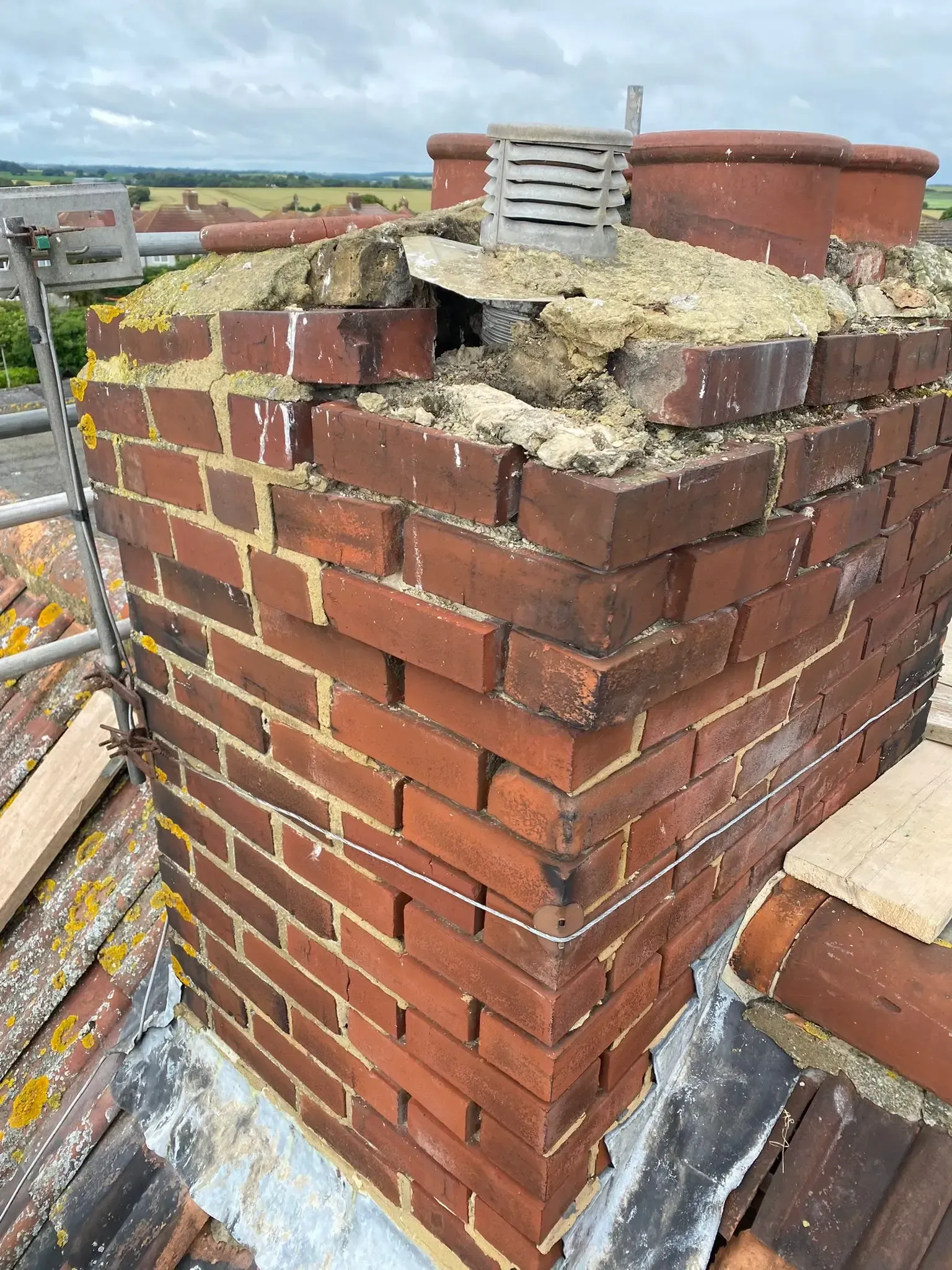
Ridge tiles sit at the very top of your pitched roof, bedded in mortar that takes a battering from Derbyshire winters. Freeze-thaw cycles crack mortar open repeatedly. Once it fails, ridge tiles shift in the wind — a loose ridge tile is a safety hazard, as it can fall from height, and it leaves an open gap at the highest and most exposed point on your roof.
Older properties in Derby are particularly prone to this. Mortar laid years ago on clay tile roofs in Spondon and Normanton, or on terraces across Pear Tree, can deteriorate faster than expected on north-facing and exposed elevations.
- Ridge tiles sitting at an angle or visibly uneven
- Gaps or cracks in the mortar along the ridge line
- White mortar debris in the gutters or on the ground below
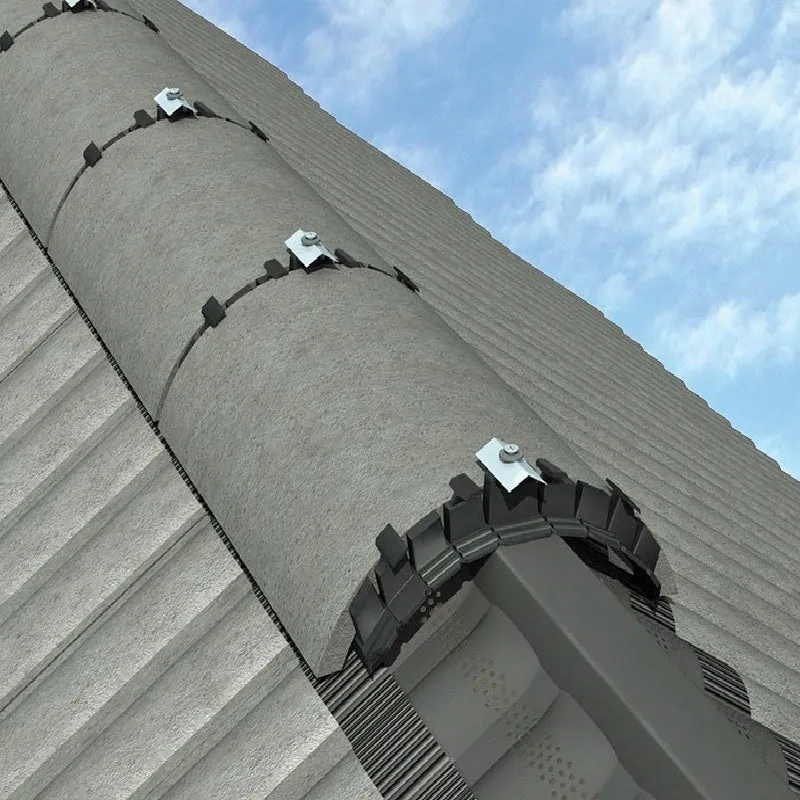
We carry out ridge tile repointing and rebedding across Derby and Derbyshire as part of our roof repair service. We also install dry ridge systems — a mortar-free alternative that does not crack, meets current building regulations, and gives a cleaner, low-maintenance finish. If your ridge mortar is ten or more years old, it is worth getting it checked before the first hard frost.
Step 7 — Inspect Your Loft, Check Insulation Depth, and Watch for Ice Dams
Your loft will tell you a great deal about your roof’s condition. Ten minutes up there in October, torch in hand, can catch a problem before it ever shows on your ceilings below. Look for daylight through roof boards, damp staining on timbers, wet or compressed insulation, and mould or dark marks on the structure.
Ice dams form when warm air escaping from the loft melts roof snow unevenly, and that meltwater then refreezes at the cold eaves. The fix is in the loft, not on the roof — good insulation at the recommended 270mm depth, clear ventilation through soffit and ridge vents, and no blocked eaves. Icicles forming along the gutter line are a clear sign of a loft insulation or ventilation issue, not just cold weather.
One important distinction: condensation in the loft is not the same as a roof leak, and the two are often confused. General moisture on cold surfaces with no specific wet patches usually means poor ventilation rather than a tile failure — both need addressing before winter, but for different reasons.
The UK recommended depth for mineral wool loft insulation is 270mm. Many older Derby properties have far less than this, particularly Victorian terraces and post-war semis — check the depth in your loft with a ruler. If you have spray foam insulation, mention this when you call us: it can make the roof structure difficult to assess visually and, in many cases, affects the ability to mortgage or sell the property. We carry out spray foam removal and roof insulation and ventilation upgrades across Derby.
How We Deliver Your Free Pre-Winter Roof Survey
The drone survey itself is free and carries no obligation. Here is how it runs, from first call to sign-off.
- Book by phone or contact form: Call us or complete the contact form to book your free pre-winter drone survey. We answer every call and get back to every enquiry the same day.
- Drone survey from the ground: Our CAA-compliant pilot flies the drone over every tile, valley, flashing point, and chimney, plus any flat roof sections, without scaffolding or ladders on your property.
- Written report and photographs: You receive a written report with high-resolution photographs and honest recommendations, showing exactly what — if anything — needs attention before winter.
- Itemised quote: If work is needed, you get a fully itemised quote broken down by job, with no pressure to proceed and no obligation to book anything further.
- Repairs carried out: Agreed work — tile replacement, flashing repair, gutter clearance, moss removal, or ridge repointing — is scheduled and carried out, weather permitting, ahead of the wet season.
- Sign-off: We confirm the roof is weathertight and safe, and the written report stays on file for future reference or for an insurer if you ever need one.
What any follow-on work costs depends on what the survey finds — a single tile replacement is a very different job from a full ridge repoint, a flashing renewal, or a flat roof upgrade. We give a fully itemised quote after the survey so you know what each part of the job costs before agreeing to anything.
What to Do After a Winter Storm, and Can Repairs Wait Until Spring?
After any significant storm — strong winds, heavy rain, or an overnight frost — carry out a quick check as soon as it is safe. You do not need to go up anywhere. From the ground, look for tiles or slates on the ground or pavement, ridge tile debris or displaced mortar, gutters pulled away from the fascia, and water stains appearing on ceilings inside. Then spend five minutes in the loft — a torch check after a storm often catches a new leak before it reaches the rooms below.
Yes — the large majority of roof repairs can be done throughout winter. Tile replacements, flashing repairs, ridge work, gutter replacement, and chimney repointing are all carried out in cold weather by experienced teams. There are a small number of exceptions: certain flat roof systems using adhesive-bonded membranes need temperatures above a minimum threshold to cure correctly, and we will tell you clearly if that applies to your job.
A small problem in October becomes a large problem by February. Water sitting in roof timbers through a wet Derbyshire winter causes rot, and mould follows. By spring, what could have been a straightforward repair is a structural issue costing several times more to fix. If you find storm damage, call us on 01332-529704 — we offer emergency roof repairs across Derby and Derbyshire and aim to respond the same day, making your roof safe and weathertight first. We also assist with storm damage insurance claims if your insurer needs a written report and photographs.
What a Pre-Winter Roof Survey Covers
- Photographing every tile, slate, and ridge line for cracks, lifts, or missing pieces
- Checking chimney, dormer, and skylight flashing for rust staining, lifting, or cracked mortar
- Inspecting valleys and flat roof sections, including felt, EPDM, and GRP surfaces
- Checking gutters, downpipes, and fascia boards for blockages, sagging, or overflow staining
- Checking ridge tile mortar and recommending repointing, rebedding, or a dry ridge system where needed
- Checking for moss and algae growth and advising whether soft-wash treatment is needed
- A written report with photographs and honest, itemised recommendations at no charge
Not Included / Costed Separately
- The repair work itself — tile replacement, flashing renewal, gutter replacement, moss removal, and ridge repointing are quoted separately once the survey findings are in
- Loft insulation upgrades and spray foam removal, which are costed and quoted as their own job
- Scaffolding or powered access equipment, where a repair needs it rather than a drone-only survey — this is costed into the individual repair quote
- Structural timber repair following a long-term leak, which is scoped once the extent of any rot is confirmed
What Does Pre-Winter Roof Preparation Cost in Derby?
The drone survey itself is free and carries no obligation. What any follow-on work costs depends on what the survey finds, and on the roof’s pitch, height, and how the property is accessed. We give a fully itemised quote after the survey so you know what each part of the job costs before agreeing to anything, with nothing added later. Because every roof and every job is different, a full, accurate price needs a site visit — call to book your free survey and we will give you honest figures in writing.
Derby Coverage: High Ground, Low Ground, and Everywhere Between
Derby sits at the eastern edge of the Peak District, and the weather that comes off those hills lands harder on the north and west of the city — Allestree, Quarndon, Mickleover — than it does on the flatter ground toward Chaddesden and Spondon. That difference shows up on the roof: a property in one of those exposed suburbs can be losing ridge tiles and mortar years before a similar-age roof half a mile away on lower, more sheltered ground, which is why we check each property on its own position rather than treating every job the same. Where a repair calls for more than the drone survey alone — a tall chimney stack, a steep pitch, a flat roof upstand that needs standing on rather than flying over — our crew are IPAF-certified for powered access platforms and PASMA-certified for mobile access towers.
Our home patch is Derby, and the free drone survey covers the whole city — from the Peak-facing exposure of Allestree and Quarndon in the north-west to the low-lying stretches along the Derwent at Chester Green, Darley Abbey, and Alvaston, where heavy autumn rain backs up and puts more strain on gutters and downpipes than roofs on higher ground get. We also cover the rest of Derbyshire’s postcodes, and further afield we carry out pre-winter roof checks and repairs across Nottingham, Sheffield, Leeds, and Manchester. Call to check availability in your area.
- Derby (DE1)
- Long Eaton (NG10)
- Belper (DE56)
- Borrowash (DE72)
- Breadsall (DE21)
- Mickleover (DE3)
- Ashbourne (DE6)
- Ilkeston (DE7)
- Willington (DE65)
- Chesterfield (S40)
- Matlock (DE4)
- Bakewell (DE45)
- Swadlincote (DE11)
- Markeaton (DE22)
- Heanor (DE75)
- Ripley (DE5)
- Alfreton (DE55)
- Burton on Trent (DE13)
- Buxton (SK17)
- Nottingham (NG)
Frequently Asked Questions — Preparing Your Roof for Winter in Derby
When Is the Best Time to Prepare My Roof for Winter in Derby?
August to October is the best window for roof preparation in Derby. This gives you dry weather for inspection and repairs, and enough lead time to book a roofer before the autumn rush. By November, availability tightens and emergency call-out volumes rise sharply.
How Do I Check My Roof for Damaged or Missing Tiles Before Winter?
Stand at the edge of your property and look at the roof surface through binoculars. You are looking for cracked, lifted, or missing tiles, slates that have slipped, and ridge tiles that look uneven or have mortar crumbling away. Also check your loft for daylight coming through the boards or any damp patches on the timbers. If anything looks wrong, book a free drone inspection before the weather turns.
How Do I Clean My Gutters and Downpipes to Prevent Winter Water Damage?
Clear debris from gutters with a scoop and flush with a garden hose after heavy leaf fall. Check that downpipes are free from blockages at bends and joints. Walk around the house during rainfall to spot any overflow. For anything above single storey, or if gutters are pulling away from the fascia, call a professional — we carry out gutter cleaning and replacement across Derby and Derbyshire.
What Is Roof Flashing, and How Do I Know If It Needs Replacing Before Winter?
Flashing is the lead or metal seal around chimneys, skylights, dormers, and wall junctions. It stops water getting into the joints where two surfaces meet. Signs it needs attention include rust staining on the chimney breast, gaps or lifting at the flashing edges, cracked mortar around the lead, and damp patches on upper ceilings near a chimney or skylight. Do not try to seal it with mastic — call us for a proper assessment.
How Do I Prevent Ice Dams Forming on My Roof During Cold UK Weather?
Ice dams form when warm air escaping from the loft melts roof snow unevenly, and that meltwater then refreezes at the cold eaves. The fix is in the loft, not on the roof — good insulation at the recommended 270mm depth, clear ventilation through soffit and ridge vents, and no blocked eaves. If you are seeing icicles forming along the gutter line, call us. That is a clear sign of a loft insulation or ventilation issue.
How Much Loft Insulation Do I Need to Stop Heat Escaping Through My Roof in Winter?
The UK recommended depth for mineral wool loft insulation is 270mm. Many older Derby properties have far less than this, particularly Victorian terraces and post-war semis. Check the depth in your loft with a ruler — if it is thin, patchy, or compressed, it is not performing. We carry out roof insulation and ventilation upgrades across Derby and Derbyshire.
How Do I Deal With Moss or Algae on My Roof Before Winter Sets In?
Have it removed professionally using a soft-wash system, not a pressure washer — pressure washing damages tiles and drives water into the structure. We use a low-pressure, biodegradable cleaning solution that removes moss, algae, and lichen safely, follow up with a biocide treatment, and can fit zinc or copper strips along the ridge for long-term prevention.
Should I Hire a Professional Roofer for a Winter Roof Inspection, or Can I Do It Myself?
A ground-level check is useful and worth doing. A professional inspection is more thorough and will find problems you cannot see from the ground. Our free drone surveys photograph every surface on your roof without scaffolding, ladders, or any cost to you, and we provide a written report and honest advice with no obligation to proceed.
What Are the Signs of a Roof Leak I Should Look for Inside My Home During Winter?
Look for damp or brown patches on ceilings, mould or dark marks in the corners of upper rooms, a musty smell in the loft, wet or discoloured insulation, and water staining on roof timbers. Check your loft after heavy rainfall or a hard frost — those are the moments when active leaks are most visible. If you find any of these signs, call us on 01332-529704.
Can Roof Repairs Be Carried Out During Winter, or Do I Need to Wait Until Spring?
Most roof repairs can be done throughout winter — tile replacements, flashing repairs, ridge work, gutter work, and chimney repointing are all carried out in cold weather. Waiting until spring is rarely the right call, as a small leak left through a wet Derbyshire winter causes wood rot and mould that costs far more to fix. Contact us and we will tell you exactly what can be done and when.
Book Your Free Pre-Winter Roof Survey Today
If a small crack or a blocked gutter is left through a wet Derbyshire winter, it rarely stays small. Freeze-thaw cycles, ice dams, and standing water on flat roofs all turn minor faults into serious repairs by February.
Our free CAA-compliant drone survey covers every tile, valley, flashing point, ridge, and flat roof section on your property — no scaffolding, no ladders, no charge, and no obligation to book any work.
- ✅ Free CAA-compliant drone survey, no scaffolding required
- ✅ Written report and photographs before any work is agreed
- ✅ Same-day response to every call and enquiry
- ✅ IPAF & PASMA-certified team for taller or awkward roofs
Call us on 01332-529704 or use our contact form to book your free pre-winter drone survey, with no obligation to proceed.