
How Long Does a Roof Last? (And When It's Time to Replace Yours)
Call: 01332-529704
Most UK homeowners don’t think about their roof — until water starts dripping through the ceiling. By that point, what might have been a £200 tile repair has quietly turned into a £5,000 problem. This guide covers average lifespans by material, how UK weather affects your roof, and the warning signs you should never ignore.
- IPAF & PASMA-Certified Team
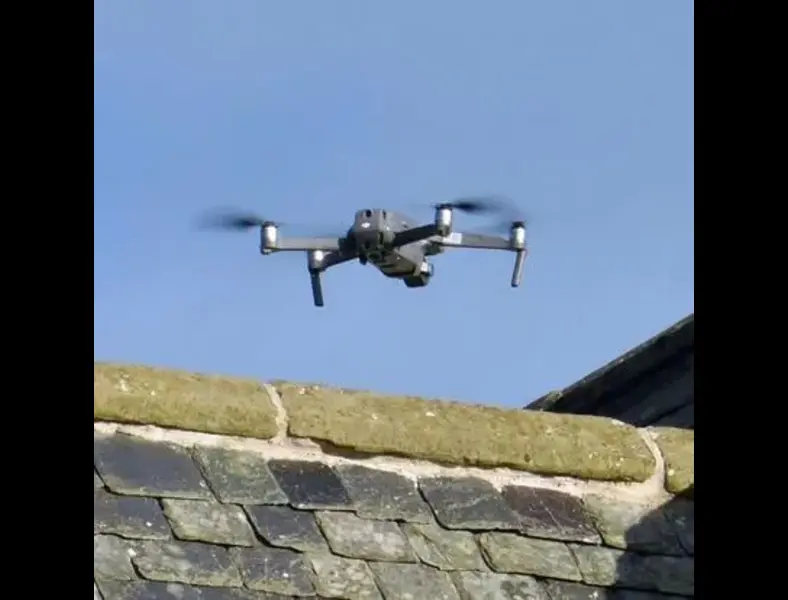
- Free Drone Roof Surveys
- Honest, Plain-English Verdicts
Not Sure If That Damp Patch Is Serious? We'll Give You a Straight Answer
If you’re not sure whether that patch of damp in the loft is nothing to worry about or the start of a bigger problem, a proper look at the roof is the fastest way to find out. We offer free roof inspections for a quick, on-the-spot verdict, more detailed roof surveys for older roofs, insurance claims or budgeting purposes, and a free drone roof survey for anything too steep, high or awkward to check safely by ladder.
Whatever the inspection turns up, our residential roofing team can quote for any repair or replacement work directly, so you’re not passed between different companies to get the job finished. You can see the wider range of what we do beyond inspections and surveys on our homepage.
- Team members hold IPAF and PASMA certification, so steep, high or awkward roofs get inspected properly rather than eyeballed from the ground
- Free drone roof surveys for roofs that are difficult or unsafe to reach by ladder
- Honest, plain-English verdicts — we’ll say when a repair is enough and when it genuinely isn’t
How Long Does a Roof Last in the UK? (The Quick Answer)
Most UK roofs last between 20 and 100 years. The biggest factor is the material your roof is made from. After that, it comes down to how well it was installed and how regularly it’s been maintained.
The UK’s wet winters, freeze-thaw cycles, and persistent wind all accelerate wear — especially on older roofs. Getting your roof inspected twice a year (spring and autumn) is the simplest way to catch small problems before they become expensive ones.
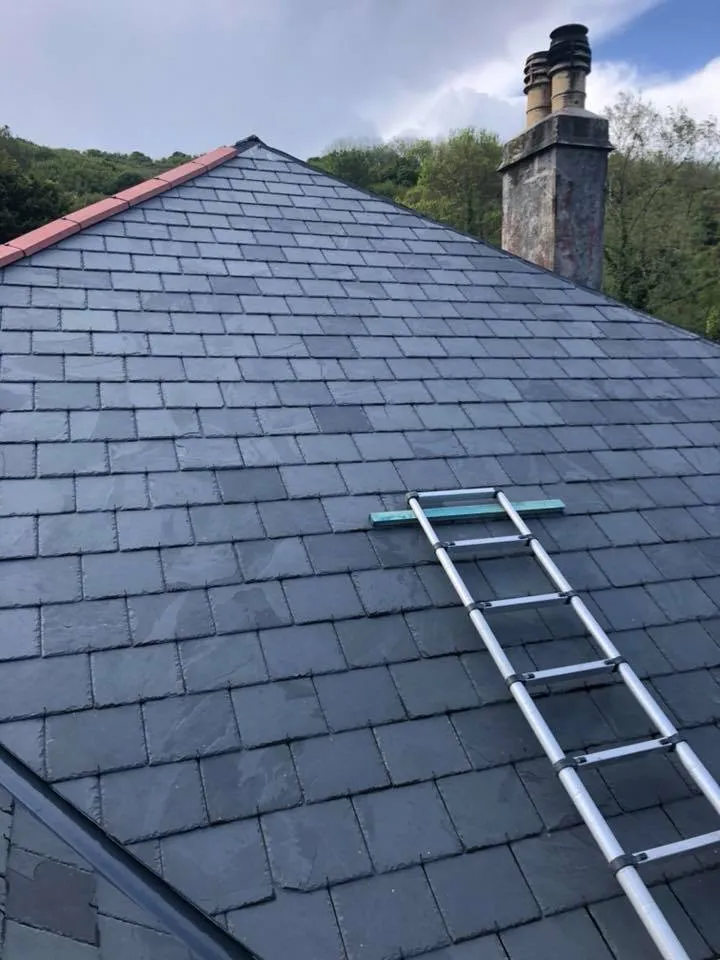
- Natural Slate — 75 to 150+ years. The longest-lasting option. Many Victorian homes still have their original slate roofs.
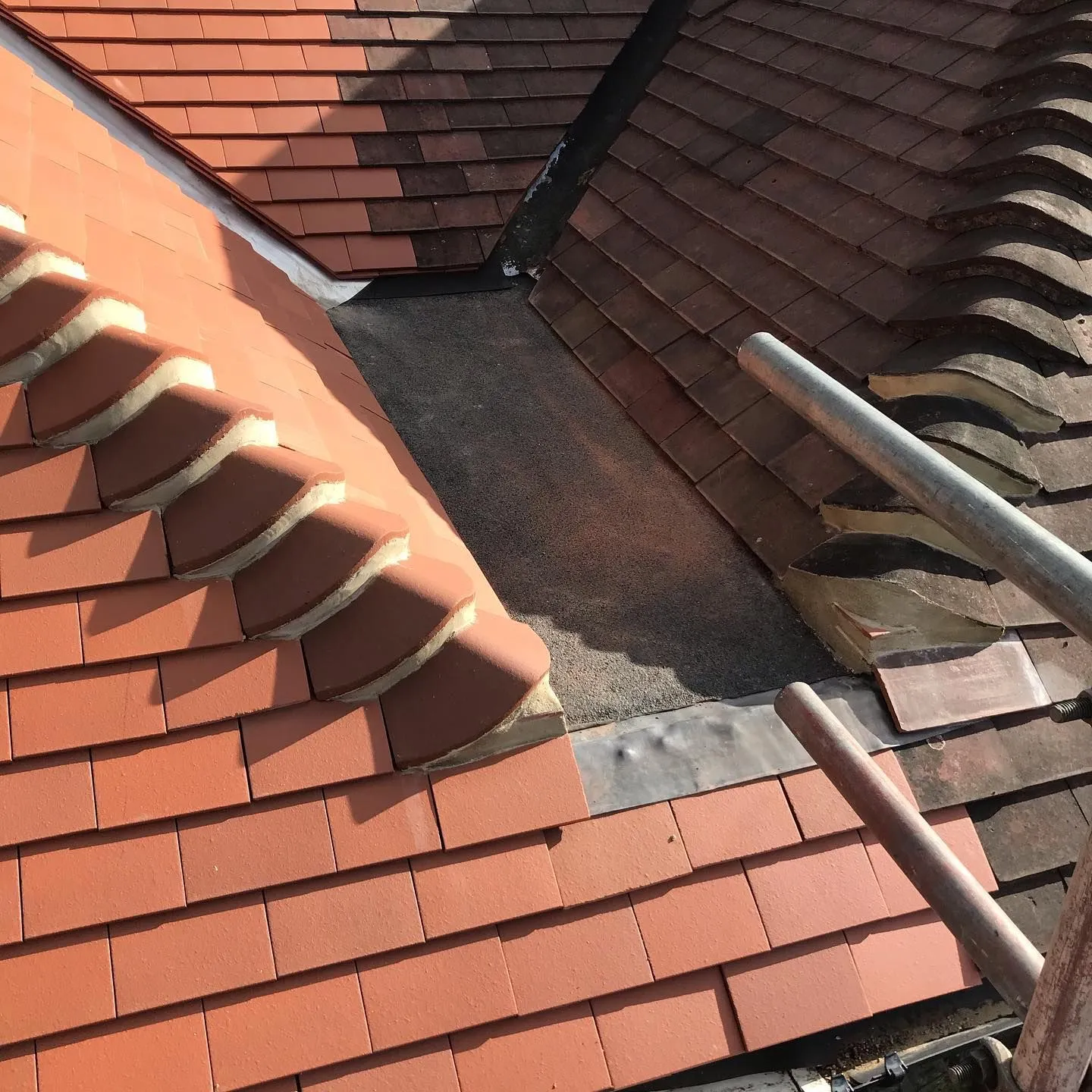
- Clay Tiles — 50 to 100+ years. A popular UK choice, very durable and can exceed 100 years with proper care.
- Concrete Tiles — 40 to 60 years. The most common and cost-effective option.
- Metal Roofing — 40 to 70 years. Low maintenance and good in exposed or coastal areas.
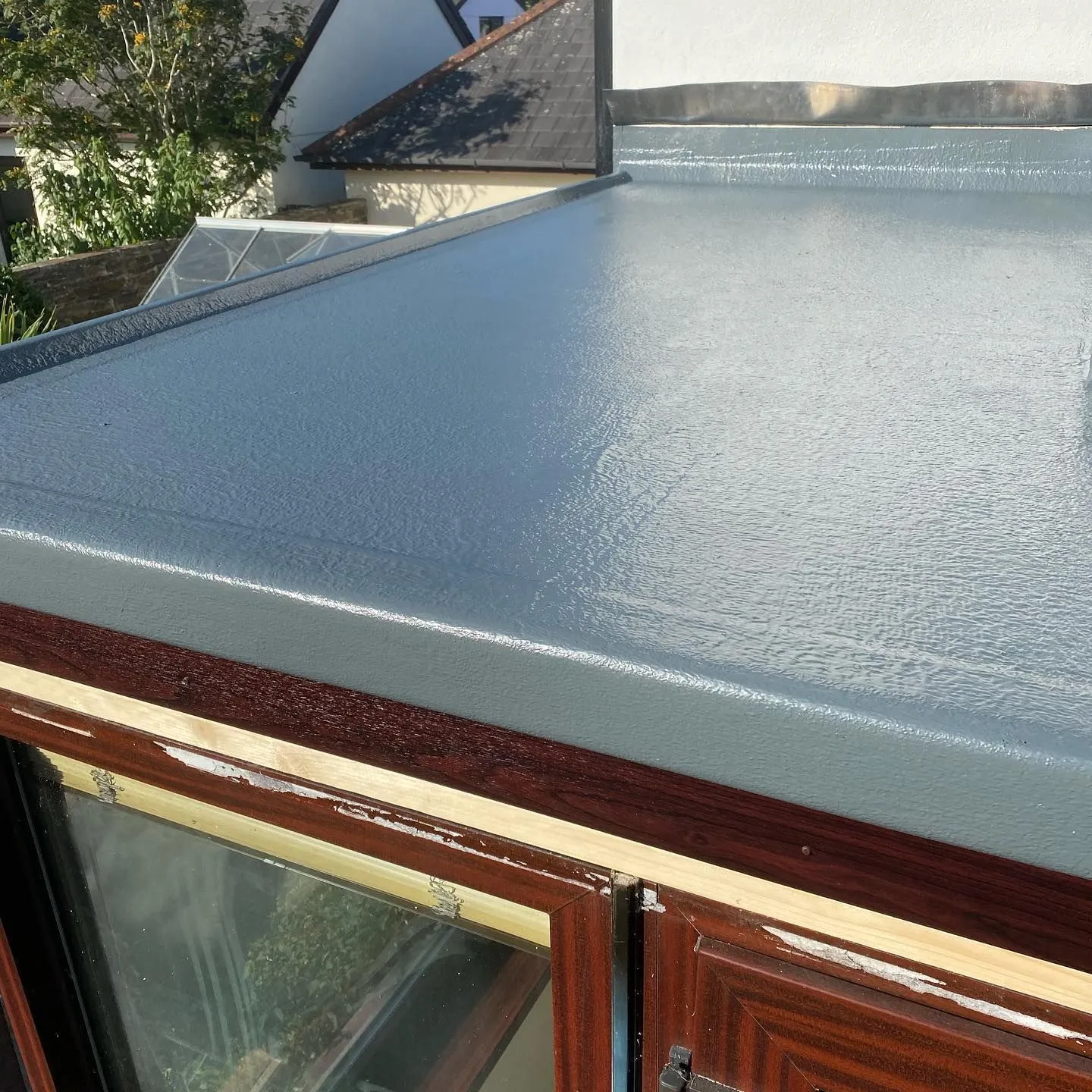
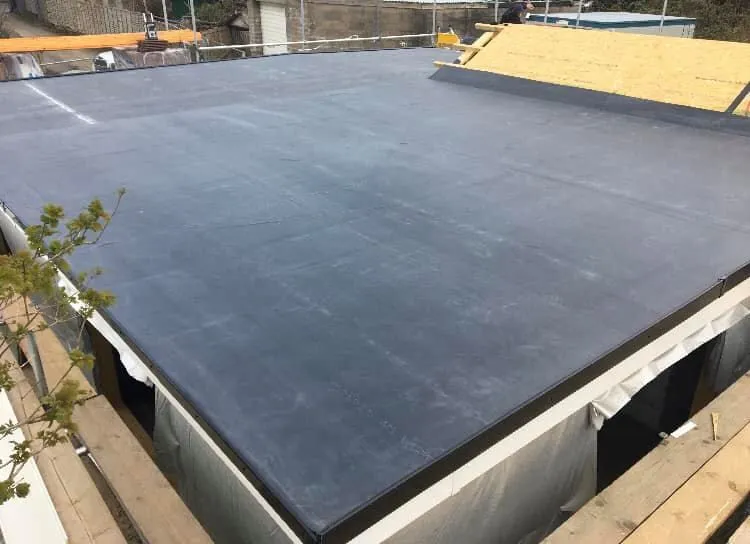
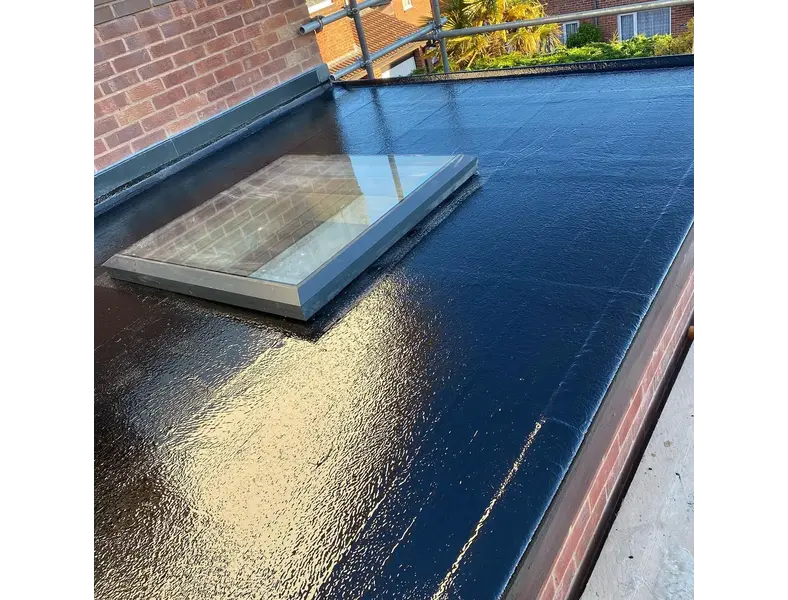
- EPDM Rubber Flat Roof — 20 to 50 years. Modern rubber flat roofs last much longer than older felt versions.
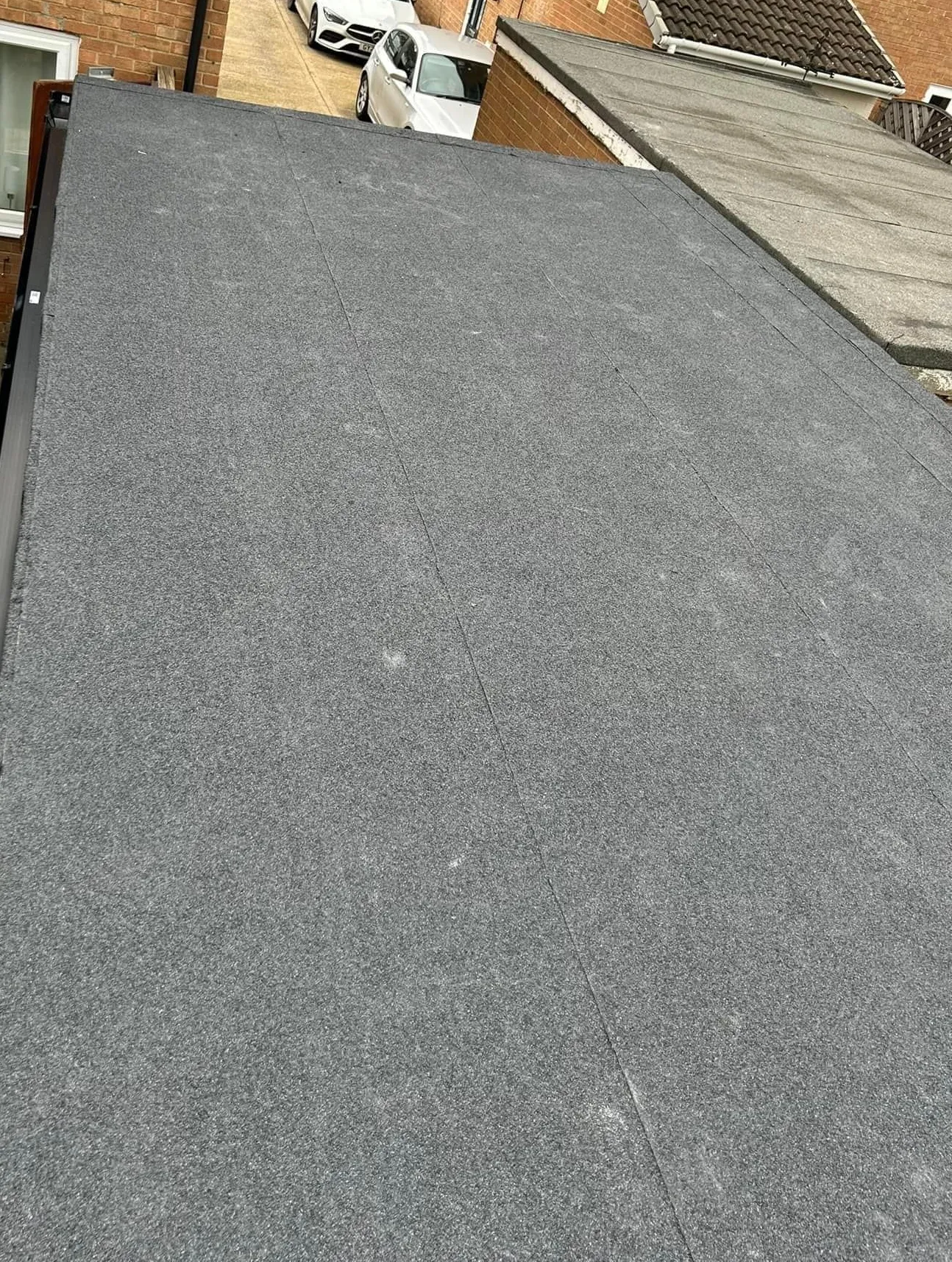
- Felt Flat Roof — 10 to 20 years. Common on older extensions and garages, many now overdue for replacement.
- Asphalt Shingles — 15 to 25 years. Budget-friendly but shorter lifespan than tile or slate.
Not sure how long your roof has left? A professional inspection is the fastest way to find out. We offer honest assessments with no obligation. → Book a free roof inspection
Roof Lifespan by Material — Which Lasts Longest?
Natural Slate: 75–150+ years
Slate is the gold standard of UK roofing. It is dense, naturally non-porous, and extremely resistant to frost — which makes it ideal for the British climate. Many Victorian and Edwardian homes still have their original slate roofs.
The trade-off is cost and weight. Slate is one of the heaviest roofing materials, which means your roof structure needs to be able to carry it. If a slate roof is installed on an unsuitable structure, it can fail far earlier than expected. Individual broken slates should be replaced as soon as you spot them — one damaged slate allows water into the roof deck, which can rot the timber underneath far faster than you might expect.
Clay Tiles: 50–100+ years
Clay tiles are one of the most popular choices across the UK. They are extremely durable, resist water damage well, and hold their appearance over decades. High-quality clay tiles can last well over 100 years with proper care. Clay’s one weakness is brittleness — if walked on incorrectly during maintenance work, tiles can crack, and are also susceptible to frost damage if the glaze is compromised.
Concrete Tiles: 40–60 years
Concrete tiles are the most cost-effective pitched roof option in the UK, and most will last 40 to 60 years before needing full replacement. Over time, concrete tiles absorb moisture, and this gradually erodes the cement matrix — resealing every 10 years helps extend their life. If your concrete tile roof is from the 1970s or 1980s, it is worth having it professionally assessed, as this generation of tiles is now commonly reaching the end of its working life across the UK.
EPDM Rubber Flat Roofs: 20–50 years · Metal Roofing: 40–70 years
The quality of flat roofing has improved dramatically since the turn of the millennium. Modern EPDM rubber roofs, when installed correctly, can last 20 to 50 years, while older felt flat roofs — particularly those installed before 1990 — have a typical lifespan of only 10 to 20 years. Metal roofs, meanwhile, are becoming more popular on UK homes, particularly in exposed coastal or high-wind areas where standard tiles can struggle. Steel and aluminium roofs typically last 40 to 70 years and require very little ongoing maintenance compared to tile or slate.
From the Field: In our experience, the concrete tile roofs we’re asked to assess most often are those installed in the 1970s and 1980s. Many are still technically watertight — but the tiles are porous, the pointing is crumbling, and the lead flashing is failing. The roof looks fine from the street but is quietly letting water in at the edges. This is exactly the kind of roof that benefits most from a professional inspection before it becomes an emergency.
How UK Weather Affects Your Roof's Lifespan
The UK averages around 1,163mm of rainfall per year — and that’s before you factor in wind, frost, and the occasional heatwave. Your roof takes the full force of all of it, every single day.
- Rain and moisture — persistent damp encourages moss, algae and lichen, which traps even more moisture against the tiles and gradually breaks down pointing and tile edges.
- Freeze-thaw cycles — water gets into tiny cracks, freezes overnight, expands, and makes the crack bigger. Repeated over several winters, tiles start to spall, crack and fail.
- Wind — strong winds lift and displace tiles, particularly on exposed or elevated properties. Even a single lifted tile can let water into the roof deck within hours of a heavy downpour.
- UV and summer heat — UV radiation degrades felt, EPDM membranes and asphalt over time, and hotter summers are accelerating this.
- Coastal salt air — speeds up corrosion on metal roofing components, particularly uncoated steel.
Where you live in the UK matters too. A roof in the Scottish Highlands or on the Welsh coast faces far harsher conditions than one in the East Midlands or the South East. If you’re in a wetter, windier, or frost-prone area, expect your roof to sit at the lower end of its typical lifespan range — unless it’s well maintained.
Signs Your Roof Needs Replacing — Not Just Repairing
Most roof problems start small. A single slipped tile or a failed patch of pointing can be repaired quickly and cheaply. The issue is that small problems, left unattended for a season or two, can become structural ones. Here is how to tell the difference:
- ⚠️ Your roof is 25 years old or more and you’ve had to repair it repeatedly in the last few years
- ⚠️ You’re getting leaks in more than one place — suggesting widespread material failure rather than a single weak spot
- ❌ The roofline is visibly sagging or dipping — this indicates structural damage and is urgent and a safety concern
- ❌ When you stand in the loft with the lights off, you can see daylight through the roof boards
- ❌ More than 25% of your tiles are cracked, slipping, missing or heavily damaged — a full re-roof is usually more cost-effective than repeated patching
- ⚠️ Your felt flat roof is cracking, blistering, or splitting around the edges, particularly if it’s over 15 years old
- ⚠️ There are persistent damp patches or water stains on your loft ceiling that keep returning after repairs
- ✅ A single tile has slipped or cracked and the rest of the roof is in good condition — a straightforward repair
- ✅ There is moss on the surface but the tiles themselves are sound — a biocide treatment and clear-out is sufficient
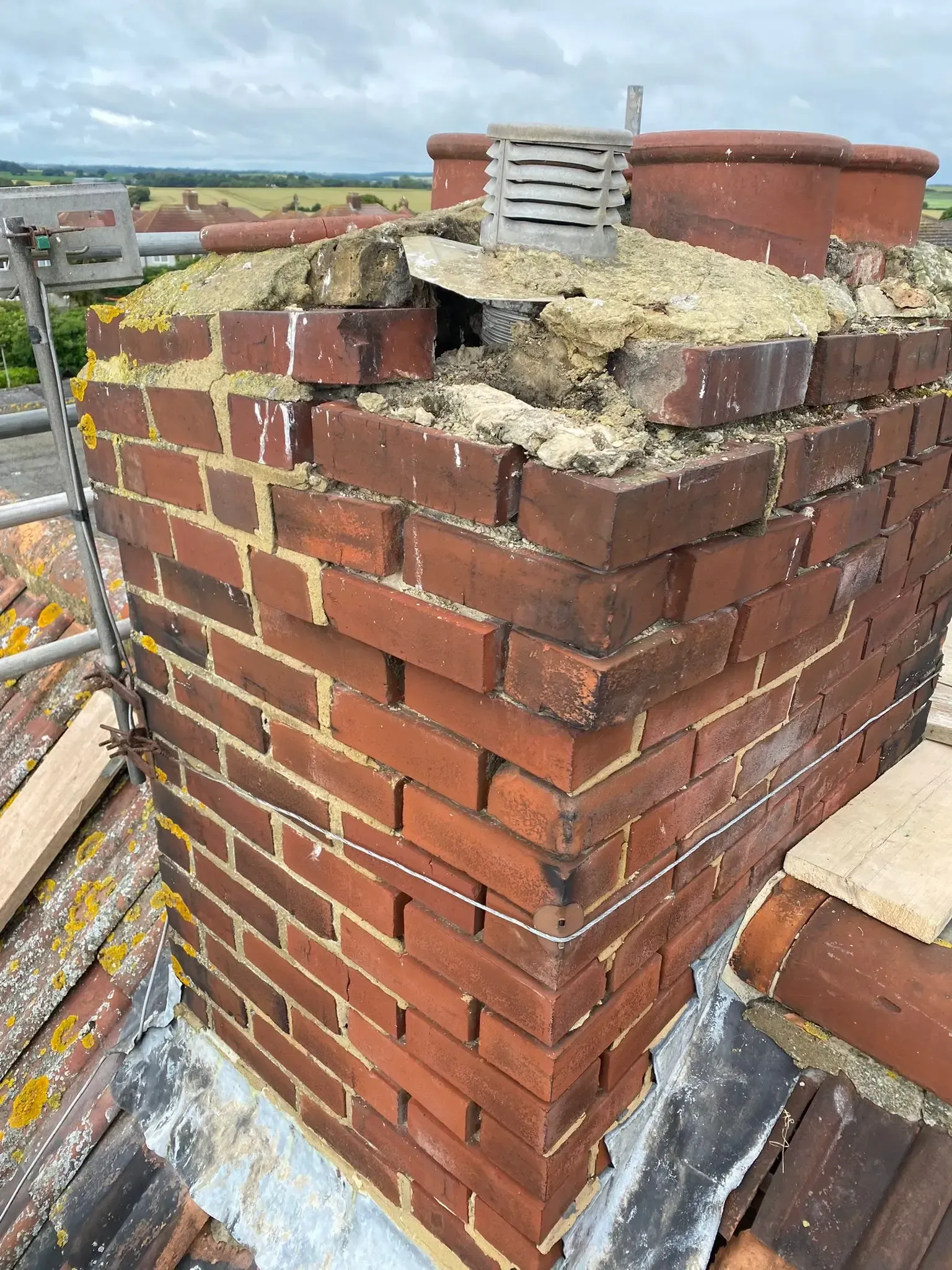
If you are not sure which category you fall into, the most useful thing you can do is have a professional inspection. A qualified roofer can assess from the inside as well as the outside, which often reveals water ingress that isn’t yet visible at ceiling level.
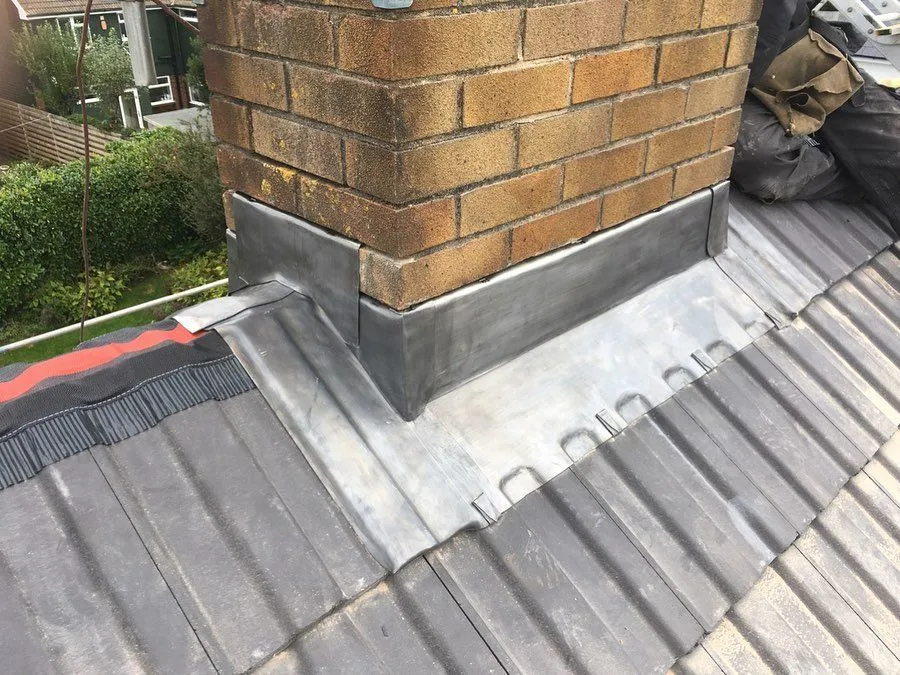
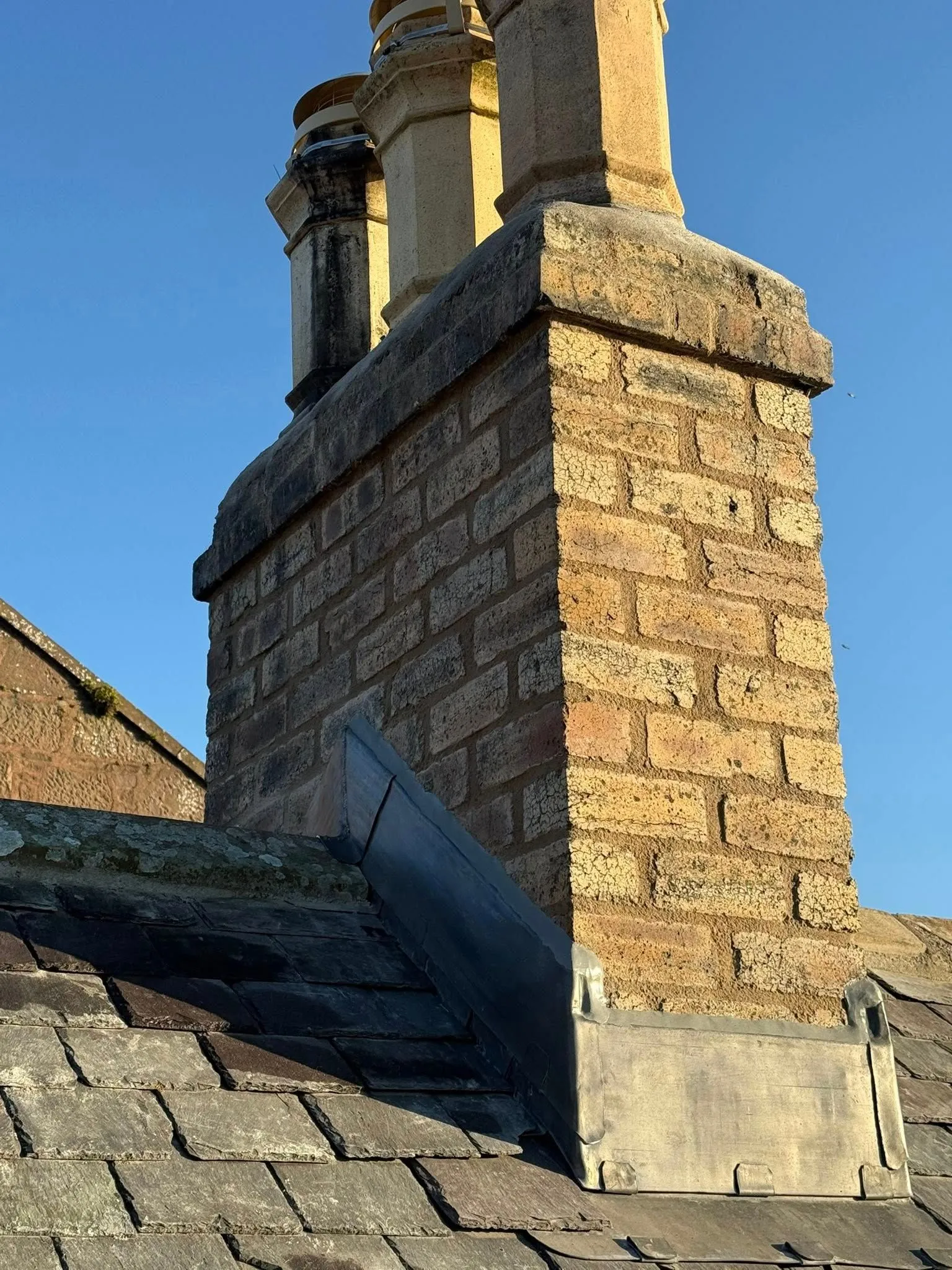
From the Field: The most common thing homeowners miss is water ingress at the lead flashing — particularly around chimneys and in valleys. It’s rarely visible from the ground and doesn’t always create an obvious internal leak straight away. We regularly find lead flashing that has been failing quietly for two or three years before the homeowner notices anything.
Think your roof might need attention? Don’t wait for a leak to confirm it. → Book a professional roof survey
How to Make Your Roof Last Longer — Maintenance Tips
The single most effective thing you can do is inspect your roof twice a year: once in spring after winter, and once in autumn before it arrives. Most roofers — including the National Federation of Roofing Contractors (NFRC) — recommend this as standard practice.
Spring Check (April / May)
- Look for tiles that have slipped, cracked, or gone missing over winter
- Check lead flashing around the chimney, valleys, and any roof penetrations for cracking or gaps
- Inspect any flat roof sections for blistering, cracking, or pooling water
- Clear debris from gutters and check for signs of moss or algae build-up
Autumn Check (September / October)
- Clear the gutters thoroughly before the leaves fall — blocked gutters are one of the most common causes of water ingress
- Check that all tiles are secure before the first storms arrive
- Apply a moss and algae biocide treatment if needed — do not use a pressure washer, as it dislodges tiles and strips protective granules
- Ensure loft ventilation is clear — a well-ventilated loft prevents condensation building up beneath the roof and causing rot from below
When something looks wrong, deal with it immediately. A £150 tile replacement left for six months can easily become a £1,500 repair to the roof deck below. The cost of delay is almost always greater than the cost of the fix.
One tip worth knowing: if you spot moss on your roof, resist the urge to scrub or pressure-wash it off. Aggressive cleaning physically damages tiles and can reduce their effective lifespan by years. Use a proprietary biocide treatment that kills and dries the moss, then brush it off gently once it has died.
How Much Does a New Roof Cost in the UK?
A new roof is one of the bigger home maintenance costs you’ll face — but it’s also one of the most important. Prices vary depending on the size of your roof, the materials used, and where you live. Here are typical ranges for 2025/2026:
- Semi-detached house (gable roof, concrete tiles) — £5,000 to £8,000
- Semi-detached house (hipped roof) — £8,000 to £12,000
- Detached house — £7,000 to £12,000+
- Slate re-roof (3-bed semi) — £10,000 to £18,000+
- Flat roof (extension or garage, EPDM rubber) — £2,500 to £6,000
- Lean-to or outbuilding — £3,000 to £5,500
These figures are estimates based on industry cost guides from MyBuilder, Homebuilding & Renovating, and PriceYourJob. Your actual quote will depend on your specific property, location, and the contractor you choose — always get at least three quotes before committing.
Before you sign anything, check these four things:
- Is scaffolding included? For a typical 3-bed semi this adds around £1,000 to £1,800 and is often quoted separately.
- Is VAT included? Most roofing work is charged at 20% VAT — make sure every quote shows the same, with or without, so you’re comparing fairly.
- Does it include waste removal and disposal? Skips and tipping fees add up.
- Is the contractor properly accredited? Look for NFRC membership, TrustMark registration, or FMB membership — these give you real recourse if something goes wrong.
One important note on asbestos: if your home was built before 2000, materials on older flat roofs, garages, or outbuildings may contain asbestos. An asbestos survey costs around £325 and must be done before any removal work starts. Never attempt to remove suspected asbestos yourself.
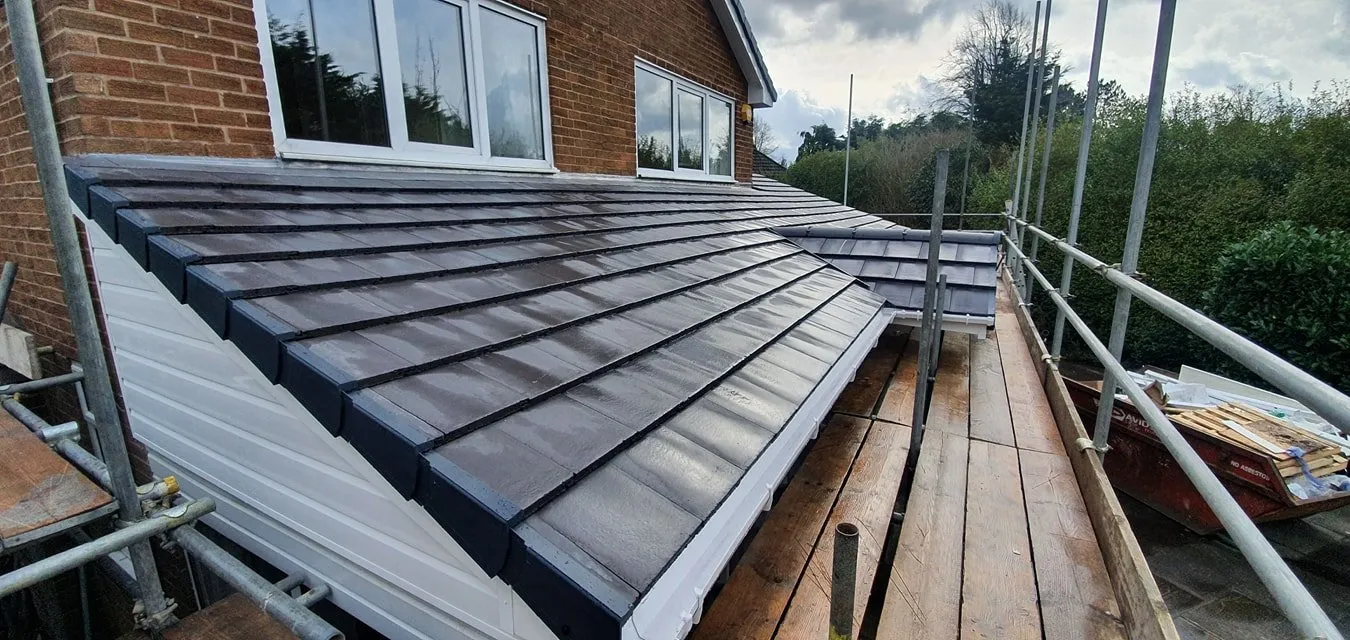
Does Installation Quality Affect How Long a Roof Lasts?
Yes — significantly. Poor installation is one of the leading causes of premature roof failure in the UK. Even premium slate or clay tiles can fail within a decade if they are installed incorrectly.
Common installation mistakes that shorten a roof’s lifespan:
- Incorrect or missing lead flashing around chimneys, valleys, and roof penetrations
- Inadequate underlay — the critical waterproof layer beneath the tiles; cheap or incorrectly installed underlay fails fast
- Wrong nail length or spacing for the tile type — tiles can lift or blow off in high winds
- Poor ventilation design — leads to condensation build-up and rot in the roof timbers from below
- Cutting corners on battens — thin or incorrectly spaced battens cannot properly support tile weight over time
The cheapest quote is rarely the best value. A roof installed at a lower price but with inferior materials or workmanship may need replacing 10 to 15 years earlier than a properly installed one — costing far more in the long run.
What to Look For in a Roofing Contractor
- NFRC membership — the National Federation of Roofing Contractors, the UK’s leading roofing trade body
- TrustMark registration — a government-endorsed quality scheme for tradespeople
- FMB membership — Federation of Master Builders
- Insurance-backed guarantees — protects you if the company ceases trading
- Manufacturer-approved installer status — relevant for EPDM and certain tile manufacturers
- Clear, detailed written quotes — any reputable contractor will provide one
What Our Roof Inspection and Survey Service Covers
- A full visual check of tiles or slates for slipping, cracking, or missing pieces
- Inspection of lead flashing around chimneys, valleys and other roof penetrations
- A check of any flat roof sections for blistering, cracking or pooling water
- A loft inspection from inside for daylight through the boards, damp staining and ventilation problems that don’t show from ground level
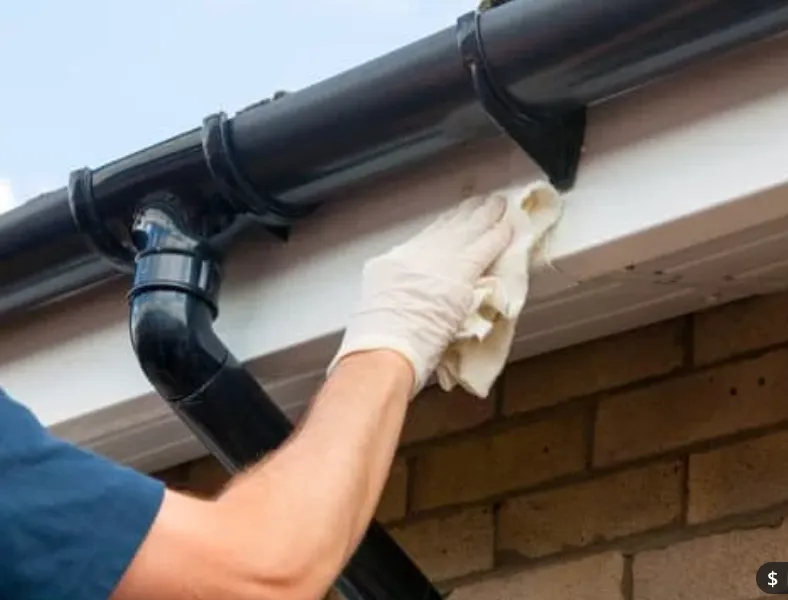
- A check of gutters and downpipes for blockages, moss and algae build-up
- A free drone survey option for roofs that are steep, high, or hard to reach safely by ladder
- A plain-English verdict on whether you need a repair, a replacement, or nothing at all
Not Included / Costed Separately
- Any repair or replacement work itself — inspections and surveys are assessments; work is quoted separately once the inspection has confirmed what’s needed
- Asbestos testing, a separate specialist survey (around £325) required on pre-2000 flat roofs, garages or outbuildings before any removal
- Scaffolding, priced separately where access requires it — typically £1,000 to £1,800 on a standard three-bed semi
- Structural or timber engineering reports, needed where a roofline is visibly sagging and a structural engineer’s sign-off is required
How a Roof Inspection With Us Works
- Get in touch: Call us or use our contact page to describe the problem, or simply ask for a routine spring or autumn check — there’s no obligation and no sales pressure.
- We book a visit: We arrange a time that suits you, including a free drone survey option if the roof is steep, high up, or awkward to access safely from a ladder.
- On-site or aerial assessment: We check tiles, flashing, valleys and any flat sections from outside, then go into the loft to look for daylight through the boards, damp staining and ventilation issues that aren’t visible from the ground.
- You get a plain-English verdict: We tell you clearly whether it’s a repair, a replacement, or nothing to worry about, with photos where useful so you’re not just taking our word for it.
- A written quote if work’s needed: If repair or replacement work is required, we put together a detailed written quote covering materials, scaffolding, waste removal and VAT, so there are no surprises later.
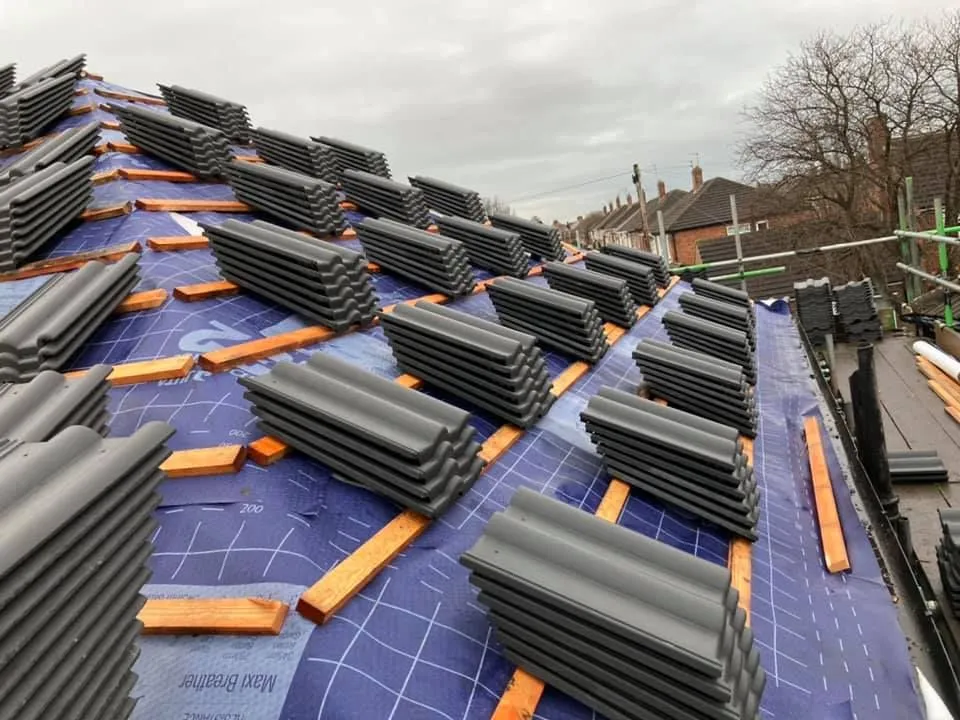
One Team for Both the Access and the Answer
On most roofing jobs, getting proper access means booking a separate scaffolding firm or cherry-picker hire company, then waiting for their availability to line up with the roofer’s before anyone can actually get near a steep or high section.
Because our own crew holds IPAF certification for powered access platforms and PASMA certification for mobile access towers, that middle step disappears — the same people who go up to inspect a chimney stack, a dormer, or a three-storey gable end are the ones who can act on what they find, on the same visit, without waiting on a subcontracted access company’s diary.
That matters most on Derby’s older housing stock, where a lot of roofs simply weren’t built with easy ladder access in mind — the steep Victorian pitches around the city centre and Chester Green, taller terraces near Normanton, and roofs sitting above conservatories or extensions in areas like Allestree and Mickleover. Rather than a verdict guessed at from the pavement, you get someone who’s actually stood on the roof, on the same day they arrived to look at it.
Where We Carry Out Roof Inspections and Surveys
We’re based in Derby, and our core patch is the city itself — Allestree, Mickleover, Littleover, Chaddesden, Oakwood, Spondon, Alvaston, Chellaston, Normanton and the Cathedral Quarter around the city centre — plus the surrounding towns along the A38, A52 and A6 corridors, including Belper, Duffield, Ripley, Heanor, Ilkeston, Long Eaton and Swadlincote, along with the rest of Derbyshire, Nottingham and Nottinghamshire. We also take on roofing inspection and survey work further afield across Sheffield, Hull, Leeds, Manchester, Doncaster, Wakefield, Rotherham, York, Glasgow, Newcastle, Sunderland, Durham and Liverpool. If you’re not sure whether your postcode is covered, get in touch and we’ll let you know.
Frequently Asked Questions
How do I know if my roof needs a proper inspection rather than just a look from the ground?
If your roof is over 20 to 25 years old, has been patched more than once, or you’ve noticed damp patches, missing tiles, or daylight in the loft, an inspection is worth having. A lot of what matters most — failing lead flashing, porous tiles, timber starting to rot underneath — isn’t visible from the street, which is why we check inside the loft as well as the roof surface itself.
Is a roof inspection or survey really free?
Yes. Our roof inspections and drone surveys both come with no obligation. You get an honest assessment of what’s going on and, if work is needed, a written quote — there’s no pressure to book anything on the spot.
What's the actual difference between a roof repair and a full re-roof?
A repair deals with a specific, contained problem — a slipped tile, some surface moss, a small area of failed pointing. A re-roof tends to be the better option once you’re looking at repeated repairs, leaks in more than one place, over a quarter of the tiles damaged, or a visibly sagging roofline. Our inspection will tell you plainly which category your roof falls into.
Do you use a drone for every roof inspection?
No. Drones come in useful for roofs that are steep, high up, or difficult to reach safely with a ladder, such as multi-storey properties or roofs over conservatories and extensions. For most single or two-storey homes, a standard inspection from our IPAF and PASMA certified team covers what’s needed.
How does a roof survey differ from a free inspection?
Both are offered with no obligation. The difference is depth: an inspection gives you a quick, clear verdict on the day, while a survey produces a more detailed written report — useful if you’re budgeting for work, dealing with an insurance claim, or want something to compare against other contractors’ quotes.
What happens after the inspection if my roof does need work?
We’ll talk you through exactly what we found and why, then put together a detailed written quote covering materials, scaffolding if it’s needed, waste removal and VAT, so you can see the full picture before deciding anything.
Does it matter if a roofer is accredited or certified for working at height?
It’s worth checking with any roofer, not just us. Trade body membership, insurance-backed guarantees, and certification for working at height — such as IPAF for powered access equipment and PASMA for mobile scaffold towers — all matter on properties where a ladder alone isn’t a safe or sufficient way to inspect the roof. Our team holds both certifications.
Ready to Find Out Where Your Roof Stands?
Get a straight answer from a roofer you can trust. We carry out professional roof inspections across Derbyshire & Nottinghamshire, with honest advice and no pushy sales. Whether you need a repair, a full replacement, or simply peace of mind — we’ll tell you exactly what we find.
→ View our residential roofing services page, or book one of our free drone surveys.
- ✅ Free roof inspections and drone surveys, no obligation
- ✅ IPAF & PASMA-certified access team
- ✅ Honest, plain-English verdicts on repair vs replacement
- ✅ Written quotes with no pushy sales
Contact us for your roofing needs, or call 01332-529704.