EPDM vs GRP vs Felt Roofing Derby | Which Is Best?
Call: 01332-529704
EPDM, GRP or felt — which flat roof is right for your Derby home? An honest, side-by-side comparison from a local team that fits all three, so the recommendation is about your roof, not just what we happen to sell.
- Free Drone Survey
- Written Quote, No Obligation
- 20-Year Guarantee on EPDM
- IPAF & PASMA-Certified Team
EPDM Rubber vs GRP Fibreglass vs Felt: Which Is Best for Derby Homeowners?
Three flat roofing materials dominate Derby and Derbyshire: EPDM rubber, GRP fibreglass, and bitumen felt. They are not interchangeable. Each has a different lifespan, a different cost profile, and a different suitability for the type of housing stock and winter conditions found across this part of the East Midlands.
This guide cuts through the noise. We cover what each system actually is, how it performs in Derby’s freeze-thaw climate, what it costs, and the question most local contractors still are not answering — whether your 1970s garage roof needs a full strip or whether a modern system can go straight on top.
We install all three systems across Derby, Mickleover, Spondon, Chaddesden and Normanton, and throughout Derbyshire. Our recommendation will not be the same for every roof — but by the end of this page, you will know which material fits your property and your budget, and what to ask before any work starts.
EPDM vs GRP vs Felt at a Glance
As a guide for 2026, here is how the three systems stack up on lifespan, cost and Derby weather performance.
| Material | Typical Lifespan | Installed Cost (per m²) | Best Suited To | How It Handles Derby Winters |
|---|---|---|---|---|
| EPDM Rubber | 40–50 years | £70–£100 | Larger, simple flat roofs on garages and extensions | Stays flexible in freeze-thaw conditions — the strongest performer of the three |
| GRP Fibreglass | 25–40 years | £100–£150 | Roofs with corners, upstands or penetrations, and walkable surfaces | Needs dry conditions above around 5°C to cure properly, so installation timing matters |
| Bitumen Felt | 10–20 years | £50–£70 | Outbuildings, budget repairs, or matching an existing felt system | Weakest in freeze-thaw — the joints are where water gets in |
Figures are typical UK installed prices for 2026 and vary with roof size, deck condition and access. We provide a free written quote for your specific roof — call 01332-529704.
What Are EPDM, GRP Fibreglass, and Felt? A Plain-English Explainer
These are the three flat roofing systems you will hear about most in Derby. Here is what each one actually is.
EPDM Rubber
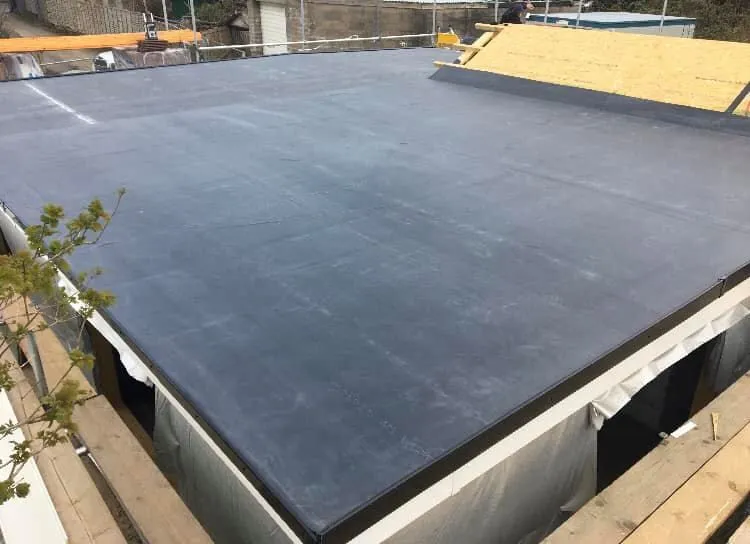
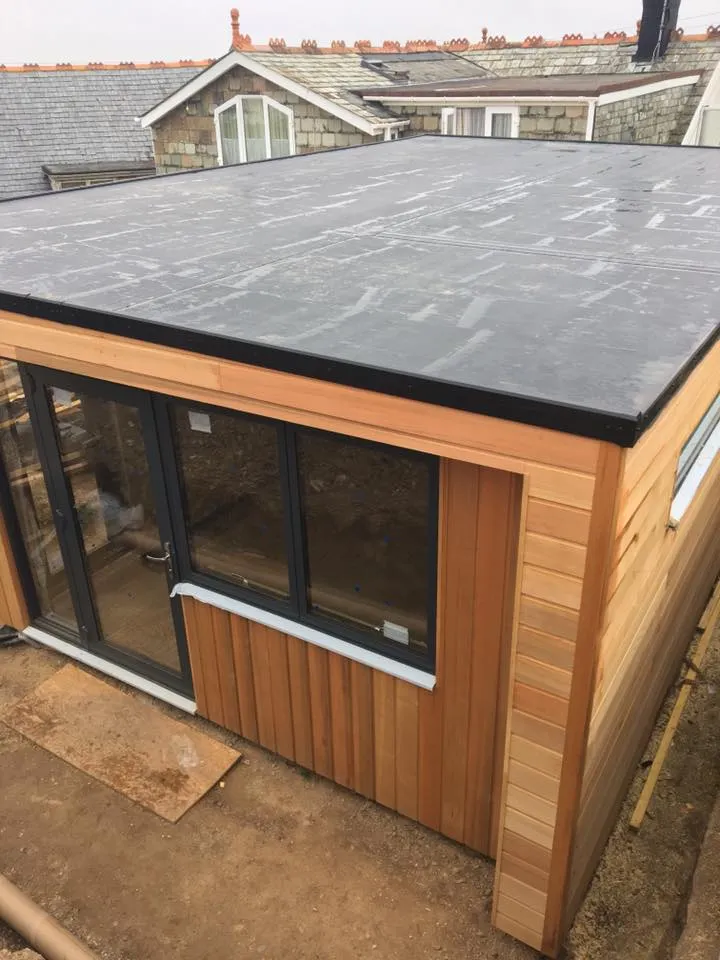
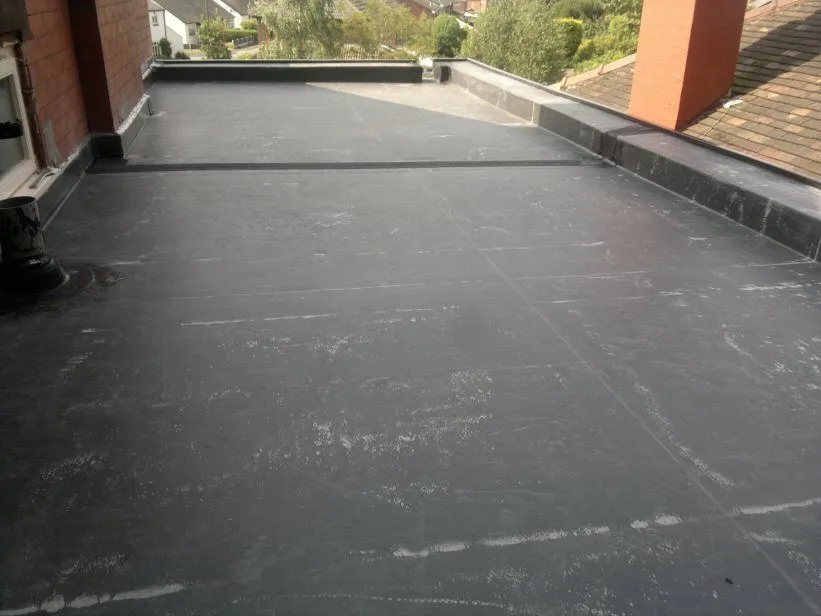
EPDM is a synthetic rubber sheet. It bonds to the roof deck with cold adhesive — no heat or flame needed. On most Derby roofs, one sheet covers the whole surface with no joins. We use Firestone RubberCover EPDM on all our jobs, backed by a 20-year workmanship guarantee. See our dedicated EPDM rubber roofing page for full installation detail.
GRP Fibreglass
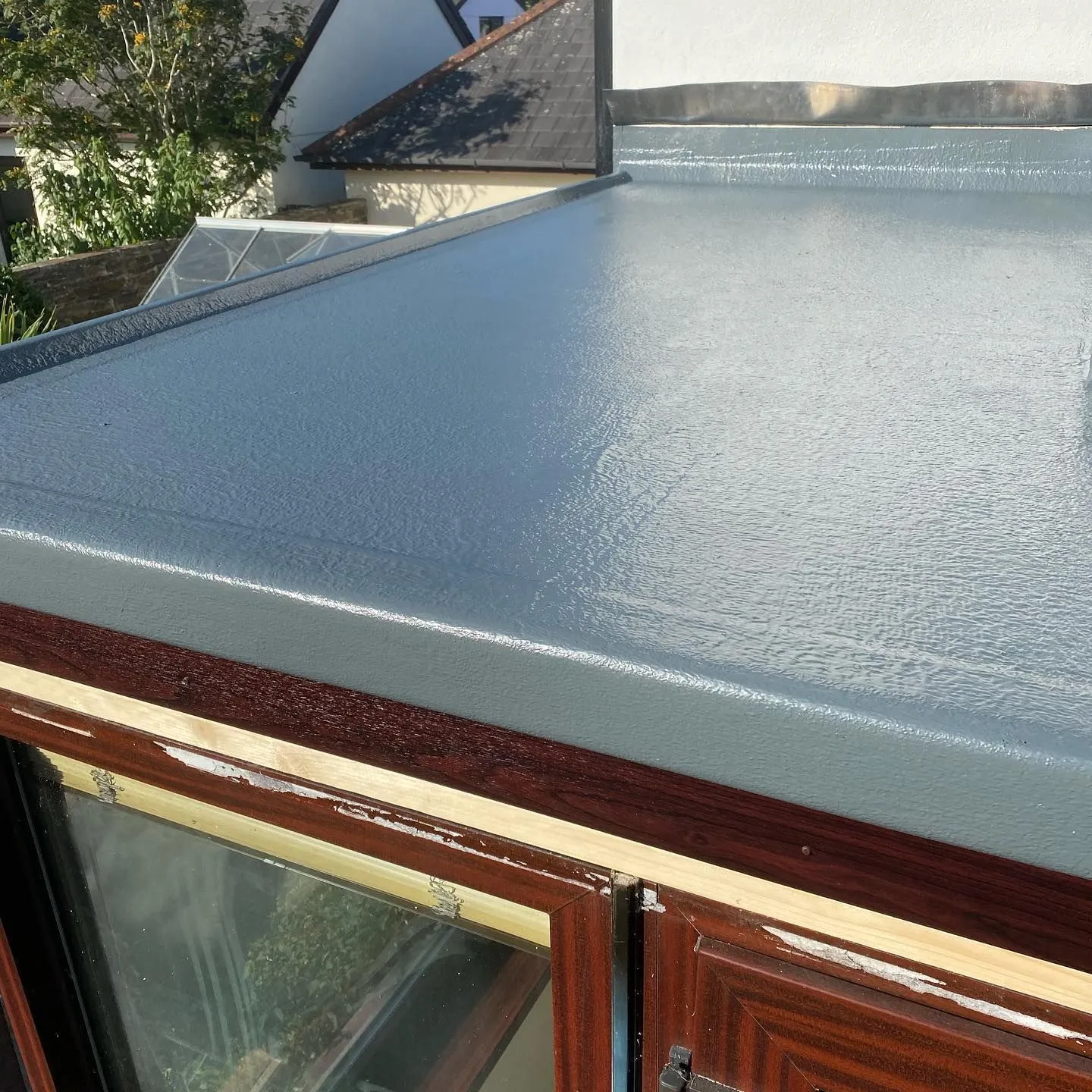
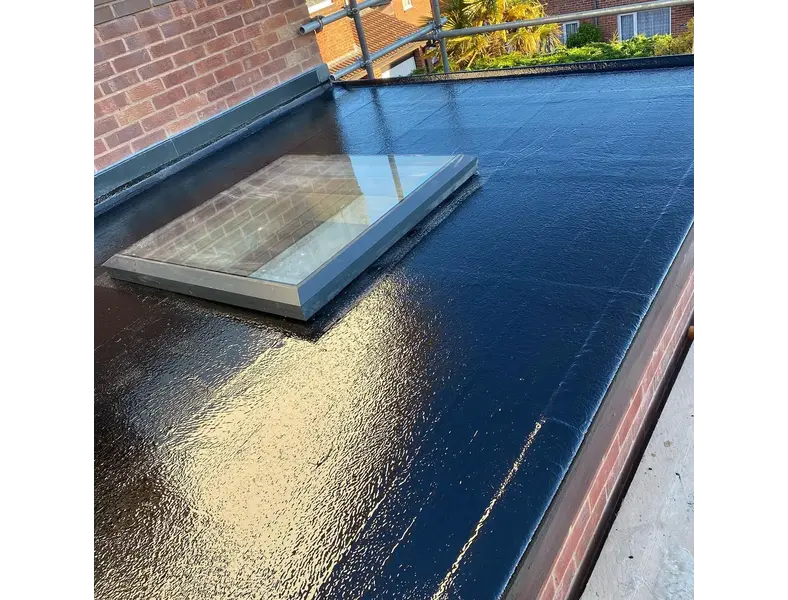
GRP is applied as a liquid resin onto fibreglass matting. It cures into a hard, solid surface — like a boat hull on your roof. It is rigid and tough underfoot, which makes it a good choice where the roof is walked on regularly. For material and installation specifics, see our GRP fibreglass roofing Derby page, or our guide to how long a GRP fibreglass roof lasts.
Bitumen Felt
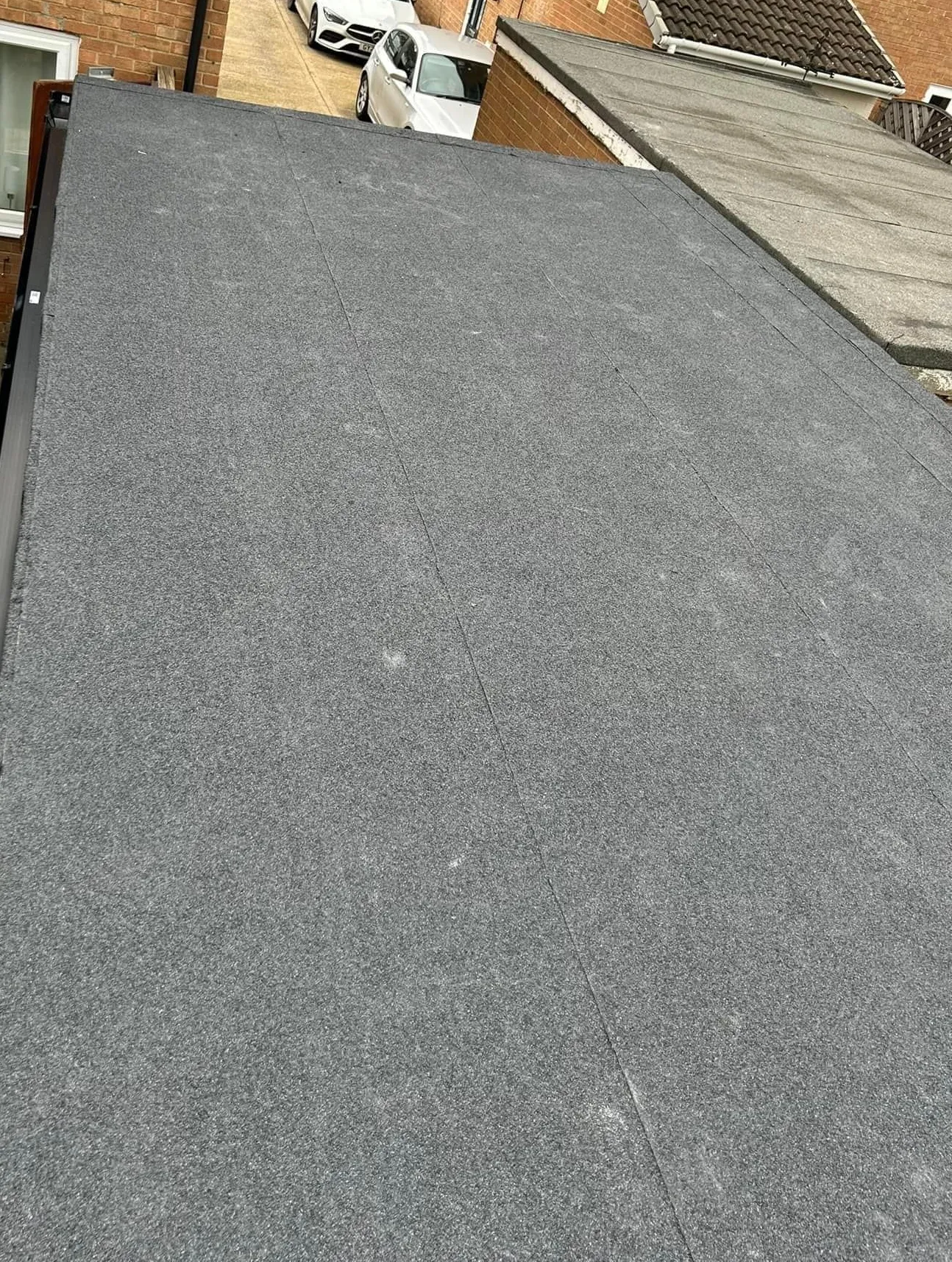
Felt is the traditional option. Multiple layers of bitumen sheet are torched or bonded onto the deck. Most Derby garages and extensions built in the 1970s and 1980s have this system. It is still the lowest upfront cost choice today, though it carries the shortest lifespan of the three.
Lifespan and Durability — How Long Will Each Flat Roof Last in Derby?
Lifespan is where the three materials differ most sharply — and where the upfront cost comparison starts to look very different once you work it through per year of service.
EPDM rubber: 40–50 years. This is not a manufacturer’s marketing figure — EPDM installations from the 1970s are still performing in the UK today. The material does not degrade under UV, does not blister in heat, and does not crack in frost. Where EPDM fails early, it is almost always at the edge details and flashings, not through the membrane itself.
GRP fibreglass: 25–40 years. A correctly installed GRP roof on a sound, stable deck can last four decades in Derby conditions. Moss and algae cannot take hold on a cured GRP surface, which is a practical advantage in Derbyshire’s damp autumns. The qualifier is installation quality — GRP installed in cold or wet weather, or onto a flexing deck, will develop cracks and delamination well before its expected lifespan.
Bitumen felt (torch-on): 10–20 years. Modern three-layer torch-on systems outperform the old single-layer felt on pre-1990s Derby properties, but the lifespan is still significantly shorter than either modern system. Felt becomes brittle under UV and loses flexibility as it ages. In Derby’s cold winters, this accelerates — water enters any weak joint, freezes, expands, and widens the gap.
The practical takeaway: a felt roof on a Derby garage or rear extension will need replacing once, possibly twice, in the time a single EPDM installation is still performing. That changes the cost comparison completely once you look past the initial invoice.
Which Flat Roof Material Handles Derby’s Climate Best?
Derby’s climate is inland East Midlands — damp autumns, cold winters, and enough freeze-thaw cycling between November and March to stress any flat roof that has weak joints or failing adhesion.
EPDM rubber is the strongest performer in these conditions. The membrane stays elastic at low temperatures. When the roof deck expands in warmth and contracts in cold, EPDM moves with it rather than cracking. That flexibility is what gives it its lifespan advantage in areas like Chaddesden, Spondon, and Allestree, where a large proportion of semi-detached and terrace properties have rear extensions with flat roofs built in the post-war decades.
GRP performs well when it is installed correctly on a stable deck. The risk in Derby’s climate is this: GRP resin will not cure properly below around 5°C. Autumn and early spring installations are viable, but a cold snap mid-installation can cause the resin to cure poorly, leading to delamination within a few years. We check weather conditions before every GRP installation day — that is standard practice, not an optional extra.
Bitumen felt is the weakest performer in freeze-thaw conditions. The joints between felt layers are the weak points. Water tracks into any small gap, freezes overnight, and widens the gap. Flat roofs across Normanton, Littleover, and Mackworth that were built with felt in the 1970s and 1980s show this pattern — repeated patch repairs that keep failing because the underlying felt has become brittle across its full surface. If that sounds like your roof, our flat roof repair Derby page covers patch-repair options too.
For north-facing flat roofs, shaded extensions, and garages in areas prone to pooling water, EPDM is our consistent recommendation. For smaller, visible roofs — bay windows, dormers, and kitchen extension flat roofs where finish matters — GRP is often the better choice.
Which Material Is Right for Your Derby Property?
The right flat roofing material depends on your specific roof — its size, shape, use, and the condition of what’s already there. Here is a practical guide based on the work we carry out across Derby and Derbyshire.
Choose EPDM Rubber If:
- Your roof is a straightforward flat deck on a garage or rear extension
- The roof is larger (over 25m²), where fewer seams mean less risk
- You want the longest lifespan with the lowest ongoing maintenance
- You want a cold-applied system with no open flame on the property
Choose GRP Fibreglass If:
- The roof has complex details — internal corners, multiple upstands, or penetrations
- The roof is visible and a cleaner finish is a priority (bay windows, dormers)
- The surface needs to be walkable — balconies, roof terraces, or accessible flat roofs
- You want a moss-free, hard surface that requires no topcoat treatment
Consider Bitumen Felt If:
- Budget is the primary constraint and you need a functional roof in the short term
- The roof is on an outbuilding with a limited expected lifespan
- The job is a repair or partial replacement where matching an existing system matters
For most Derby homeowners replacing a garage or extension roof, the choice comes down to EPDM or GRP. We will recommend the right one after seeing your roof, not before. A free survey costs you nothing and gives you the information you need to make the right call.
Customer Story: Rear Extension Roof Replacement in Chaddesden, Derby
When Sandra noticed a watermark spreading across her kitchen ceiling after a spell of wet November weather, she hoped it was a one-off. A closer look told a different story — the felt roof on her rear extension had been on the house since it was built in the early 1980s and had already had a patch repair two years earlier.
Derby Roofers visited and carried out a full survey. The deck was largely sound, but the felt had become brittle across its entire surface. With another Derbyshire winter approaching, a further repair was not a realistic option.
The recommendation was a full strip and replacement with EPDM rubber — the right choice for Sandra’s extension given its straightforward flat deck, generous size, and the long, maintenance-free lifespan she wanted from a roof over her kitchen. The work was completed in a few days.
“I’d been putting it off for two years. It was done swiftly, cleanly, and I haven’t given the roof a second thought since.” — Sandra, Chaddesden. The installation carries a 20-year workmanship guarantee, and with Firestone RubberCover EPDM now protecting her extension, it is a roof she will not need to think about again for decades.
How a Flat Roof Replacement Is Carried Out in Derby
Whichever material you choose, the same structured process applies from first call to finished roof.
- Book a free survey: Call or book online for a free on-site roof survey; a free drone survey is offered where the roof is hard to reach safely.
- Deck assessment: The existing deck and covering are checked to establish whether an overlay is workable or a full strip is needed.
- Written quote: A written quote sets out the recommended material — EPDM, GRP or felt — and the price, with no pressure to proceed.
- Strip-out and deck repair: Where needed, the old covering is stripped and any rotten or flexing deck boards are replaced before the new system goes down.
- Installation: The chosen system is fitted — EPDM cold-bonded with adhesive, GRP laminated in resin on a day checked against the weather, or felt layers torched or bonded on — with edge trims and flashings finished around upstands and abutments.
- Completion and guarantee: The finished roof is signed off and a written guarantee is provided, including the 20-year guarantee on EPDM installations.
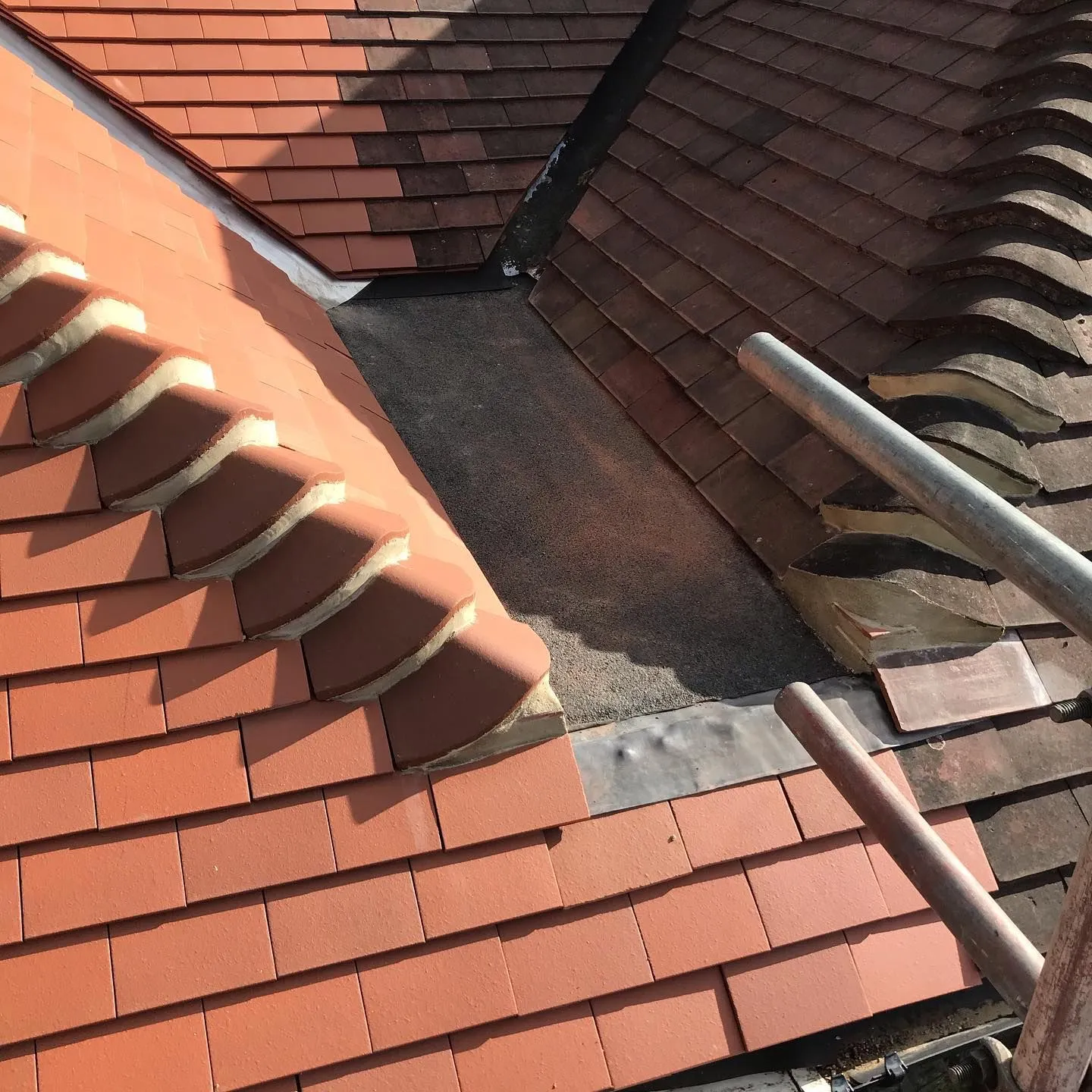
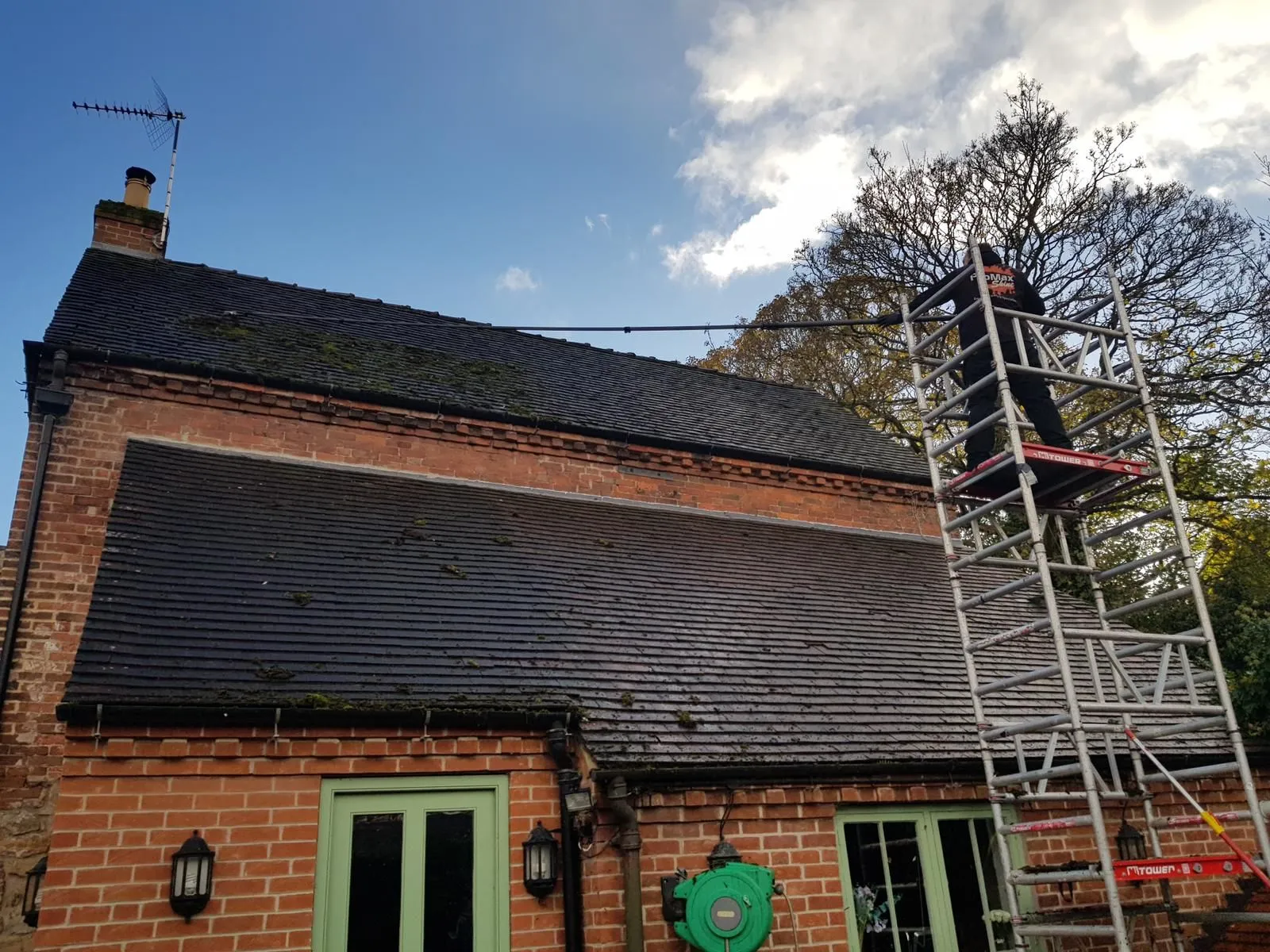
Getting the materials up there safely matters as much as the fitting itself. A roll of EPDM membrane, a drum of GRP resin or a tin of adhesive is heavy, and none of them are things you want passed hand-over-hand up a ladder. Where a flat roof sits above a single-storey rear extension, our PASMA-trained team builds a mobile tower with a proper working platform. On a dormer or anywhere a tower cannot be positioned, our IPAF-trained operatives bring in a powered platform that lifts materials and person together in one load.
What’s Included in a Derby Flat Roof Installation
- Free on-site roof survey, with a free drone survey option for roofs that are difficult to access safely
- Assessment of the existing deck to establish whether the current covering can be overlaid or needs a full strip
- Strip-out and disposal of the old felt, GRP or EPDM covering where a full strip is needed
- Replacement of rotten, wet or flexing deck boards found during the strip
- Installation of the chosen system, including edge trims and flashing details
- Written guarantee on completed work, including the 20-year guarantee on EPDM installations
Not Included / Costed Separately
- Structural repairs to the roof itself, such as rafters or wall plates, beyond the deck boards
- Repair of internal ceiling damage or redecoration caused by a pre-existing leak
- Access towers or powered access equipment for roofs that can’t be reached safely from a ladder — priced once the survey has established what’s needed
- Guttering, fascia or soffit replacement, unless agreed as part of the same job
Do you need to strip your old felt roof before fitting EPDM or GRP? Not always, but often. We assess the deck condition before recommending an overlay or a full strip. If deck boards are rotten, wet, or flexing, the old roof must come off and boards must be replaced before the new membrane goes down — overlaying a failed deck shortens the life of the new system.
Why Choose Derby Roofers for Your Flat Roof?
Over 20 Years of Local Experience. We have been fitting and repairing flat roofs across Derby and Derbyshire for over 20 years, on everything from Victorian terrace extensions in Normanton to modern garage conversions in Mickleover and Chellaston.
We Fit All Three Systems, So Our Advice Is Not Slanted
Some contractors only install one flat roofing system and will steer every customer towards it. We fit EPDM, GRP and felt, so the material we recommend is based on your roof, not on what we happen to sell.
Free Drone Survey
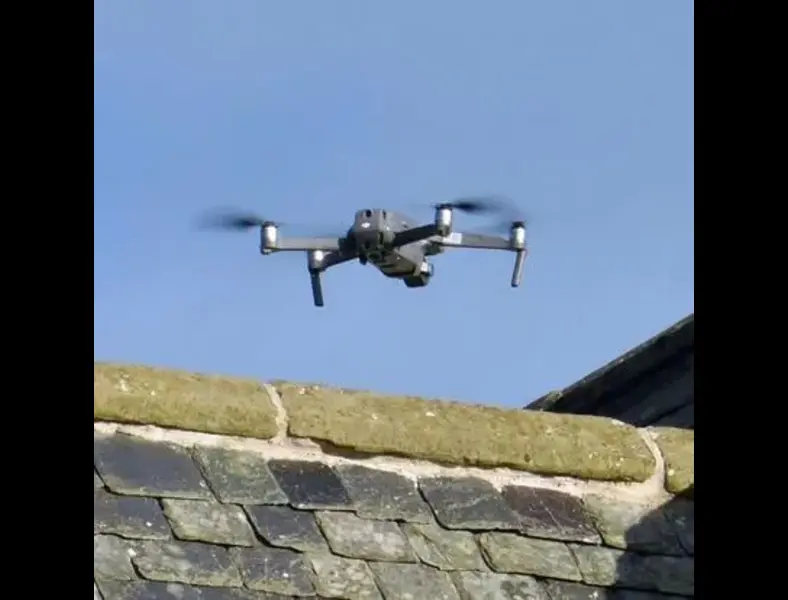
We use drone technology to inspect roofs safely and accurately before quoting, including flat roofs that are difficult or unsafe to reach from a ladder.
20-Year Guarantee on EPDM Installations
Every EPDM installation comes with a 20-year workmanship guarantee, alongside written documentation of the materials used.
Weather-Checked GRP Installations
GRP resin will not cure properly in cold or wet conditions. We check the forecast before every GRP installation day rather than working through it and risking early delamination.
IPAF & PASMA-Certified Access
Materials for flat roofs above extensions and dormers are heavy and awkward to carry up a ladder. Our certified team uses mobile towers or powered platforms to get materials and people up safely.
Flat Roofing Coverage: Derby First, Further Afield by Arrangement
Derby is home base, and most flat roof jobs stay within the city and its suburbs — Mickleover, Spondon, Chaddesden, Normanton, Littleover, Mackworth and Allestree — along with the rest of Derbyshire. Beyond that, work gets booked in around the diary rather than a fixed radius. If your postcode is not mentioned here, call and ask — distance is not usually what decides it, the size of the job is.
- Derby (DE1)
- Mickleover (DE3)
- Spondon (DE21)
- Chaddesden (DE21)
- Normanton (DE23)
- Littleover (DE23)
- Mackworth (DE22)
- Allestree (DE22)
- Chellaston (DE73)
- Oakwood (DE21)
- Long Eaton (NG10)
- Belper (DE56)
- Ilkeston (DE7)
- Swadlincote (DE11)
- Heanor (DE75)
- Ripley (DE5)
- Alfreton (DE55)
- Burton on Trent (DE13)
- Ashbourne (DE6)
- Nottingham (NG)
Frequently Asked Questions — EPDM vs GRP vs Felt in Derby
What Is the Best Flat Roof Material for a Derby Garage?
For most Derby garages, EPDM rubber gives the best long-term result. It handles the freeze-thaw conditions in Derbyshire, lasts 40–50 years with professional installation, and costs less per year over its life than felt. If the garage has a complex roof shape or needs a harder finish, GRP is the alternative we recommend.
How Long Does a Flat Roof Last in Derby?
Lifespan depends on the material and installation quality. Bitumen felt typically lasts 10–20 years in Derby’s climate. GRP fibreglass lasts 25–40 years when installed correctly on a stable deck. EPDM rubber lasts 40–50 years. In all cases, poor installation or inadequate drainage shortens these figures significantly.
Is EPDM Rubber or GRP Fibreglass Better for a Derby House Extension?
Both are strong choices for house extensions. EPDM is better on large, simple flat decks. GRP is better on smaller, more detailed roofs with upstands, corners, and visible finishes. We assess your extension and recommend the right system after the survey, not a one-size answer.
Does Derby’s Cold Weather Affect Which Flat Roofing System I Should Choose?
Yes. EPDM maintains its flexibility in low temperatures, which is why it performs well through Derbyshire winters. GRP can crack if the deck flexes significantly during freeze-thaw, and must be installed in dry, mild conditions. Bitumen felt becomes brittle over time in freeze-thaw cycles, which accelerates joint failure.
Do I Need to Strip My Old Felt Roof Before Fitting EPDM or GRP in Derby?
Not always, but often. We assess the deck condition before recommending an overlay or a full strip. If deck boards are rotten, wet, or flexing, the old roof must come off and boards must be replaced before the new membrane goes down. Overlaying a failed deck shortens the life of the new system.
Will Replacing My Felt Roof With EPDM Affect My Home Insurance in Derby?
Upgrading from felt to EPDM or GRP is generally viewed positively by home insurers. Modern membrane systems carry a lower claims risk. Notify your insurer after the installation and provide the warranty documentation — this may reduce your premium or remove a flat roof condition from your policy.
How Much Does a Flat Roof Replacement Cost in Derby?
As a guide for 2026: bitumen felt costs approximately £50–£70 per m² installed; EPDM rubber approximately £70–£100 per m²; GRP fibreglass approximately £100–£150 per m². A typical Derby garage roof replacement runs from around £1,000 for felt to £2,000–£3,000 for EPDM or GRP, depending on size, deck condition, and access. We provide free written quotes on every job.
Can I Get a Free Flat Roof Survey in Derby Before Deciding?
Yes. Derby Roofers offers free roof surveys across Derby and Derbyshire, including a free drone survey for roofs that are difficult to access safely. We assess your roof, explain the options, and provide a written quote with no pressure to proceed. Call 01332-529704 to arrange one.
Can EPDM or GRP Be Fitted Directly Over an Existing Felt Roof?
Sometimes, if the existing deck is sound, dry and not flexing — an overlay saves the cost and disruption of a full strip. We only recommend it once a survey confirms the deck underneath is in good enough condition; a failed deck should always be exposed and repaired first.
Which Flat Roof Material Needs the Least Maintenance?
EPDM rubber needs the least ongoing maintenance of the three — there is no topcoat to renew and the membrane resists moss and algae well. GRP is a close second once cured. Felt needs the most attention, with joints and edge details worth checking each year, particularly after a hard winter.
Ready to Find Out Which Flat Roof Is Right for Your Derby Property?
EPDM, GRP and felt each have a place — the right one depends on your roof’s size, shape, use and budget, not a one-size-fits-all sales pitch.
Derby Roofers has been fitting and repairing flat roofs across Derbyshire for over 20 years, from garage roofs in Chaddesden to kitchen extensions in Allestree. Every EPDM installation carries a 20-year workmanship guarantee, and every quote is free and in writing.
- ✅ Free survey, with a free drone survey option for hard-to-reach roofs
- ✅ Honest recommendation — we fit all three systems, not just one
- ✅ 20-year guarantee on EPDM installations
- ✅ IPAF & PASMA-certified access team
Get in touch to arrange a free flat roof survey and a written quote, with no obligation to book anything in.