
Dry Verge System Derby | BS 5534 Compliant Installation
Call: 01332-529704
Mechanically fixed uPVC or cloaked verge units — replacing failing sand-and-cement mortar along your gable edge, fitted to BS 5534 and BS 8612 across Derby & Derbyshire.
- Free Drone Survey
- BBA-Approved Materials
- 10-Year Guarantee
- 24-Hour Response
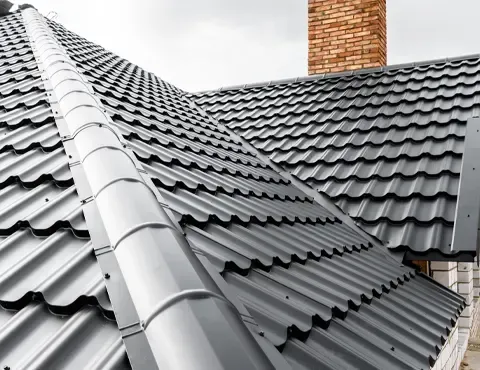
A Dry Verge System Replaces Failing Mortar Along Your Gable Edge
A dry verge system is a mechanically fixed uPVC or cloaked verge unit that clips over the edge of your roof tiles at the gable end, replacing traditional sand-and-cement mortar. It seals the roof edge against wind uplift, water ingress and pest entry — with no re-pointing and no ongoing maintenance required.
In Derby, exposed gable edges are one of the first places a pitched roof starts to fail. Traditional mortar cracks, washes out, and lets wind and water straight in. A dry verge system fixes that problem permanently.
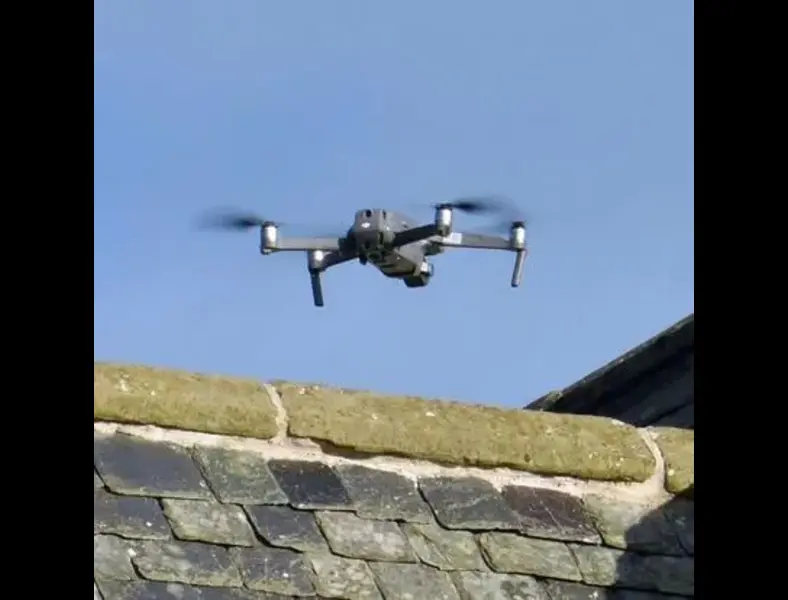
- Free drone survey checks gable edges and tile gauge without scaffolding or ladders
- Only BS 5534 and BS 8612 compliant verge units fitted, using BBA-approved materials
- 24-hour response on every enquiry, with all work fully guaranteed
A Dry Verge System Outperforms Traditional Mortar on Pitched Roofs
If your Derby home has a gable-end roof, the verge edge is the strip running along the outside of the roof above the gable wall. On most older properties, that edge is held in place with sand-and-cement mortar — the standard method for decades, but one with real weaknesses.
Derby's wet winters put mortar under constant pressure. Frost gets into hairline cracks, water follows, and within a few years the mortar is loose, patchy, or gone entirely. A dry verge system replaces all of that with mechanically fixed uPVC or cloaked verge units that clip directly over the tile edge — there is no bonding agent to fail.
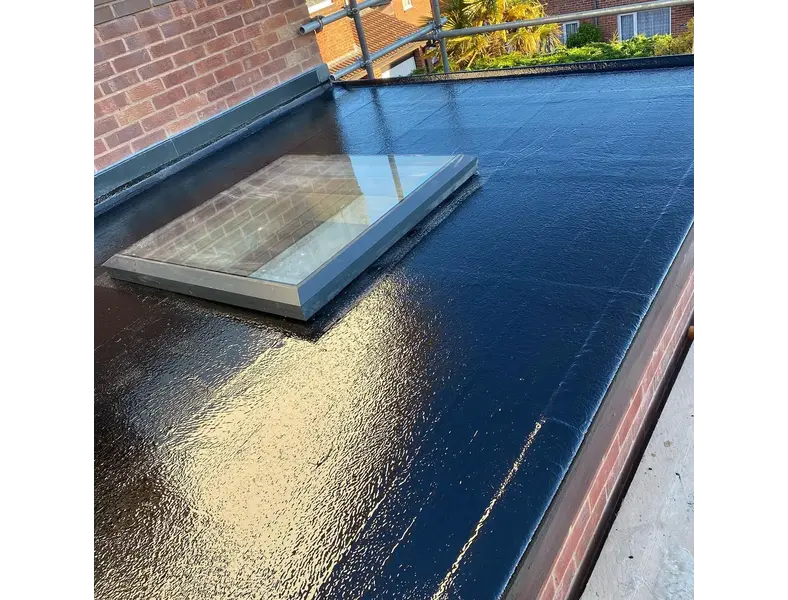
- Wind uplift resistance — units lock tiles in place along the full gable edge
- Water exclusion — no gaps for rain to track behind the verge and into the roof structure
- Pest prevention — a sealed edge stops birds, wasps, bees and insects nesting in the roof void
- Better roof ventilation — controlled airflow reduces condensation build-up in the loft
- Zero re-pointing — once fitted correctly, the system needs no routine maintenance
- Cleaner appearance — a neat, uniform finish that stays looking good for years
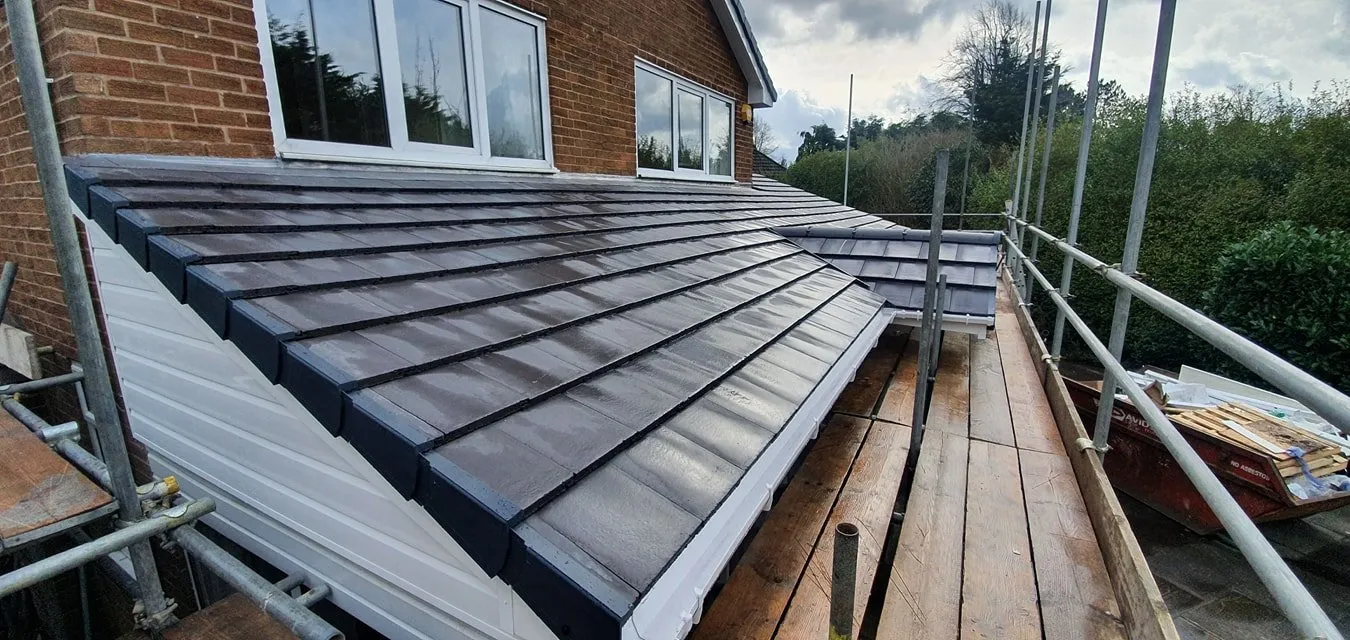
Units are available in black, white and brown, so they can be matched to your existing roof tiles for a tidy, consistent finish.
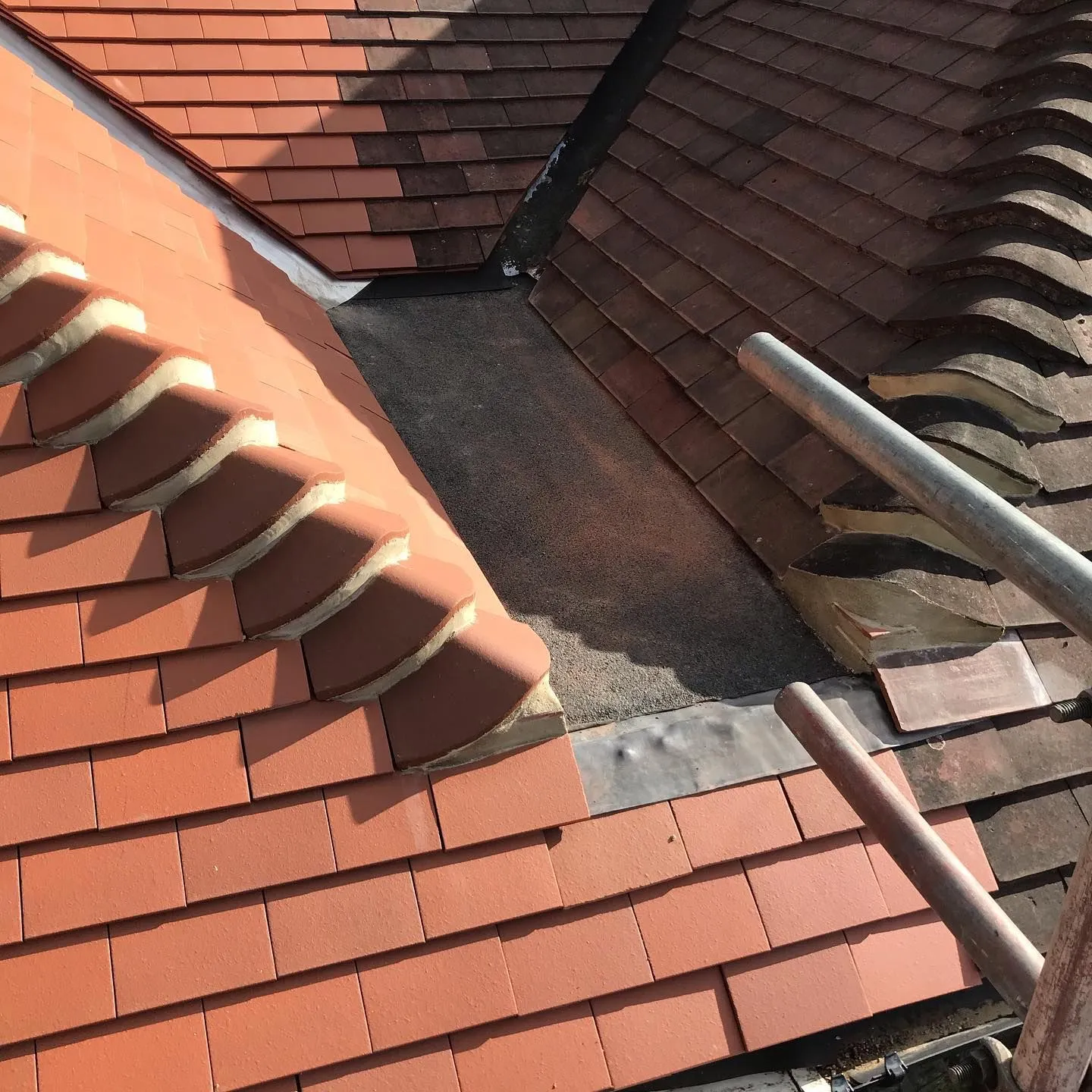
Dry Verge Systems Can Be Fitted to an Existing Roof Without Full Replacement
You do not need a new roof to benefit from a dry verge system. We fit them to existing pitched roofs across Derby every week — on properties in Spondon, Chaddesden and across the wider city. The tiles stay in place; only the failed mortar verge is removed and replaced with the new system.
Our roofers inspect the existing tiles and battens before any work begins. If the tile gauge and batten spacing are compatible with the dry verge units, we can proceed without touching the main roof structure.
Dry verge systems are compatible with most concrete interlocking tiles, clay tiles and double-lapped slates — the tile types most commonly found on Derby homes built from the 1950s through to the 1990s. A typical semi-detached property can have both gable ends completed in a single day with minimal disruption to your household.
Fitting Dry Verge Over Old Mortar Is Possible With the Right Preparation
A common question we hear from Derby homeowners is whether the old mortar needs to come out first. The short answer is yes — and it matters more than most people realise. Fitting dry verge units onto existing mortar is one of the most frequent installation errors in the industry.
When units are fixed into soft or crumbling mortar rather than sound tile edges and battens, the whole system fails as the mortar deteriorates beneath it. We strip the old mortar back to bare tile before anything is fixed, and check the condition of the tiling battens at the edge.
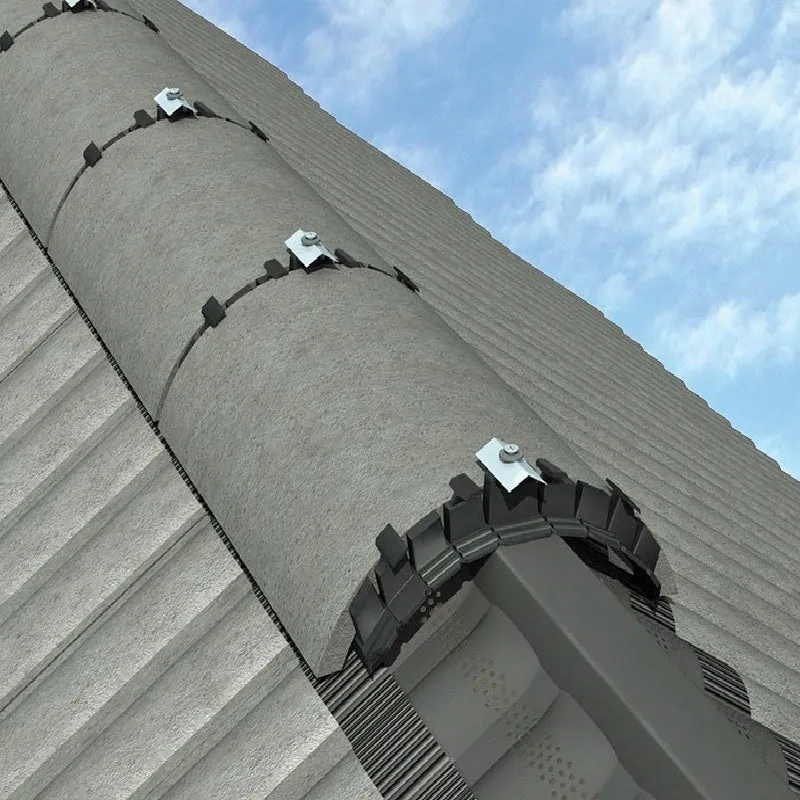
- Strip all existing mortar back to the tile edge — no shortcuts
- Inspect and test the tiling battens at the gable end for rot or movement
- Replace or extend battens where they are too short or degraded to hold a secure fixing
- Fit an eaves starter unit at the base of the verge before the first cap goes on
- Work up the slope, interlocking each unit, and finish with a neat ridge end cap
Done correctly, the result is a system fixed to sound structure — not to failing cement. That is the difference between a dry verge that lasts 30 years and one that fails in five.
The Fitting Sequence: From Enquiry to a Sealed Verge Line
A dry verge installation is a structured process. Here is what happens on your Derby property from first call to finished roofline.
- Enquiry and booking: Call or use the contact form to book a free drone survey — no ladders or scaffolding needed to get a look at your gable edges.
- Drone survey and unit-type check: We check tile gauge, tile type and batten condition by drone, then confirm whether uPVC or cloaked units are the right match for your roof.
- Fixed quote: You get a straight, no-obligation quote based on what the survey found, covering unit type, colour and any batten work needed.
- Strip-out and batten prep: Old mortar is stripped back to bare tile and any rotten or short battens are replaced or extended before a single verge unit goes on.
- Verge units fitted: The eaves starter unit goes on first, then interlocking verge units run up the slope to a ridge end cap, mechanically fixed rather than bedded in mortar.
- Completion and guarantee: We clear the site, check the finished verge line, and confirm your guarantee before we leave.
A dry verge upgrade is typically a one-day job on a standard semi-detached property. It does not require scaffolding in most cases, and can be combined with a dry ridge installation to complete the full roof perimeter in a single visit.
A Properly Installed Dry Verge System Adds Decades to Your Roof's Lifespan
One of the most common reasons Derby roofs deteriorate ahead of schedule is water and wind damage at the verge edge. Once mortar fails, water gets behind the tiles, saturates the roofing felt, and starts working its way into the roof structure. By the time you see a ceiling stain, the damage is already done.
A dry verge system removes that risk entirely. The mechanically fixed units create a sealed edge along the full gable — no gaps, no cracked pointing, no seasonal maintenance required. Properties in exposed locations, such as west-facing rooflines in Mickleover and Littleover, benefit most because wind-driven rain hits these edges hardest.
The system also supports better roof ventilation. Controlled airflow at the verge reduces condensation in the roof void — a leading cause of batten rot and felt decay on older Derby homes. Fitting a dry verge alongside a dry ridge system gives the roof full perimeter protection — the most effective combination available for a pitched roof in Derbyshire's climate. Quality uPVC dry verge units are UV-stable, frost-resistant and colour-fast, and will outlast any mortar alternative by a wide margin.
Dry Verge Installation Does Not Require Building Regulations Approval
Most Derby homeowners ask us about planning or regulations before they book. It is a fair question, and the answer is reassuring. Replacing a failed mortar verge with a dry verge system is a like-for-like repair and upgrade. In the vast majority of cases, no formal building regulations application or planning permission is needed.
What does apply is BS 5534 — the British Standard Code of Practice for slating and tiling — alongside BS 8612, which sets the performance requirements for dry fixed ridge, hip and verge systems. Under these standards, mechanical fixing is now the required method for roof verges on re-roofing work and repairs.
The one exception to be aware of in Derby is conservation areas and listed buildings. Parts of Derby city centre and some older residential streets, including Darley Abbey, Chester Green (Little Chester) and Duffield, carry restrictions on external alterations — in some cases including the colour of uPVC units used. If your property sits within a designated area, we will check the position before any work begins and advise you clearly. You will never be left guessing.
How Dry Verge Units Compare to a Traditional Mortar Verge
The difference between a wet verge and a dry verge is simple: one relies on cement that will eventually crack, the other uses interlocking mechanical fixings that hold firm regardless of frost, wind, or building movement.
| Feature | Dry Verge System | Traditional Mortar Verge |
|---|---|---|
| Fixing method | Mechanically fixed uPVC or cloaked units | Sand-and-cement mortar bond |
| Typical lifespan | 30 years or more | Often needs re-pointing within a few years |
| Weather resistance | Frost and wind-driven rain do not affect the fixing | Frost cracks the bond; wind-driven rain finds gaps |
| Maintenance | None required once fitted | Regular re-pointing as mortar ages |
| Installation weather | Can be fitted in cold or wet conditions | Cannot be laid in frost or rain |
| Standards compliance | Meets current BS 5534 and BS 8612 | Superseded as the required fixing method |
Verge Unit Types We Fit, and What Every Installation Covers
- Interlocking dry verge units in uPVC or cloaked profiles, matched to your tile type and gauge
- Eaves starter unit fitted at the base of the verge to anchor the run
- Ridge end cap unit fitted where the verge line meets the ridge
- Choice of black, white or brown units matched to your existing roof tiles
- Full strip-out of existing mortar back to bare tile before units go on
- Inspection and testing of tiling battens for rot or movement
- Replacement or extension of battens too short or degraded to hold a secure fixing
- Free drone survey and unit-type compatibility check before any work is booked
- A check on conservation area or listed building restrictions, where relevant
Not Included / Costed Separately
- Full roof re-tiling or replacement, quoted and carried out as a separate job
- Dry ridge installation, priced separately though it can be combined with dry verge work in the same visit
- Scaffolding, which most dry verge jobs do not need but may be added for exposed or high properties
- Repairs to roof timbers or decking beyond the tiling battens, quoted separately if found during the survey
- Planning or building regulations applications, only needed in the rare cases of listed buildings or restricted conservation areas
Gable Ends, Battens and Access: What Sets the Price
Price on a dry verge job moves mostly with three things: how many gable ends need doing, the condition of the battens once the old mortar is off (rotten or short battens add time to replace or extend), and whether the property needs powered access or a tower rather than a standard ladder.
A typical semi-detached home with two gable ends is usually finished in a single day, which keeps the cost down against jobs needing repeat visits. Fitting a dry verge alongside a dry ridge system in the same visit is often cheaper than booking the two separately, since access equipment and site set-up are shared across both jobs.
A full fixed-price figure needs the free drone survey first — that's what gives an accurate number, not a phone estimate.
Two Decades of BS 5534 Verge Fixing Around Derby
Dry verge units only sit flush and hold their line when they match the tile gauge and profile they're going onto. Get the batten spacing or unit width wrong and the verge line runs uneven, or the fixing works loose within a couple of winters.
Our roofers check tile type, tile gauge and batten condition on every job before units are ordered, so what goes on the roof is sized to fit rather than adjusted on site, and the fixing is carried out to BS 5534 and BS 8612 — the standards that set out how a verge should be mechanically fixed rather than bedded in mortar.
Some gable ends, particularly on dormer bungalows, steep pitches and taller terraces around Allestree, Chaddesden and Spondon, aren't reachable from a standard ladder. Our team holds IPAF certification for powered access and PASMA certification for mobile access tower work, so those verges get fitted properly rather than skipped or defaulted to a scaffolding quote. Combined with over 20 years fitting roofs around Derby and out into Belper, Ripley and Ashbourne, BBA-approved materials, and a guarantee on every completed job, that's what separates a verge line that looks fitted from one that's actually fixed to the standard.
Derby Homeowners Book Dry Verge Upgrades Before Autumn Weather Arrives
Summer is the best time to look at your roof. The days are dry, access is easier, and there is time to book without urgency. By the time September arrives in Derby, the weather turns fast — and exposed or failing verge edges become a problem within weeks.
We see the pattern every year across Borrowash, Breadsall and the wider Derby area. Homeowners who noticed loose mortar in spring and delayed the call are phoning us in October after a night of high winds has lifted tiles or let water in. Booking ahead of the autumn season is simply the smarter move.
Some signs your verge mortar needs attention:
- Cracks or missing sections of mortar along the gable edge
- Loose or shifted tiles at the roof edge
- Damp patches or water stains on ceilings near the gable wall
- Birds or insects entering through gaps at the roof edge
- Moss or vegetation growing along the verge line
- A worn, patchy appearance along the roofline
Derby Verge Installations, Suburb by Suburb
Derby comes first for dry verge work: jobs are regularly carried out in Allestree, Mickleover, Oakwood, Chaddesden, Littleover, Chellaston, Alvaston, Spondon, Sinfin, Allenton, Breadsall and Normanton, plus the city centre. Beyond Derby, we also cover Derbyshire towns including Belper, Duffield, Ripley, Heanor, Long Eaton, Swadlincote, Ashbourne and Wirksworth. In conservation areas such as Darley Abbey, Chester Green (Little Chester) and Duffield, the free drone survey includes the same listed-building and conservation check set out above, so any extra permissions needed get flagged before a quote is given, not found on installation day.
Areas We Cover For Dry Verge Systems in Derby
Derby Roofers proudly serves homeowners and businesses throughout Derby city and the wider Derbyshire area. Not sure if we cover your area? Call us on 01332-529704 and we'll be happy to help.
- Derby City Centre (DE1)
- Allestree, Mackworth & Quarndon (DE22)
- Mickleover (DE3)
- Littleover & Normanton (DE23)
- Chaddesden, Oakwood & Spondon (DE21)
- Alvaston, Crewton & Osmaston (DE24)
- Belper (DE56)
- Ripley (DE5)
- Ilkeston (DE7)
- Heanor (DE75)
- Swadlincote (DE11)
- Ashbourne (DE6)
- Matlock (DE4)
- Borrowash & Draycott (DE72)
- Etwall & Hilton (DE65)
- Melbourne & Chellaston (DE73)
- Duffield & Little Eaton (DE56 / DE21)
- Breadsall & Darley Abbey (DE21 / DE22)
- Long Eaton (NG10)
- Castle Donington (DE74)
Frequently Asked Questions About Dry Verge Systems in Derby
Is a dry verge system worth fitting on a Derby semi-detached?
Yes — a dry verge system is one of the most cost-effective roof upgrades for a Derby semi-detached. Most semi-detached properties have at least one exposed gable end. Mortar verges on these edges are among the first roof components to fail, and replacing them with a mechanically fixed dry verge system removes that maintenance cycle entirely. The installation typically pays for itself by eliminating repeated re-pointing costs and preventing water damage to the roof structure.
Can a dry verge be installed on my existing roof without replacing tiles?
Yes, dry verge systems can be fitted to your existing roof without replacing the tiles. The mortar verge is removed and the dry verge units are fixed directly to the tile edge and battens. As long as your existing tiles are in sound condition and laid to a compatible gauge, the main roof structure stays untouched. We check compatibility as part of our free survey before any work is booked.
Will fitting a dry verge over old mortar cause any damage?
Fitting dry verge over intact mortar without removing it first is one of the most common installation errors in the industry. We always strip the old mortar completely before fitting units. This is the only way to achieve a secure, lasting fix. Skipping this step leads to early system failure — we will not cut that corner.
How long does a dry verge system last on a Derby home?
A dry verge system installed correctly on a sound roof structure will typically last 30 years or more. Quality uPVC units are UV-stable, frost-resistant and colour-fast — they do not degrade the way mortar does through Derbyshire's freeze-thaw winters. Routine maintenance is not required once the system is in place.
Do I need planning permission or building regs to fit a dry verge in Derby?
No planning permission or building regulations approval is required in most cases. Dry verge installation is classed as permitted development under current rules. The work must comply with BS 5534 and BS 8612, which require mechanical fixing as standard — and every system we install meets both standards. If your property is in a conservation area in Derby, we will check the local position for you before work begins.
What is the difference between a dry verge and a dry ridge?
A dry verge system protects the gable edges of your roof — the sides. A dry ridge system protects the ridge line at the top of the roof. They are separate systems that work together. Installing both gives your pitched roof full perimeter protection and removes all mortar from the most vulnerable parts of the roof.
What's the difference between uPVC and cloaked dry verge units?
uPVC units are a moulded plastic profile that clips over the gable tiles and batten end, while cloaked units use a tile-shaped cover that sits closer to the roofline for a more traditional look. Both are mechanically fixed rather than bedded in mortar and both meet BS 5534 and BS 8612 — which one suits your roof depends on tile type and gauge, checked during the free drone survey.
Do I need scaffolding for a dry verge installation?
Most dry verge jobs don't need scaffolding — our team works from ladders or, where a roof is steep, high or a dormer bungalow, from powered access or a mobile tower. Team members hold IPAF certification for powered access and PASMA certification for tower work, so exposed gable ends get fitted properly rather than needing a separate scaffolding quote.
How long does a dry verge installation take?
A typical semi-detached property with two gable ends is usually finished within a single day, covering mortar strip-out, batten checks and fitting the verge units. Larger properties, more gable ends, or battens needing replacement can add time — the drone survey gives an accurate figure before work starts.
What happens if my battens are rotten under the old mortar verge?
Once the mortar is stripped back, any battens that are too short or degraded to hold a secure fixing are replaced or extended before the verge units go on — this is checked and priced as part of the same visit, not left as a separate call-back.
Do dry verge units come in different colours?
Yes, units are available in black, white or brown, chosen to match your existing roof tiles rather than fitted as a single generic option.
Can dry verge be fitted in winter or wet weather?
Yes — because the units are mechanically fixed rather than bedded in wet mortar, dry verge can be fitted in cold or wet conditions that would rule out traditional mortar pointing work. This is one of the practical advantages over traditional mortar, which cannot be laid in frost or rain.
Ready to Book? Get a Free Survey from Derby Roofers
If your mortar verge is cracking, crumbling, or already missing sections, the right time to act is now — before the next storm does the damage for you.
Derby Roofers has over 20 years of experience fitting dry verge systems across Derby, Derbyshire, and the surrounding areas. We offer a free drone survey, a straight no-obligation quote, and a 24-hour response on every enquiry. All materials are BBA approved. All work is fully guaranteed.
- ✅ Free drone survey and written, no-obligation quote
- ✅ BS 5534 & BS 8612 compliant, BBA-approved materials
- ✅ IPAF & PASMA-certified access team
- ✅ 10-Year Guarantee on every completed job
Call us today or use our contact form to book your free survey. We always answer the phone — or we call you back.