Corrugated Roofing Derby | Sheet Roofing Installation, Repair & Replacement
Call: 01332-529704
Steel, polycarbonate, fibre cement, PVC and bitumen corrugated sheet roofing — fitted, repaired and replaced on garages, outbuildings, farm buildings and commercial units across Derby and Derbyshire.
- Free Drone Roof Survey
- IPAF & PASMA-Certified Team
- Over 20 Years’ Experience
- 24-Hour Emergency Call-Out
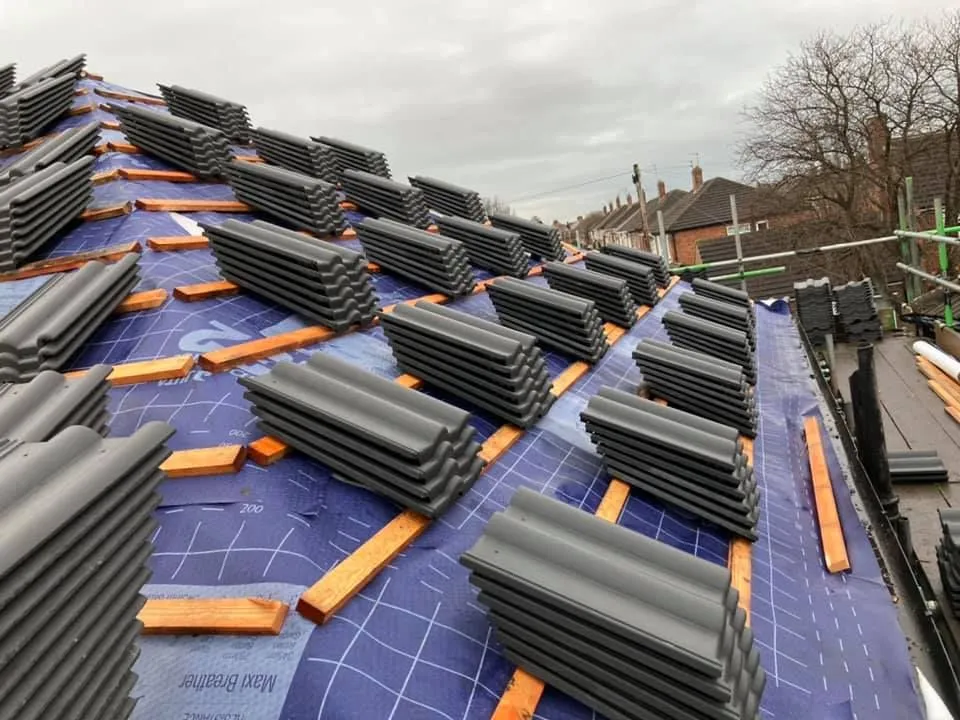
Corrugated Roofing in Derby — Installation, Repair & Replacement
In Derby, corrugated roofing is one of the most practical and cost-effective choices for garages, outbuildings, agricultural buildings, and commercial units. The ridged sheet profile sheds rainwater fast and holds up against the kind of wet winters Derbyshire regularly delivers.
Whether you need a full corrugated roof installation, a sheet replacement, or a repair to an ageing roof, Derby Roofers are your local specialists — serving Derby and the surrounding Derbyshire area for over 20 years.
This page covers the main sheet materials available, how long each one lasts, how far sheets can span, what a correct installation looks like, and what to watch out for on older roofs. If you have an asbestos cement sheet roof, we also cover what you need to know before any work begins.
- IPAF and PASMA certified team, so powered access platforms and mobile towers are used correctly on every roof type
- Free drone roof survey before any quote is put together
- Over 20 years fitting and repairing corrugated roofing across Derby and Derbyshire
What Is Corrugated Roofing? A Quick Overview
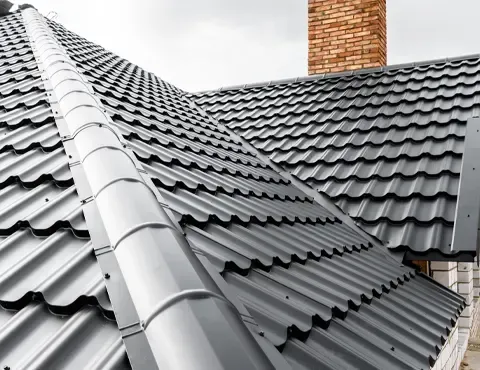
Corrugated roofing uses ridged or wave-profile sheets — typically steel, polycarbonate, or fibre cement — fixed to a purlin frame. The wave pattern does two things: it drains rainwater quickly and it adds structural strength without extra weight.
In Derby and across Derbyshire, corrugated sheeting is the go-to solution for garages and outbuildings in residential areas such as Spondon, Mickleover, and Alvaston; farm buildings and agricultural structures across rural Derbyshire; industrial units, workshops, and warehouses; lean-to extensions, carports, and covered walkways; and the replacement of old or damaged asbestos cement sheet roofs.
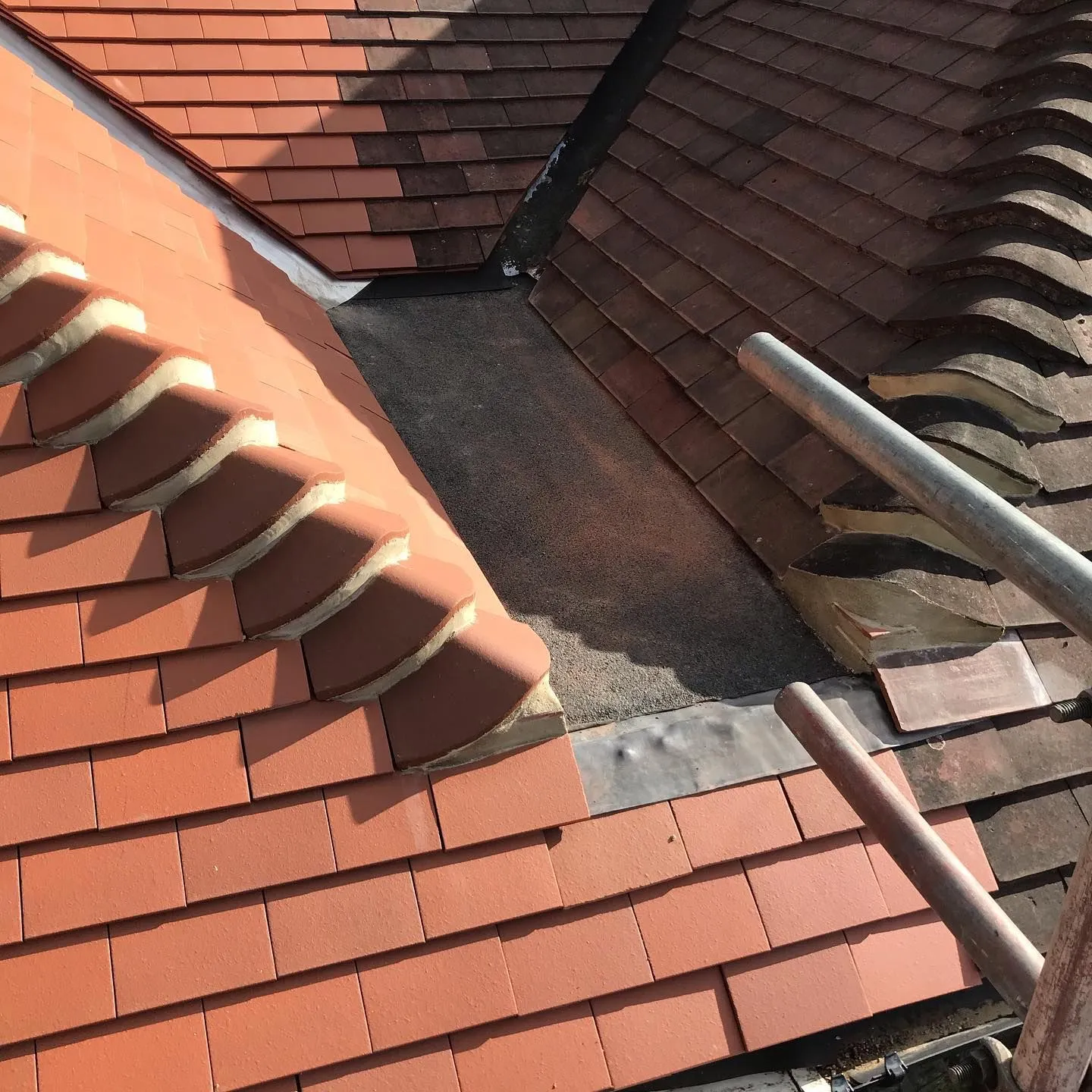
Corrugated sheeting is also used as wall cladding on commercial and agricultural buildings — not just roofing. If you need side cladding as well as roofing, we can advise on matching profiles at the survey stage.
Corrugated Roofing Lasts Decades When Fitted Correctly in Derby
Derby homeowners and landlords with garages or outbuildings often ask how long corrugated roofing will last before it needs replacing. The honest answer depends mostly on the sheet material and how well the roof was installed in the first place.
| Material | Typical Lifespan | Relative Cost |
|---|---|---|
| Galvanised / polyester-coated steel | 40–50 years | Mid-range, better value long-term |
| Fibre cement | 30–40 years | Mid-to-upper, low maintenance |
| Polycarbonate (UV-protected) | 25–30 years | Mid-range |
| Bitumen corrugated sheets | 10–20 years | Low cost |
| PVC corrugated sheets | Around 10 years | Cheapest per sheet |
The wave or corrugated profile itself is a key factor in longevity. The shape disperses impact force — from hail, falling debris, or foot traffic — more evenly across the sheet surface than flat sheeting, which is why corrugated profiles outlast flat alternatives in exposed Derbyshire conditions. Derby’s wet winters speed up failure in poorly installed roofs: if fixings are not sealed, water works into the screw holes and corrodes the sheet from inside. We always use capped screws with neoprene washers and seal every penetration on installation.
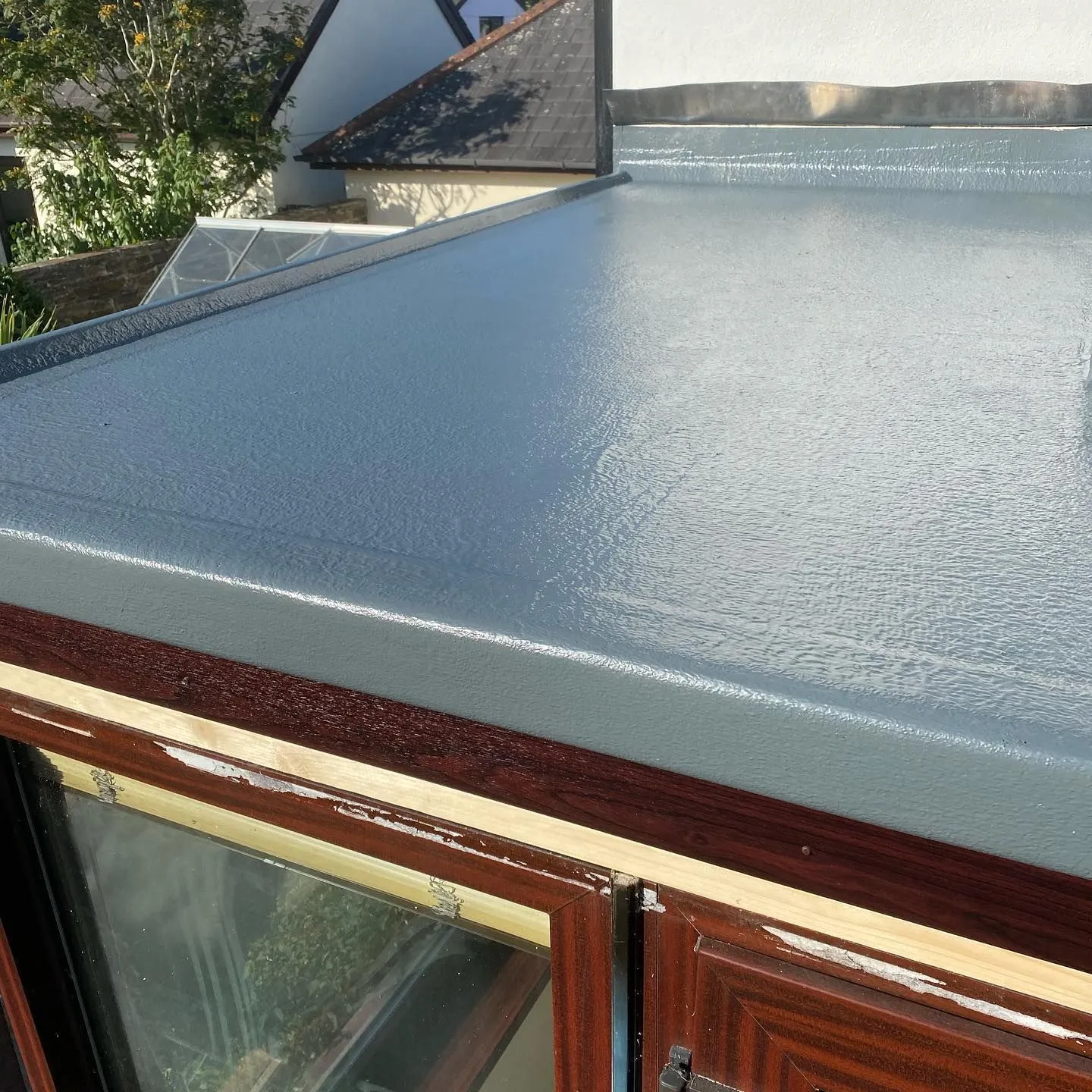
Steel and Polycarbonate Are the Most Common Corrugated Sheet Materials
Choosing the right sheet material for your Derby garage or outbuilding comes down to what the roof needs to do. Each material has clear strengths.
Galvanised and polyester-coated steel is the most widely used sheet for garages, commercial units, and agricultural buildings in Derbyshire. It is strong, handles heavy rainfall and wind load well, and comes in a wide range of colours and coatings. PVC plastisol-coated steel is the premium option — the thick coating adds greater weather resistance and colour retention over decades.
Polycarbonate sheets let in natural light, which makes them popular for garden rooms, lean-to structures, and covered outdoor areas. UV-protected grades are important in the UK climate — unprotected polycarbonate yellows and becomes brittle over time.
Fibre cement is often specified for agricultural buildings and industrial units in Derbyshire where acoustic insulation matters. It does not rust or rot and is breathable, which helps with condensation management inside the building.
Bitumen corrugated sheets are a low-cost option well suited to smaller sheds, garden buildings, and temporary structures — lightweight and straightforward to install on simple timber frames. We can also fit box profile sheets, which have a flatter top than standard corrugated and offer a larger coverage width with a cleaner finish, common on Derby’s newer commercial and industrial buildings.
For bitumen corrugated roofing specifically — including branded systems — see our dedicated Onduline Roofing Derby page for install and repair detail on that material.
Older Derby Buildings May Have Asbestos Cement Sheets — Here Is What to Do
If your property in Derby was built before the 1990s and has a corrugated roof on a garage, outbuilding, or industrial unit, there is a possibility the existing sheets contain asbestos cement. This was a common roofing material until its use was banned in the UK.
You should not drill, cut, or disturb sheets you suspect may contain asbestos. The safest first step is to have the material tested by a licensed surveyor before any roofing work begins.
Under the Control of Asbestos Regulations 2012, removal of corrugated asbestos cement sheets typically falls under non-notifiable work — meaning it does not need to be reported to the HSE, provided the sheets are handled carefully and not broken or smashed. However, this work must still be carried out by a competent person following strict safe-handling procedures, and the material must be disposed of at a licensed waste facility.
Derby Roofers do not carry out asbestos removal — that work must be handled by a licensed asbestos removal contractor. What we can do is advise you on the process and carry out the new corrugated sheet installation once the old material has been safely removed and cleared. We work alongside licensed asbestos removal specialists in the Derby and Derbyshire area and can help coordinate the full project if needed.
Corrugated Sheets Span Up to 3 Metres Without Extra Support
One of the most practical questions for anyone planning a new corrugated roof in Derby is how far the sheets can span between supports. This affects how many purlins you need and the overall cost of the frame.
Standard corrugated steel sheets can typically span up to around 1.8 metres between purlins at normal residential loads. Heavier gauge sheets or box profile sections can span further — sometimes up to 3 metres — but the exact figure depends on sheet thickness, the load the roof carries, and the pitch.
Sheet pitch also matters. A minimum pitch of around 5 to 10 degrees is generally recommended for corrugated sheets to ensure adequate water run-off. On very shallow pitches, end lap distances need to be increased to prevent water ingress — something our team calculates on site rather than applying a generic rule. Planning requirements in Derbyshire may restrict the size and height of outbuildings, depending on your property and location, which we check as part of our survey process.
Your Corrugated Roof in Derby — What a Proper Installation Looks Like
If you are ready to book corrugated roofing work in Derby — whether in Alvaston, Chaddesden, or anywhere else across the city — here is what the installation process looks like from start to finish.
- Survey and measure the structure — we check the frame, pitch, and purlin condition before ordering any sheets
- Check and repair the frame or purlins — any rot, rust, or structural movement gets fixed before sheeting begins
- Cut sheets to length on site — steel is cut with shears or a nibbler; polycarbonate with a fine-toothed saw
- Lay the first row at the bottom with a 50 to 70mm overhang into the gutter
- Fix with capped screws into the purlin crown — screws go into the peak of the corrugation, not the valley, on lightweight sheets
- Overlap each row by a minimum of one corrugation on the side and 150mm on the end lap
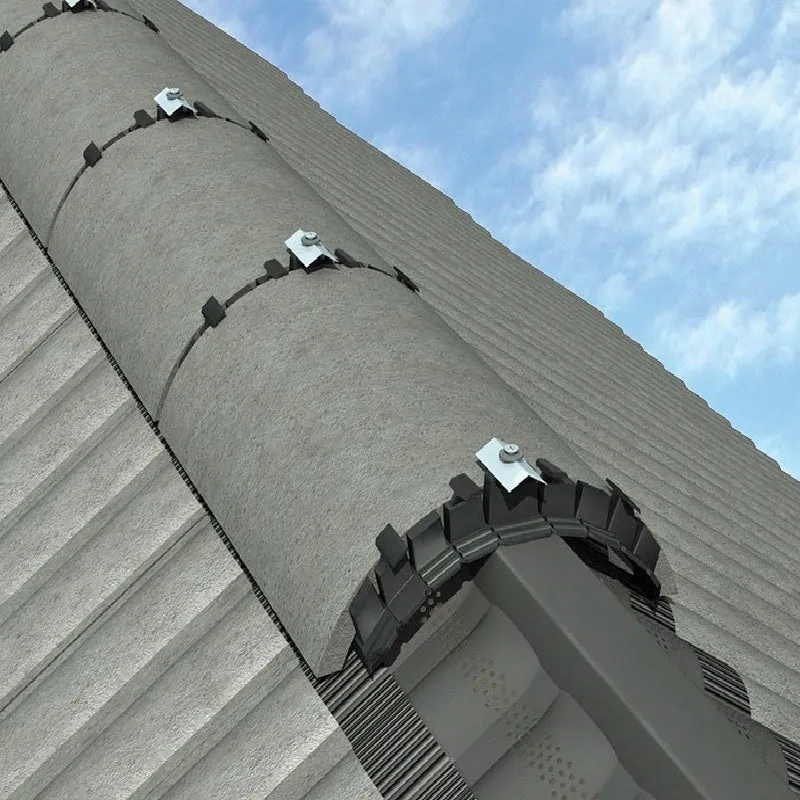
- Seal the ridge, verge, and any pipe or vent penetrations with compatible flashing and sealant
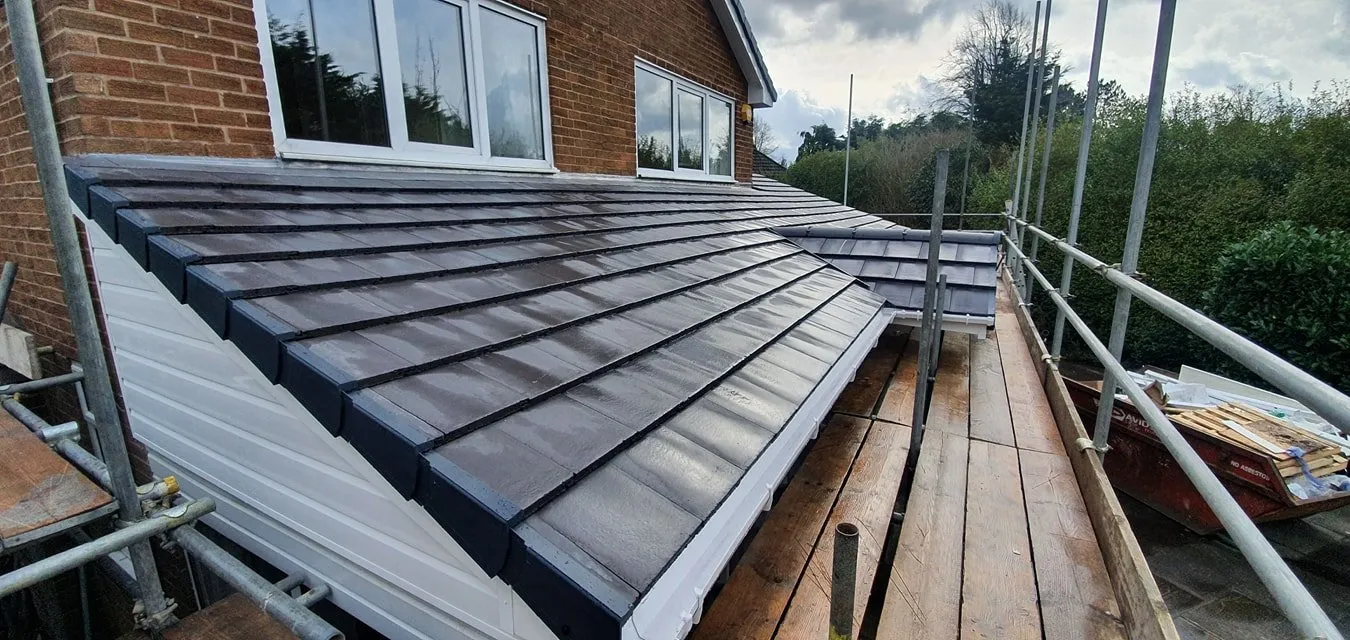
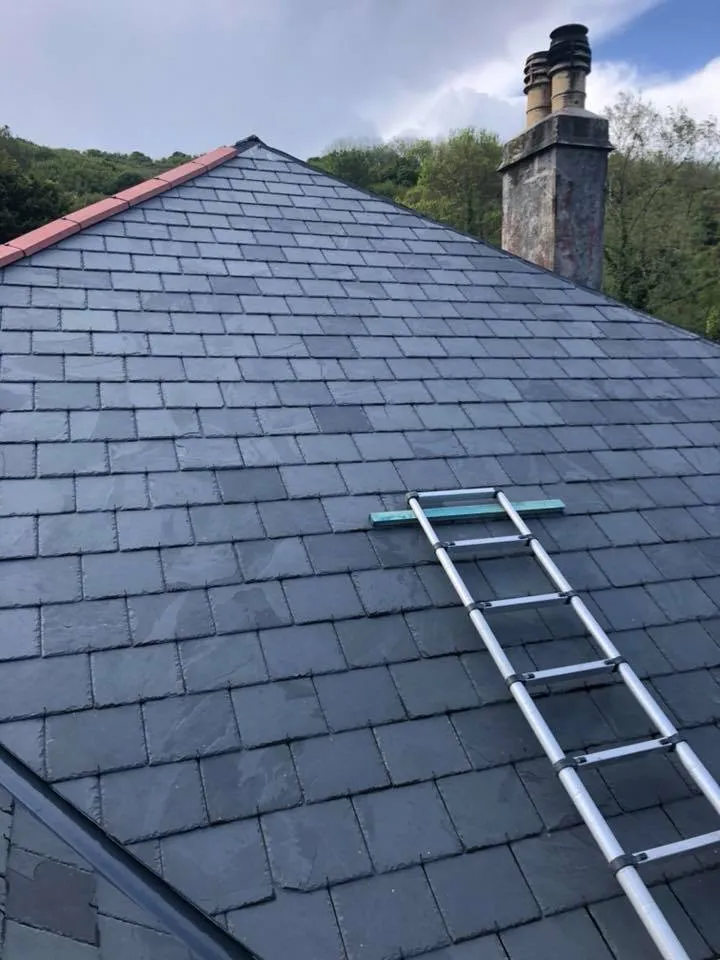
We also install foam or rubber closure strips at the eaves and ridge to block wind-driven rain and insects from entering under the sheet — a detail that makes a significant difference on Derbyshire’s exposed agricultural sites. Derby’s prevailing south-west winds mean we always start laying sheets from the opposite end of the roof, stopping wind from lifting the overlaps.
Ventilation and Condensation — What You Need to Know Before the Roof Goes On
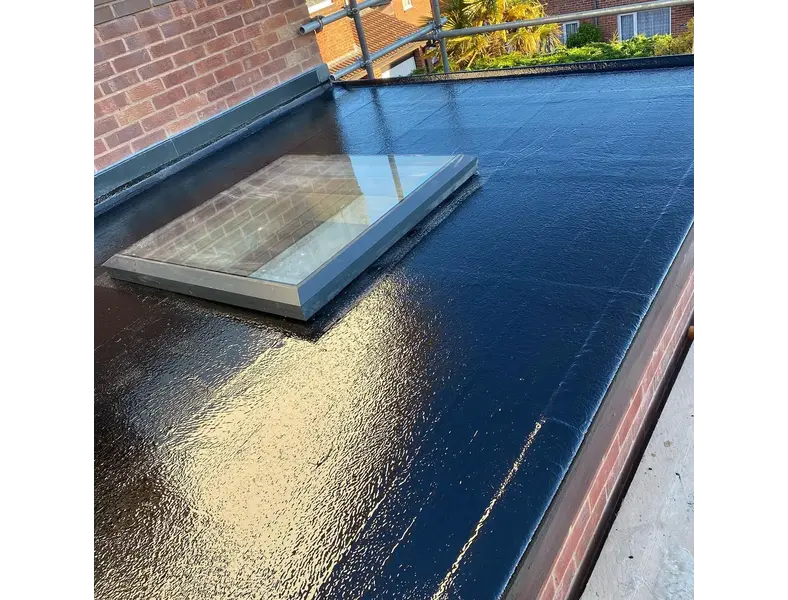
A corrugated roof that looks watertight from the outside can still cause problems inside if ventilation is not right. This is a common issue in Derby garages and outbuildings, and it is worth planning for before the roof goes on.
Metal sheets conduct temperature quickly. In cold weather, warm air inside the building hits the cold underside of the sheets and condensation forms. Over time this drips down, causing damp patches, rust on stored items, and deterioration of the structure below.
- Ridge vents — allow warm air to escape at the apex
- Eaves vents — allow fresh air in at the base
- Anti-condensation underlay — a fleece-backed layer fixed under the sheets that traps moisture droplets before they drip
- Insulated composite panels — the full solution for buildings where temperature control matters, such as workshops or garages with habitable use
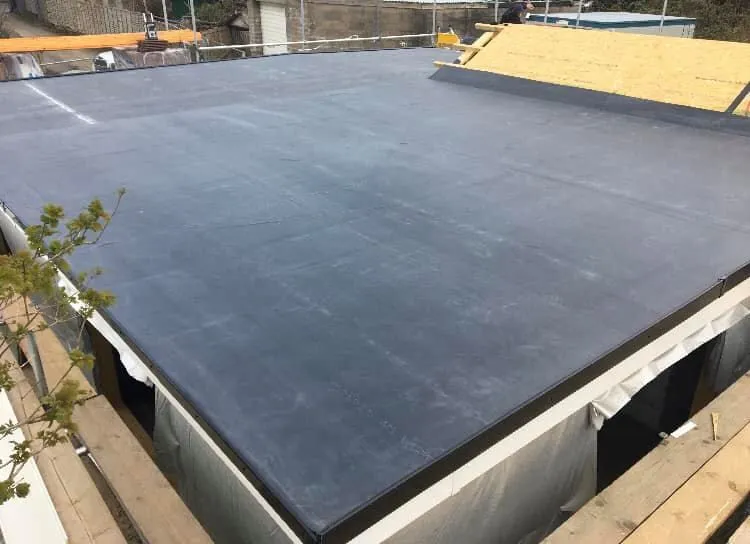
What you put under corrugated roofing matters as much as the sheet itself. Steel sheets should always be installed with insulation or anti-condensation underlay to prevent moisture problems inside. Polycarbonate and PVC should have airflow above and below the sheet to prevent heat build-up and UV degradation. We advise on the right ventilation approach during the survey.
Walking on Corrugated Roofing Causes Damage — Here Is How We Access Your Roof Safely
It is worth knowing this before you try to inspect or clean a corrugated roof yourself anywhere in Derby. Steel and polycarbonate sheets are not designed to take a person’s full body weight at a single point between fixings.
Walking directly on a corrugated sheet concentrates all your weight on a small area. This cracks polycarbonate panels, dents steel sheets, and can cause a fixing to pull through — resulting in a leak, or a more serious structural failure.
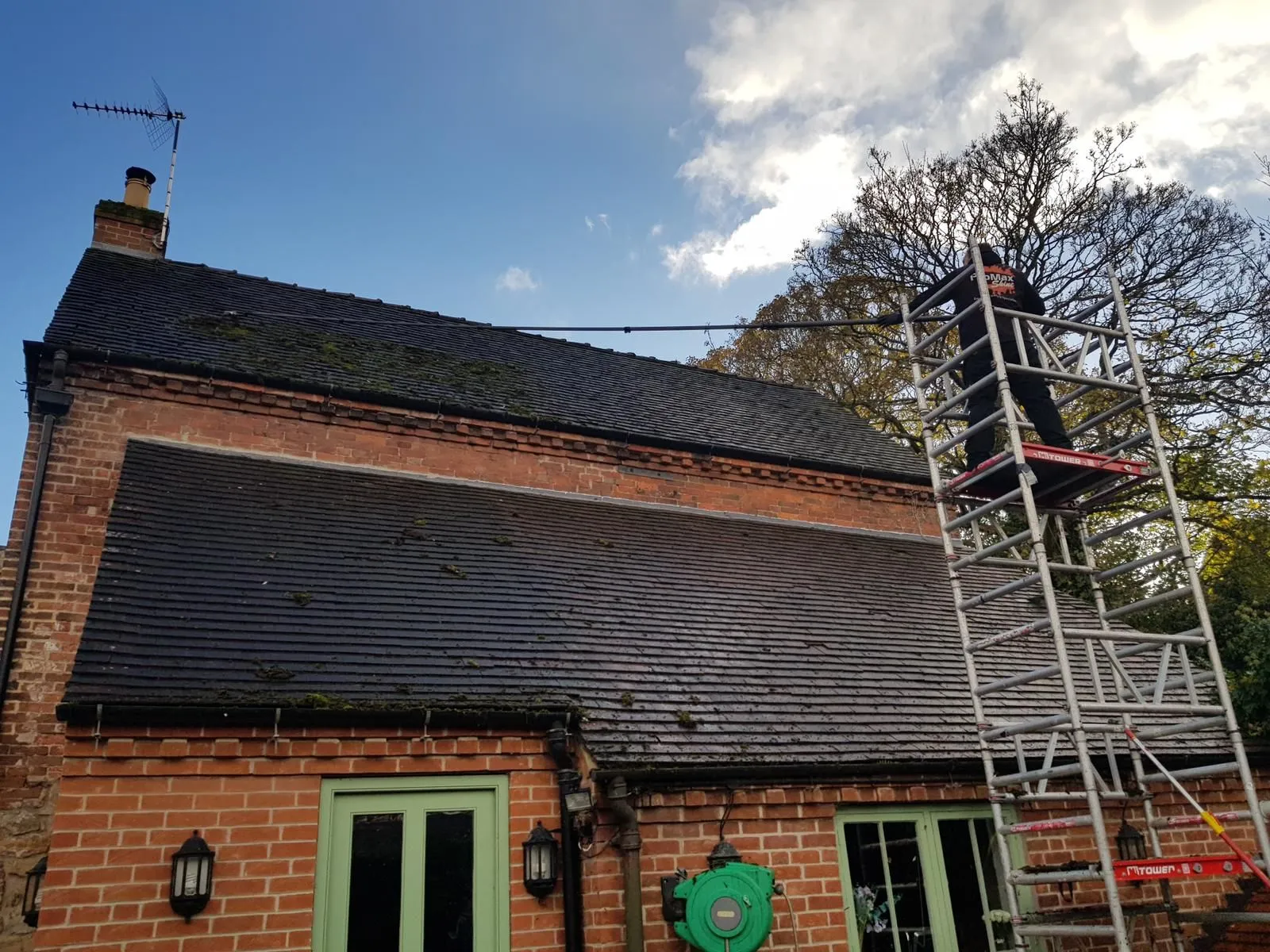
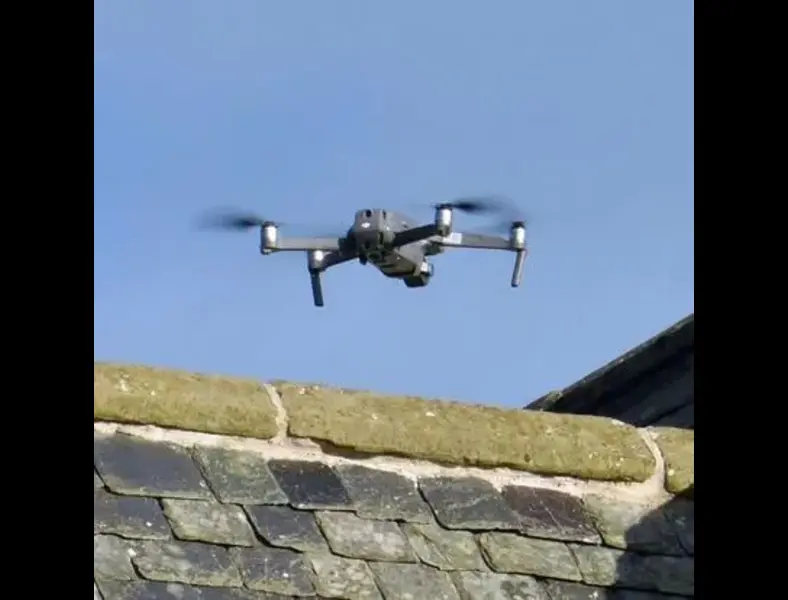
If access is needed, crawl boards spread the load across multiple purlins and make the work safe. Our team uses crawl boards and tower scaffolding as standard, and we also carry out free drone surveys for initial inspections — assessing the full condition of your corrugated roof, including ridge sealant, sheet condition, and fixing integrity, without anyone setting foot on the sheet at all.
North-facing corrugated roofs in Derby build up moss and algae faster than south-facing ones. If yours needs cleaning, we carry out soft-wash roof cleaning — a low-pressure process that removes biological growth without damaging the sheet surface, sealant, or coatings.
What Are the Disadvantages of Corrugated Roofing? An Honest Overview
Corrugated roofing is not the right choice for every situation. Here are the main drawbacks to be aware of before you commit:
- Insulation — thin sheet materials have little inherent insulation. Without an underlay or insulation layer, corrugated roofs can be cold in winter and hot in summer
- Condensation — closely linked to insulation. Without proper ventilation or anti-condensation measures, moisture can drip from the underside of metal sheets
- Noise — rain on metal or polycarbonate sheets is audible. For workshops and garages this is rarely a problem; for habitable rooms it is worth considering thicker sheets or an insulated panel system
- Exposed fasteners — corrugated sheet systems use visible screws. Washer seals degrade over time and need periodic checking to prevent leaks
- Thermal movement — temperature changes cause sheets to expand and contract slightly. Fixings can loosen over years if not installed with the correct torque and washer type
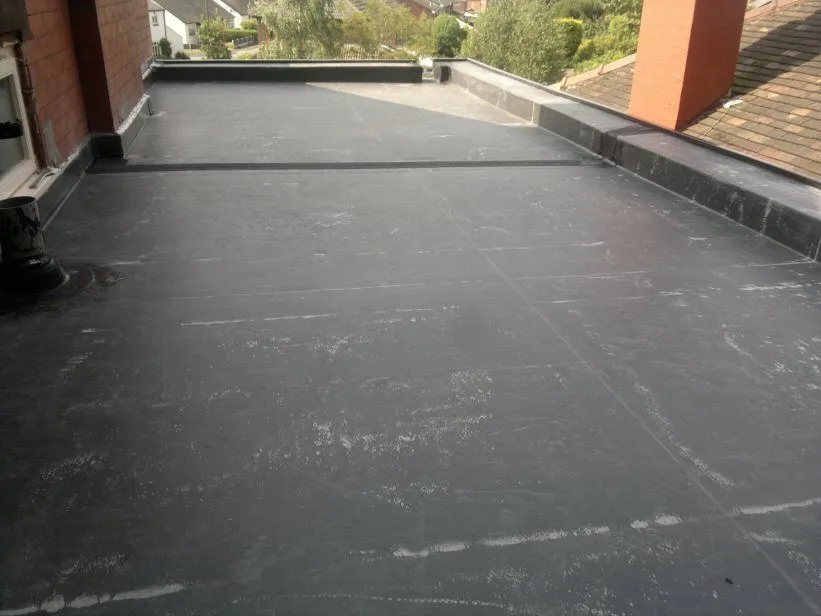
These are manageable issues when a roof is specified and installed correctly. Our survey process is designed to identify which of these factors applies to your specific building in Derby and advise on the right specification before any sheets are ordered.
Signs Your Corrugated Roof in Derby Needs Attention
For Derby landlords and homeowners with corrugated roofs on garages or outbuildings that are more than five years old, a periodic check catches problems before they turn into leaks or structural damage.
Properties in Borrowash and low-lying areas near the River Derwent see more freeze-thaw cycles through winter. This accelerates sealant cracking at joints and loosens fixings faster than on more sheltered sites.
- Rust bleed around screw heads — indicates the washer seal has failed and water is entering the fixing hole
- Cracked or missing sealant at the ridge cap or verge flashing
- Cracked, yellowed, or opaque polycarbonate sheets — UV degradation or impact damage
- Loose or lifting sheet edges at the eaves or side laps
- Ponding water visible on the sheet surface — indicates a sagging purlin or insufficient pitch
- Dripping or damp patches inside the building — condensation or a leaking lap
- Visible daylight through the roof — a sheet has cracked or a fixing has pulled through
If you spot any of these on a corrugated roof in Derby, contact us for a survey before the next period of heavy rainfall. Small repairs carried out early cost a fraction of a full sheet replacement. If a metal corrugated roof is specifically leaking or showing cut edge corrosion, our dedicated Metal Roof Repair Derby page covers that repair process in more depth.
What Our Corrugated Roofing Service Covers in Derby
- New corrugated roof installation on garages, outbuildings, farm buildings, industrial units and commercial premises
- Sheet replacement and repair on existing corrugated roofs, from single sheet swaps to a full re-sheet
- Box profile sheet installation as an alternative to standard corrugated profile
- Wall cladding in matching corrugated or box profile sheet for agricultural and commercial buildings
- Ridge vents, eaves vents, anti-condensation underlay and insulated composite panel fitting
- Soft-wash roof cleaning to remove moss and algae without damaging the sheet surface or sealant
- Free drone roof survey and free no-obligation quote
- 24-hour emergency call-out
Not Included / Costed Separately
- Testing and removal of asbestos cement sheets — this must be carried out by a licensed asbestos removal contractor. We can coordinate with a licensed specialist and fit the new corrugated sheets once the old material has been safely cleared and disposed of
Certified Access Equipment for Every Corrugated Roof Job
Corrugated sheets tend to fail less from the material wearing out than from a mismatched profile going on, or a fixing pattern that was never right for the building in the first place. Before we order material we check the existing profile against what’s being replaced, so the new sheets lap and fix the way the original run did. On farm buildings around Ticknall and Egginton, where sheets run long over open machinery sheds and grain stores, we fix to the purlin spacing the building was actually built to and use coated, washered fasteners at the right centres to hold against wind uplift. Our team holds IPAF certification for powered access platforms and PASMA certification for mobile access towers, so garage, industrial estate and farm roofs each get access equipment matched to the structure.
Which Corrugated Roofing Page Do I Need?
This page is a general guide to corrugated sheet roofing across all materials — steel, polycarbonate, fibre cement, PVC and bitumen — covering installation, repair, replacement, spans, ventilation and asbestos. If your enquiry is more specific, two of our other pages go deeper on a single material or fault:
- Metal Roof Repair Derby — for leaks, rust and cut edge corrosion specifically on steel corrugated or box profile roofs
- Onduline Roofing Derby — for bitumen corrugated sheet installation and repair, including branded Onduline systems
Not sure which applies to your roof? Call us on 01332-529704 and we will point you in the right direction — or simply book a free survey and we will confirm the material and the right fix on site.
Areas We Cover For Corrugated Roofing In Derby
Derby Roofers proudly serves homeowners and businesses throughout Derby city and the wider Derbyshire area. Most of our corrugated roofing work starts close to home in Derby itself — garages and outbuildings in Chaddesden, Alvaston, Mickleover and Allestree, alongside commercial units on Pride Park, Wyvern Business Park, the Raynesway estate and Sinfin Business Park. Outside the city, the bulk of our farm building work sits in the flatter Trent Valley land to the south, around Melbourne, Ticknall, Repton, Etwall, Hilton and Egginton. Further out towards the Peak District fringe, villages such as Ashbourne, Wirksworth and Belper bring older stone-built barns and exposed hillside sheds where wind loading is higher, so sheet gauge and fixing spacing get adjusted for the site. Not sure if we cover your area? Call us on 01332-529704 and we will confirm straight away.
- Derby City Centre (DE1)
- Allestree, Mackworth & Quarndon (DE22)
- Mickleover (DE3)
- Littleover & Normanton (DE23)
- Chaddesden, Oakwood & Spondon (DE21)
- Alvaston, Crewton & Osmaston (DE24)
- Belper (DE56)
- Ripley (DE5)
- Ilkeston (DE7)
- Heanor (DE75)
- Swadlincote (DE11)
- Ashbourne (DE6)
- Matlock (DE4)
- Borrowash & Draycott (DE72)
- Etwall & Hilton (DE65)
- Melbourne & Chellaston (DE73)
- Duffield & Little Eaton (DE56 / DE21)
- Breadsall & Darley Abbey (DE21 / DE22)
- Long Eaton (NG10)
- Castle Donington (DE74)
Corrugated Roofing in Derby — Frequently Asked Questions
How long will a corrugated roof last in Derby?
A correctly installed corrugated roof in Derby lasts between 10 and 50 years depending on the sheet material. Galvanised or coated steel sheets with anti-corrosion treatment last longest, at 40 to 50 years. Polycarbonate and fibre cement fall in the 25 to 40 year range, while PVC and bitumen sheets typically run 10 to 20 years. Regular checks of fixings and ridge sealant extend the lifespan of any sheet type.
Is corrugated roofing cheap?
Corrugated sheeting is one of the most cost-effective roofing materials available. PVC and bitumen sheets are at the lower end of the cost spectrum. Galvanised steel sits in the mid-range, and polyester or plastisol-coated steel costs more upfront but lasts significantly longer, making it better value over the roof’s lifetime. Fibre cement is mid-to-upper range but offers excellent durability and requires very little maintenance.
What is corrugated roofing made of?
Corrugated roofing sheets are made from several different materials: galvanised steel, polyester or PVC plastisol-coated steel, polycarbonate, PVC plastic, fibre cement, and bitumen. Steel is most common for garages and commercial buildings in Derby; polycarbonate where light is needed; fibre cement for agricultural and industrial structures; bitumen and PVC for smaller sheds and garden buildings.
How far can corrugated roofing span?
Standard corrugated steel sheets can span up to around 1.8 metres between purlins at typical residential loads. Heavier gauge steel or box profile sheets can span up to 3 metres in some configurations. The exact span depends on sheet thickness, gauge, pitch, and the load the roof needs to carry. We calculate purlin spacing on site as part of every installation.
What are the cons of corrugated roofing?
The main disadvantages are limited insulation in thin sheet materials, potential for condensation on the underside of metal sheets without proper ventilation, noise during heavy rain, and exposed fixings that need periodic checking. These are manageable when the roof is correctly specified for the building. We advise on the right underlay, insulation, and ventilation during the survey to prevent these issues.
Can you walk on corrugated roofing?
You should not walk directly on corrugated roofing. The sheets are not designed to carry the concentrated weight of a person between fixing points — this can crack polycarbonate, dent steel, or cause fixings to pull through. If roof access is needed, crawl boards must be used to spread the load across the purlin frame. Our team always uses crawl boards and scaffolding, and offers drone surveys for inspections so no load is placed on the sheeting at all.
Does corrugated roofing rust?
Only steel-based corrugated sheets can rust, and only if the protective coating is damaged or fails. Galvanised sheets have a zinc coating as the primary rust barrier, and polyester or plastisol-coated sheets have an additional painted layer. Rust typically starts at screw holes where the coating has been penetrated — capped screws with neoprene washers slow this significantly. Polycarbonate, PVC, fibre cement, and bitumen sheets do not rust.
Do I need to check for asbestos before replacing an old corrugated roof in Derby?
If your property was built before the 1990s and has an existing corrugated cement sheet roof, you should have the material tested before any work begins. Asbestos cement was a widely used roofing material until it was banned in the UK. Removal must be carried out by a competent person following the Control of Asbestos Regulations 2012. Derby Roofers can install your new corrugated sheets once the old material has been safely cleared and disposed of at a licensed facility.
How do I book a corrugated roofing survey in Derby?
Call us on 01332-529704 or use the contact form at derbyroofers.co.uk/contact-derby-roofers. We will arrange a free survey — by drone or on-site depending on the roof and access — and follow up with a no-obligation quote. We cover Derby, Derbyshire, and the wider East Midlands area.
Is this the same as your Metal Roof Repair or Onduline Roofing pages?
No. This page is a general guide covering all corrugated sheet materials — steel, polycarbonate, fibre cement, PVC and bitumen. Our Metal Roof Repair Derby page focuses specifically on leaks, rust and cut edge corrosion on steel roofs, and our Onduline Roofing Derby page focuses specifically on bitumen corrugated sheet systems. Call us and we will confirm which applies to your roof.
Ready to Get Your Corrugated Roof Sorted?
If you have a corrugated roof in Derby that needs replacing, repairing, or surveying — or if you are planning a new installation on a garage, outbuilding, or commercial building — Derby Roofers are ready to help.
We fit and repair steel, polycarbonate, fibre cement, PVC and bitumen corrugated roofing across Derby and Derbyshire, backed by over 20 years of local experience and a free drone survey on every enquiry.
- ✅ Free drone roof survey — no one on your roof until we know exactly what is needed
- ✅ Free no-obligation quote
- ✅ 20+ years of experience on residential and commercial properties across Derbyshire
- ✅ All BBA-approved materials and 24-hour emergency call-out
Call us today or get in touch online. Our team covers Derby and all surrounding Derbyshire towns — and we always answer the phone.