
Clay Roof Tiling Derby | Supply & Install | Free Survey
Call: 01332-529704
Clay roof tiling for Derby & Derbyshire homes — full clay re-tiles, single tile repairs, and tile matching on period and listed properties, installed to BS 5534.
- Free Drone Survey
- Dry Ridge & Dry Verge as Standard
- IPAF & PASMA-Certified Team
- Written Guarantee on Workmanship
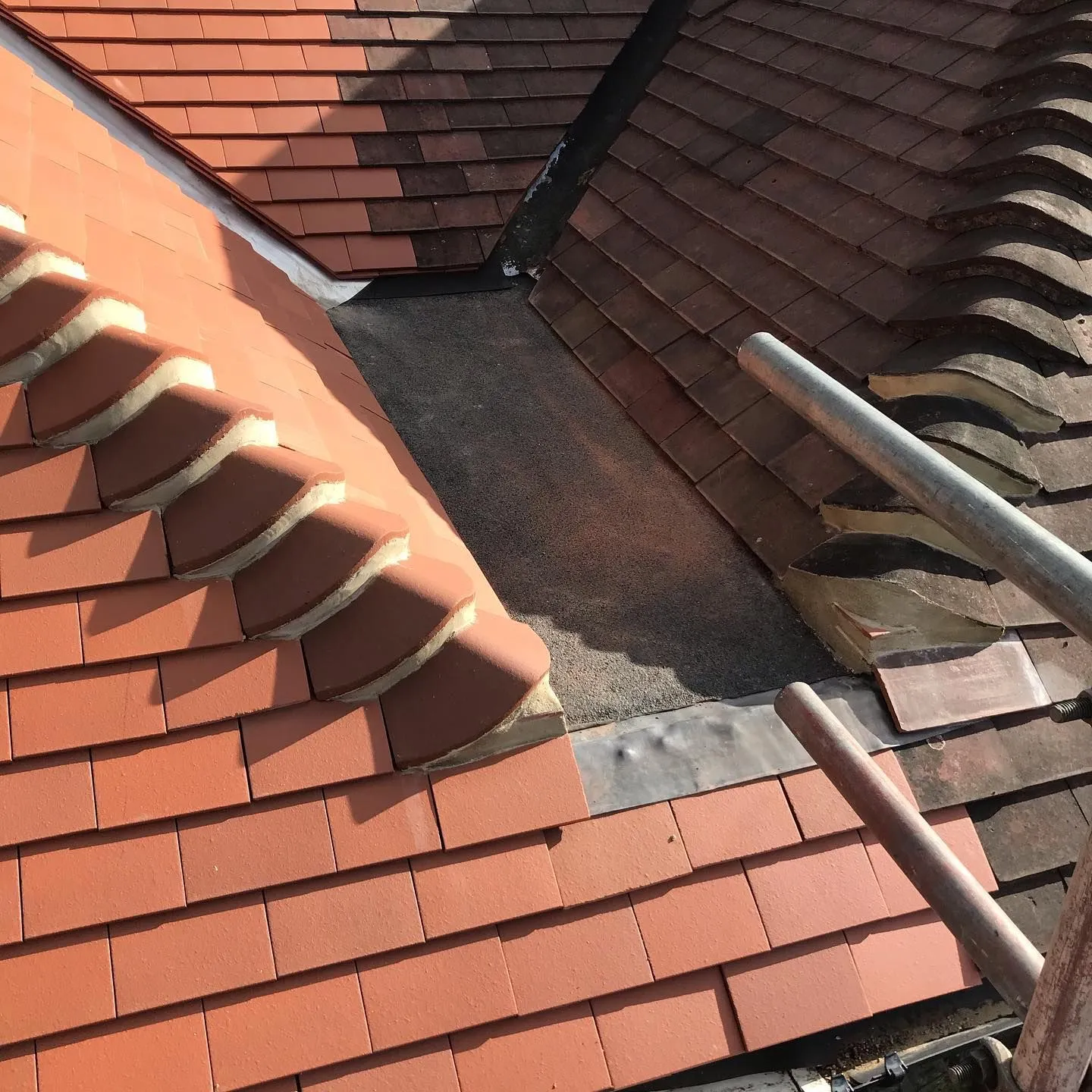
Clay Roof Tiling in Derby — Full Re-Tiles, Repairs & Tile Matching
Clay roof tiling has protected homes across Derby for centuries. This page covers full clay tile installations, re-tiling jobs, single tile repairs, and tile matching on older properties — a supply-and-install service specifically for clay, rather than concrete or slate.
Derby has a proud heritage of clay tile roofing — the city was once a significant producer of high-quality clay roofing tiles, and many of Derby’s Victorian terraces, Edwardian semis, and older stone cottages still carry clay roofs today. Whether you need a full re-tile, a repair after storm damage, or tile matching on a period property, we have the local experience to do the job properly.
- Free drone roof survey before any quote — no scaffolding cost just to look
- Every re-tile installed to BS 5534 with dry ridge and dry verge as standard
- IPAF and PASMA-certified team for safe roof access on taller or harder-to-reach properties
Clay Roof Tiles Are a Strong, Long-Term Choice for Derby’s Weather
Derby’s winters are wet and cold, with frost common from late October through to March. Clay tiles handle freeze-thaw cycles better than most alternatives. Their density means they don’t absorb water readily, so they don’t crack as concrete can when ground frost sets in overnight.
Clay is a natural material. It holds its colour without paint or coating, and it doesn’t rot, rust, or degrade under UV light — a low-maintenance, long-lasting option for homeowners who want a roof that performs year after year without repeat treatment.
This page is specifically about clay tiling — for concrete tile installs and re-tiles, see our Concrete Roof Tiling Derby page. If you’re still deciding which tile material suits your roof, our Types of Roof Tiles guide compares clay, concrete, slate and more.
Types of Clay Roof Tiles Available in Derby
Clay tiles come in several types, each suited to different roof styles and property ages.
- Plain tiles — the most common on Derby’s Victorian and Edwardian terraces
- Interlocking tiles — faster to lay, good coverage, suits newer builds
- Pantiles — curved profile, traditional look, seen on older Derbyshire properties
- Hand-crafted tiles — used for heritage and conservation work
- Peg tiles — traditional fixing style, suited to listed buildings and conservation areas across Derby city centre
One thing to check before choosing clay: the weight. Clay tiles are heavier than concrete or synthetic alternatives. Older properties in areas like Mickleover and Allestree may need their rafters checked before we proceed — this is why a structural check forms part of every free survey we carry out. We will not recommend clay tiling unless your roof structure can take the load.
Clay Roof Tiles Last Longer Than Most Other Tile Types
When laid correctly, clay tiles can last between 60 and 100 years. Some Victorian-era properties across Derby city centre still carry their original clay tiles in fully serviceable condition — that is over a century of performance from a correctly installed roof.
Compared to concrete tiles, which typically last 30 to 50 years, clay tiles come out ahead on lifespan in most cases. Concrete is porous: over time it absorbs moisture, grows moss faster, and can lose structural integrity. Clay stays denser and more water-resistant across its full service life.
Clay Against Concrete: How the Two Hold Up in Derbyshire
| Feature | Clay Tiles | Concrete Tiles |
|---|---|---|
| Typical lifespan | 60–100 years | 30–50 years |
| Moisture resistance | Denser, absorbs little water | More porous, absorbs moisture over time |
| Moss growth | Slower, due to lower porosity | Faster, due to higher porosity |
| Colour stability | Holds natural colour for decades | Fades over time, may need repainting |
| Fire rating | Class A, non-combustible | Class A, non-combustible |
| Weight (per tile profile) | Lighter than concrete interlocking tiles in most profiles | Heavier in most interlocking profiles |
Clay tiles also allow air circulation beneath them, which reduces heat transfer into the loft space — that natural ventilation can help lower heating costs in winter and keep loft temperatures down in summer.
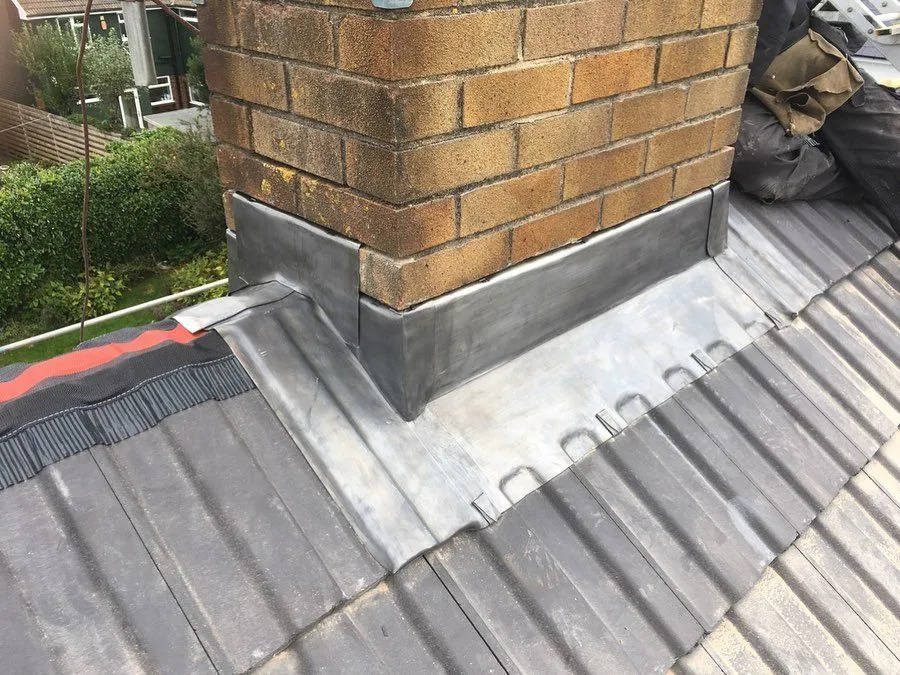
What Lies Beneath a Clay Tile Roof Matters as Much as the Tiles
Clay tiles get the attention, but the layers underneath do a lot of the work. A clay tile roof is a system: the tiles sit on top, but what protects your home day-to-day is the combination of tiles, underlayment felt, counter-battens, and battens working together.
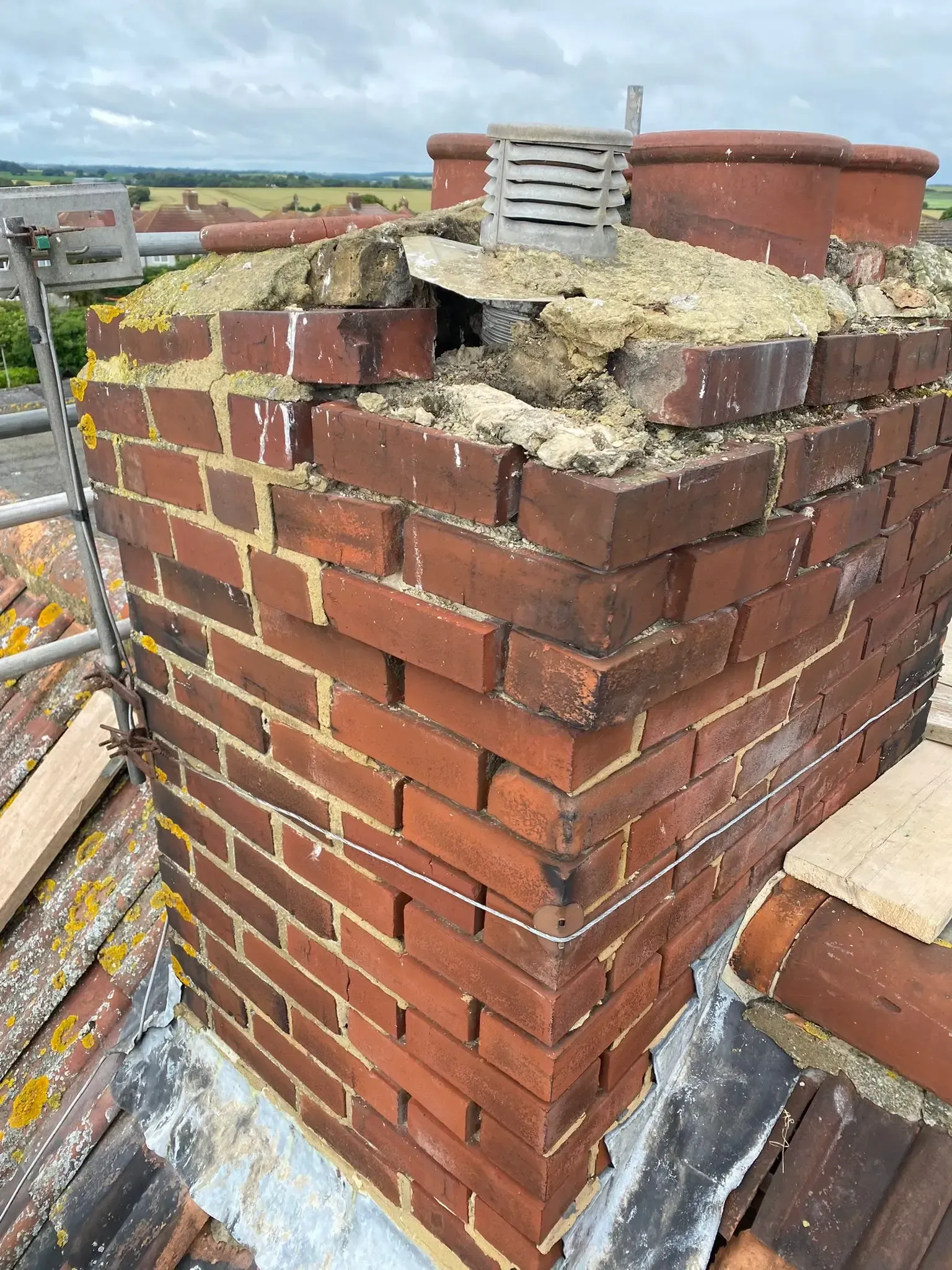
Many Derby properties — particularly in Chaddesden and Spondon — were built with bitumen-based felt underlays that are now 40 or 50 years old. That felt degrades, becomes brittle, and can split. When it does, a cracked tile lets water straight through to the ceiling below. During any re-tiling job, we inspect the felt as standard and replace it where needed.
When we carry out a re-tile in Derby, we check and replace as needed:
- Bitumen or breathable membrane underlayment
- Timber counter-battens and battens
- Lead flashings and valley linings
- Ridge and hip fixings
- Ventilation strips and eaves carriers where required by current building standards
For properties with original clay tiles in partial repair, we also carry out careful clay tile matching. Getting the profile and colour right on an older Derby terrace matters — mismatched tiles stand out, particularly in Derby’s conservation areas such as Friar Gate, Cathedral Quarter, and parts of Mickleover.
A Clay Tiled Roof in Derby Needs the Right Installation to Stay Watertight
Laying clay tiles looks straightforward. It is not. The difference between a roof that sheds water cleanly for 80 years and one that leaks within five comes down to how it was installed.
Derby sits in a rainfall corridor. Prevailing south-westerly winds drive rain across Derbyshire and into roof details — valleys, verges, ridge lines, and abutments — where poor workmanship shows up fast. We install all clay tile roofs in line with BS 5534, the British Standard for slating and tiling, which sets out minimum fixing density, lap requirements, and batten gauge for different roof pitches and wind zones.
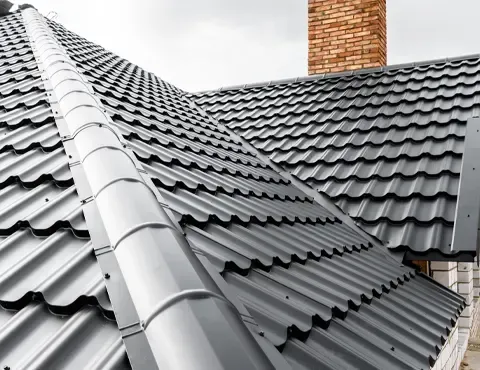
Key installation details we get right on every job:
- Correct tile overlap and gauge for the specific tile profile
- Mechanical nail or clip fixing to the required density for Derbyshire wind zones
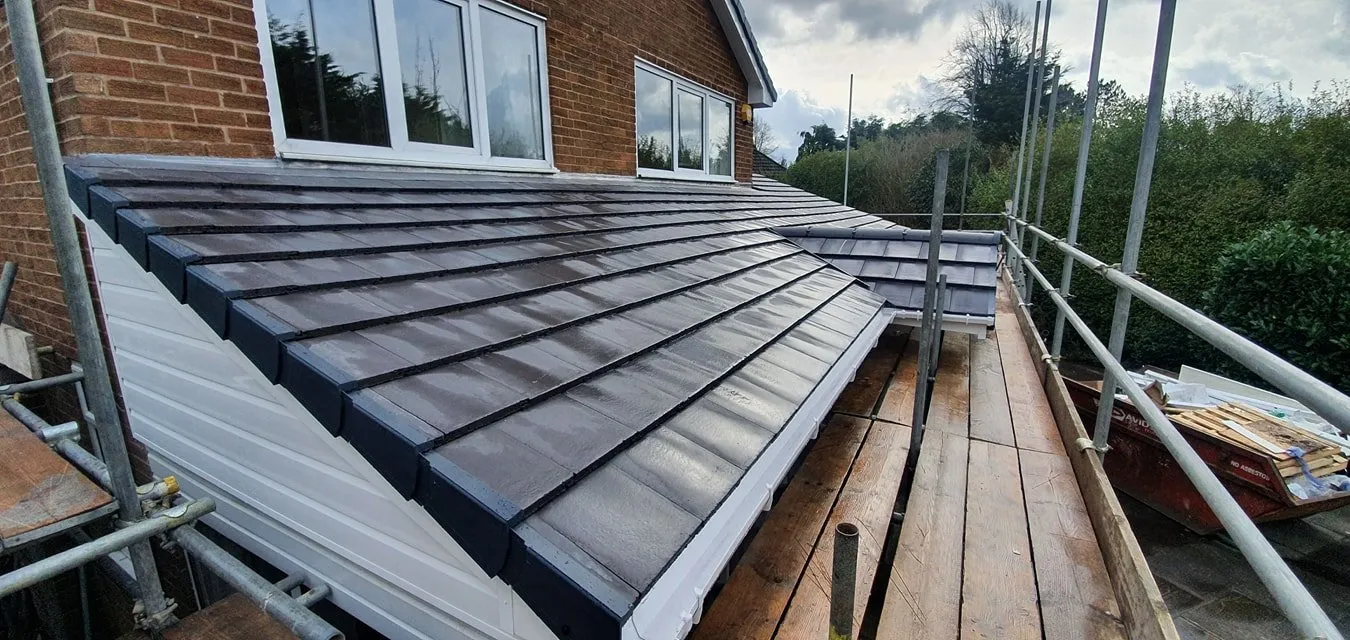
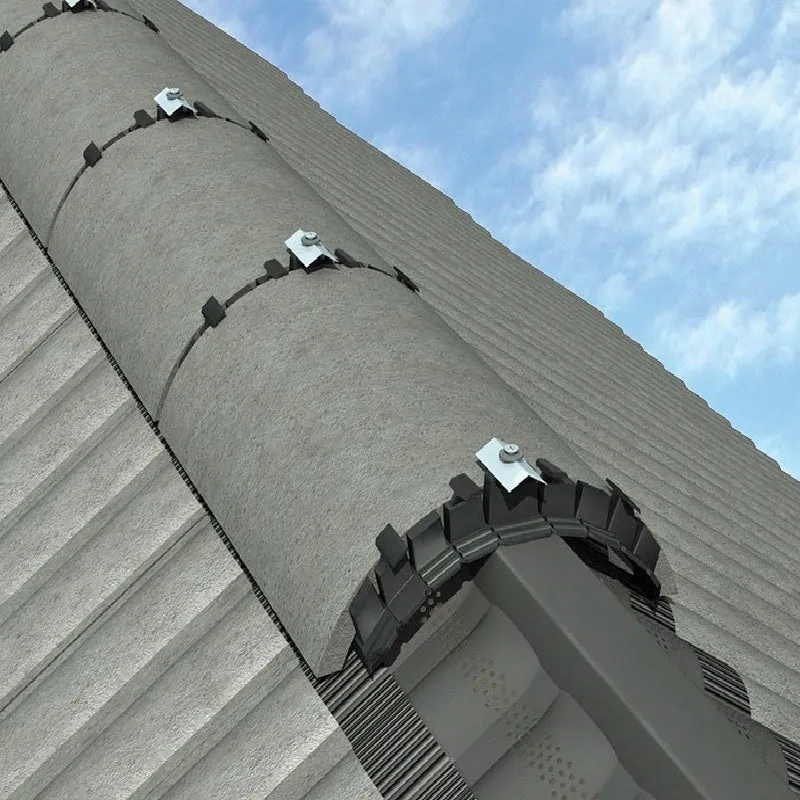
- Dry ridge system installation — no mortar, clamp-fixed for a secure and maintenance-free ridge
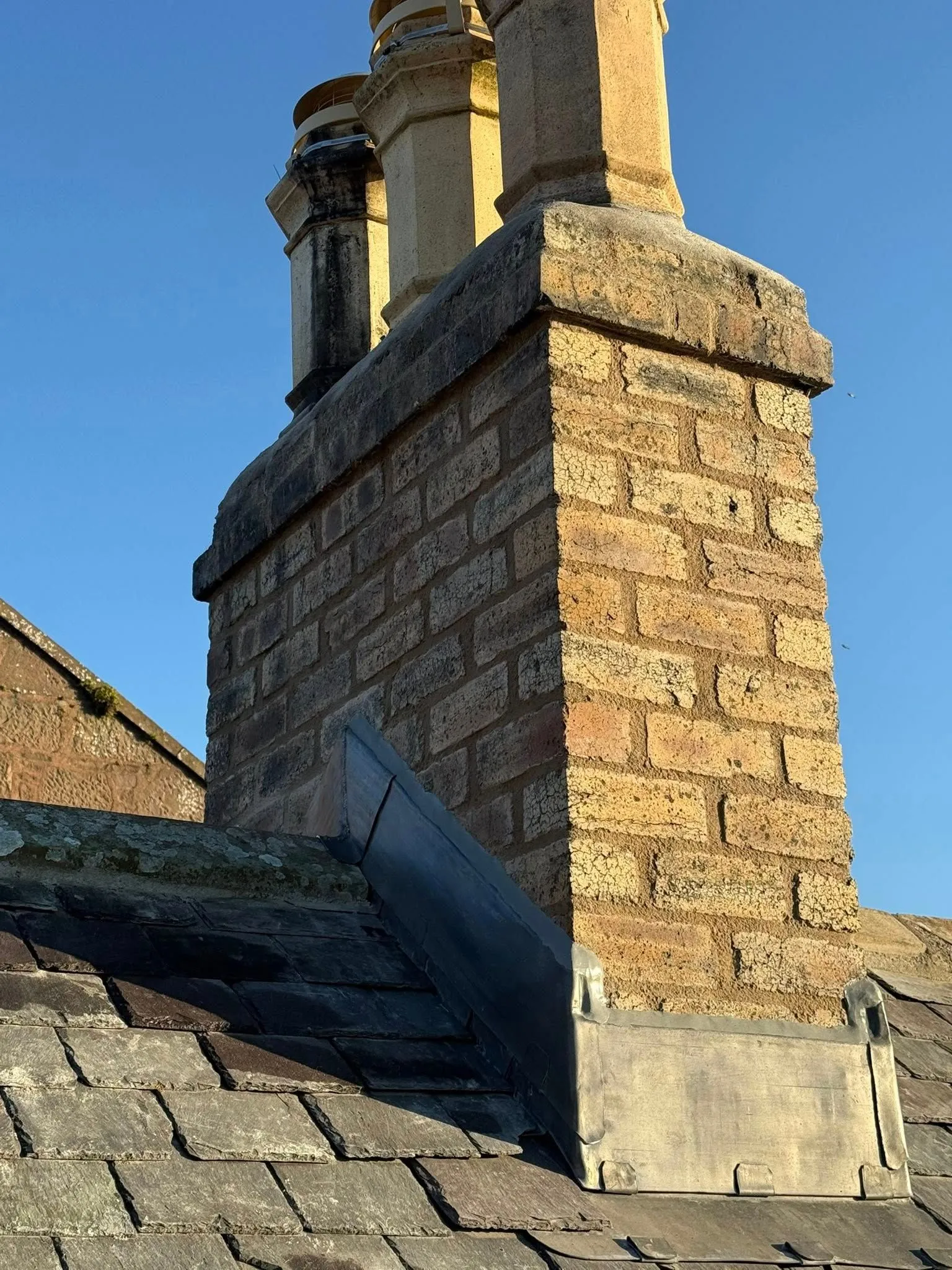
- Lead or code-correct flashing at all junctions — chimneys, dormers, abutments, and valleys
- Dry verge systems at roof edges — mechanically fixed, no mortar, no cracking over time
- Bird and pest stop strips at eaves to prevent nesting under tiles
We do not use mortar-bedded ridges on new clay tile work. Dry ridge systems hold tile ridges in place without the cracking and lifting that wet mortar eventually causes, and need no repointing over the years.
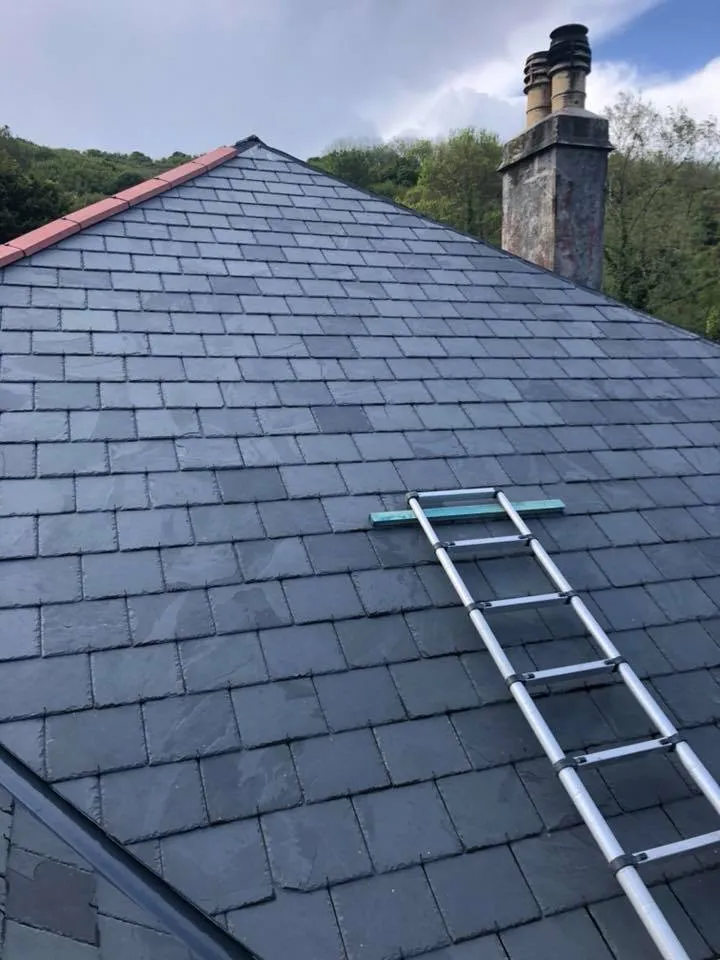
Getting Onto the Roof Safely Is Half the Clay Tiling Job
Clay tiles are strong under compression — rainfall, wind, and decades of weather. They are not designed to take point loads from a person’s foot. Stand on the wrong part of a clay tile and it cracks, and the tile underneath it can crack too.
This matters in Derby because trades regularly need roof access after a clay tile installation — aerial fitters, solar panel engineers, satellite installers. Ladders balanced against the guttering aren’t good enough on the taller Victorian terraces and stone cottages found across Derby and Derbyshire, which is why access equipment gets treated as its own part of the job.
Safe access to a clay tile roof requires:
- A roof ladder or crawl boards spread across at least three tile courses
- Foam or rubber padding between the ladder and tiles to prevent point cracking
- Entry and movement along the batten line, not across tile bodies
- No access during frost — cold tiles are more brittle
Our powered access platforms are operated by IPAF-certified team members, and mobile scaffold towers are built and used by staff holding PASMA certification, so the equipment matches what the roof actually needs. If you have had any trade access to your clay tile roof since it was laid, it is worth booking a visual check — our drone roof survey lets us inspect the full roof surface without scaffolding, identifying cracked or displaced tiles quickly and at no access cost to you.
What Happens After You Call: The Clay Tiling Process, Step by Step
Clay tiling is a structured process. Here is what happens on your Derby property from first call to handover.
- You call or get in touch: The phone gets answered directly, or you get a call back the same day, and your free drone roof survey gets booked for a time that suits you.
- Free drone survey and structural check: The roof gets flown with a drone to check tile condition, felt, battens and flashings, and the existing rafters get assessed to confirm they can carry clay tile weight before it’s recommended.
- Itemised written quote: You get a clear breakdown of what needs doing and why — no vague estimates, and no work starts until the price is agreed.
- Safe access set up: For jobs needing scaffold towers or powered access platforms, our IPAF and PASMA-certified team sets this up properly rather than relying on ladders alone.
- Strip-out and preparation: Old tiles come off, and felt underlayment, counter-battens and battens get replaced wherever the survey found them worn or degraded.
- Tiling to BS 5534 and handover: New or matched clay tiles are laid with the correct overlap and fixing density, dry ridge and dry verge fitted, the site cleared, and the work backed by a written guarantee.
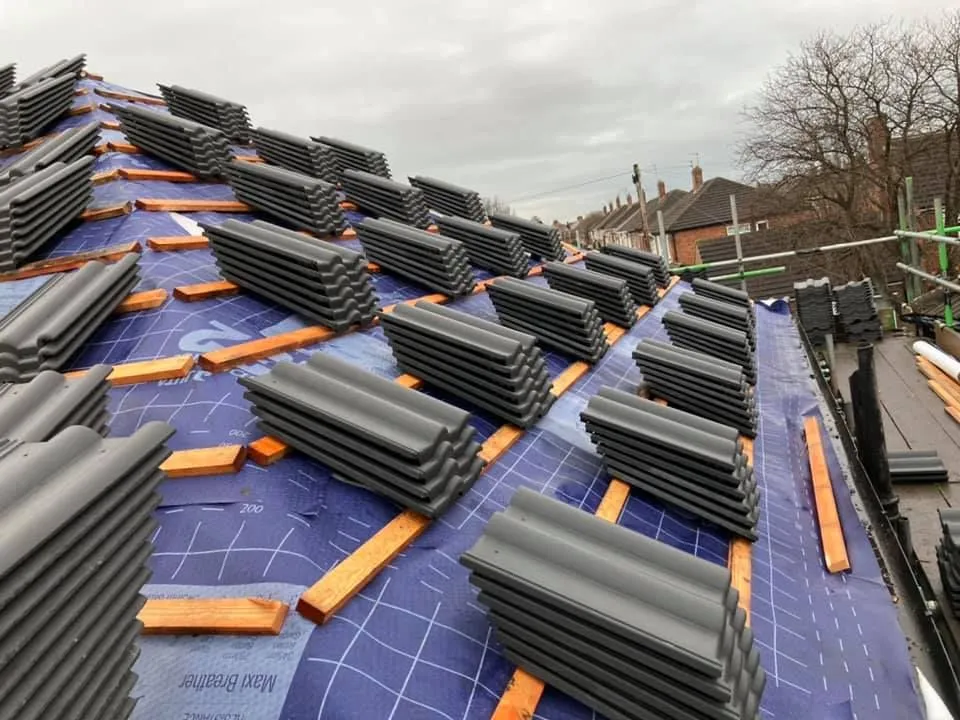
Regular Checks Keep a Clay Tile Roof in Derby Performing Well
A well-installed clay tile roof in Derby needs very little work to stay in good condition. That said, doing nothing for decades is not the same as low maintenance. Small issues — a slipped tile, a blocked valley, failed pointing on a ridge — become expensive if left unattended.
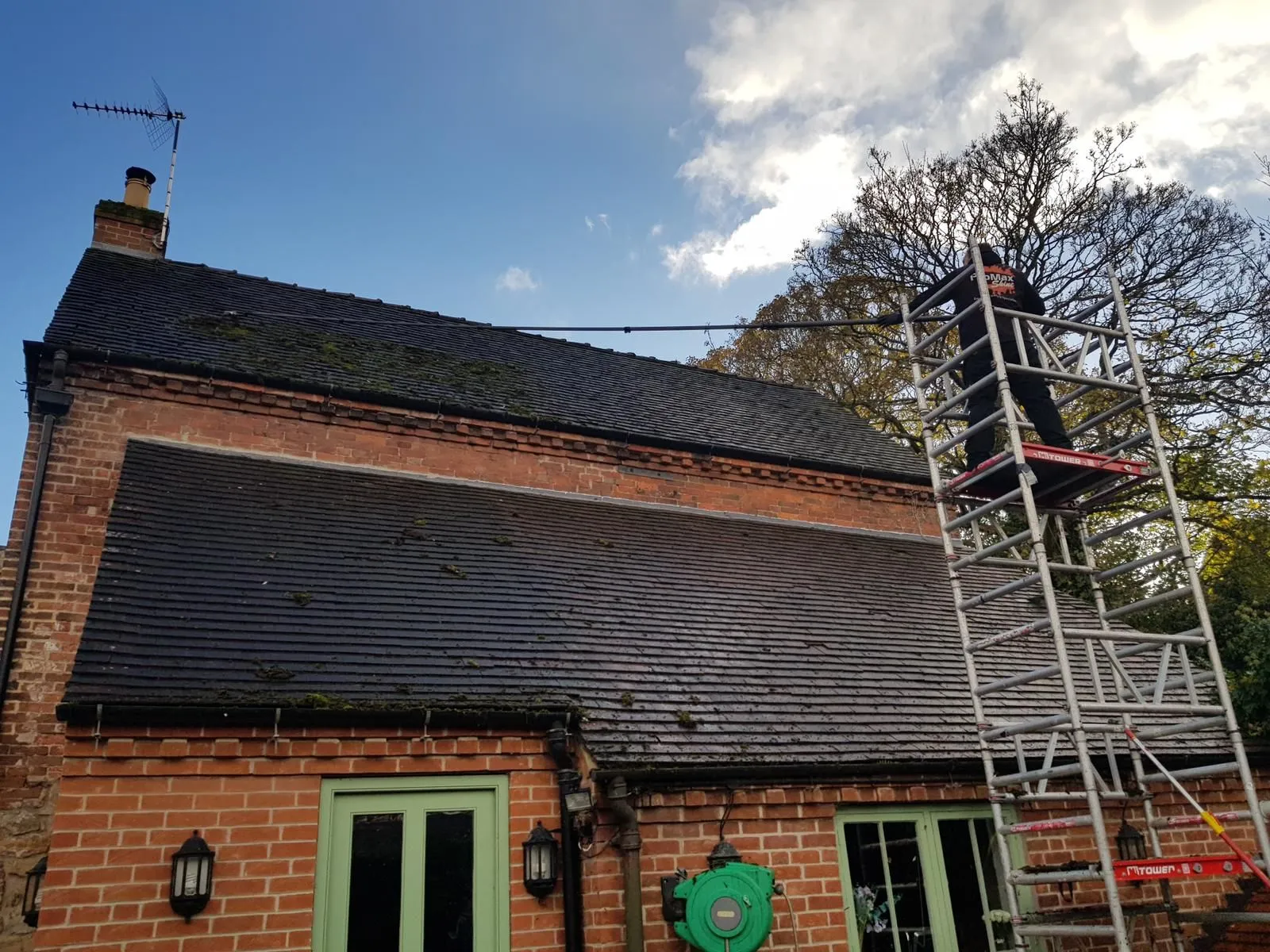
Autumn is the most important season to check. Leaf fall in Derby blocks valleys and gutters fast, and standing water in a valley puts pressure on tile laps and flashings. Areas like Littleover and Oakwood, with mature street trees, see this problem regularly. Moss and lichen growth is another thing to watch — moss retains moisture against the tile surface and can lift tile edges over time.
A simple annual check covers:
- Slipped, cracked, or missing tiles after winter storms
- Valley and gutter clearance before and after leaf fall
- Ridge and hip mortar condition (if wet-bedded) — cracking is normal over time
- Lead flashing joints at chimney bases and abutments
- Moss or lichen growth that may be lifting tile edges
- Condition of any dry ridge or dry verge components — clips and fixings can loosen over time
Clay tiles generally do not benefit from sealant application. Sealing traps moisture inside the tile body, and in frost, that trapped moisture expands and can crack the tile from within — we do not recommend sealing clay tiles. We never recommend high-pressure washing on clay either; a soft-wash treatment removes organic growth without damaging the tile surface.
What Does Clay Roof Tiling Cost in Derby?
Clay tile roofing costs more upfront than concrete, but the long lifespan makes it good value over time. For a typical Derby semi-detached home, you can expect:
| Job Type | Typical Cost |
|---|---|
| Single tile repairs | £75–£120 per tile, labour and materials included |
| Partial re-tile (one slope) | £1,500–£3,500 depending on size and access |
| Full strip and re-tile | Most 3–4 bedroom Derby homes fall in the £5,500–£10,000+ range |
| Underlayment & batten replacement | Usually included in full re-tile quotes; added cost if done separately |
Factors that affect your final figure include roof pitch, scaffolding requirements, leadwork, ridge and valley work, and whether the original felt needs replacing. The best way to get an accurate figure is a free survey — call us on 01332-529704 and we will assess your roof and provide a fully itemised written quote.
The Clay Tiling Work Included in Your Derby Quote
- Full strip and re-tile, including safe removal of the old clay tiles
- Single tile repairs and tile matching for older Derby properties, including period and listed buildings
- Underlayment inspection and replacement (bitumen or breathable membrane felt)
- Timber counter-batten and batten replacement where the survey finds them worn or rotten
- Lead flashing and valley lining renewal at chimneys, dormers, abutments and valleys
- Dry ridge and dry verge fitting — mechanically fixed, no mortar
- Ventilation strips and eaves carriers fitted to current building standards
- Bird and pest stop strips at eaves to stop nesting under the tiles
- A free drone roof survey and rafter load check before any work is quoted
- A fully itemised written quote and written workmanship guarantee
Not Included / Costed Separately
- Sealing or coating clay tiles — this isn’t offered, as it traps moisture and can crack tiles in a hard frost
- Structural rafter repairs beyond batten level — priced separately if the survey finds the roof structure needs strengthening before tiling
- Fitting or refitting aerials, satellite dishes or solar panels — arranged through specialist trades, not part of a tiling quote
- High-pressure jet washing of clay tiles — soft-wash cleaning only, since pressure washing strips the tile surface
- Scaffold or access tower hire — costed and itemised separately in your written quote once the survey confirms what access the roof needs
Why Choose Derby Roofers for Clay Roof Tiling in Derby?
Derby has no shortage of roofers. Here is why homeowners across the city choose us for clay tile work specifically — heritage matching, structural load checks, and BS 5534 installation on the roofs where getting it wrong matters most.
20+ Years of Local Experience
We have been installing and repairing clay tile roofs across Derby and Derbyshire for over 20 years. We know the local housing stock and its conservation area requirements.
Free Drone Roof Survey
We inspect your roof safely, without scaffolding costs, before quoting — including the structural rafter check every clay tiling job needs.
BS 5534 Compliant Installation
Every clay tile roof we lay meets the current British Standard for slating and tiling.
Dry Ridge & Dry Verge as Standard
No mortar, no cracking, no repointing in five years.
Heritage Tile Matching
We source period-correct clay tiles for older Derby properties, including listed buildings and conservation areas.
Fully Itemised Written Quotes
No vague estimates, no hidden costs, and a written workmanship guarantee on every job.
Areas We Work — Clay Roof Tiling Across Derby and Derbyshire
We carry out clay roof tiling installations, repairs, and re-tiles across Derby and the wider Derbyshire area. Our team is based locally and works across all of the following areas. Not sure if we cover your area? Call us on 01332-529704 and we will confirm straight away.
- Derby City Centre (DE1)
- Allestree & Darley Abbey (DE22)
- Mickleover (DE3)
- Littleover (DE23)
- Normanton & Peartree (DE23/DE24)
- Chaddesden (DE21)
- Spondon (DE21)
- Oakwood (DE21)
- Belper (DE56)
- Ilkeston (DE7)
- Long Eaton (NG10)
- Heanor (DE75)
- Ripley (DE5)
- Matlock (DE4)
- Swadlincote (DE11)
- Burton upon Trent (DE13/DE14)
- Buxton (SK17)
- Chesterfield (S40/S41)
- Nottingham (NG)
Frequently Asked Questions About Clay Roof Tiling in Derby
What Is the Average Cost of a Clay Tile Roof in the UK?
Clay tile roofing costs more upfront than concrete, but the long lifespan makes it good value over time. Single tile repairs run from around £75–£120 per tile, a partial re-tile is typically £1,500–£3,500, and a full strip and re-tile on a typical Derby semi falls in the £5,500–£10,000+ range. The best way to get an accurate figure is a free survey — call us on 01332-529704.
How Long Does a Clay Tile Roof Last on a Derby Home?
Clay tiles last between 60 and 100 years when installed correctly, but the felt underlay and battens underneath often need replacing sooner — typically after 40 to 50 years. Investing in the underlayment and battens at the same time as the tiles avoids repeat work down the line.
Do Clay Roof Tiles in Derby Need to Be Sealed?
No — sealing clay tiles is not recommended. Sealant traps moisture inside the tile. In a Derbyshire frost, that moisture can freeze, expand, and crack the tile from within. Clay tiles are designed to breathe and shed water naturally.
What Are the Disadvantages of Clay Roof Tiles?
Clay tiles are heavier than concrete or synthetic alternatives, so the roof structure must be checked before installation. They cost more upfront than concrete tiles, and they can crack under direct point loads — foot traffic and poor trade access are the most common causes of damage. Sourcing matching tiles for repairs on older Derby properties can also take time if the original profile is no longer in production. These are manageable issues with the right roofer, but worth knowing upfront.
Are Clay Roof Tiles Better Than Concrete Tiles for Derbyshire Weather?
Clay handles freeze-thaw cycles better than concrete. Concrete is more porous and absorbs moisture over time, which speeds up moss growth and can cause surface degradation. Clay holds its density and colour far longer in wet, cold climates like Derby’s. See our full Types of Roof Tiles guide for a wider material comparison, or our Concrete Roof Tiling Derby page if concrete is the better fit for your property.
Will My Derby Home’s Roof Structure Hold Clay Tiles?
Clay tiles are heavier than concrete or synthetic alternatives, so we always check rafter and batten condition during a free survey before recommending them. Most solid brick properties built before 1960 are built to carry the load, but it should always be confirmed first.
Can a Clay Tile Roof in Derby Leak?
A correctly installed clay tile roof rarely leaks. Most water ingress on clay tile roofs comes from failed ridge mortar, slipped tiles after storm damage, or degraded felt underlayment — all of which are fixable. We identify the source and repair it rather than suggesting a full re-tile unless it is genuinely needed.
Can I Walk on My Clay Tile Roof?
You should not walk on a clay tile roof without the correct equipment. Clay tiles crack under point loads. If you need roof access for any reason — to inspect a chimney, fit an aerial, or check after a storm — use a roof ladder with padding, or call us to carry out a safe drone inspection instead.
How Do I Know If My Clay Roof Tiles Need Replacing or Just Repairing?
If fewer than 20% of tiles are damaged and the underlayment is sound, a repair is usually the right call. If the felt is degraded, the battens are rotten, or large areas of tiles are cracked and slipping, a full re-tile is likely better value long-term. Our free drone survey gives you a clear picture of the roof’s condition before you commit to anything.
What Is the Difference Between This Page and Your Types of Roof Tiles Guide?
Our Types of Roof Tiles guide is a general educational comparison of all UK tile materials — clay, concrete, slate and more. This page is the clay-specific supply-and-install service page: clay tile types, clay vs concrete performance, BS 5534 installation detail, and clay tiling pricing. If you need concrete tiling specifically, see our Concrete Roof Tiling Derby page instead.
Ready to Book Your Clay Roof Tiling Survey in Derby?
If your clay tile roof needs attention — whether that is a single cracked tile, a full re-tile, or you are not sure what is needed — the best first step is a free, no-obligation survey.
Derby Roofers has over 20 years of experience installing and repairing clay tile roofs across Derby and Derbyshire. We use drone technology to inspect your roof safely, provide fully itemised written quotes, and carry out all work to BS 5534 standards with dry ridge systems as standard.
- ✅ Free drone survey and written, no-obligation quote
- ✅ BS 5534 compliant installation with dry ridge & dry verge as standard
- ✅ Heritage tile matching for period and listed Derby properties
- ✅ Written workmanship guarantee on every job
Call Derby Roofers today to book your free clay roof survey, with no obligation to book anything in.