Bird Proofing for Solar Panels Derby | Clip-Fit Mesh, No Drilling
Call: 01332-529704
Stop pigeons nesting under your Derby solar panels — UV-stable stainless steel mesh, clip-fitted with no drilling, so your panel manufacturer warranty stays intact.
- Free Drone Survey
- Legal Nest Check Every Visit
- Clip-Fit Mesh — No Drilling, Warranty Safe
- Written Completion Record
Pigeons Nesting Under Solar Panels — One of Our Most Common Derby Call-Outs
Pigeons nesting under solar panels are one of the most common call-outs we get across Derby, and it’s rarely just a mess problem. Birds squeeze into the gap between the panel frame and the roof surface, build nests against live DC cables, foul the panel glass, and block drainage channels — all while your energy output quietly drops.
We are Derby Roofers. We have been working on roofs across Derby, Derbyshire, and Nottinghamshire for over 20 years. We fit UV-stable stainless steel mesh bird proofing to solar panel arrays using a clip-fit system — no drilling into panel frames, no voided warranty, no subcontractors. Just a clean, secure installation backed by a written completion record.
- Free drone roof surveys as standard — no ladders or scaffolding needed just to get a quote
- Clip-fit stainless mesh installation that never voids your solar panel manufacturer warranty
- A written completion record provided on every job, ready to pass to your insurer if you ever need it
Why Derby Homes Are Particularly Vulnerable to Bird Nesting Under Solar Panels
Derby and the surrounding Derbyshire area has the building stock and geography that makes bird nesting under solar panels more common than in many other parts of the UK.
Victorian and Edwardian terraces in areas like Normanton, Spondon, and Pear Tree have pitches and ridge lines that pigeons and starlings navigate easily. Post-war semis in Allestree, Mickleover, and Chaddesden typically have south-facing rear elevations — exactly where solar arrays are installed for maximum output, and exactly where birds find the warmest, most sheltered nesting position.
Add Derby’s damp autumns, cold winters, and wet springs — weather that accelerates the corrosion caused by bird droppings on aluminium frames and mounting hardware — and the case for getting bird proofing fitted becomes straightforward. Pigeons breed year-round in Derbyshire; they don’t stop in winter. Once a nest is established under your panels, the birds return season after season, so early action is always less costly than dealing with the aftermath.
How to Tell if Birds Are Already Nesting Under Your Derby Solar Panels
Most homeowners across Derby don’t realise birds are nesting until the damage is already established. By that point, nests may be packed against wiring, guano has built up on the panel glass, and roof drainage channels are partially blocked. Watch for these warning signs:
- Scratching, cooing, or fluttering sounds from the roof — especially at dawn and dusk
- Dark streaking or white staining below panel edges on roof tiles or fascia boards
- A noticeable drop in readings on your solar monitoring app or inverter display
- Visible nest material — straw, twigs, or feathers — poking out from the panel perimeter
- A strong, musty or ammonia-like smell from the roof area in warm weather
- Droppings on gutters, fascias, or window sills directly below the panel array
If you can see any of these signs from ground level in Littleover or Borrowash, the nest is already well established — what you can see from below is rarely the full picture.
How We Assess the Problem Before We Quote
We carry out free drone roof surveys across Derby and Derbyshire as standard. Our CAA-compliant drone pilot can photograph exactly what is under and around your panels before we give you a quote — no scaffolding, no ladders, no obligation.
You receive a clear written report with photographs, in plain English, so you know exactly what you are dealing with before you commit to anything.
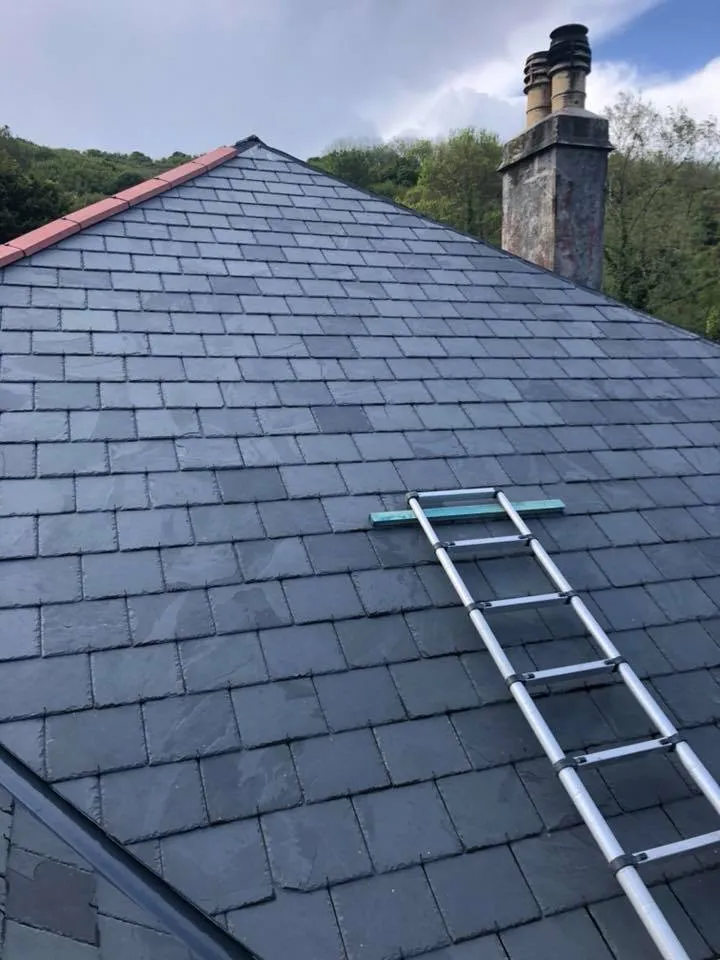
Call 01332-529704 to book your free drone assessment, or use the contact form and we will reply the same day.
The Real Risks of Birds Nesting Under Solar Panels — What Derby Homeowners Need to Know
Birds under solar panels are not simply a noise or mess problem. The risks cover your home’s safety, your energy performance, your health, and your financial position.
Fire Risk
Pigeons build dry nests from straw, twigs, feathers, and other combustible material. These nests sit directly against DC cables running beneath your panel array. DC circuits in solar PV systems carry live current at the cable even when the inverter is switched off — a nest in contact with a degraded or chafed cable is a documented fire risk. This is one of the reasons insurance assessors are increasingly asking whether solar panel bird proofing was in place at the time of a claim.
Corrosion and Structural Damage
Pigeon droppings are highly acidic. Over time, the uric acid degrades aluminium panel frames, stainless mounting brackets, and the anti-reflective coating on panel glass. On Derby roofs — where moisture sits longer due to the local climate — this corrosion builds faster than it would in a drier region. Left untreated, frame damage can affect the structural integrity of the mounting system and create water ingress points on the roof surface.
Bird Mites Entering Your Home
When a nest is active, bird mites live in the nesting material. When birds leave the nest — or are removed — the mites migrate through roof voids, into loft insulation, and in some cases into living spaces. We have seen this pattern on properties in Spondon and Chaddesden where nests had been active for more than one season without being treated.
Reduced Energy Output
Partial shading from guano on panel glass reduces the output of photovoltaic cells. The effect is gradual and easy to miss unless you monitor your inverter data consistently. Over a full year, the energy loss from fouled panels on a typical Derby home is measurable — and entirely avoidable.
Health Hazard
Pigeon guano is classified as a hazardous waste by UK local authorities. It is a vector for bacteria including Salmonella and E. coli, as well as the fungal spore Cryptococcus neoformans. Cleaning guano without correct PPE and disposal procedures is a health risk — we apply a biocide treatment to all cleared areas under your panels as part of every bird proofing installation.
From First Call to Completion Certificate: How the Install Runs
A professional bird proofing installation does one thing: it permanently seals the gap between your panel frame and the roof surface without damaging the panels, the mounting system, or the roof tiles. Here is what happens on a typical Derby job.
- Enquiry and booking: You get in touch with your panel make and roof type, and we book in a survey slot — usually within a few days rather than weeks.
- Drone or ladder survey: We check the full array from above or via ladder, with no scaffolding needed just for the survey, and give you a fixed quote based on what we actually find under the panels.
- Legal nest check: Before any panel is touched, we check for active nests under the Wildlife and Countryside Act 1981. If a nest is found in use, work on that section pauses until it’s naturally vacated.
- Clearance and treatment: Old nest material and accumulated debris are cleared from beneath the panels, and the area is treated with biocide to deal with bird mites and hardened guano.
- Mesh fitting: Stainless steel mesh, cut to the exact perimeter of your array, is clipped onto the panel frame lip with aluminium clips — nothing is drilled into the panel or the roof tiles.
- Gap check and sign-off: We check the whole mesh perimeter for any gap over 20mm, then leave you with photos and a written completion certificate for your own files or your insurer.
On a typical Mickleover or Allestree semi-detached with a 10–14 panel south-facing array on a standard 35-degree pitch, the full job takes around half a day. We leave your roof tidy, clean up at the end, and never leave a job half finished.
Bird Proofing Methods Compared — Why Mesh Is the Right Choice for Derby Roofs
Not all bird proofing methods are equal. Here is a plain summary of the main options and why we recommend stainless mesh for residential solar arrays across Derby and Derbyshire.
Stainless steel clip-fit mesh — the most effective and widely used method for domestic solar panels in the UK. A fine but durable stainless mesh is fitted around the full perimeter of your panel array using aluminium clips that grip the panel frame lip. No drilling required. It creates a sealed barrier on all sides, allows normal airflow beneath the panels, and is virtually invisible from street level. This is the method we use on every Derby installation.
Solar skirts — rigid barriers fitted along the outer edges of the panel frame, designed to blend with the panel colour and finish. A neater aesthetic result, but more costly and less flexible when fitting around older or irregularly spaced arrays. Less commonly used on the mix of Victorian and post-war roof types found across Derby.
Bird spikes — effective at stopping birds from perching on ridge tiles and chimney stacks, but they do not seal the gap beneath the panels. A useful secondary deterrent, but not a substitute for the primary solution.
Bird netting — a draped or tensioned system used mainly on large commercial arrays. On domestic roofs it can trap birds rather than deter them, and requires a tensioned frame to work correctly. Not our recommended approach for standard residential installations in Derby. For residential properties, clip-fit stainless mesh is the most practical, durable, and warranty-safe solution — the only method that fully seals the underside gap without risking your panel manufacturer warranty.
Your Home Insurance and Solar Panel Bird Damage — The Gap Nobody Talks About
This is the section most Derby roofing contractors skip. It should not be skipped. Most standard home insurance policies treat bird damage as preventable deterioration. If a loss assessor determines that bird proofing was readily available and was never fitted, a claim for panel damage, cable damage, or fire related to nesting material can be refused.
Derby homes with solar panels fitted between 2011 and 2019 under the original Feed-in Tariff scheme are now entering the period where frames, brackets, and wiring are most vulnerable to accumulated bird damage — exactly the properties where claims are most likely to be made, and where the absence of a bird proofing record is most damaging.
- Check your home insurance policy wording — specifically sections on gradual damage, pest damage, and solar panel equipment
- Have bird proofing installed and keep a written record of the work, including the method used, the date, and the contractor
- Ask for a completion certificate — we provide a written record on every Derby installation as standard
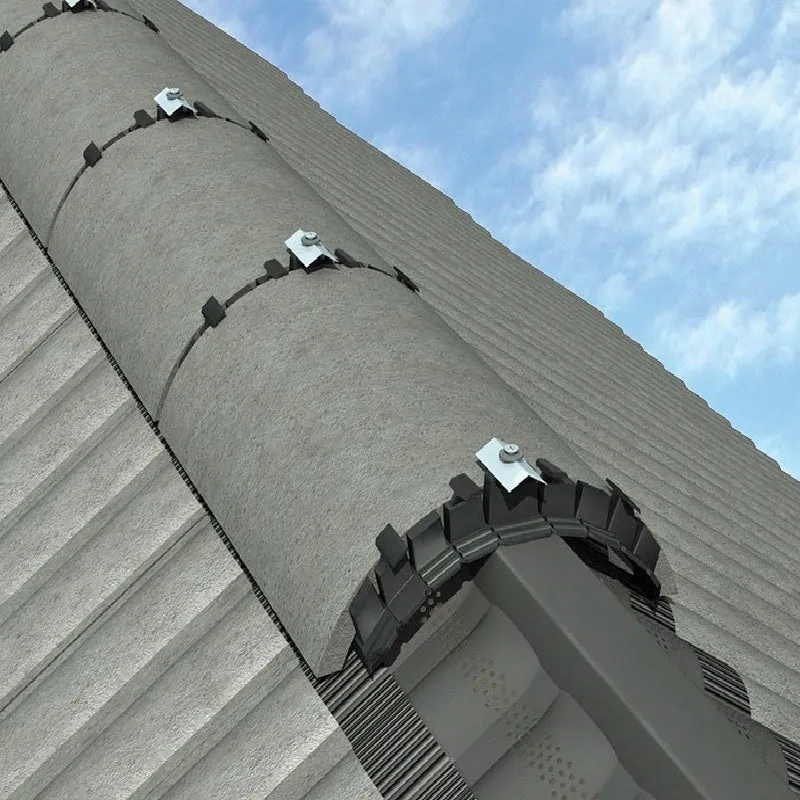
Drilling into a solar panel frame to fit bird mesh is a known warranty risk, and it happens more often than it should. Some contractors drill directly through the aluminium panel frame to anchor mesh fixings — quicker, but it voids the panel manufacturer warranty in almost every case. Our clip-fit method grips the outer lip of the panel frame, the same lip designed by the manufacturer to accept accessories. No hole. No sealant. The panel remains structurally and legally intact.
What’s Included in a Derby Bird Proofing Installation — And What Costs Extra
- Free drone or ladder survey of the full panel array before any quote is given
- A legal check for active nests under the Wildlife and Countryside Act 1981 before any work starts
- Removal of inactive nest material and accumulated debris from beneath the panels
- Biocide treatment of the cleared area to eliminate bird mites and break down hardened guano
- Stainless steel mesh cut to the exact perimeter of your specific panel array
- Clip-fit installation using aluminium clips on the panel frame lip — no drilling or adhesive on the panel or roof tiles
- A full gap check confirming no opening larger than 20mm remains around the mesh perimeter
- A photographic record and written completion certificate for your own files or your insurer
Not Included / Costed Separately
- Scaffolding or other additional access equipment, where a roof’s pitch or height means standard ladder access isn’t enough — priced separately once assessed
- Repair of DC cables or other electrical wiring — we flag anything found in poor condition during the survey, but the repair itself needs a qualified solar electrician
- Structural roof repairs such as damaged tiles, felt, or timber found beneath the panels during the survey — quoted separately if discovered
- Bird proofing fitted at the same time as a brand new solar panel installation — a related but separate job, worth raising when you get in touch about a new install
What Solar Panel Bird Proofing Costs in Derby
Most solar panel bird proofing jobs in Derby land somewhere between £500 and £900, with the main factors being the size of your array, the amount of nest material and debris found underneath it, and how the roof is accessed. A straightforward mesh fit on a standard semi-detached roof with easy ladder access sits toward the lower end; larger arrays, heavier guano build-up, or roofs needing powered access or a tower push it higher. That range is a starting guide rather than a fixed price — a full, accurate quote needs a site visit or drone survey so we can see the actual condition under the panels before confirming a figure.
Why Choose Derby Roofers for Solar Panel Bird Proofing?
Over 20 years of local experience. We see the most repeat pigeon activity on the older terraced streets of Normanton, Chaddesden and Allenton, where tightly packed roof lines and low eaves give birds an easy hop onto a panel array from next door, and on rear-extension roofs in Alvaston and Sinfin where panels sit closer to ground level and catch shelter from the wind. We don’t use subcontractors — the team that surveys your roof is the team that does the work.
No-Drill Fitting, Every Job
Every mesh panel we fit clips onto the aluminium frame lip with purpose-made clips — nothing is drilled or glued into the panel or the roof tiles beneath it, so the fixing method itself doesn’t put your solar warranty at risk.
A Legal Nest Check First
Before any mesh goes on, we check for active nests under the Wildlife and Countryside Act 1981, because disturbing an occupied nest is an offence no matter how the bird got there in the first place.
A Fixed 20mm Gap Standard
Once the mesh is fitted, we check the full perimeter for any gap over 20mm — pigeons can get through openings that look too small to bother checking, so that measurement is a fixed standard on every job, not a guess.
IPAF and PASMA-Certified Access
For roofs where reaching the array needs more than a ladder or drone survey — a steep pitch, a terraced roof with restricted rear access, or an array above an extension roof — our team holds IPAF certification for powered access platforms and PASMA certification for mobile tower work, so the same crew handles the access side without bringing in a separate contractor.
We Actually Answer the Phone
We respond to every call and every email. If you leave a message, we call back the same day — for a job that touches your solar warranty and your insurance position, you deserve a contractor who communicates clearly from first contact to completion certificate.
Areas We Cover for Bird Proofing Solar Panels in Derby and Derbyshire
We carry out bird proofing for solar panels across Derby and the wider Derbyshire area — from the older terraced housing in Normanton, Chaddesden and Allenton through to the family estates in Mickleover, Littleover, Oakwood and Chellaston, plus Alvaston, Spondon, Sinfin, Allestree, Darley Abbey and Boulton Moor. We also take on jobs in Ilkeston, Long Eaton, Belper and Ripley on a regular basis. Not sure if we cover your area? Call us on 01332-529704 and we will confirm straight away.
- Derby City Centre (DE1)
- Normanton (DE23)
- Littleover (DE23)
- Allestree (DE22)
- Darley Abbey (DE22)
- Mackworth & Markeaton (DE22)
- Mickleover (DE3)
- Chaddesden (DE21)
- Spondon (DE21)
- Breadsall & Oakwood (DE21)
- Borrowash (DE72)
- Alvaston & Chellaston (DE24)
- Willington & Findern (DE65)
- Pear Tree (DE23)
- Long Eaton (NG10)
- Ilkeston (DE7)
- Heanor (DE75)
- Ripley (DE5)
- Belper (DE56)
- Alfreton (DE55)
Frequently Asked Questions — Bird Proofing Solar Panels in Derby
How much does it cost to bird proof solar panels in Derby?
Most solar panel bird proofing jobs in Derby land between £500 and £900, depending on the size of your array, how much nest material and debris has built up underneath it, and the access needed to reach the roof. Roofs requiring scaffolding cost more due to access equipment. We provide a free, no-obligation written quote before any work starts — call 01332-529704 to arrange a free drone survey.
What is the best way to stop pigeons nesting under solar panels?
Stainless steel clip-fit mesh is the most effective long-term solution. It creates a sealed perimeter barrier around the full panel array, prevents access from all angles, and — when correctly installed with aluminium clips rather than drilled fixings — does not affect your panel warranty or performance. Spikes deter perching on ridges but do not seal the gap beneath panels; mesh does both.
Will bird proofing void my solar panel warranty?
No, as long as it’s fitted correctly. We use clip-fit aluminium clips on the panel frame lip, with nothing drilled or glued into the panel or the roof tiles, which is why the fixing method itself doesn’t affect your manufacturer warranty. Drilling into the aluminium frame does void most manufacturer warranties — always confirm the installation method before any contractor starts work.
Is it legal to remove birds nesting under solar panels in the UK?
You can remove inactive nests at any time. Active nests containing eggs or live chicks are protected under the Wildlife and Countryside Act 1981, and disturbing one is a criminal offence that can result in an unlimited fine or up to six months in prison. We check for active nest status on every site visit and will never proceed with work on a protected nest. The safest window for bird proofing in Derbyshire is September through to late February, before the nesting season begins.
What happens if you find an active pigeon nest under my panels?
We stop work on that section straight away. That area is left alone until the nest is naturally vacated, and we’ll explain the timeline for coming back to finish the job.
Do I need scaffolding for this work?
Not usually. Surveys are done by drone or ladder as standard. Scaffolding, or a powered access platform or tower, is only needed where the pitch or height of the roof makes that necessary, and it’s priced separately once we’ve assessed the roof.
How do you stop pigeons getting back in through small gaps?
We check the entire mesh perimeter for any gap wider than 20mm once fitting is complete. That measurement is a fixed check on every job, because pigeons can squeeze through openings that look too small to bother checking.
Does bird proofing affect solar panel efficiency or performance?
No. Correctly installed clip-fit mesh does not cover any part of the panel glass — it sits at the perimeter of the frame and has no effect on the photovoltaic cells or light absorption. In fact, bird proofing improves long-term efficiency by preventing guano build-up and debris accumulation that would otherwise partially shade the panels.
Can birds nesting under my solar panels cause bird mites to enter my home?
Yes. Bird mites live in active nest material, and when birds vacate a nest — or are displaced — mites migrate through roof voids and into loft insulation, and in some cases reach living areas. We apply a biocide treatment to all cleared areas under your panels as part of every installation, eliminating mites at source.
Could a bird’s nest under my solar panels cause a house fire?
Yes, this is a genuine risk. Dry nesting material sitting against live DC cables creates a potential ignition point — DC cables in solar PV systems remain live even when the inverter is switched off. We inspect wiring condition during every survey and flag anything that needs attention before the mesh is fitted.
Should I get bird proofing fitted when my solar panels are installed?
Yes — and it is significantly cheaper to do so. If proofing is fitted as part of a new installation, access equipment is already in place and the labour is minimal. Retrofitting later means a separate visit, potential scaffolding costs, and the risk that birds have already begun nesting. We also carry out solar panel roof preparation for new installations — speak to us if you are planning a solar install on your Derby property.
Do you deal with wiring or roof damage found under the panels?
We flag anything we find, but the repair itself is handled separately. Damaged DC cabling needs a qualified solar electrician, and structural issues such as damaged tiles, felt or timber are quoted as a separate job once identified.
Ready to Protect Your Derby Solar Panels From Nesting Birds?
Every month you leave bird proofing unfitted, the risk increases. Nesting season in Derbyshire typically runs from March through to August — once eggs are laid, we cannot legally remove the nest, and the damage continues.
Derby Roofers is your local, fully insured roofing contractor with over 20 years of hands-on experience across Derby and Derbyshire. We carry out free drone roof surveys, provide written quotes with no obligation, use only clip-fit stainless mesh that protects your panel warranty, and issue a written completion record on every job.
- ✅ Free drone survey and written, no-obligation quote
- ✅ Clip-fit stainless mesh that never voids your panel warranty
- ✅ Legal nest check on every visit, before any work starts
- ✅ Written completion record for your own files or your insurer
We don’t use subcontractors — the team that surveys your roof is the team that does the work. Call now to book your free assessment, no pressure, no hidden costs.